Masterpieces
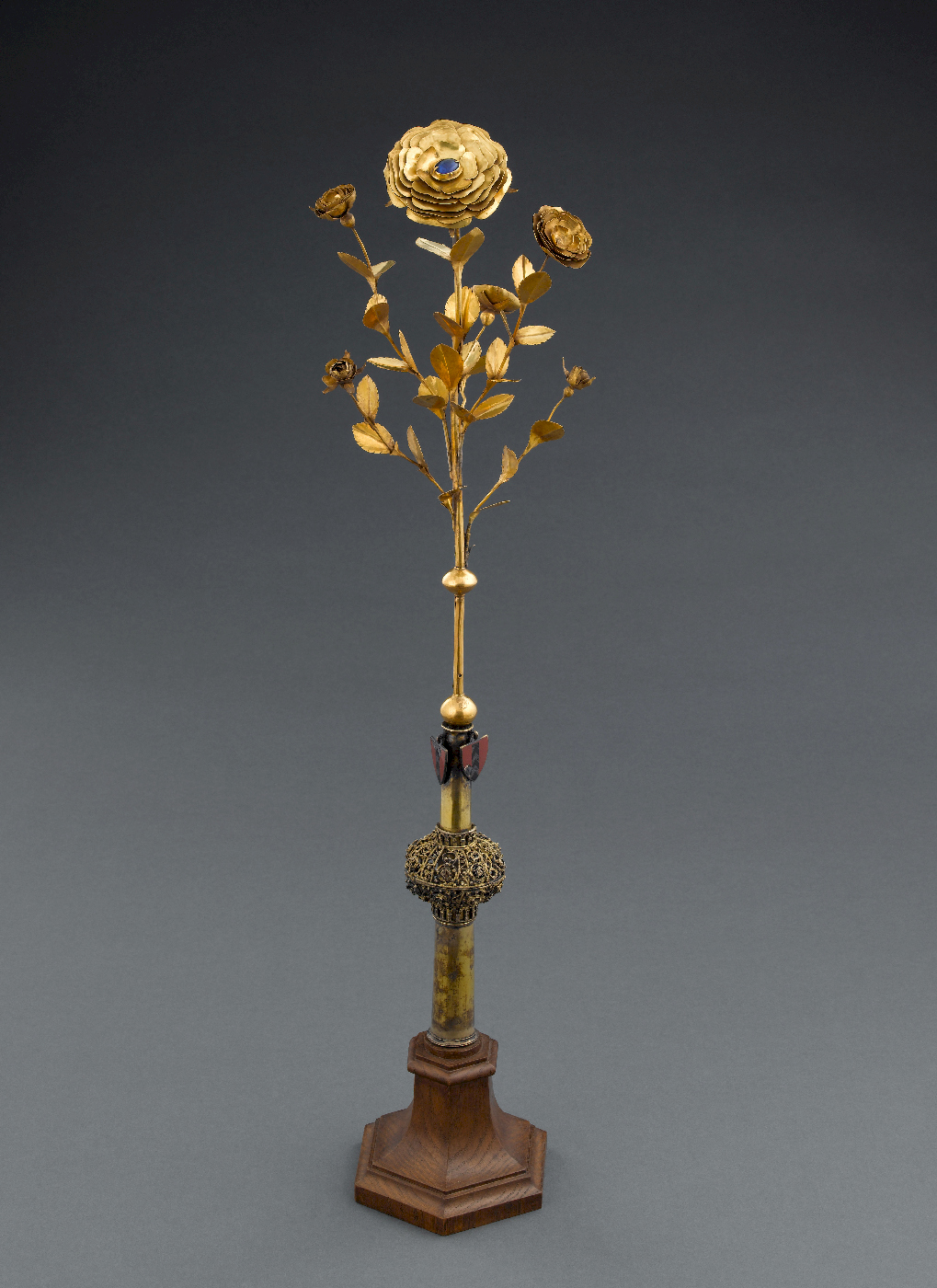
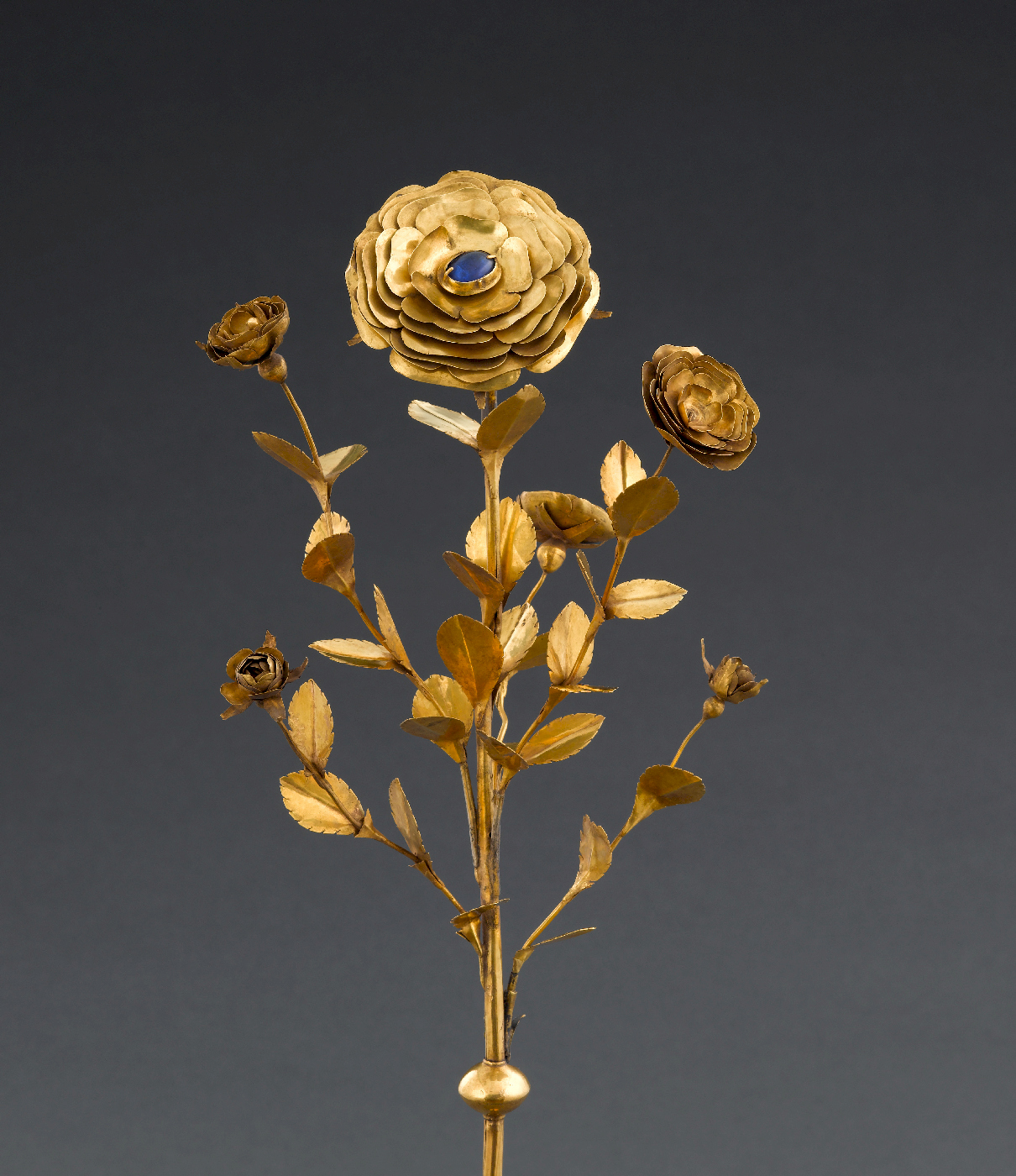
Golden rose from the Basel Cathedral, Cl. 2351 © GrandPalaisRmn / Michel Urtado
Masterpieces
Golden rose from the Basel Cathedral, Cl. 2351 © GrandPalaisRmn / Michel Urtado
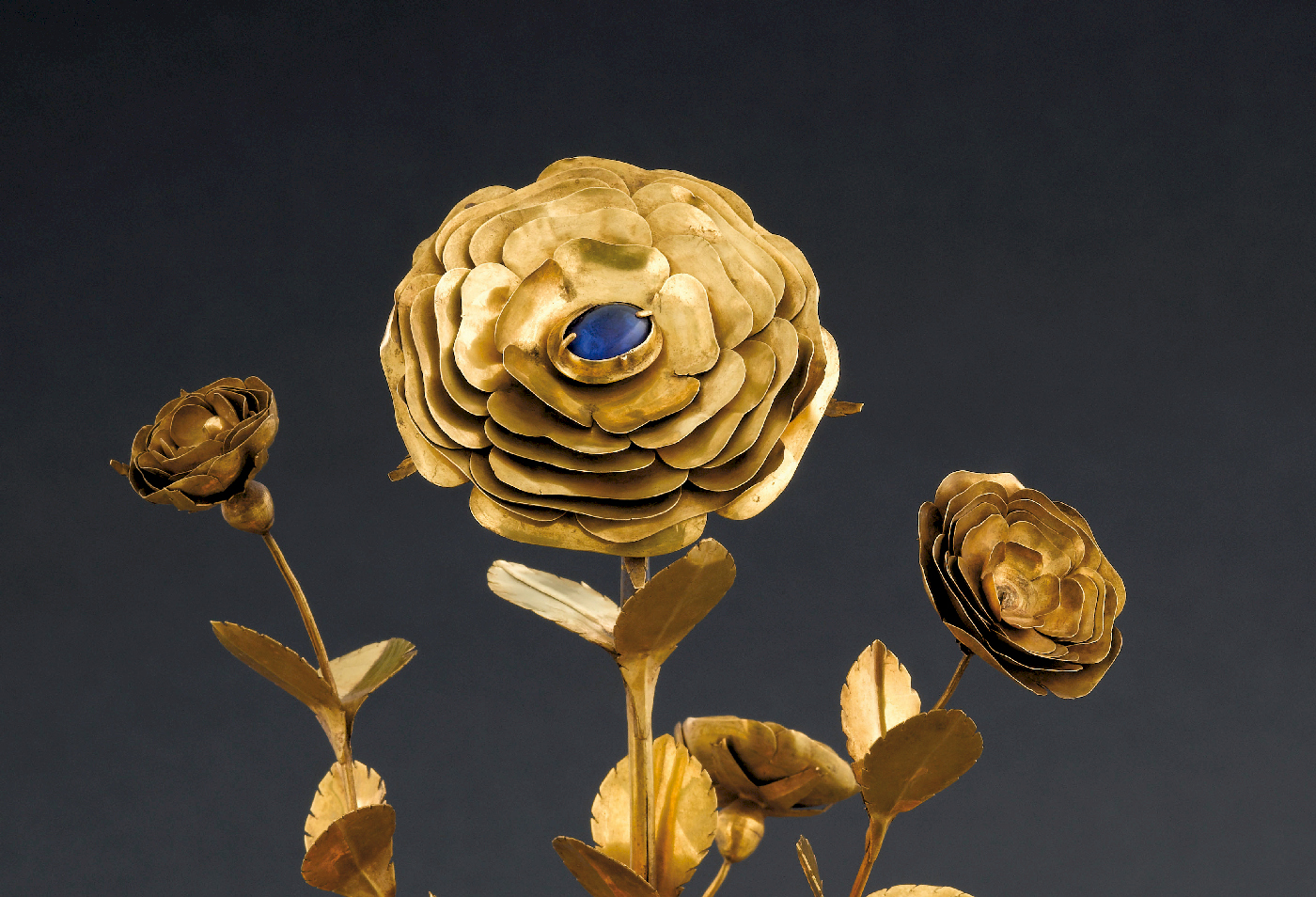
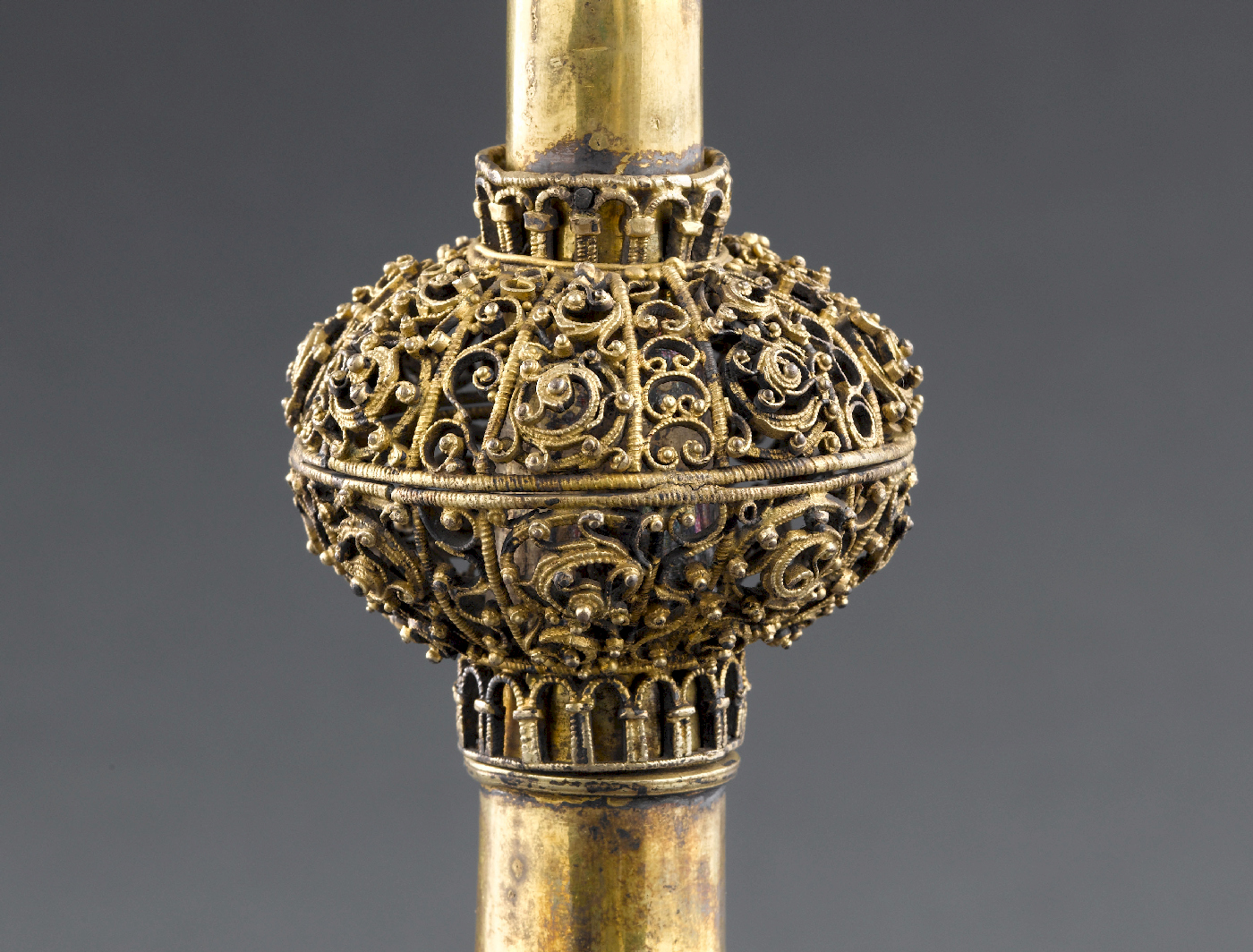
Golden rose from the Basel Cathedral, Cl. 2351 (detail) © GrandPalaisRmn / Michel Urtado
Golden rose
Description
This golden rose comes from the treasury of the Cathedral of Basel. It was offered by Pope John XXII to the Count of Neuchâtel. The golden rose symbolizes the Passion and Resurrection of Christ.
Each year, on the fourth Sunday of Lent, the Pope would give a golden rose to one of his faithful, in recognition of their devotion and to reward them for their services. This rose as one with no thorns, like those that perfumed Paradise, the symbol of the Passion of Christ and his Resurrection.
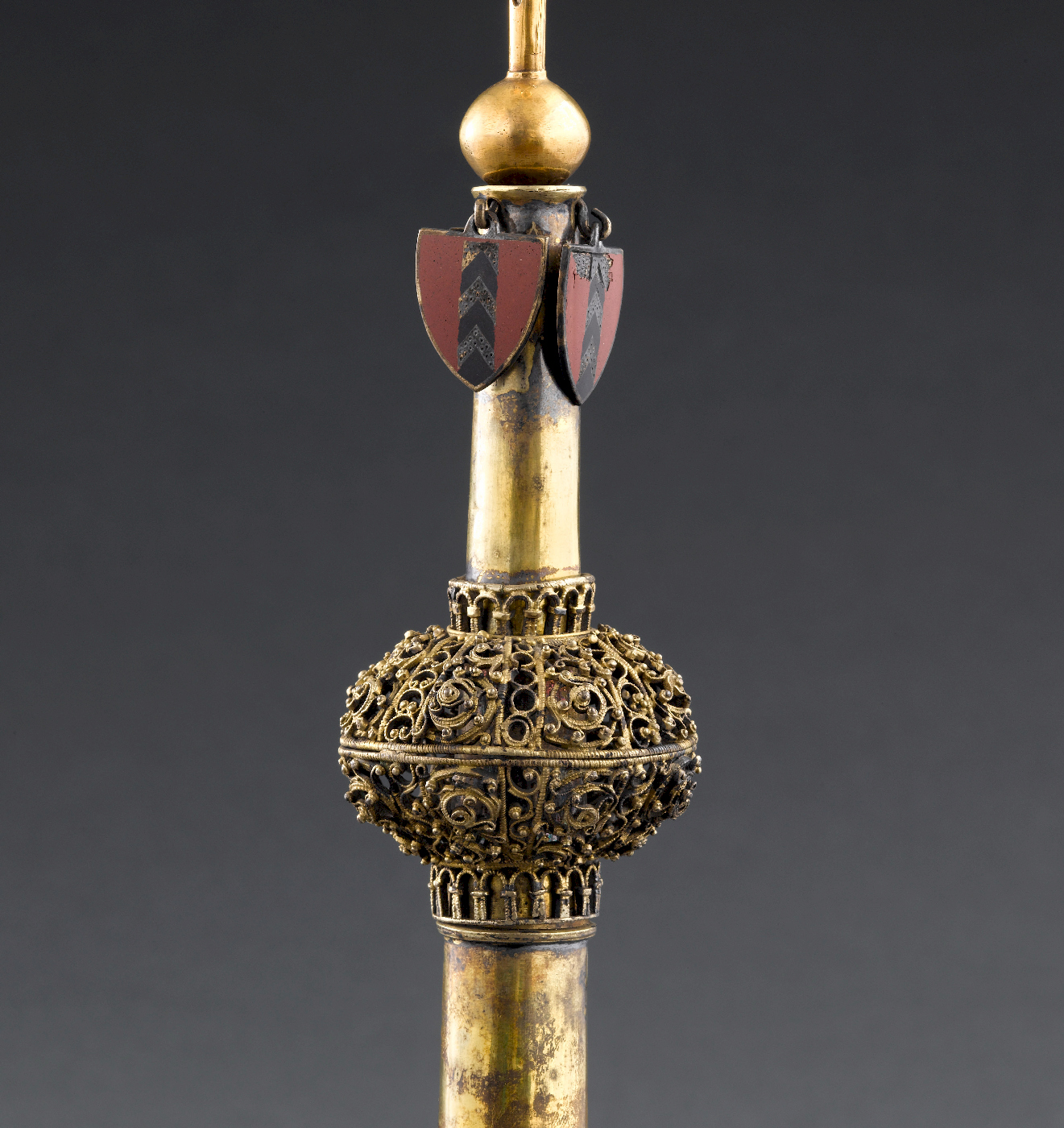
It has been crafted with exquisite finesse: the stems, narrow ribbons folded in on themselves, and the flowers, made from overlapping corollas, are cut from a thin sheet of gold. John XXII commissioned it in 1330 and presented it to Rudolf of Nidau, Count of Neuchâtel, who had supported the Pope in his conflict with Emperor Louis of Bavaria. He was identified by his coat of arms, present on the enamelled heraldic shield that he had added to the rose, with a 13th century filigree knot.
The papal records allowed the artist's name was identified: it was the goldsmith Minucchio from Siena, who worked in Avignon from 1327 to 1347. After the papacy was established in Avignon in 1309, the city became a significant centre for the arts, where artists from all walks of life worked for the Popes and Cardinals.
This work is the oldest preserved golden rose.
It comes from the Basel Cathedral treasure.
| Inventory number | Cl. 2351 |
|---|---|
| Height | 60 cm |
| Medium | Goldsmithery |
| Method of acquisition | Donated by Theubet, 1854 |