
Film shoots and photography
A unique setting in the heart of Paris
The Musée de Cluny, the National Museum of the Middle Ages, is a unique venue in the heart of Paris, classified as a historic monument. In the Latin Quarter, two thousand years of history are waiting for you in a unique heritage site, where Gallo-Roman antiquity coexists with late mediaeval architecture and contemporary design.
The museum extends over 3,500 m² of exhibition space, but also has unexpected and charming areas tucked away like the underground passages of the Roman baths and the Gothic cellar.
The museum is equipped with lifts and platform lifts, as well as two wide staircases.
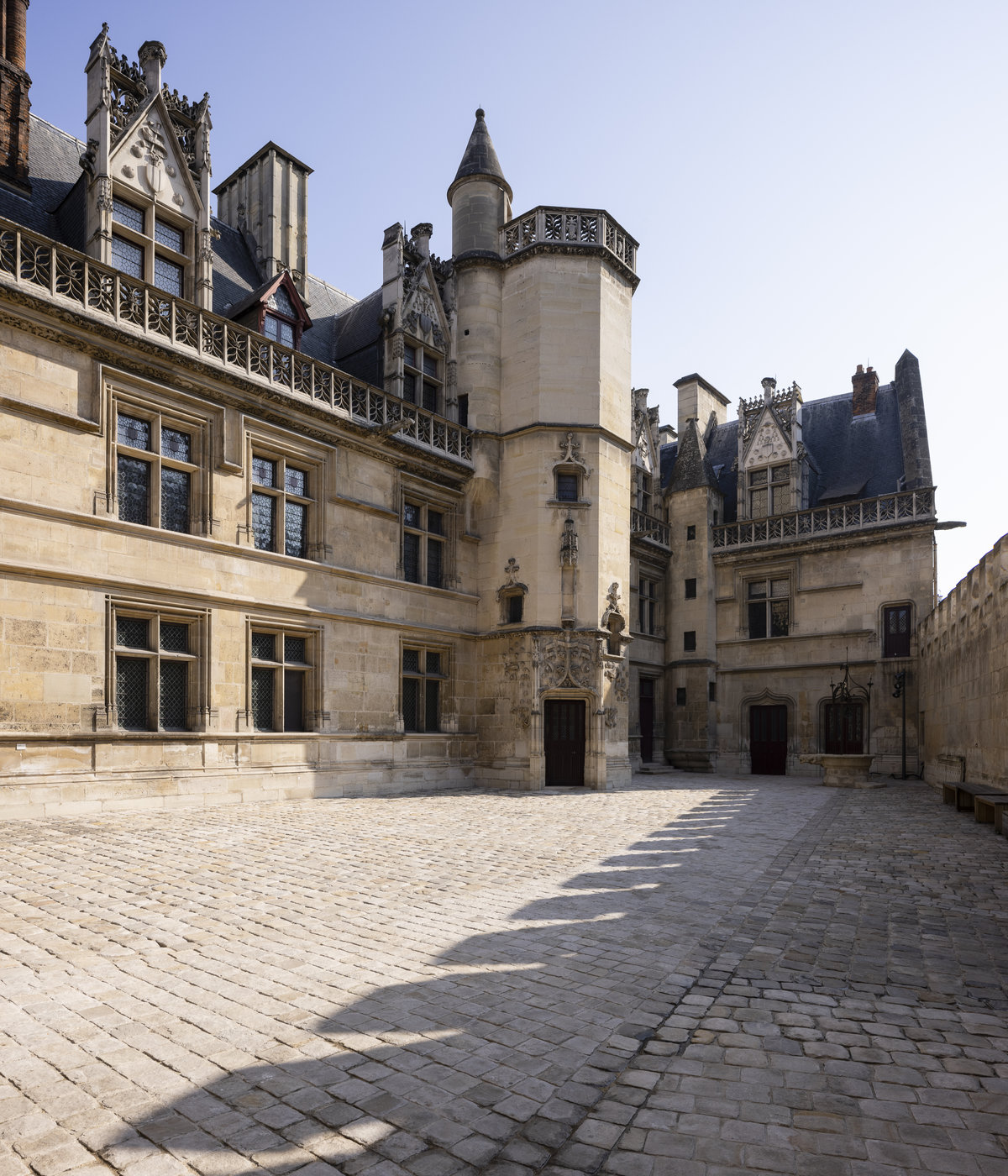
Exterior view of the Hôtel des Abbés de Cluny
© Alexis Paoli / OPPIC
Contact
Are you looking for a place for a film or photography shoot project? Contact the museum’s communications department: aline.damoiseau[at]culture.gouv.fr or +33 (0)6 09 23 51 65.
Rates on request depending on the project.
Filming is possible preferably during the day on Mondays and in the evenings from Monday to Friday.
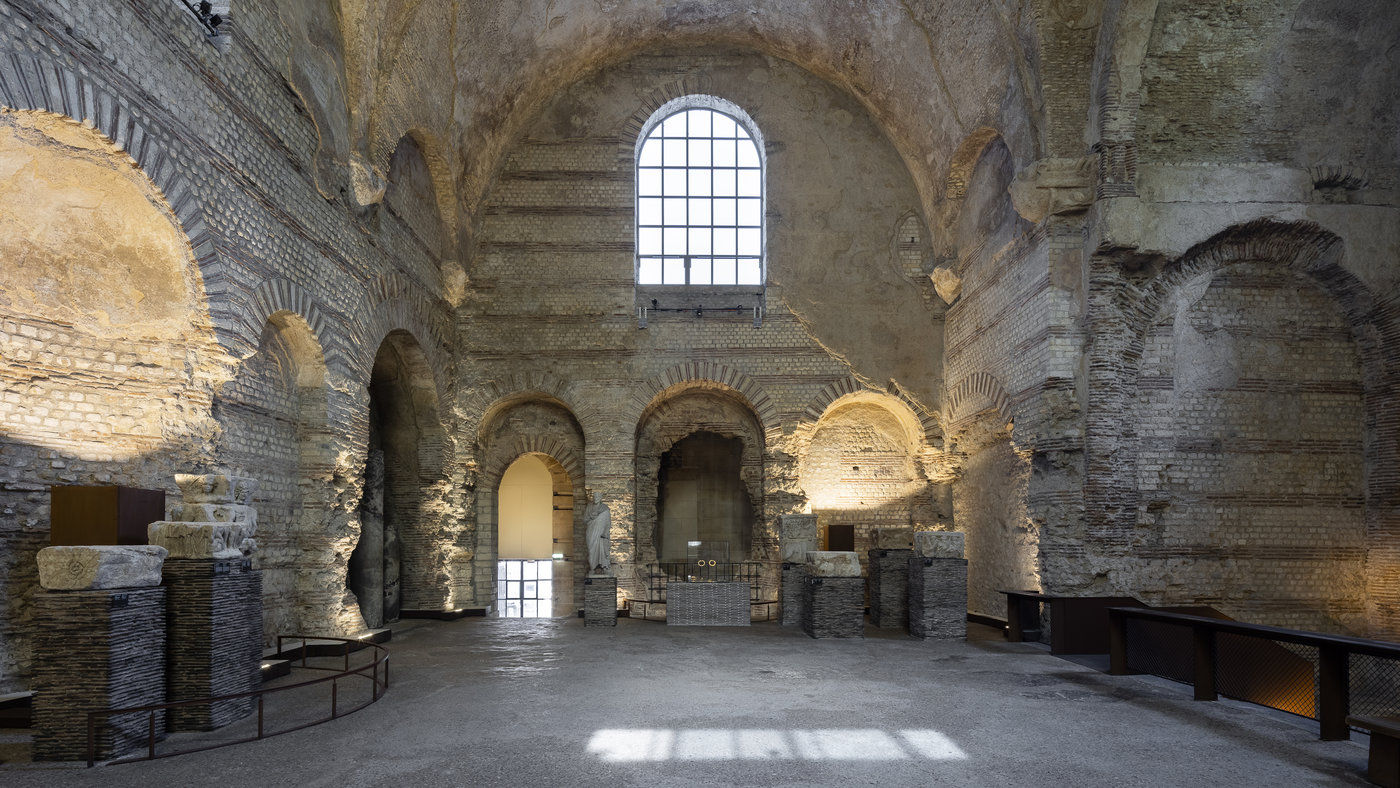
Room 1, Frigidarium © Alexis Paoli / OPPIC
The Gallo-Roman baths as a setting
The "frigidarium", or the cold room of the ancient Roman baths, dates from the 1st and 2nd centuries. It is one of the best-preserved examples of Gallo-Roman Antiquity in northern France, featuring thick walls made of bricks alternating with small stone block masonry. A majestic vault spans the 350 m² of the room at a height of 14 metres.
The area is open to visitors; filming is possible outside the museum opening hours.
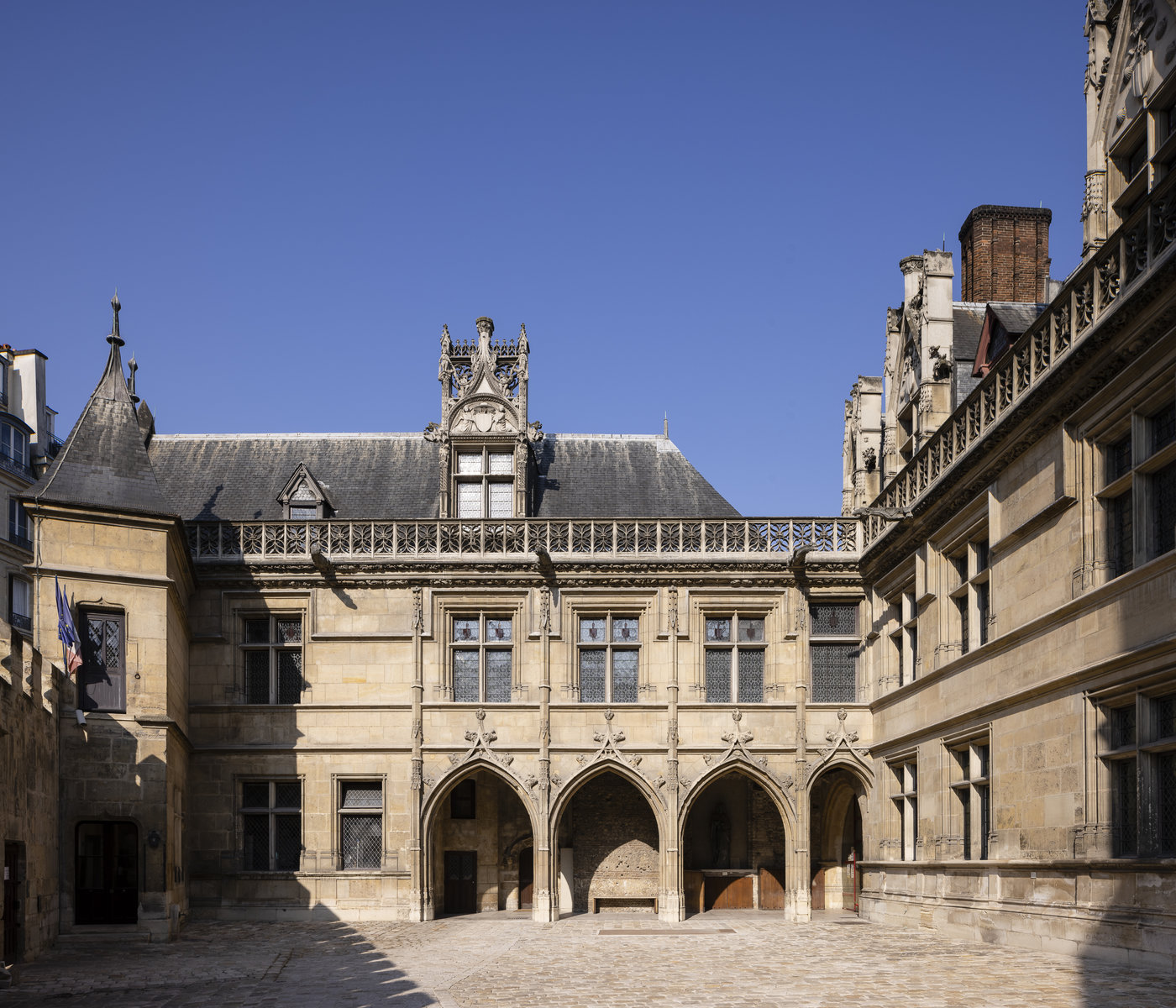
Exterior view of the Hôtel des Abbés de Cluny © Alexis Paoli / OPPIC
A courtyard at the heart of Gothic art
The courtyard of the Hôtel des Abbés de Cluny is a haven of peace and tranquillity a short walk from Boulevard Saint-Michel.
The uniform facades, sculpted motifs from the mediaeval bestiary... The Hôtel de Cluny is a gem of flamboyant Gothic civil architecture, built at the end of the 15th century for the Abbots of Cluny. It is also the oldest example in Paris of the "hôtel particulier" (private mansion) model between a courtyard and a garden, which would become widely used in the centuries that followed.
And it is seen the best from the courtyard!
400 m² of surface area
The area is open to visitors; filming is possible outside the museum opening hours.
.
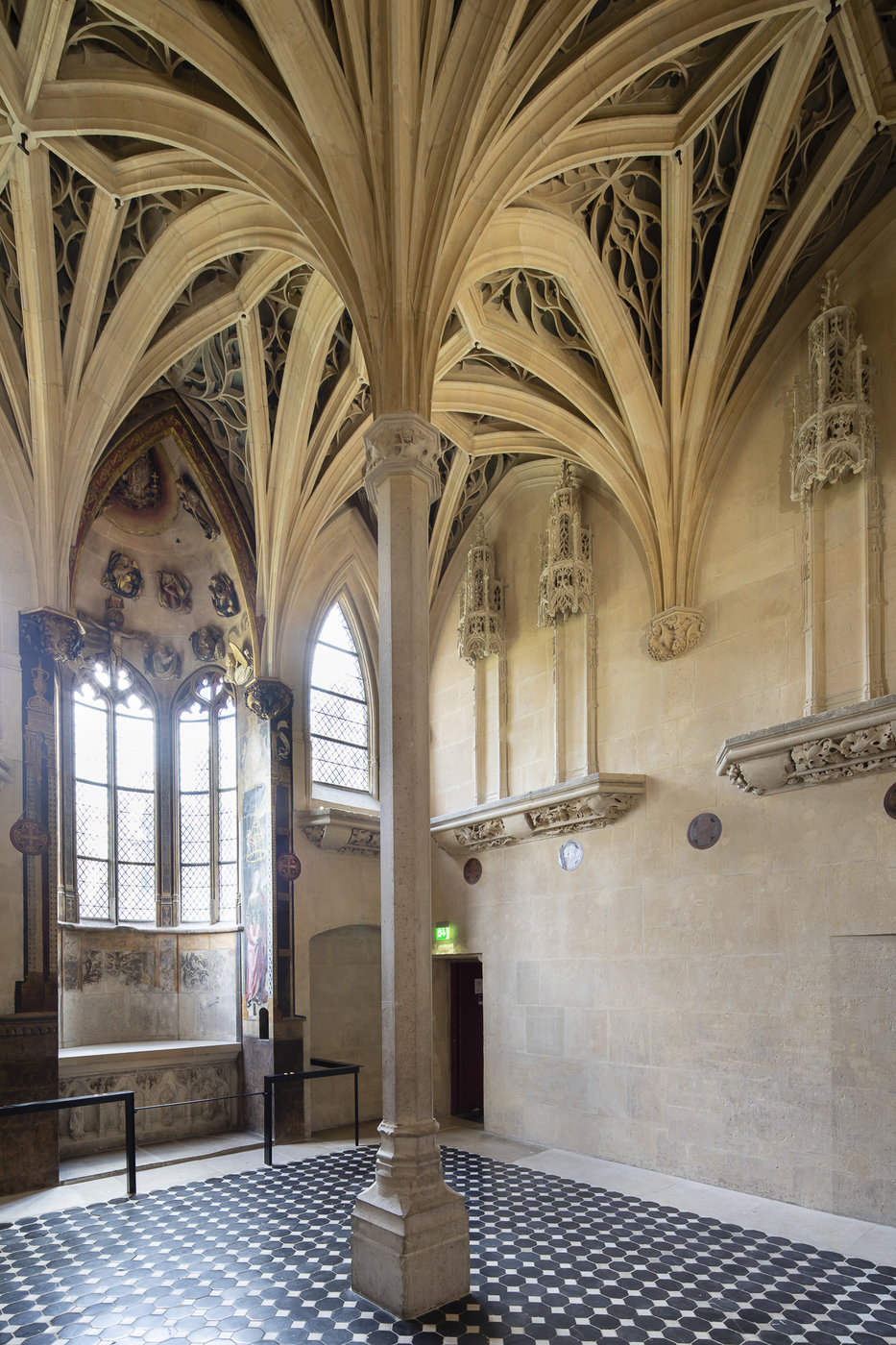
Room 16, Chapel of the Hôtel de Cluny © Alexis Paoli / OPPIC
A masterpiece of flamboyant Gothic architecture
The Abbots' chapel is one of the most fascinating spaces in the mediaeval residence of the Abbots of Cluny. It was completely restored in 2016.
The chapel was built at the end of the 15th century and has an almost square footprint. It features a dense network of ribs radiating from its single central pillar arranged into four rib vaults. Its rich sculpted decor is embellished with cabbage leaf and plant motifs, and an unusual bestiary. The restorations have revealed the full intensity of the deep blue of the vault on the ceiling.
Floor area: 45 m²
The area is open to visitors; filming is possible outside the museum opening hours.
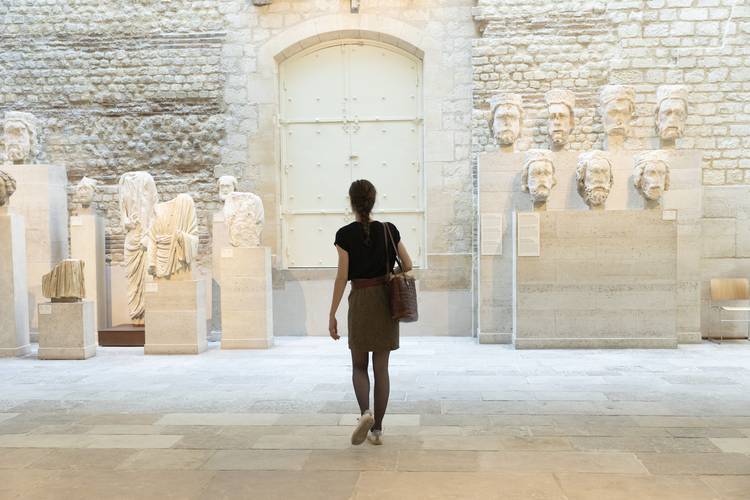
Room 5, The sculptures of Notre-Dame de Paris © Élisa Haberer / musée de Cluny - musée national du Moyen Âge
The ambience of Notre-Dame de Paris
The bright 170 m² Notre-Dame room has a mineral feel and is entirely dedicated to the Parisian cathedral.
It is filled with sculptures that as captivating as they are expressive, providing a striking insight into the early developments of Gothic art.
The area is open to visitors; filming is possible outside the museum opening hours.
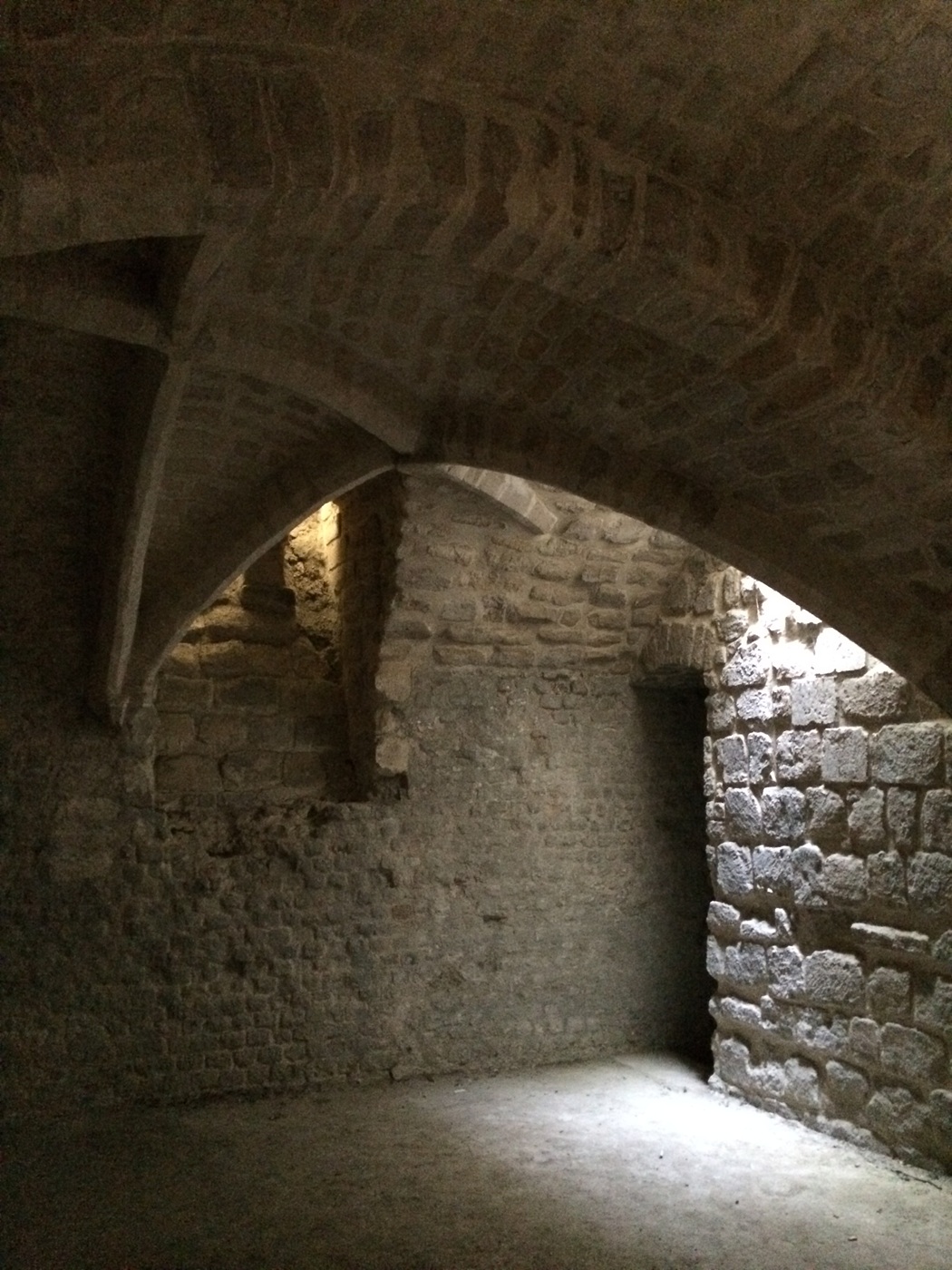
The cellar of an old Gothic house © musée de Cluny - musée national du Moyen Âge
A "Gothic" cellar
The Gothic cellar is a partially underground, small vaulted room beneath the Roman baths that's dimly lit by two ventilation openings. The beaten-earth floor, the minimalist decor, and its atmosphere give it a striking identity and allow for flexible layouts. The opening to the garden along Boulevard Saint-Michel and the presence of several blind entrances also spark the imagination.
The Gothic cellar connects to the underground passages of the Roman baths.
The area is not open to visitors; filming is possible (subject to conditions) even during the museum's opening hours.
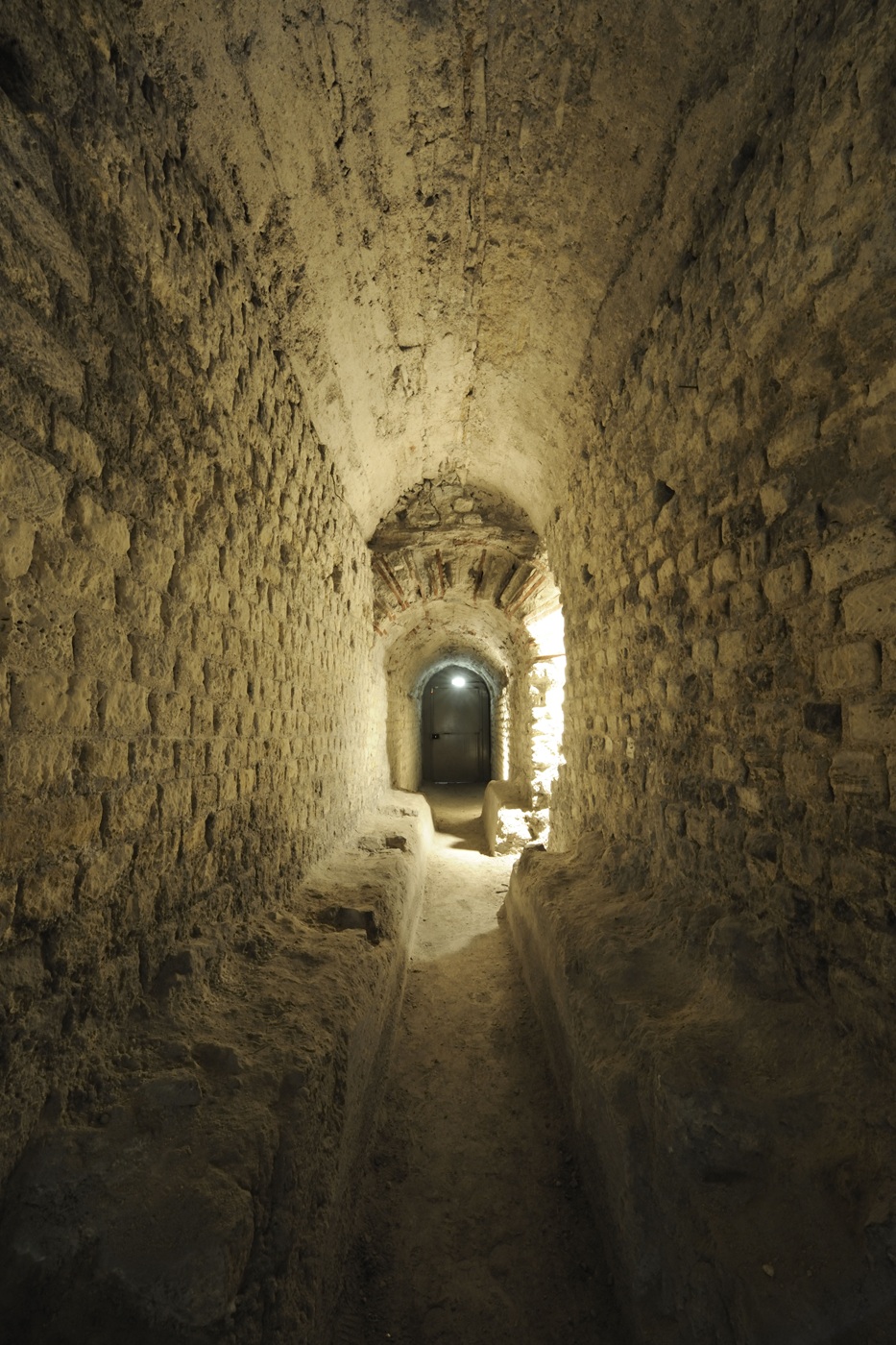
Corridor in the underground passages of the ancient baths © GrandPalaisRmn / René-Gabriel Ojeda
A network of underground passages
Beneath the ancient Roman baths lies a gallery of underground passages that were once used for technical purposes. With walls alternating between brick and small stone block masonry, a Gallo-Roman cement vault, and a beaten-earth floor, these interconnected blind corridors create a mysterious labyrinth that sparks the imagination.
They communicate with the Gothic cellar.
The area is not open to visitors; filming is possible (subject to conditions) even during the museum's opening hours.