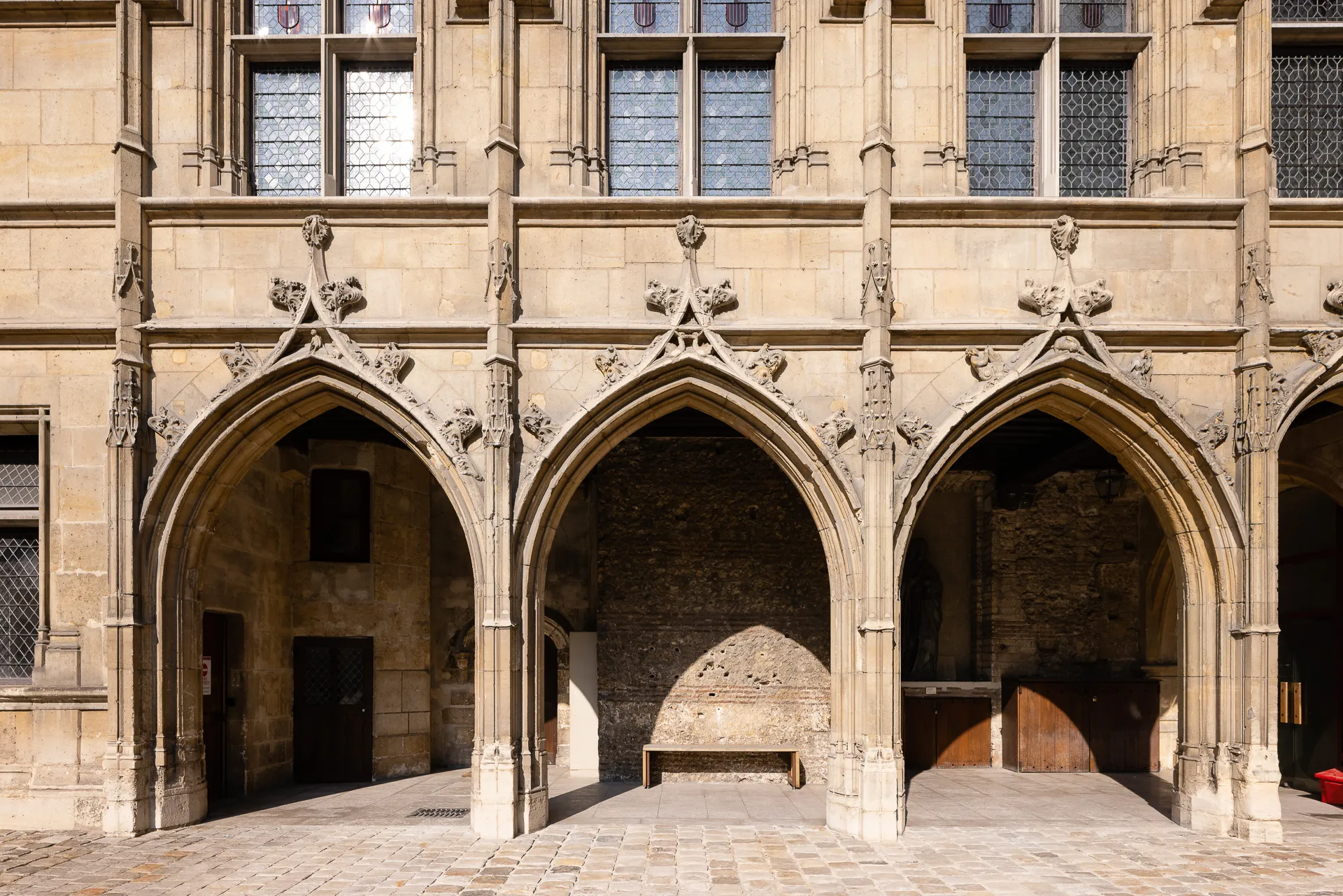
Une façade de l'hôtel médiéval côté cour. © Alexis Paoli / OPPIC
The creation of the Musée de Cluny
Opened in 1844, the Musée de Cluny is one of the oldest museums in Paris. Established around two collections – one private and the other public – the museum evolved throughout the 19th and 20th centuries until it became the National Museum of the Middle Ages.
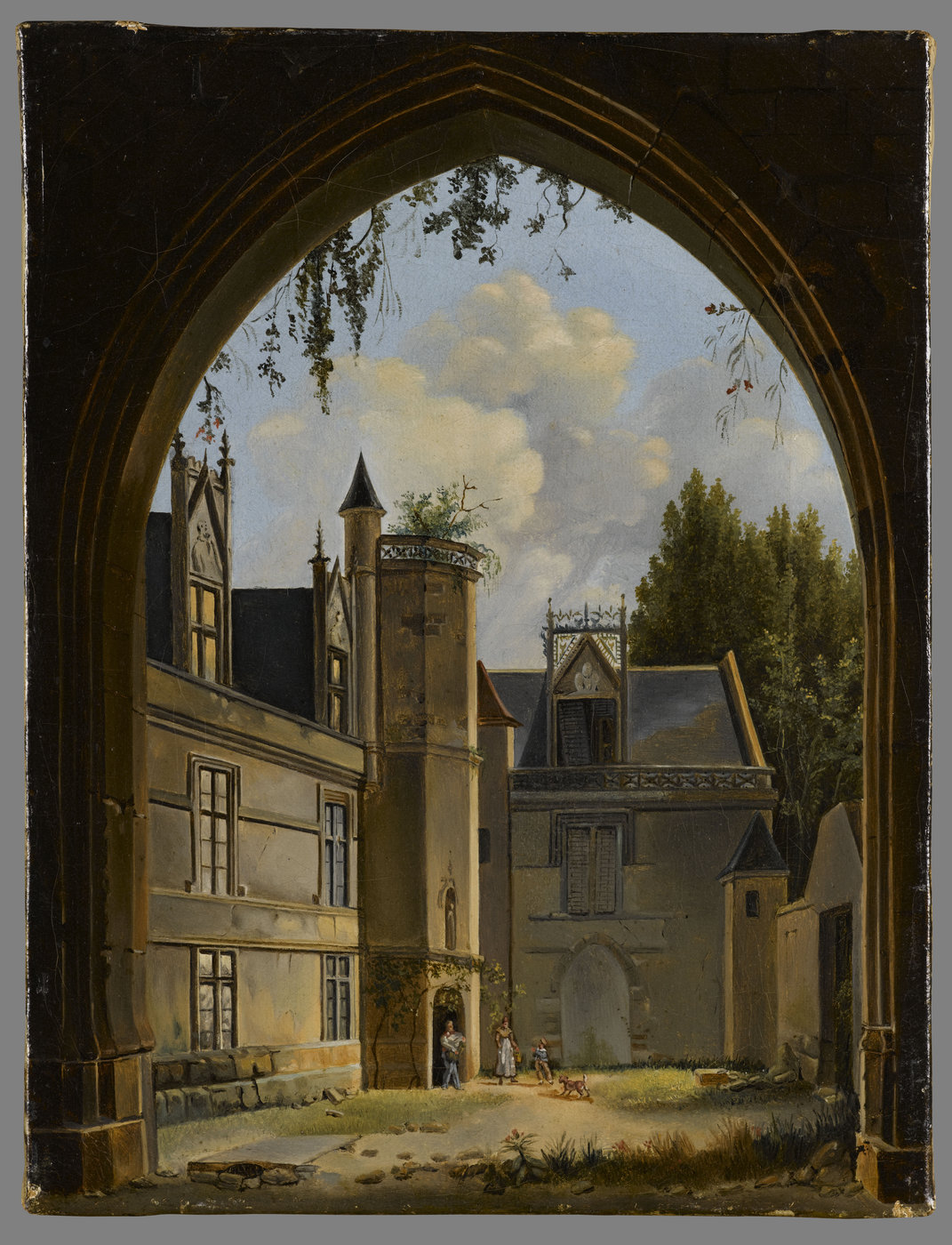
View of the courtyard of the Hôtel de Cluny, Cl. 23879 © GrandPalaisRmn / Stéphane Marechalle
From Hôtel to museum
During the Revolution, the residence of the Abbots of Cluny, made up of Gallo-Roman remains and a mediaeval Hôtel, was nationalised. The site was broken up and sold to private individuals. Consequently, the Hôtel was turned into rental accommodation, while the "frigidarium" of the Roman baths was used as a storage area. However, in the 1830s, its historical significance attracted considerable attention.
In 1838, the City of Paris acquired the "frigidarium", which became the city's stonework repository, housing sculptures removed from Parisian buildings.
In 1833, the collector Alexandre Du Sommerard rented a six-room apartment in the mediaeval Hôtel. He installed his collection of ancient art in a setting that complemented their nature.
After his death, the State acquired the Hôtel de Cluny in 1843, along with approximately 1,500 objects collected by Alexandre Du Sommerard. In the same year, the City of Paris transferred ownership of the Gallo-Roman baths and the stonework repository they contained to the State, including the Pillar of the Boatmen. The Musée de Cluny opened to the public a year later. When it was inaugurated on 17 March 1844, 12,000 visitors flocked to see it.
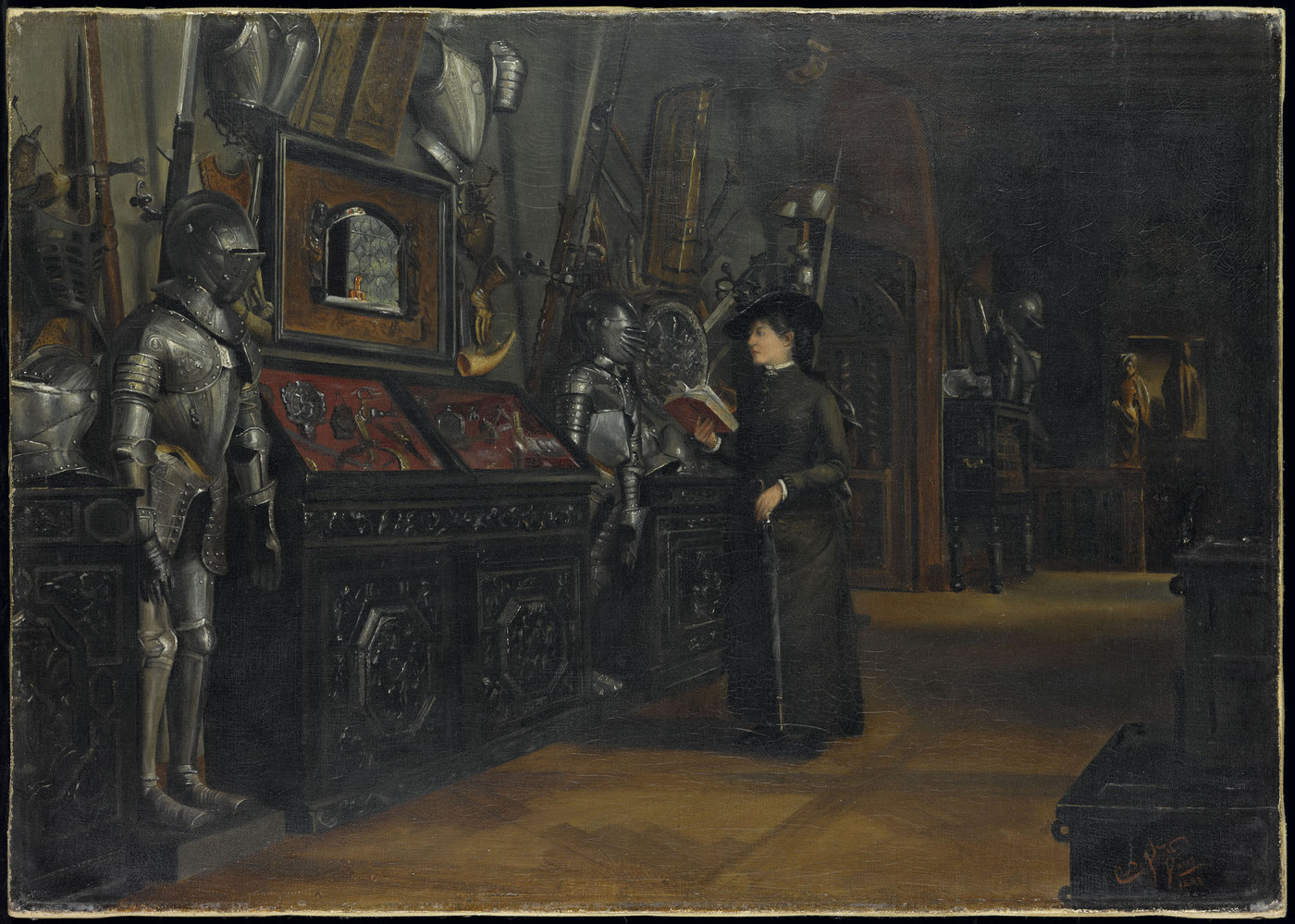
The arms gallery at the Musée de Cluny, Cl. 23882 © GrandPalaisRmn / Michel Urtado
The Museum of Historical Monuments
The museum was then placed under the supervision of the Commission of Historical Monuments, which was located in the mediaeval Hôtel. It covers the history of the arts from Antiquity to the Renaissance. As the museum of the Commission, it benefited from significant contributions of monumental sculptures, such as the Apostles and the stained glass of the Sainte-Chapelle.
Edmond Du Sommerard, the son of Alexandre, was entrusted with managing it. For forty years, he significantly added to the collection and made several major acquisitions, including the Golden Rose and the Altar Frontal from the treasure of Basel Cathedral, the tapestry of The Lady and the Unicorn, and the Guarrazar Crowns.
When he died in 1885, the collection included almost 11,000 objects. The nature of the museum changed under Edmond Du Sommerard: the chronological period of the collections was broadened, the presentation became clearer and more rigorous in its scientific approach, and the first catalogue was published.
In 1907, the museum left the Commission of Historical Monuments to be placed under the administrative body overseeing museums. It was then included in the list of national museums.
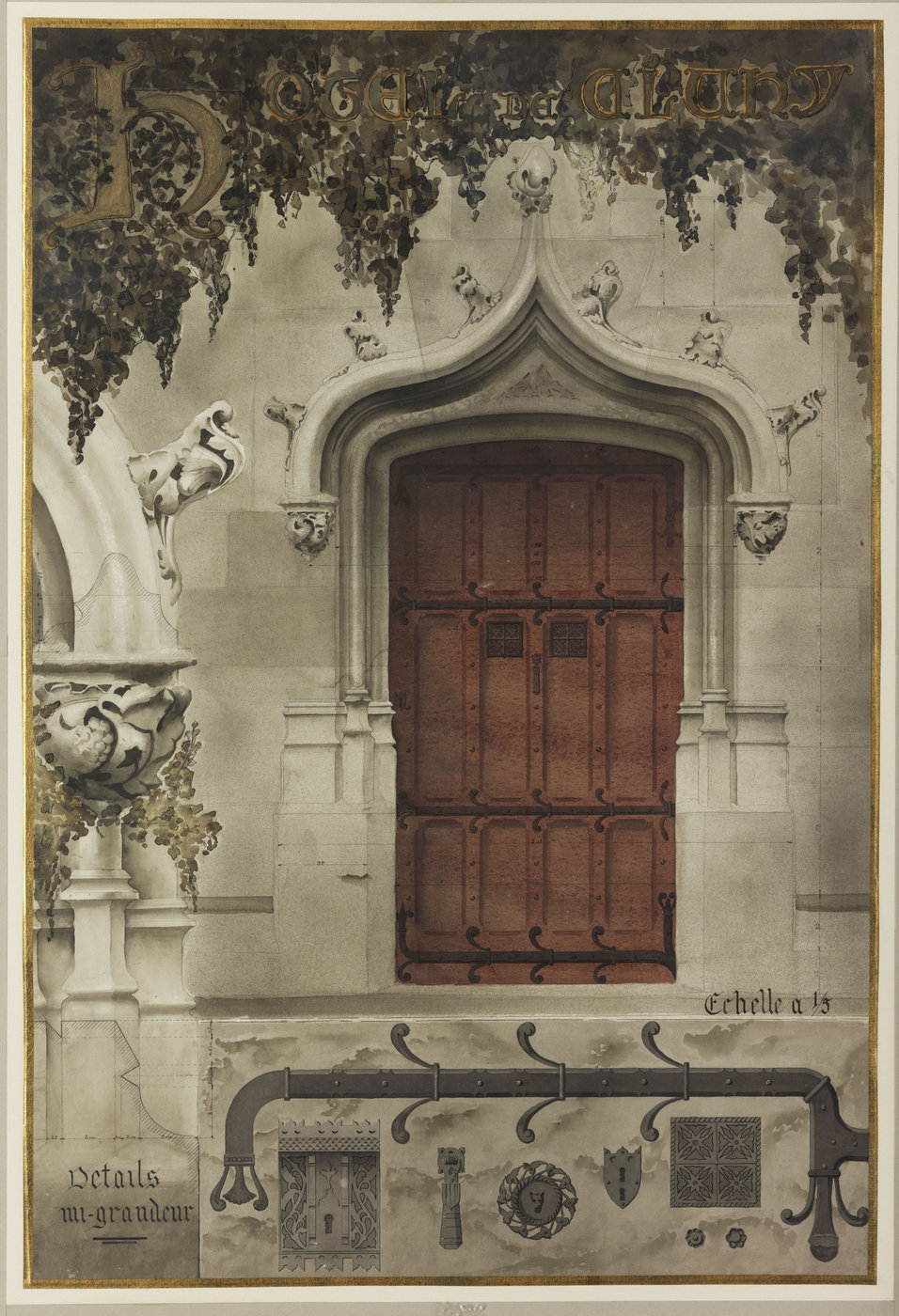
Door of the Hôtel de Cluny, Cl. 23887 © GrandPalaisRmn / Michel Urtado
An architectural gem to showcase
From the 1st third of the 19th century, the architectural quality of the site, integrating the remains of the Gallo-Roman baths and one of the very rare examples of mediaeval civil residences in Paris, prompted reflection about how to showcase it.
At that time, the mediaeval Hotêl was in poor condition due to lack of maintenance. As for the Roman baths, although their continuous use since the Middle Ages contributed to their preservation, they experienced various forms of deterioration over time. In 1737, part of the vaults collapsed. Archaeological studies and reports were conducted during the 19th century. When the railway lines were being dug in the 1850s, Théodore Vacquer conducted archaeological excavations that provided a clearer understanding of how the Gallo-Roman city was organised.
Nestled within a dense urban landscape, the site was gradually cleared to free the monument from unnecessary surrounding structures that obscured the view or altered it. The around it houses were destroyed, and this trend continued until 1871. As early as 1846, the mediaeval Hôtel was listed as a historic monument. The "frigidarium" followed in 1862.
The remains of the Roman baths and the mediaeval Hôtel were also restored. Between 1843 and 1861, the architect Albert Lenoir reconstructed the northern gable of the chapel using numerous salvaged materials after demolition of the buildings in the quarter that were destroyed when the boulevards were opened up.
Between 1866 and 1883, the museum was extended with the construction of a new building to the west of the site, designed by architect Paul Boeswillwald. He was also responsible for the interior fittings, particularly those intended to enable the Lady and the Unicorn tapestries to be displayed.
To learn more about the founding figures of the museum, you can visit the dedicated page.