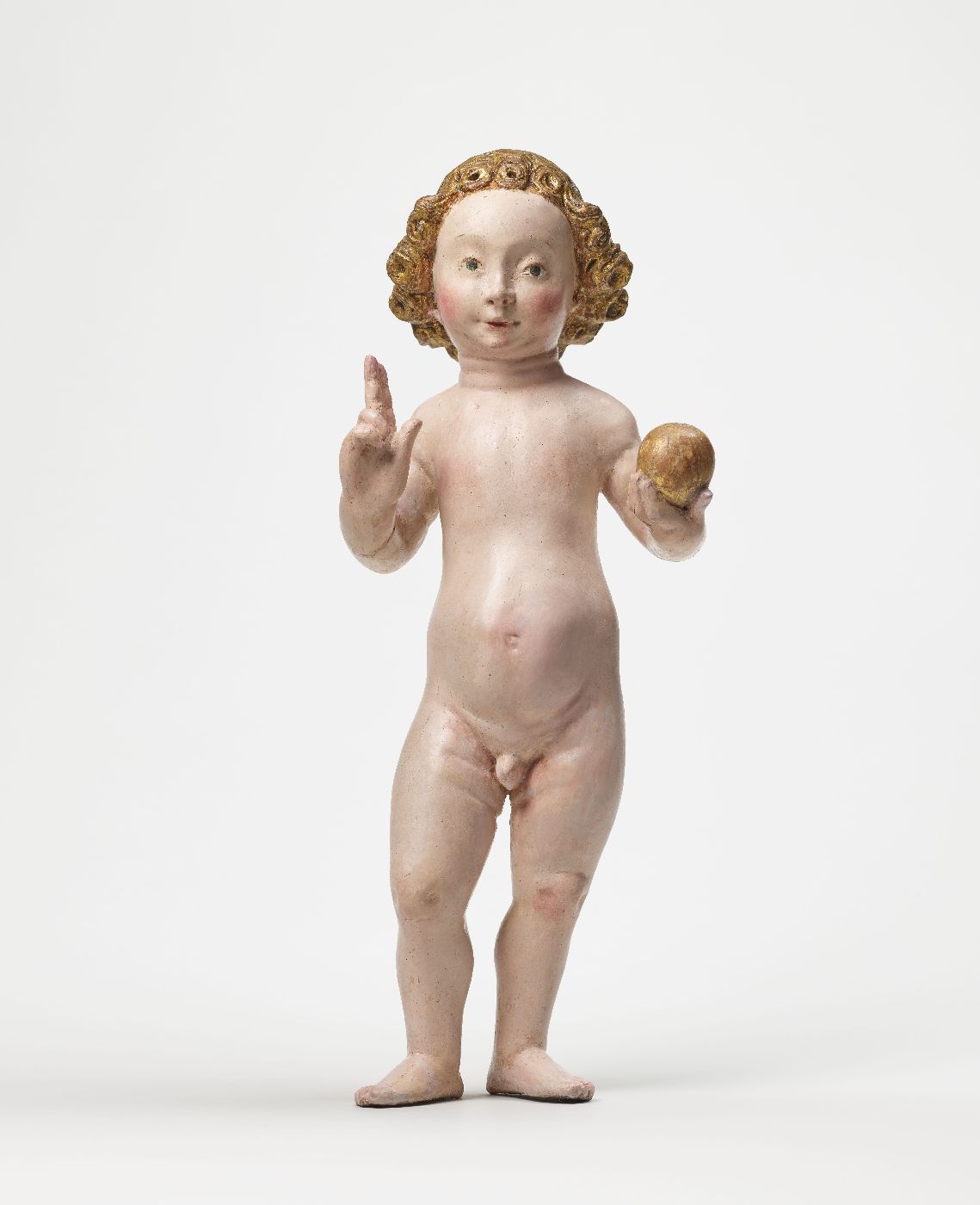
The Christ Child, Cl. 23936 © GrandPalaisRmn / Michel Urtado
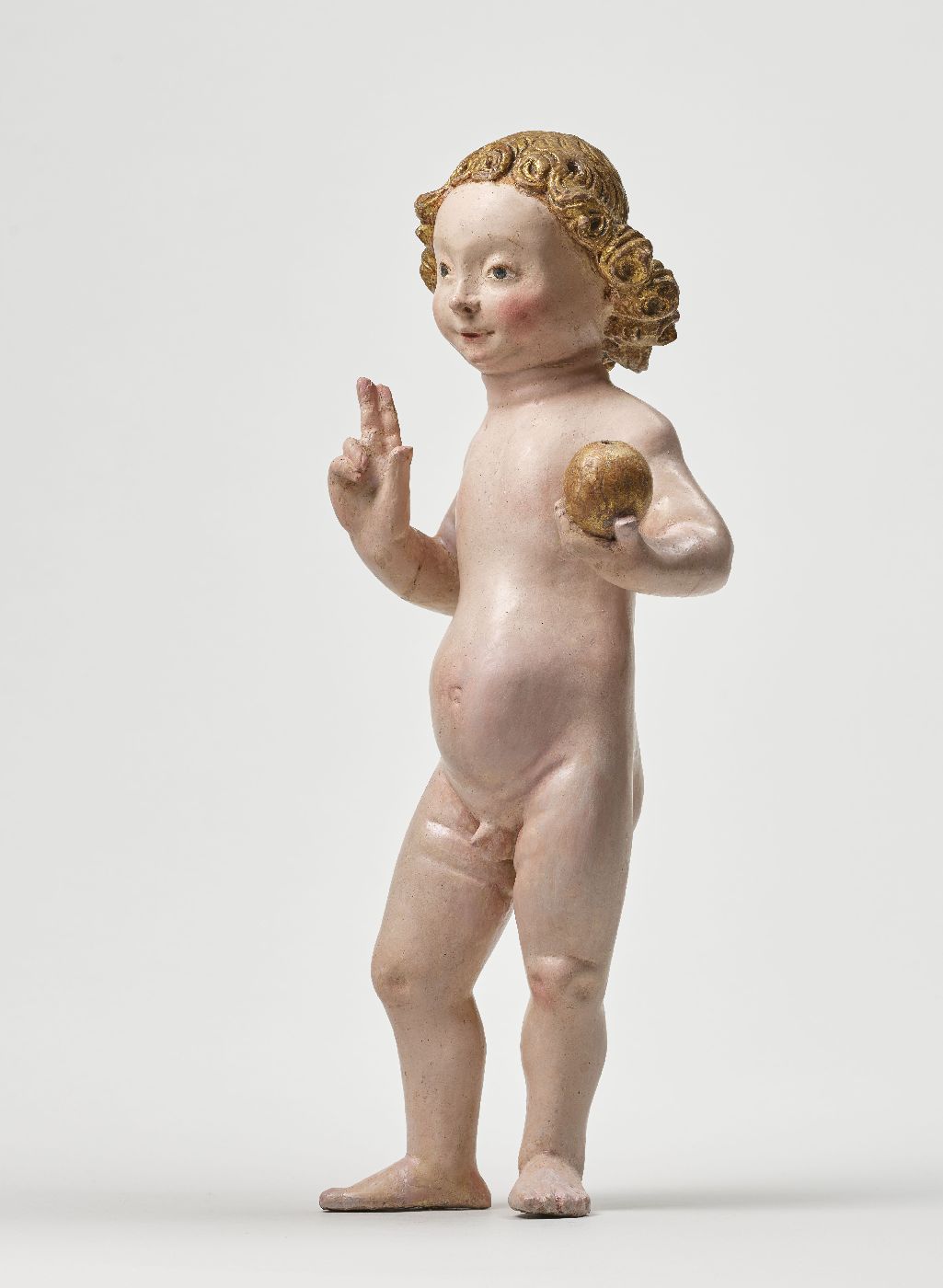
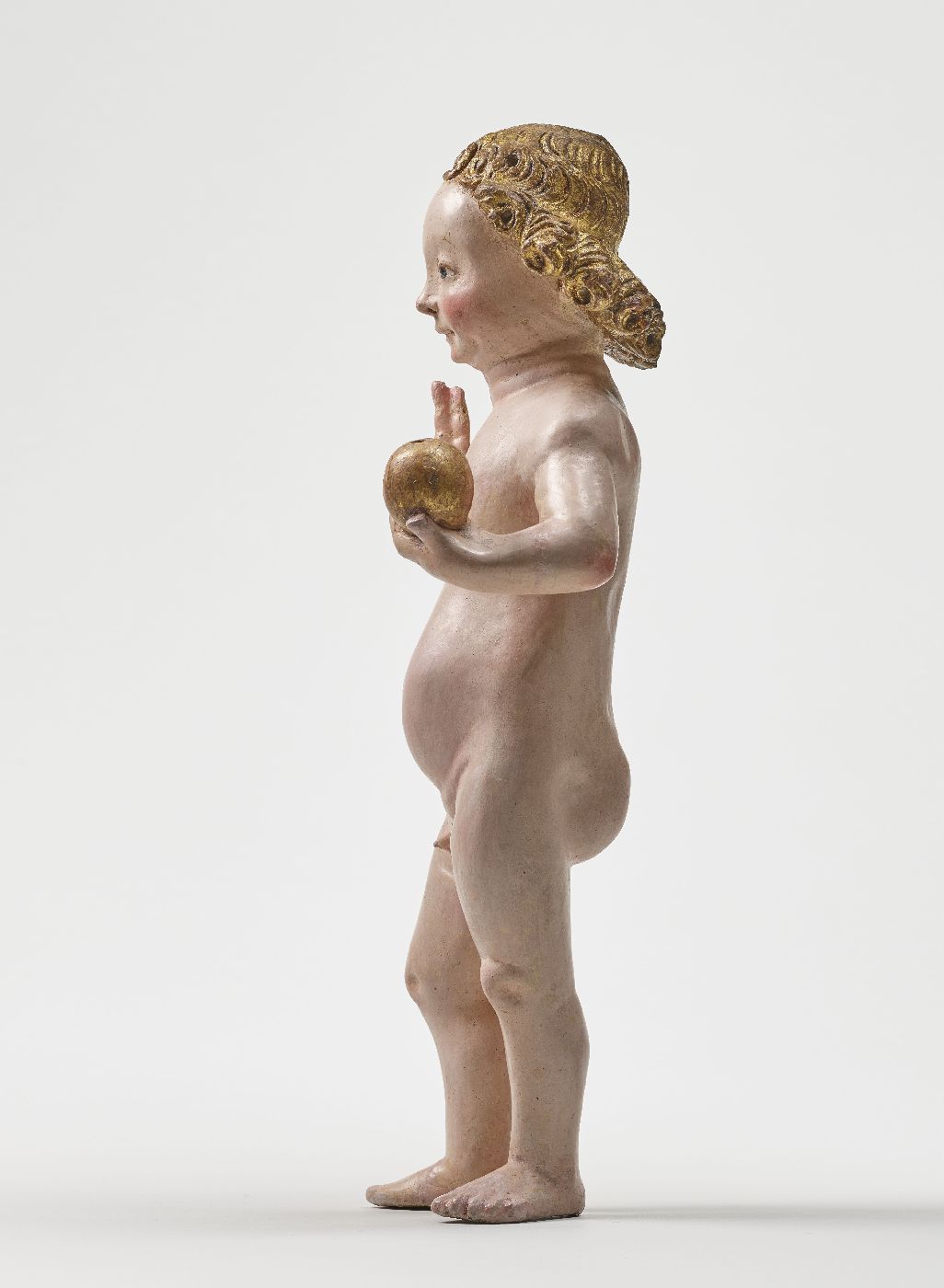
The Christ Child
Description
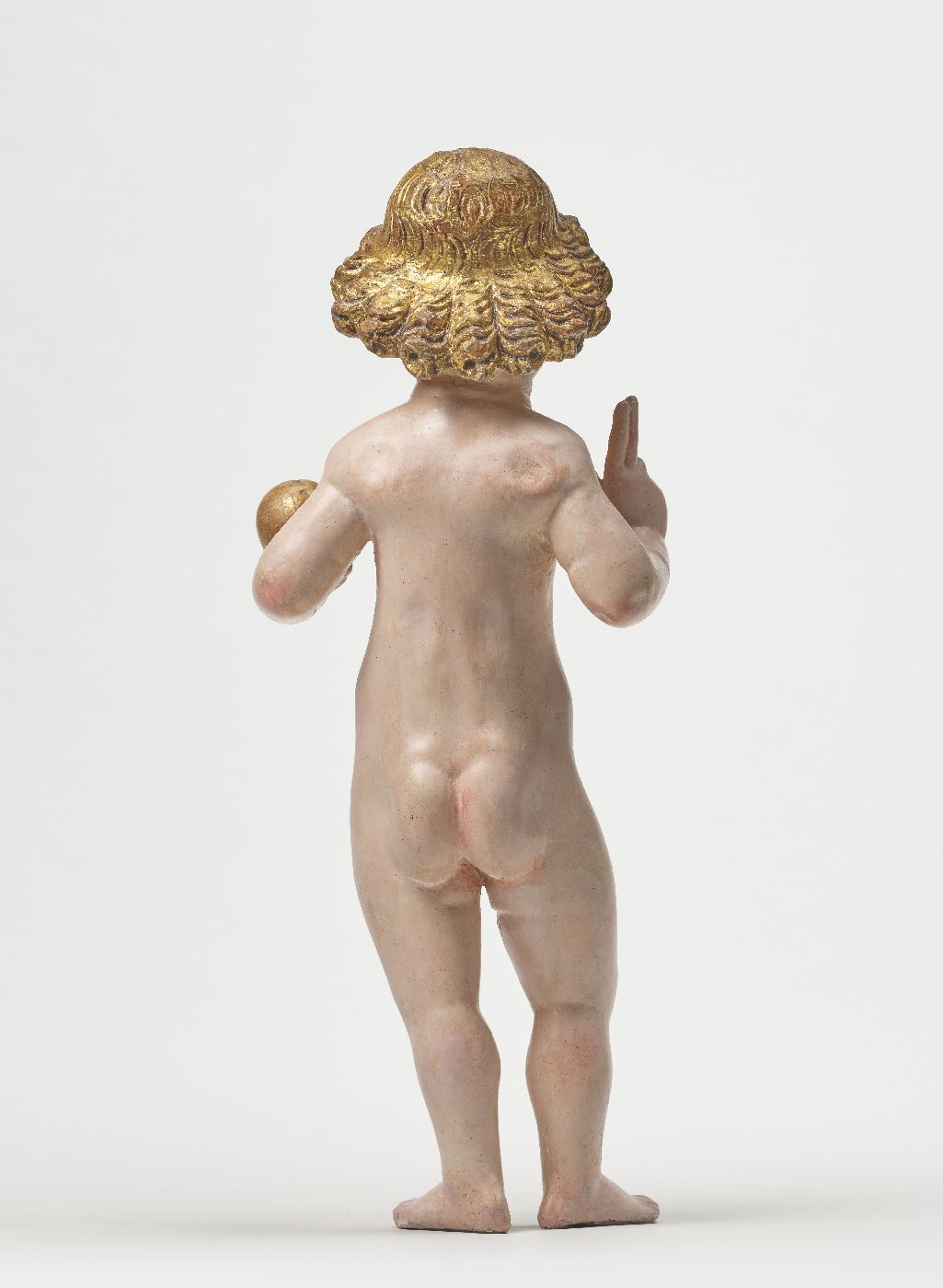
This Christ is depicted as a smiling child with a chubby body, standing in a welcoming pose.
The sculpture depicts the dual nature of Christ: human and divine. Complete nakedness reflects the human nature of the Son. However, the gesture of blessing given with his right hand and the globe he holds in his left serve to remind us of his divine nature as the Saviour of the world (Salvator Mundi).
Images and statuettes of the Christ child in Salvator Mundi were common around the year 1500. They responded to new forms of devotion that were more incarnate and personal. These representations served as aids for meditation and prayer in a private setting. They were valued both by laypeople and in convents, where devotional practices that favour smaller formats and objects that could be handled were evolving. This small figurine, which could be handled, dressed or even cradled, was part of these "modern" practices.
The greatest sculptors working in the southern part of the Empire created variations with great virtuosity on this theme. Less prestigious production developed at the beginning of the 16th century in the Brabant city of Mechelen, in the wake of the Brussels sculpture of the late 15th century.
Both in terms of its style and the technical aspects of its production, this Christ Child belongs to that produced in Mechelen.
| Inventory number | Cl. 23936 |
|---|---|
| Height | 32,5 cm |
| Place of production | Mechelen (Brabant) |
| Medium | Sculpture ; Wood |
| Method of acquisition | Acquired in 2020 |