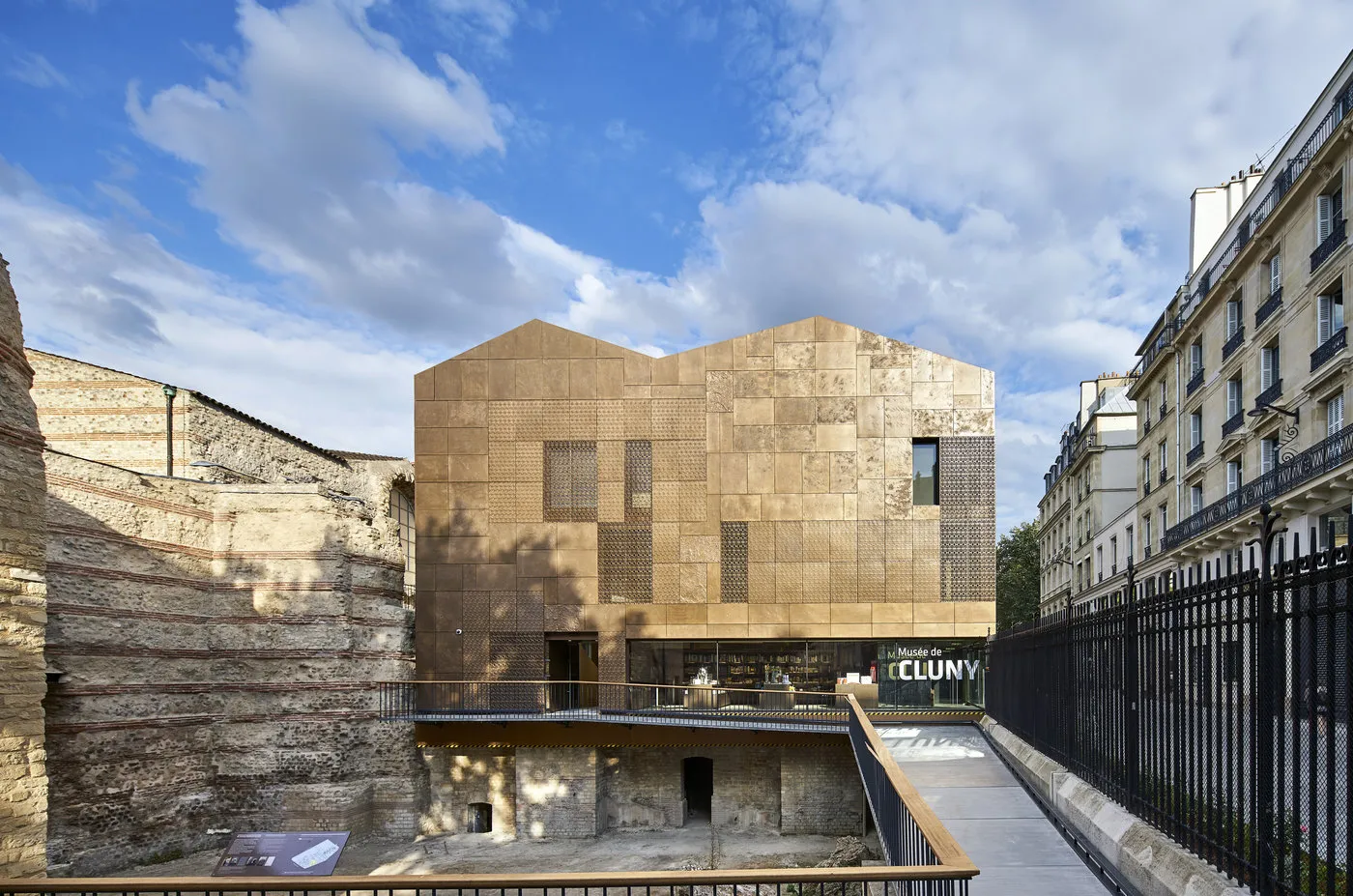
New entrance building of the Musée de Cluny, west façade © M. Denancé / musée de Cluny - musée national du Moyen Âge
A museum for tomorrow
One of the oldest museums in Paris, the National Museum of the Middle Ages is also looking to the future. An extensive modernisation project, carried out between 2015 and 2022, redesigned the visitor experience from start to finish to meet the expected standards of a museum in the 21st century.
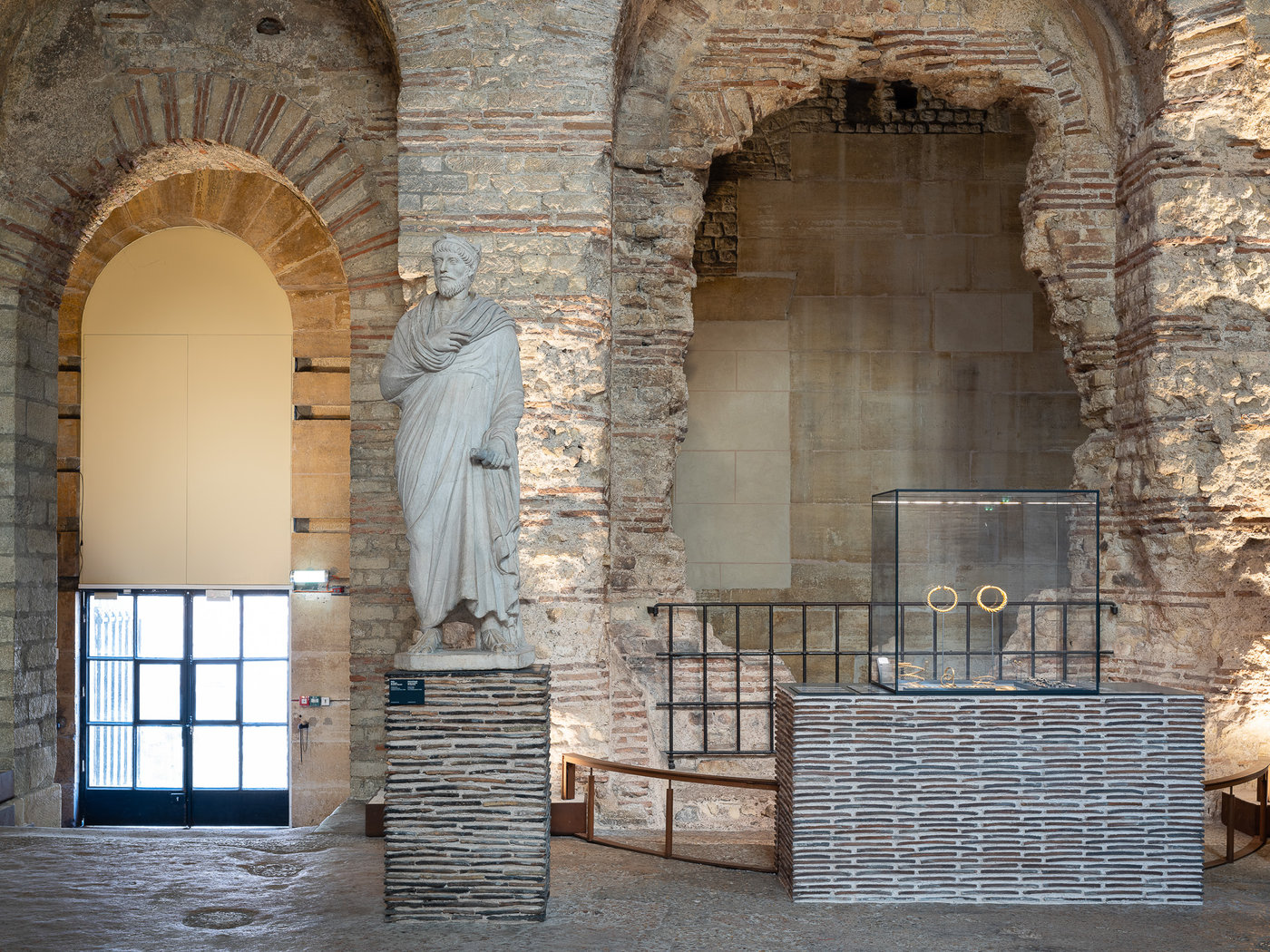
Room 1, Frigidarium © Alexis Paoli / OPPIC
The work was undertaken with the visitors of today and those of the future in mind. The primary objective was to ensure physical accessibility, which not only meets legal requirements but also allows individuals with reduced mobility to explore the collections in the best conditions. Younger visitors will appreciate the new educational spaces dedicated to workshops, and everyone can enjoy the magnificent courtyard of the mediaeval Hôtel in peace and quiet thanks to the "Café des Amis".
The ancient and mediaeval heritage restored
From 2009, the restoration of the plasterwork and facing inside the "frigidarium" took the walls back to their original shade of pink, creating real harmony with this magnificent space that was the Roman public baths.
This first stage was completed in 2015 during the museum's modernisation project. The external remains of the Roman baths, along with the areas referred to as the Roman annex and the plaster room, underwent consolidation that was completed in December 2017.
At the same time, work was carried out under the direction of Paul Barnoud, the Chief Architect of Historic Monuments, to consolidate the northern gable of the chapel. They restored the east and north facades (including the spiral staircase leading to the garden, which is currently still closed to the public).
Inside, the sculptures and wall decorations were very dirty. They have been carefully cleaned, revealing their original polychromy. In particular, the painted decorations, which represent a rare example of Parisian mural painting from the 1500s, reveal their full splendour. As for the vault, blue-green polychromy was revealed on the surface of the panels between the ribs, similar to the decorations of the staircase tower, which had been assumed to be brown-black due to the accumulation of dirt.
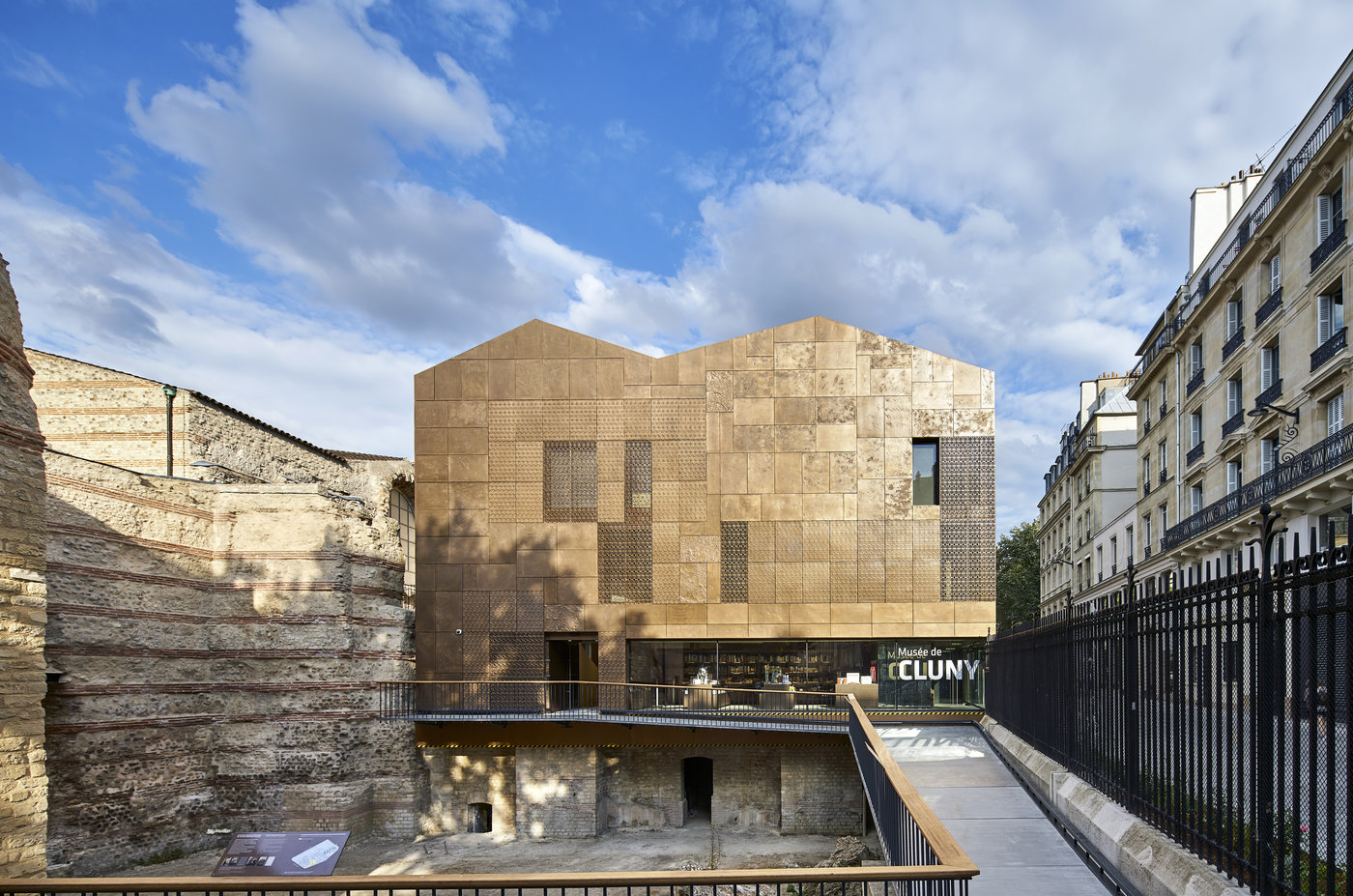
New entrance building of the Musée de Cluny, west façade © M. Denancé / musée de Cluny - musée national du Moyen Âge
A fully accessible museum
The museum, a true architectural millefeuille, sometimes looked like a labyrinth full of obstacles. The many stairs and changes in level made it impossible for people with reduced mobility to access the building. The modernisation work carried out in two phases resolved the access issues without altering the site or affecting the visitor experience.
Firstly, an extension was inaugurated in 2018, designed by architect Bernard Desmoulin. As an anchor building, it connects the various levels of the ancient, mediaeval, and 19th-century buildings.
In addition, the installation of ramps and lifts enables differences in levels between buildings to be overcome. In the cobbled courtyard of the mediaeval hotel, a path for wheelchairs and strollers has also been created by levelling the cobbles, to make the site fully accessible.
A building that blends into the background
In keeping with the principle of minimal impact, the new museum reception building features a simple design, with its gables echoing the pattern of the ancient elevations. The facades are covered with panels of cast aluminium featuring irregular dimensions and textures that reflect the light, creating variations in colour throughout the day.
The broad expanses of metallic lace motifs take on a pattern found in the intricately-sculpted stone of the flamboyant Gothic chapel of the mediaeval Hôtel, creating a direct reflection of the site's history. These motifs reflect a filtered, graphic light inside the building, made of wood and concrete… Two materials reminiscent of the ancient Roman baths and the mediaeval Hôtel.
Designed to echo the existing buildings but without looking to be an architectural pastiche, this new reception is, in the eyes of its architect Bernard Desmoulin, "like a ring on the finger, it shows passers-by the new vitality of a museum continuing the beautiful idea of a Roman city building on itself".
Built on an archaeological repository, the building has been entirely designed to be reversible and is supported by a series of micropiles that pass through the ancient masonry without causing any damage.
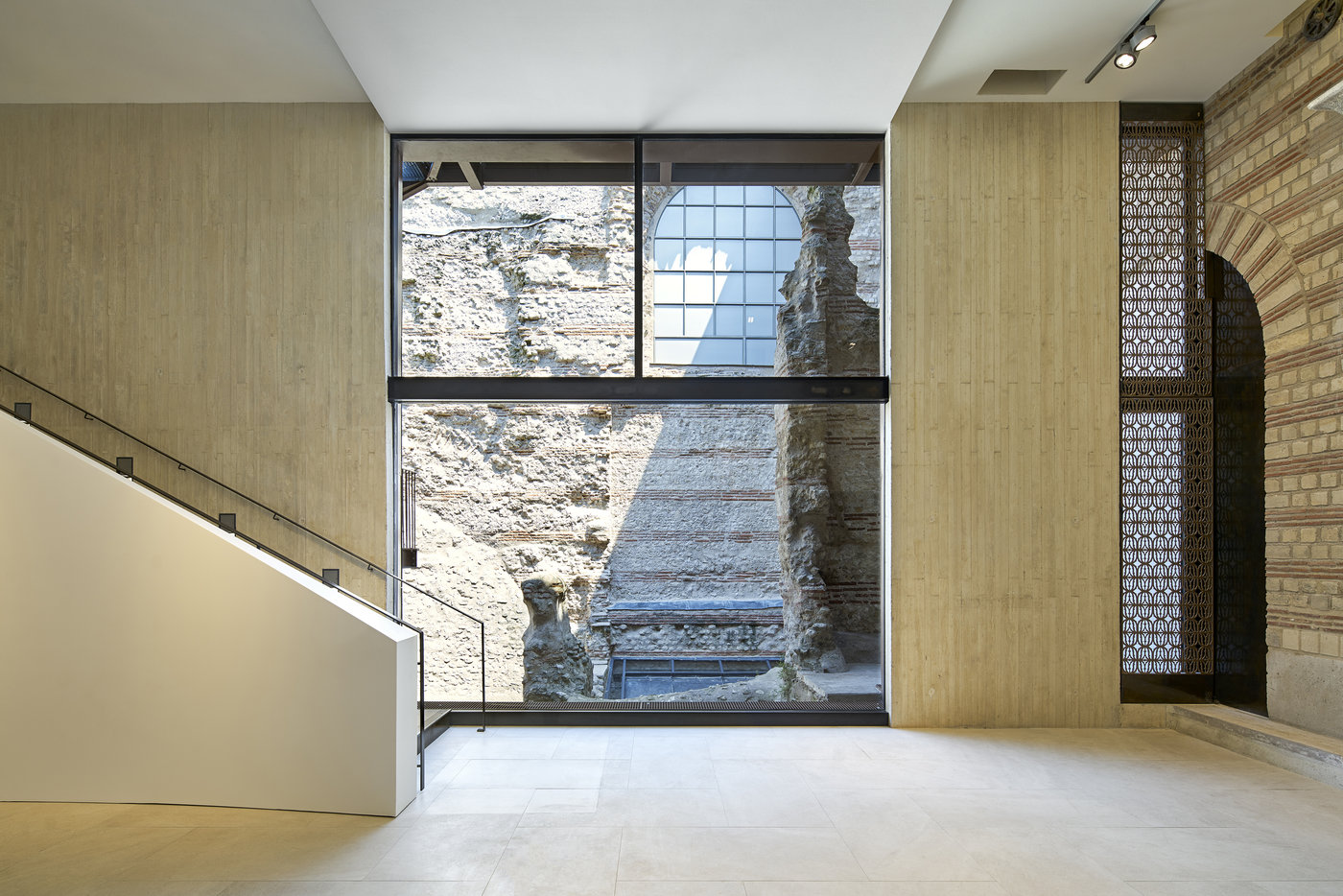
New entrance building of the Musée de Cluny, ground floor and staircase © M. Denancé / musée de Cluny - musée national du Moyen Âge
Light-filled museography
The redesign of the museography was entrusted to the Adrien Gardère studio and the architect Bernard Desmoulin. By removing some modern partitions and unblocking the windows to the outside, the museography allows light to stream into the Hôtel des Abbés de Cluny again. This approach also gives a fresh resonance to the collections, while helping visitors to know where they are in the space more easily.
By choosing neutral colours and carefully considered lighting on the artworks, the contemporary furniture subtly fades into the background. Visitors are encouraged to move around certain pieces, thanks to devices that enable them to be viewed from all angles.
From Gallo-Roman Antiquity to the dawn of the Renaissance, the Musée de Cluny invites you to go on a journey through 1500 years of history. The chronological tour highlights the evolution of this long period, making it possible to move through History while going from one room to another.
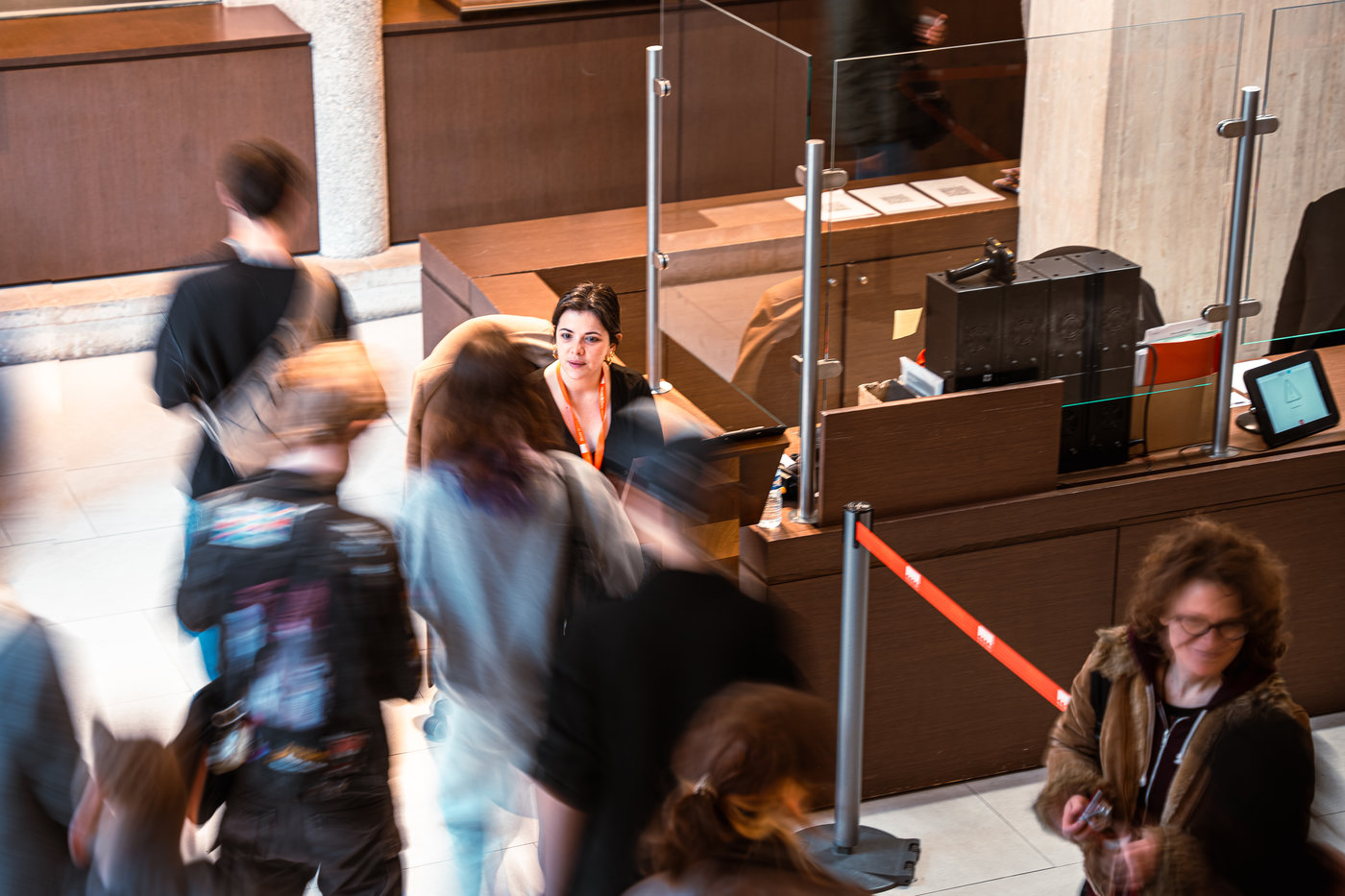
Visitors at the museum reception desk © Agence LE MENU–Arthur M.Burt / musée de Cluny – musée national du Moyen Âge
Services at the heart of the museum
The extension opened in 2018 also improved the reception areas, with a new area to buy tickets and a more spacious shop and bookstore. It also includes areas designed to support the museum in fulfilling its missions: management facilities for the works, educational spaces, and a room for temporary exhibitions.
Thanks to the modernisation project, visitors can now enjoy redesigned areas to take a break in. The shop and bookstore has been updated, and a café serves light refreshments. On sunny days, its terrace extends out into the courtyard of the mediaeval Hôtel, to spend a moment where time stands still. The creation of this café was possible thanks to the support of the Friends of the Musée de Cluny, and the concession was awarded to La Table de Cana.