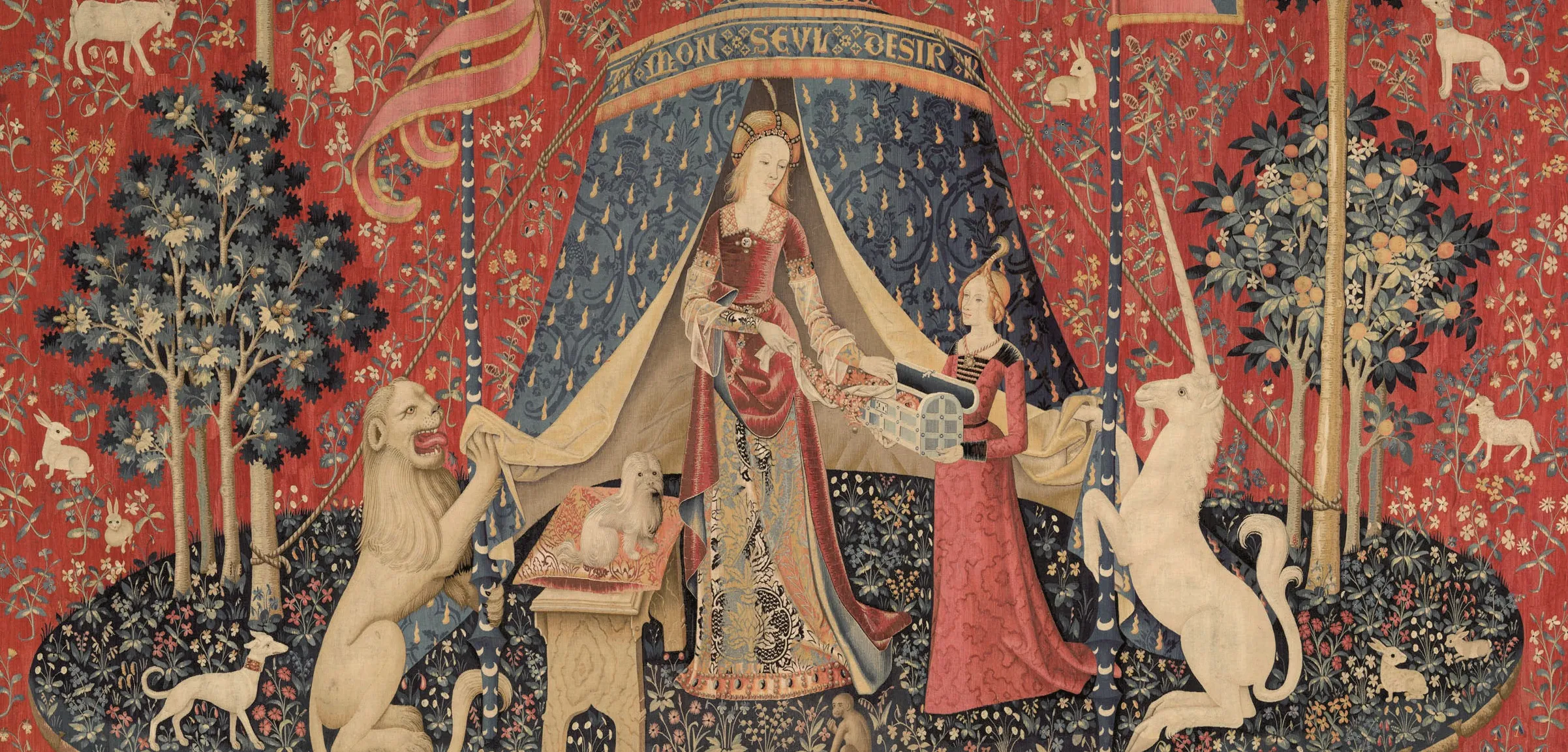
La Dame à la licorne, Mon seul désir, Cl. 10834 © GrandPalaisRmn / Michel Urtado
Eight questions to understand the museum
If you have any questions about the museum and its history, we have the answers! In eight points, we offer you a better understanding of what the Musée de Cluny is.
What do you find at the Musée de Cluny? And what do you not find there? Why and according to which criteria? Why is the Musée de Cluny situated in the heart of Paris, and what does the term 'National Museum of the Middle Ages' cover?
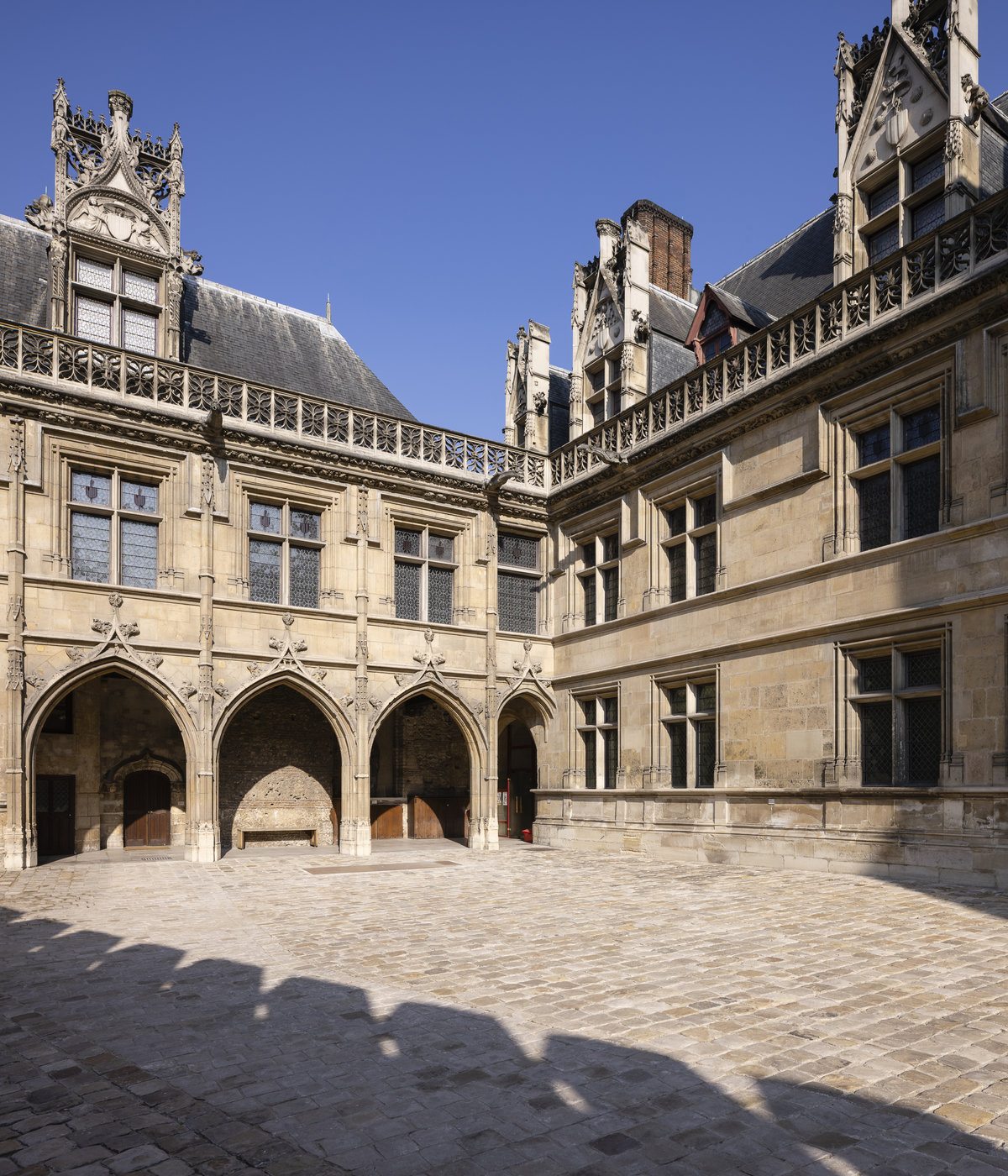
Exterior view of the Hôtel des Abbés de Cluny © Alexis Paoli / OPPIC
1. The Musée de Cluny, a castle in the heart of Paris?
A mediaeval monument surrounded by a crenellated wall… With such a description, who wouldn't think of a fortified castle?
And yet, the museum site has never been a castle. At the end of the Middle Ages, it was the Parisian residence of the powerful abbot of Cluny. This religious leader, at the helm of one of the most famous abbeys of the mediaeval world, has an elegant private mansion built between a courtyard and a garden. So it is nothing like the massive castles, which had in any case gone out of style at the end of the 15th century. As for the gargoyles, they are not original; they were only added in the 19th century.
To learn more about the site’s history, visit our "Locations and Collections" pages. They go over the various monuments that make up the Musée de Cluny today, from the ancient Roman baths in Lutetia to the extension inaugurated in 2018, via the Hôtel de Cluny.
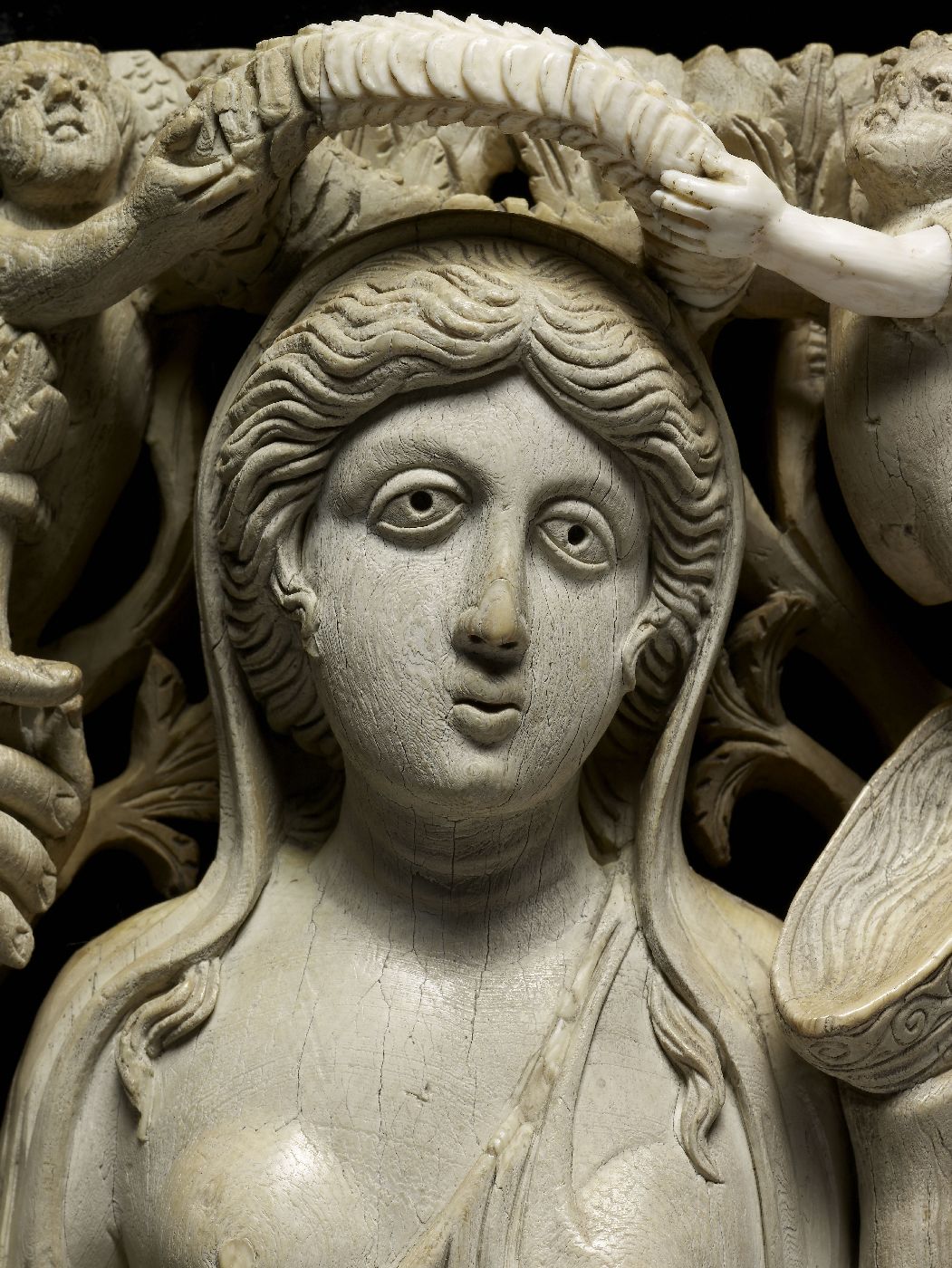
Ariadne, Cl. 455 (detail) © GrandPalaisRmn / Thierry Ollivier
2. What is on display at the Musée de Cluny?
The Musée de Cluny, situated on an ancient and mediaeval site, features collections that reflect the same periods: the end of Gallo-Roman antiquity and the Middle Ages. It therefore covers more than 1000 years of history, from the 2nd century BC to the beginning of the 16th century.
A museum is a place where collections are preserved and exhibited. The pieces presented are therefore originals, of which there is often only one.
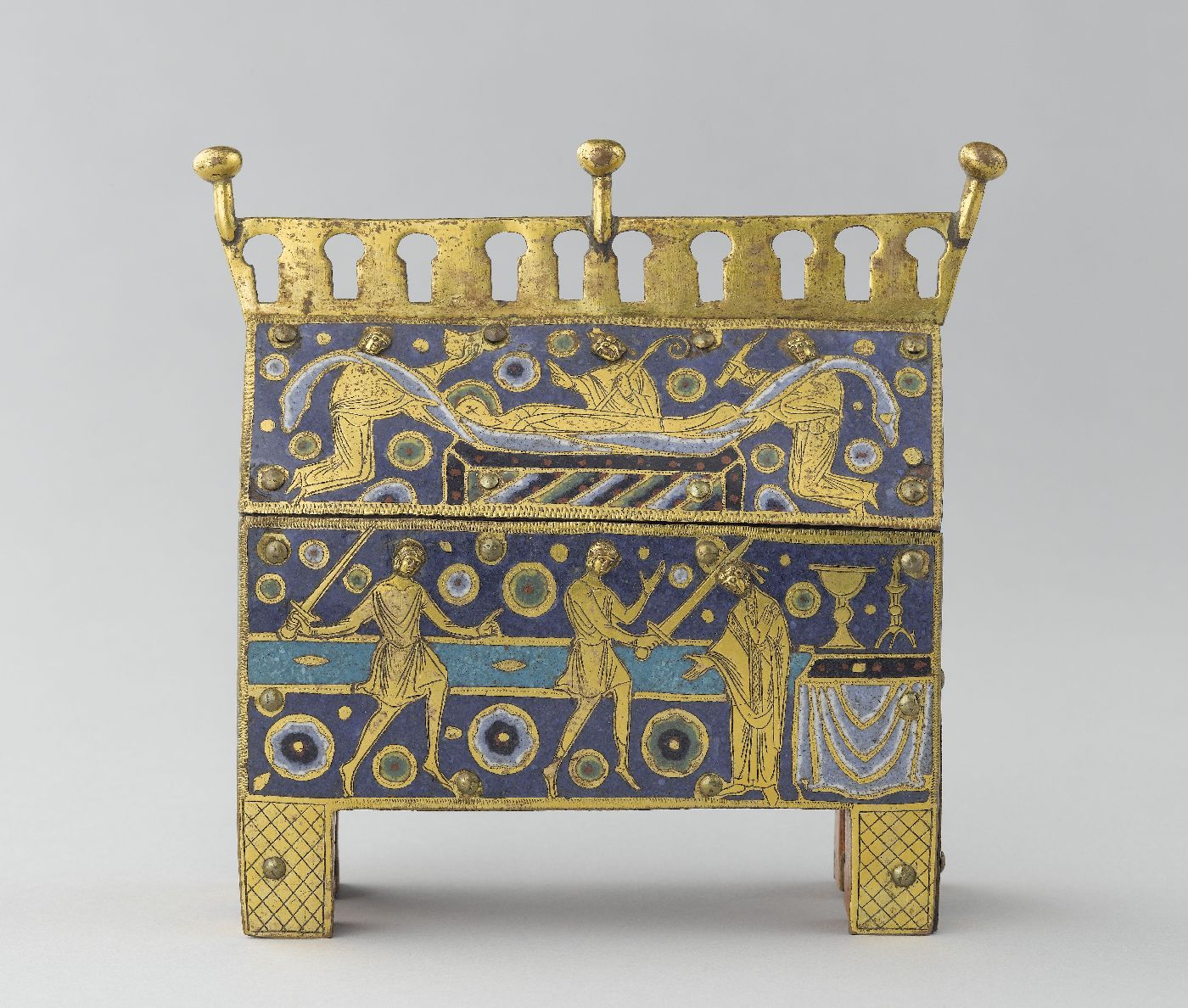
Chasse (Shrine) of Saint Thomas Becket, Cl. 23296 © GrandPalaisRmn / Jean-Gilles Berizzi
Original works
Of course, the museum keeps pieces that have sometimes been produced in several copies, such as the printed books of hours or the Châsse (shrine) of Saint Thomas Becket, of which several dozen copies are more or less similar.
However, each one remains an original work. They are not modern copies or reproductions.
That is why visitors to the museum are asked to follow certain rules. Do not touch the works, do not carry bulky items that risk creating any damage, and do not use ink pens in the rooms… Before your visit, you can read the museum visitor regulations.
And if you’re curious to understand what a museum is, the Icom definition will give you all the answers.
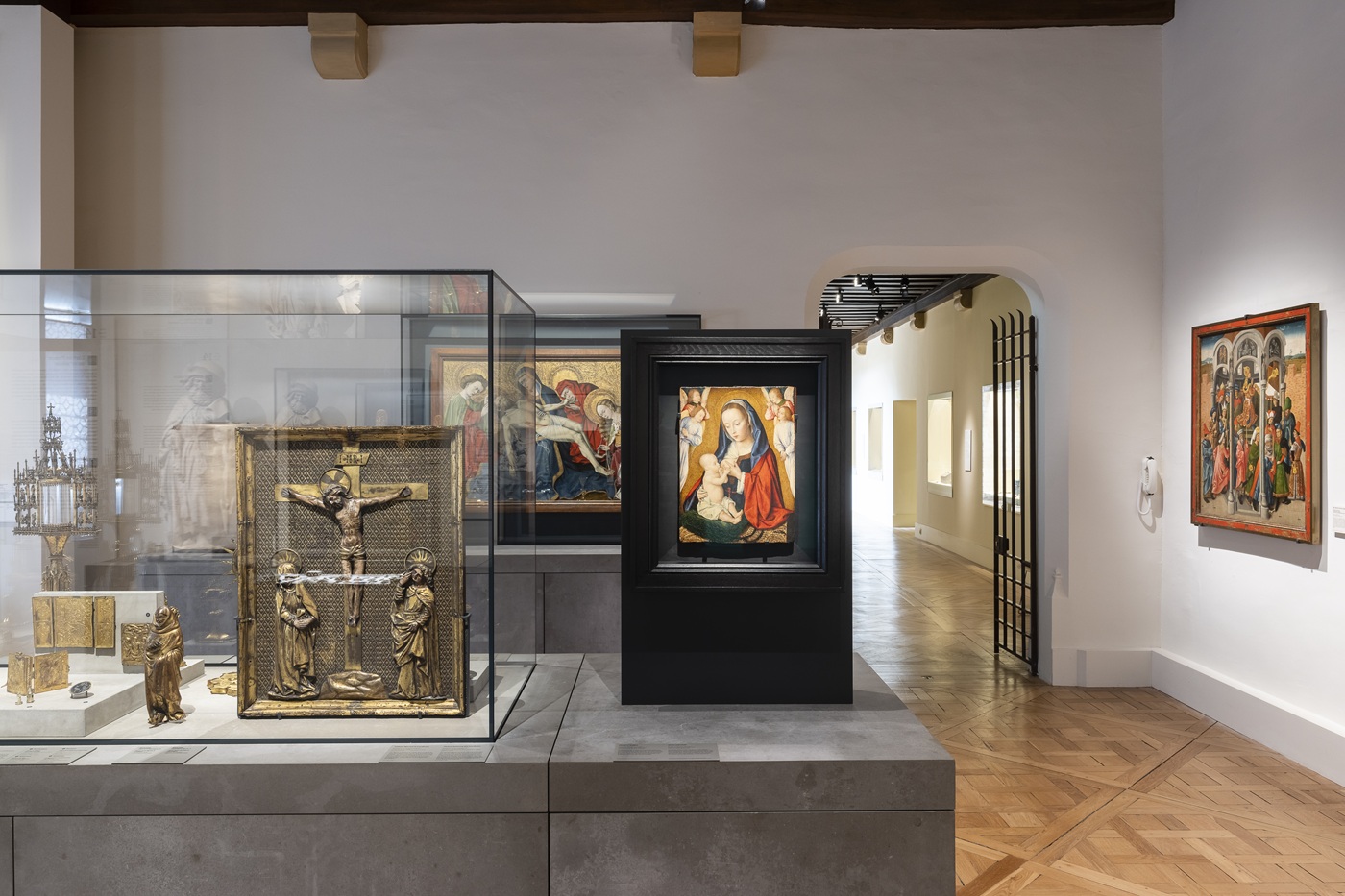
Room 14, Art in France in the 15th century © Alexis Paoli / OPPIC
3. Why were some items held and not others?
A museum exhibits material traces that have survived the passage of time…
It was in the 19th century that works of art and objects of the past took on the value of precious testimonies, making up a shared heritage to be preserved. Prior to this, although some collectors created "cabinets of curiosity," there was no collective concern for conservation. Traces of culture, especially popular culture, were not preserved due to a lack of interest and the use of cheap, perishable materials.
This is why our collections primarily reflect contexts of princely, and even royal, or religious creation, where the principles of conservation were more prominent. However, even in this context, the most valuable works could be used as a monetary reserve. Gold and silver jewellery was sometimes melted down in times of financial difficulty to extract the precious metals.
And due to lack of a longstanding willingness to preserve things, you may occasionally encounter surprises while exploring our collections, such as a stocking, which was separated from the one it matches, which is lost.
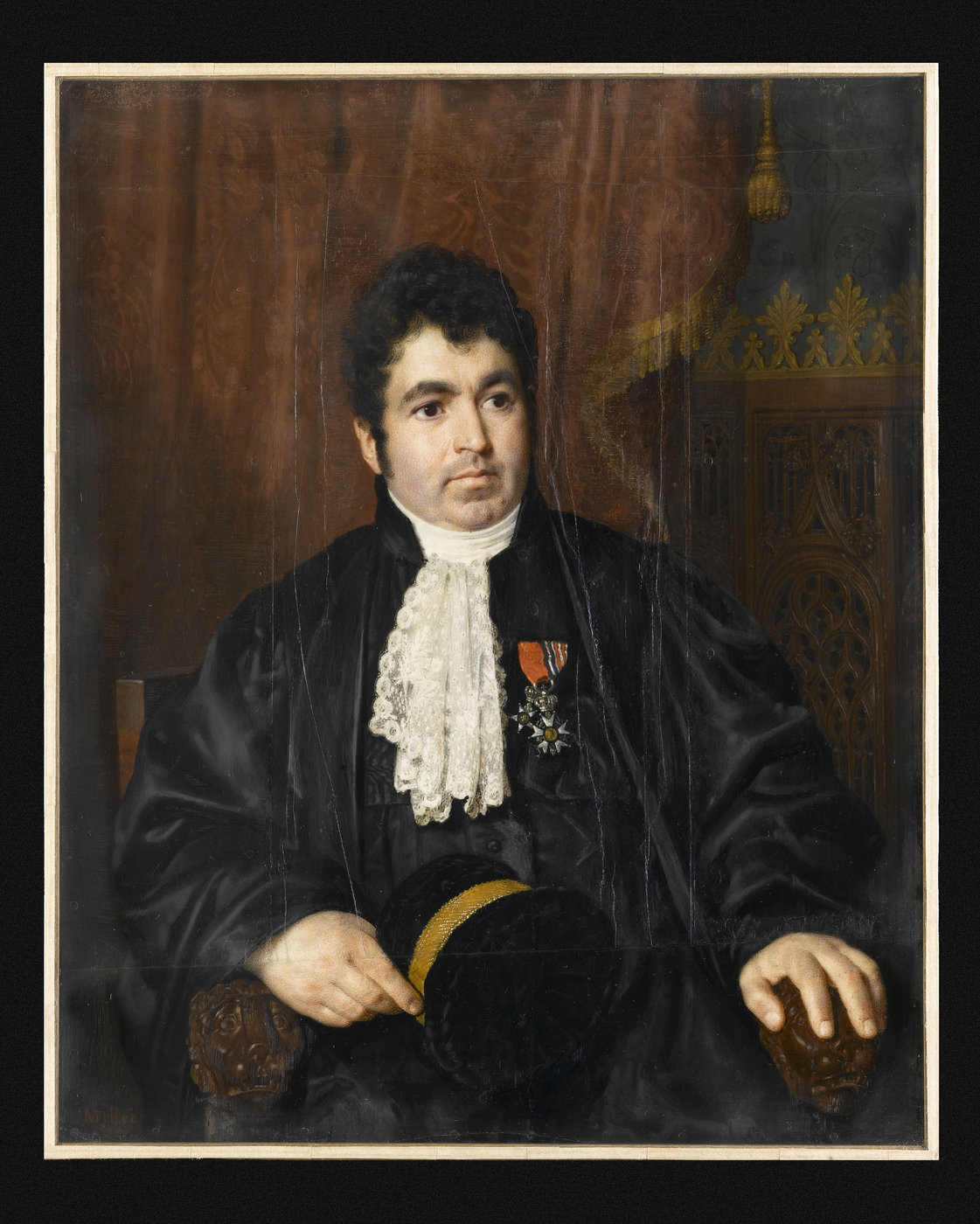
Portrait of Alexandre du Sommerard, Cl. 23754 © GrandPalaisRmn / Franck Raux
4. How do you choose the objects that are added to the museum?
A museum is not meant to display every work or object from a particular period or style.
Unlike the Louvre Museum or the Bibliothèque nationale de France (National Library of France), the Musée de Cluny is not the inheritor of the collections of the kings of France. It was established through merging two collections: the archaeological deposit of the city of Paris and the art collection of Alexandre Du Sommerard, which was acquired by the State in 1843. The museum’s collections are therefore the heirs of these two origins.
Therefore, in the 19th century, the collector Alexandre Du Sommerard brought together numerous pieces of decorative art from different eras. Today, those from the mediaeval period are still in the museum. Others were assigned to the château d'Écouen to form the National Museum of the Renaissance or were deposited in other museums.
Since its establishment, the Musée de Cluny has continued to add to its collection through donations, purchases, and so on. However, each new acquisition is the result of a careful selection by the museum's curators. The acquisition process is therefore an initial selection.
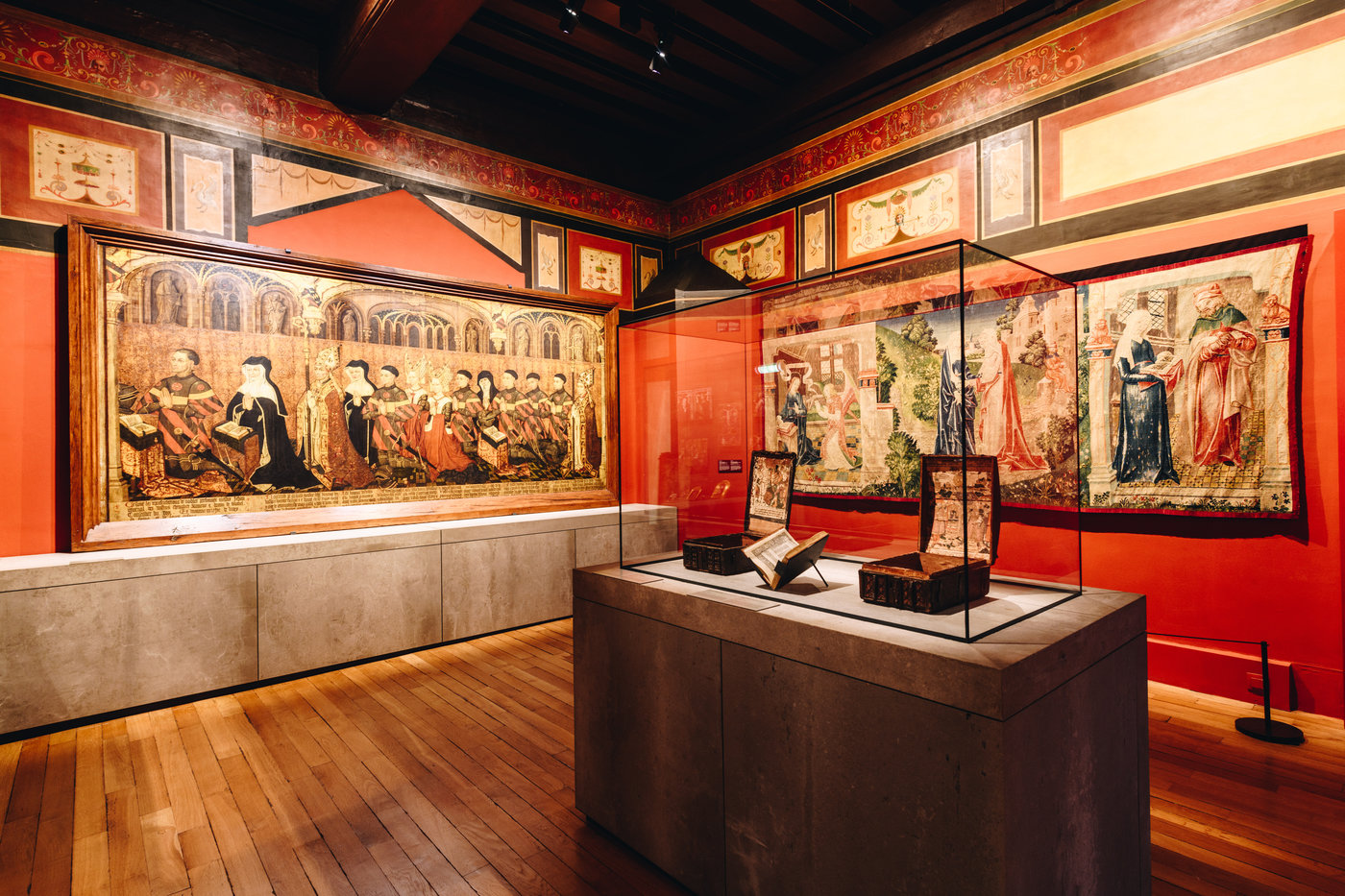
Room 15, Art around 1500: between the Middle Ages and the Renaissance
© Jean-Marie Heidinger / musée de Cluny - musée national du Moyen Âge
5. Are all collections on display?
Since its inception, the museum has catalogued over 24,000 items in its inventory. Not all of them are on display!
Some have been taken out of the tour because they are not mediaeval. As we've said, part of the collections was sent to Écouen to form the core of the National Museum of the Renaissance, while other pieces are now presented at the Museum of Jewish Art and History, or the International Shoe Museum in Romans-sur-Isère, for example.
Following the selection phase during the acquisition of the pieces, further decisions determine whether or not to display an object: its consistency with the narrative of the collections and how it complements works already on display. A piece that is too damaged, has undergone too many modifications over time, or does not illustrate the narrative of the museum may be left in storage or sent on deposit to another heritage institution.
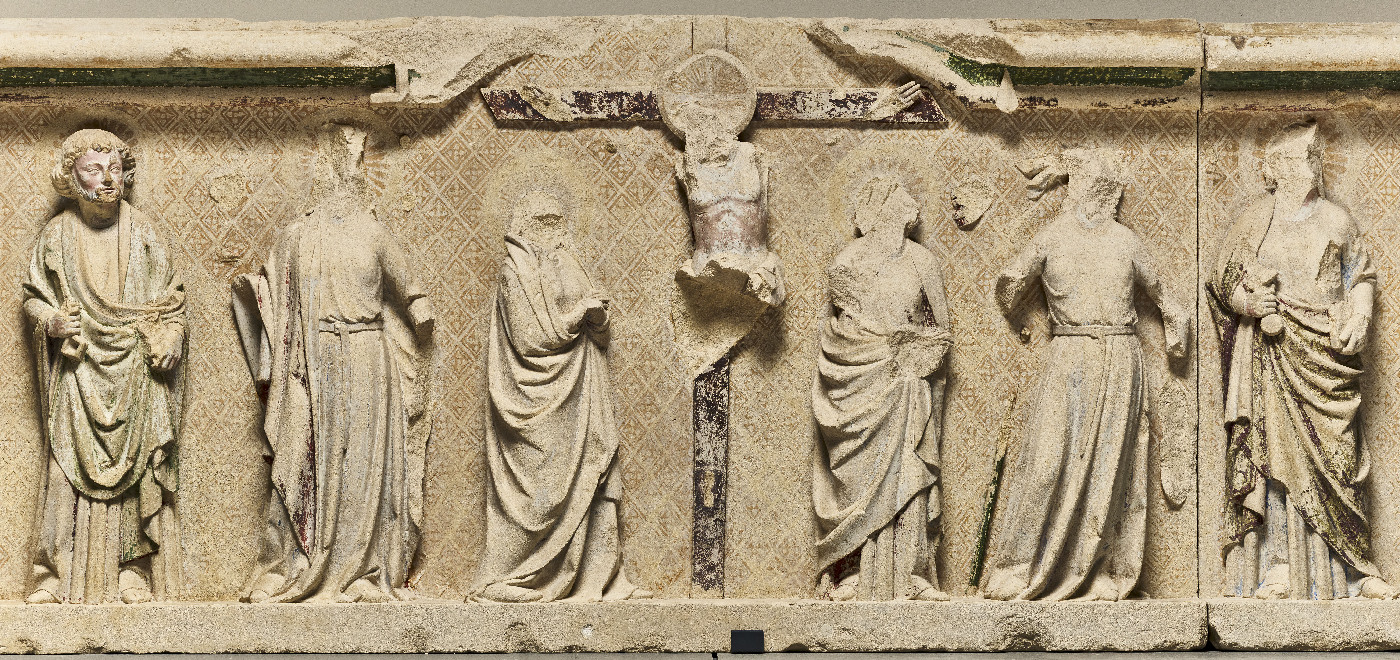
Saint Germer altarpiece, Cl. 18749 (detail) © GrandPalaisRmn / Michel Urtado
Collections that cannot be sold
A piece that is kept in storage is not shown to visitors. But that doesn't mean it will be removed from the museum's collections. This is also prohibited by French law. This is known as the principle of inalienability: an item that has entered a museum's collections cannot be removed from them. It may not be given, sold, or transferred in any way whatsoever, except as a result of a law passed by Parliament or a declassification procedure approved by the Haut Conseil des Musées de France (High Council of Museums of France).
This principle ensures the permanence of public collections by safeguarding them from private interests, as well as from trends and changes in taste and knowledge. Therefore, a forgotten, poorly documented, or inaccurately dated work can, for instance, reveal its full interest during a restoration.
Several works joined our new tour after dust had been removed and they had been restored.
This is the case for several alabaster elements of an English altarpiece (Cl. 2596, 2597, 2600), presented in room 12 or the Saint Germer altarpiece.
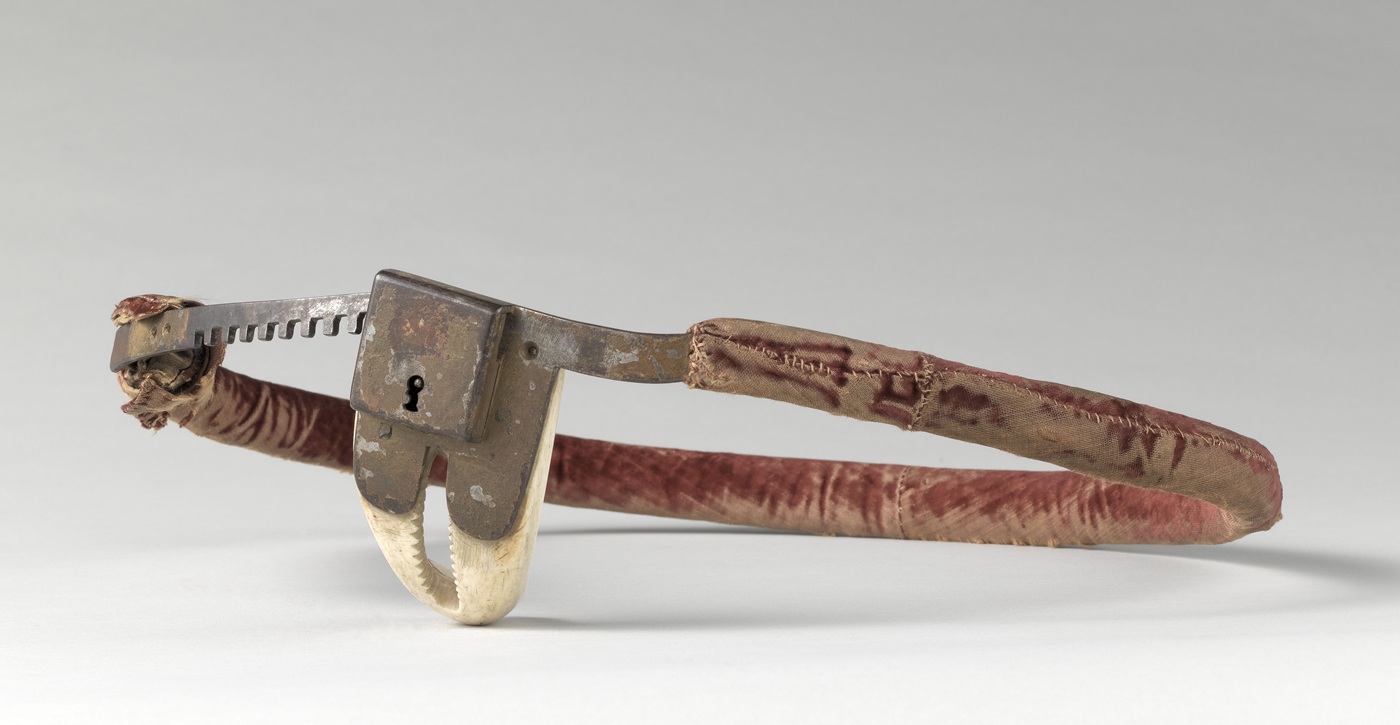
Ivory-beaked chastity belt © GrandPalaisRmn / Jean-Gilles Berizzi
An authentic chastity belt?
The museum displays authentic artefacts.
Everyone has heard of chastity belts, and the museum even holds two (Cl. 1377 and Cl.7650)… But they date back to the 19th century! Chastity belts did not exist in the mediaeval period; they were a complete invention of those who started imagining a romanticised version of the Middle Ages in the 19th century. But since historians and experts identified the deception, they are no longer displayed!
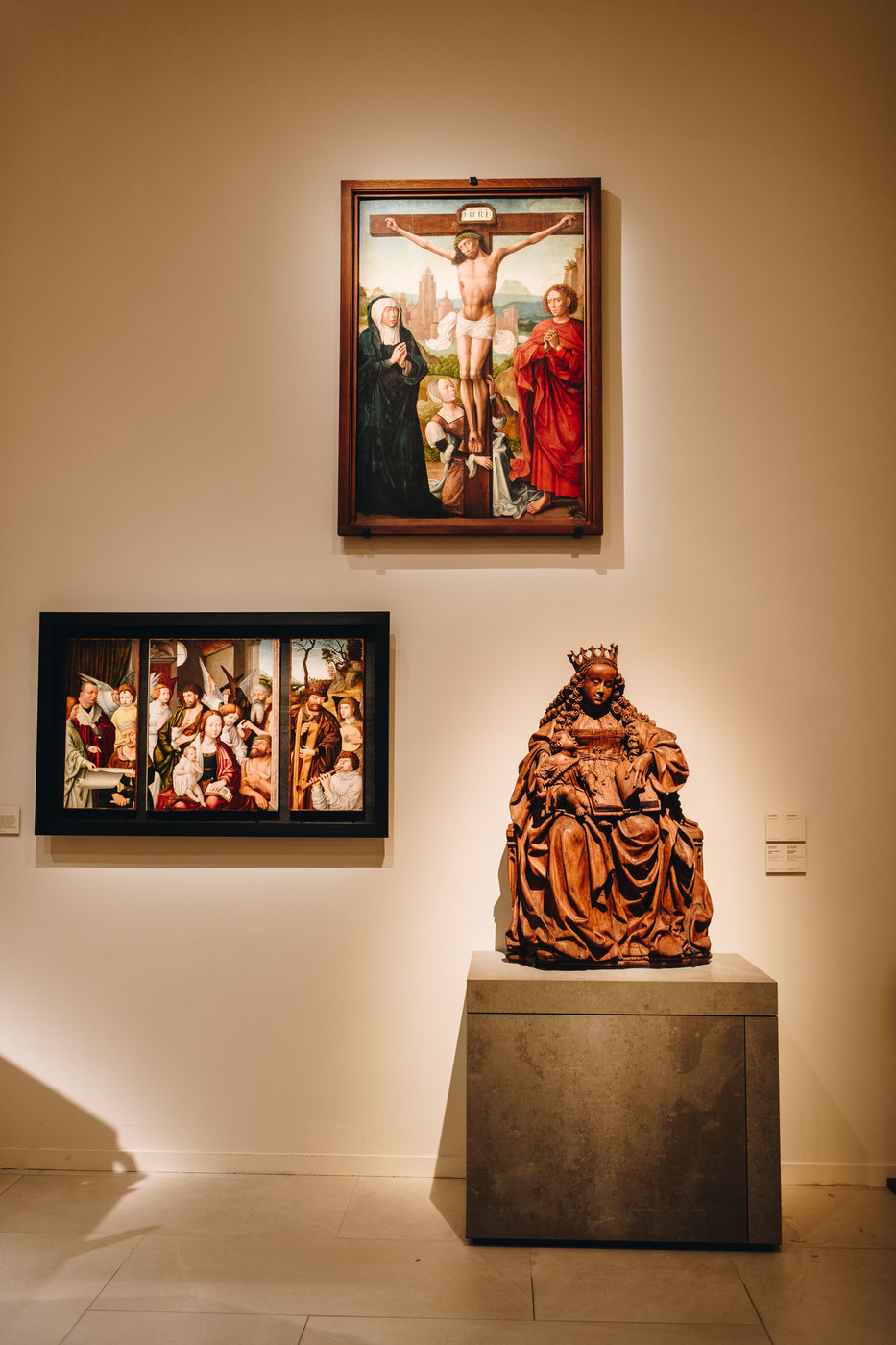
Room 21, Religious furnishings north of the Alps in the late Middle Ages © Jean-Marie Heidinger / Musée de Cluny - musée national du Moyen Âge
6. Is the Musée de Cluny the museum of the history of the Middle Ages?
The Musée de Cluny displays collections that span over 1,000 years of history, from Gallo-Roman antiquity to the dawn of the Renaissance. Some of the exhibited pieces come from archaeological excavations and reflect everyday life. But for the most part, they are works of art.
The museum is therefore primarily defined as an art museum rather than a history museum. The concept of work is important here. As a result, the chronological tour reflects the evolution of forms and styles, although you may take detours to explore certain significant historical events of the period during your visit.
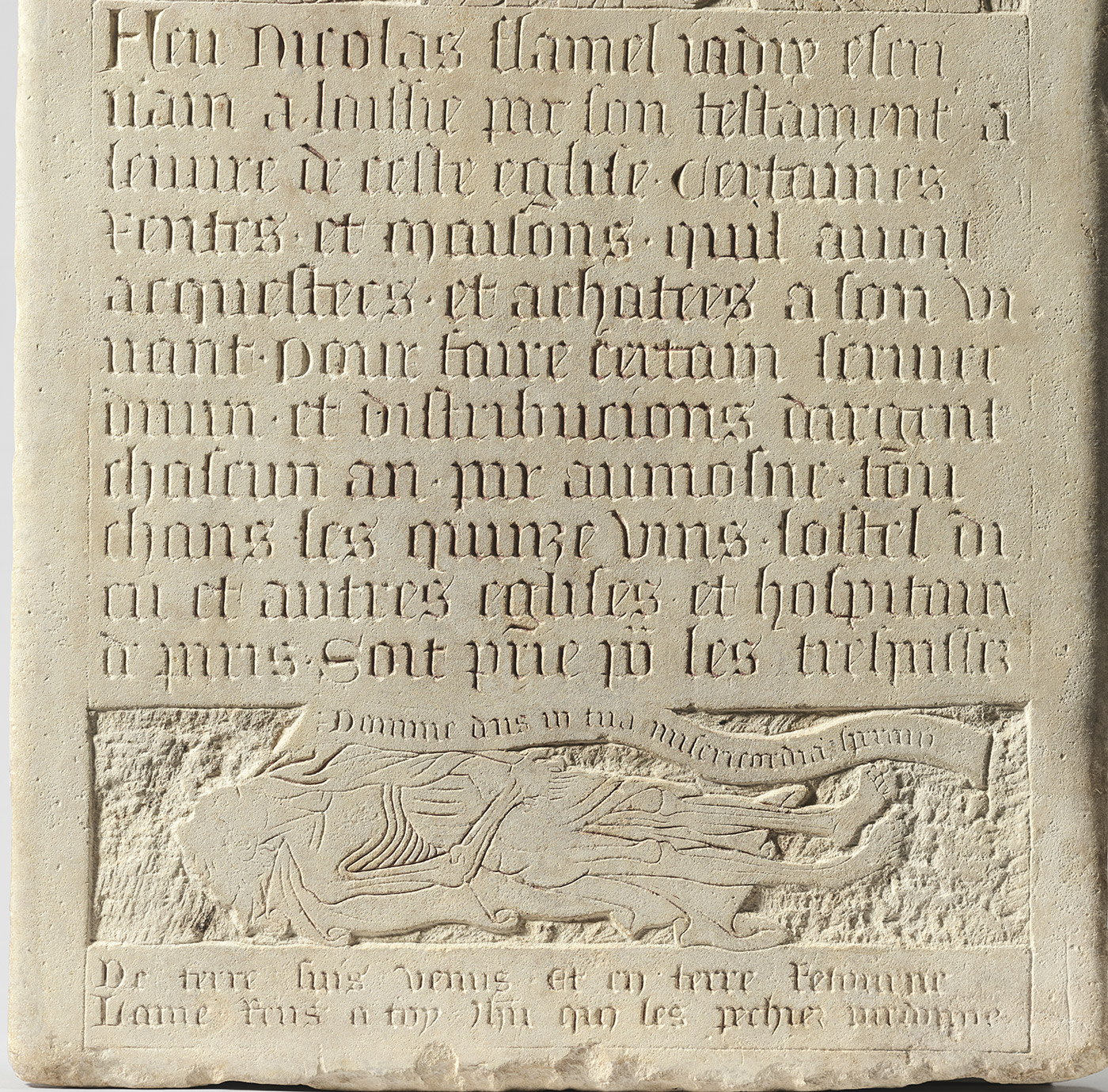
Epitaph of Nicolas Flamel, Cl. 18823 (detail) © GrandPalaisRmn / Michel Urtado
7. What makes the Musée de Cluny unique?
Founded in the 1840s, the Musée de Cluny has a unique history. It originated from two collections: the collection of works of art belonging to Alexander Du Sommerard, who was passionate about "antiques", i.e. ancient art (but he also bought works from the 17th and 18th centuries); and the stonework repository of the City of Paris. This repository, located in the frigidarium, housed the remnants of Parisian buildings that had been taken down or architectural elements from altered monuments. This is how the epitaph of Nicolas Flamel became part of the museum’s collections from the outset.
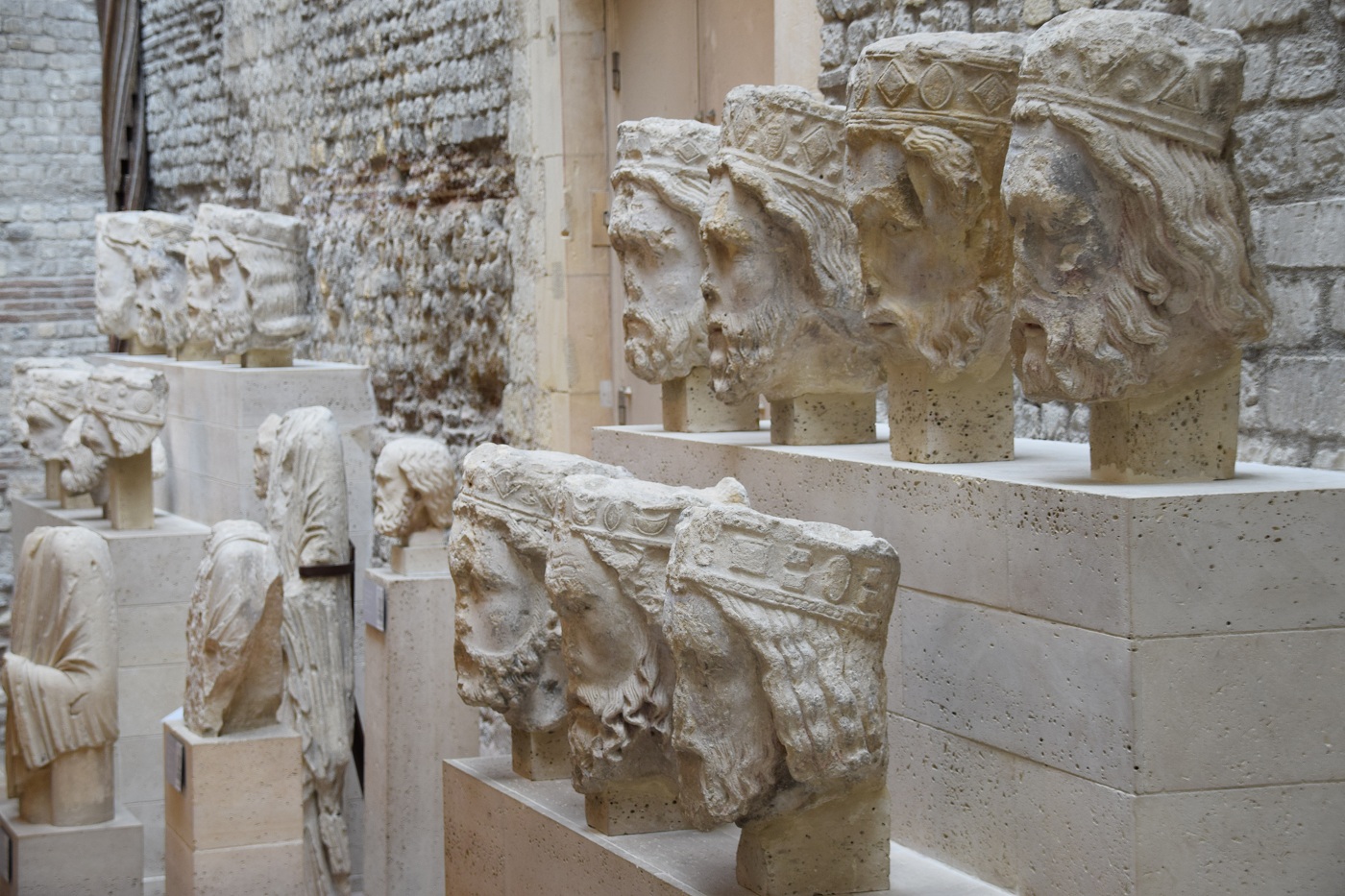
Heads of the kings of Judah in the Notre-Dame Room © musée de Cluny - musée national du Moyen Âge
A museum of Parisian monuments?
At its inception, the museum was placed under the authority of the newly established Commission Supérieure des Monuments Historiques (High Commission for Historical Monuments), which was responsible for identifying and classifying monuments considered worthy of historical or artistic interest. When archaeological discoveries were made or during restoration, the museum was naturally chosen to preserve elements from Parisian monuments. This is the case for some of the stained glass windows of the Sainte-Chapelle, which were considered too fragile to be left in place. The museum emerged as a preservation solution, also for Notre-Dame de Paris cathedral, restored by Viollet-le-Duc.
This tradition lasted until the 1970s, when the 28 monumental heads from the Gallery of the Kings of Judah at Notre-Dame Cathedral were added to the collections. Considered lost during the Revolution, these sculptures were discovered by chance during renovation work in a private mansion in the 9th arrondissement of Paris and were donated to the State for display at the museum.
8. Is the Musée de Cluny the museum of all of the Middle Ages?
The Musée de Cluny does not claim to be universal. Its vocation is that of an art museum, with the way in which the collections have been formed and the significant proportion of mediaeval artistic production that has disappeared today…
All of this contributes to making the National Museum of the Middle Ages what it is today: a key place for understanding the Western Middle Ages.