These works, sculpted in noble materials, testify to the exchanges between Romanity and peoples from the East. Created in the Mediterranean basin, they seem to have been used in a Germanic context.
Many works made from precious materials were created in Constantinople and Rome in the 5th and 6th centuries, during the transition from Antiquity to the Middle Ages. The statue of Ariadne and the two crystal lion heads are examples of this sumptuous art. They were discovered in Germany and are housed at the Musée de Cluny.
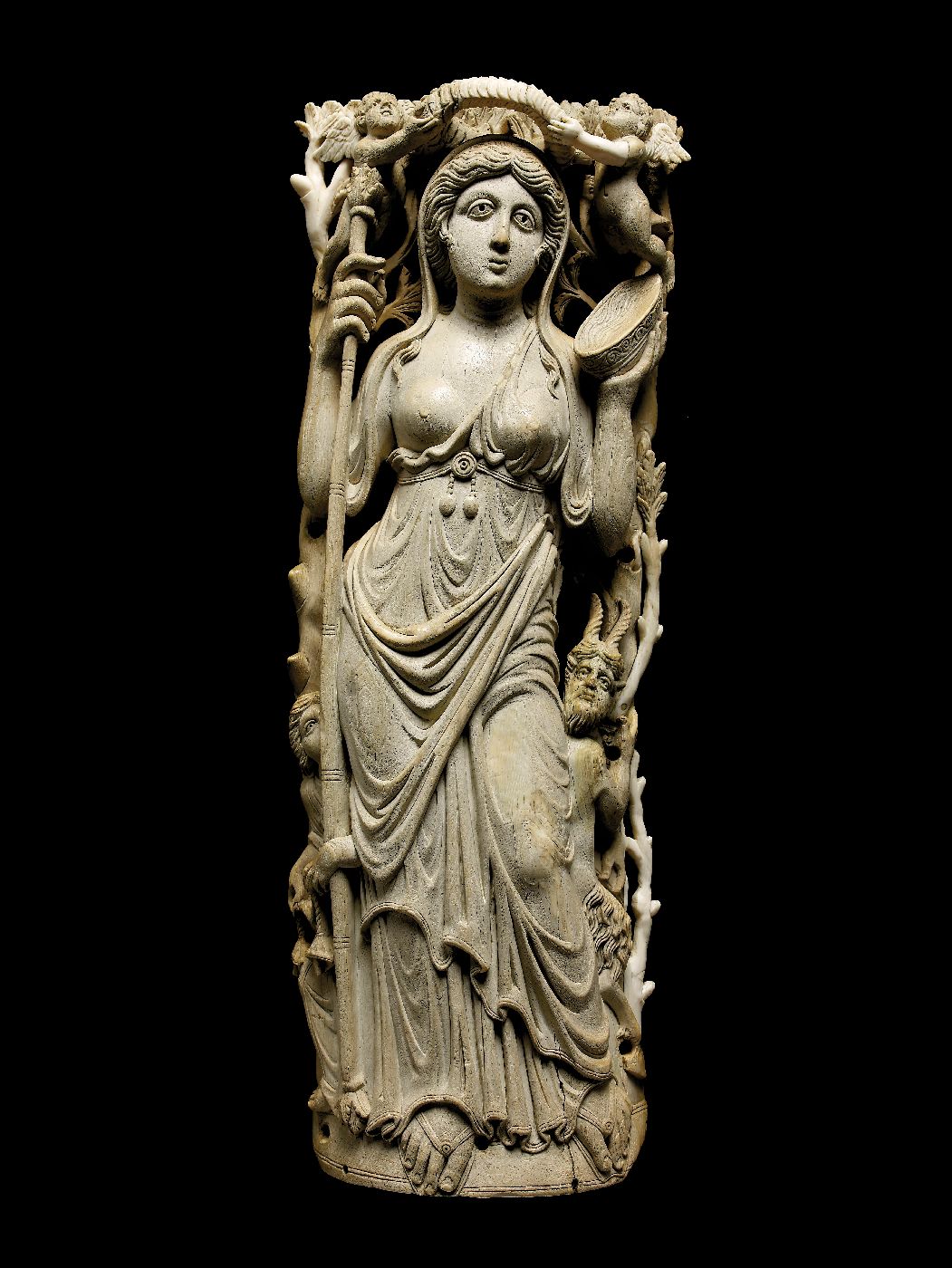
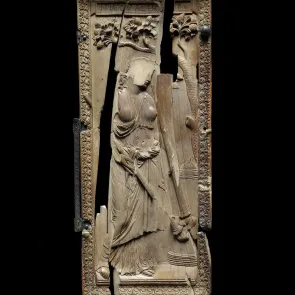
The statuette of Ariadne was made in Constantinople at the beginning of the 6th century. It is carved in high relief from an elephant tusk and represents Ariadne, the companion of the god Bacchus in Roman mythology.
Her face is full and rounded. Her mouth is small and her eyelids are marked. Her downturned eyes were once inlaid with glass beads. She is dressed in a flowing tunic that is softly draped, revealing a breast. She holds two attributes of Bacchus, the god of wine. In her left hand she holds a cup. In the other, she is supported by a thyrsus, a staff that ends with a bouquet of ivy. Above her, two little cupids place a crown on her head.
To the right of Ariadne, a dancing satyr hides behind the creases of her dress. He is easily identified by his horns and goat legs. A maenad, a worshipper of Bacchus, also peeks out behind Ariadne on the other side. She holds a pair of cymbals. They are recognised as the traditional protagonists in Bacchic processions, ceremonies in honour of Bacchus.
At the back, the natural cavity of the elephant tusk allowed it to be mounted against a surface. This statuette was therefore probably a decorative element on a piece of furniture.
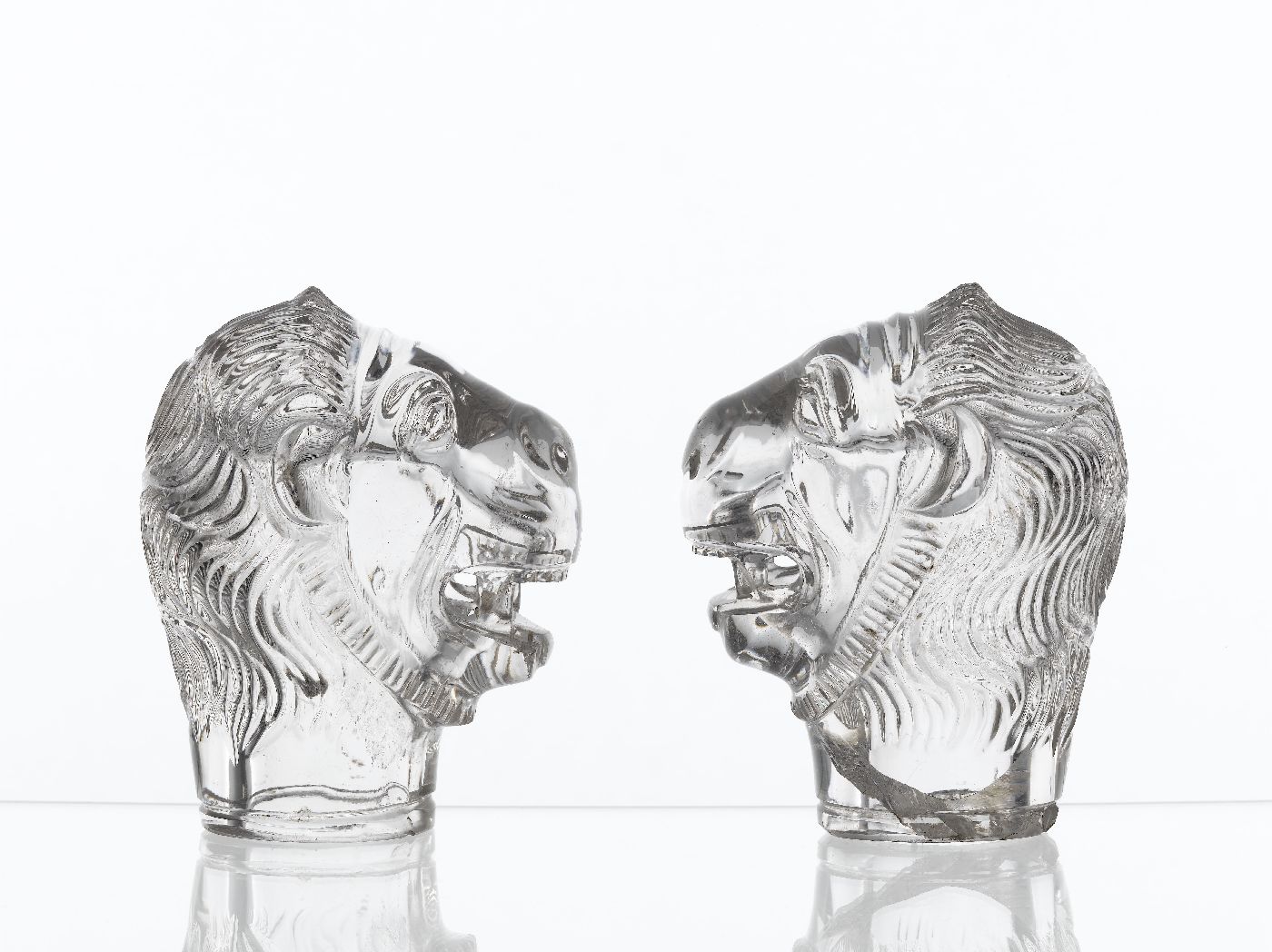
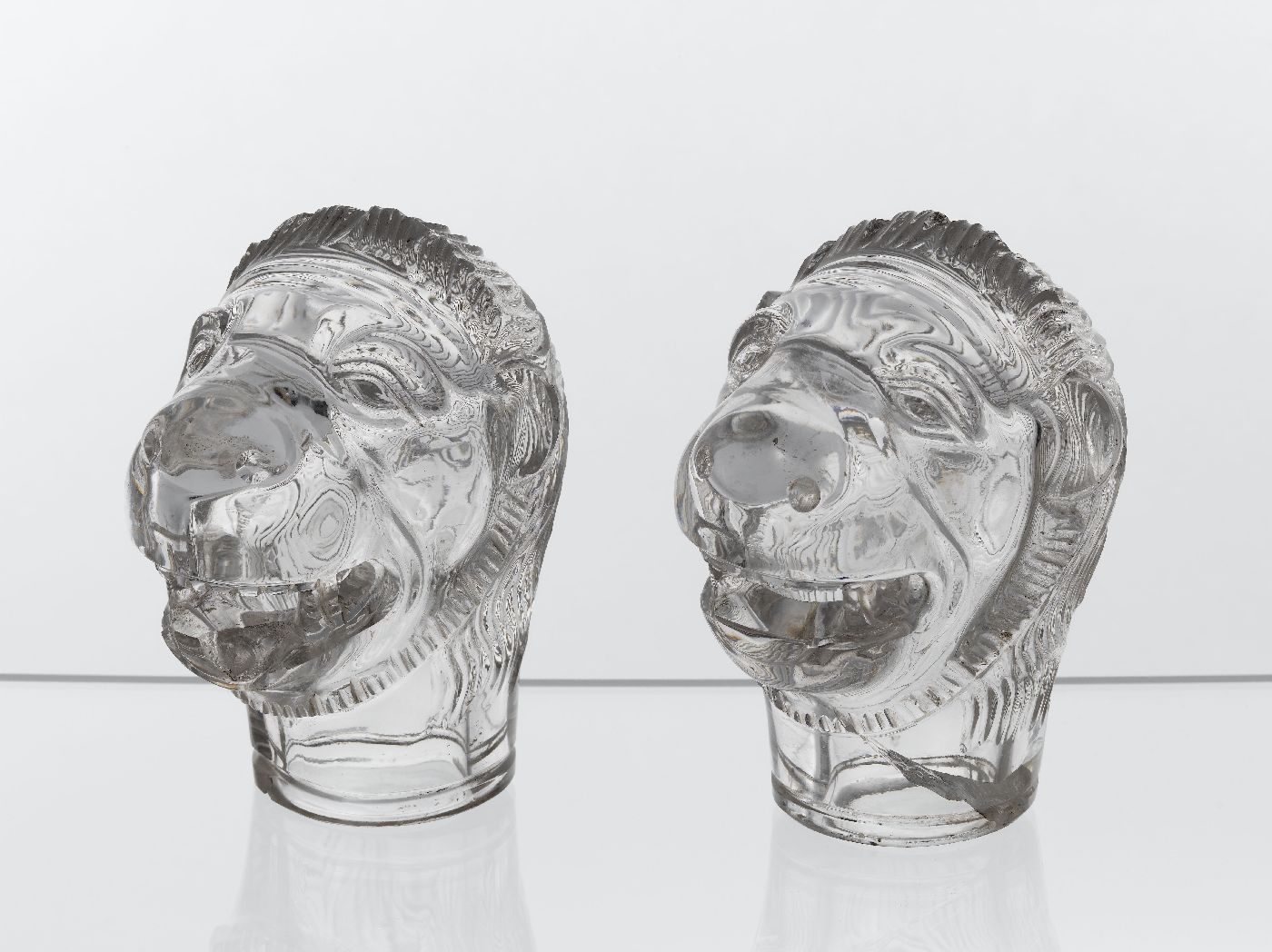
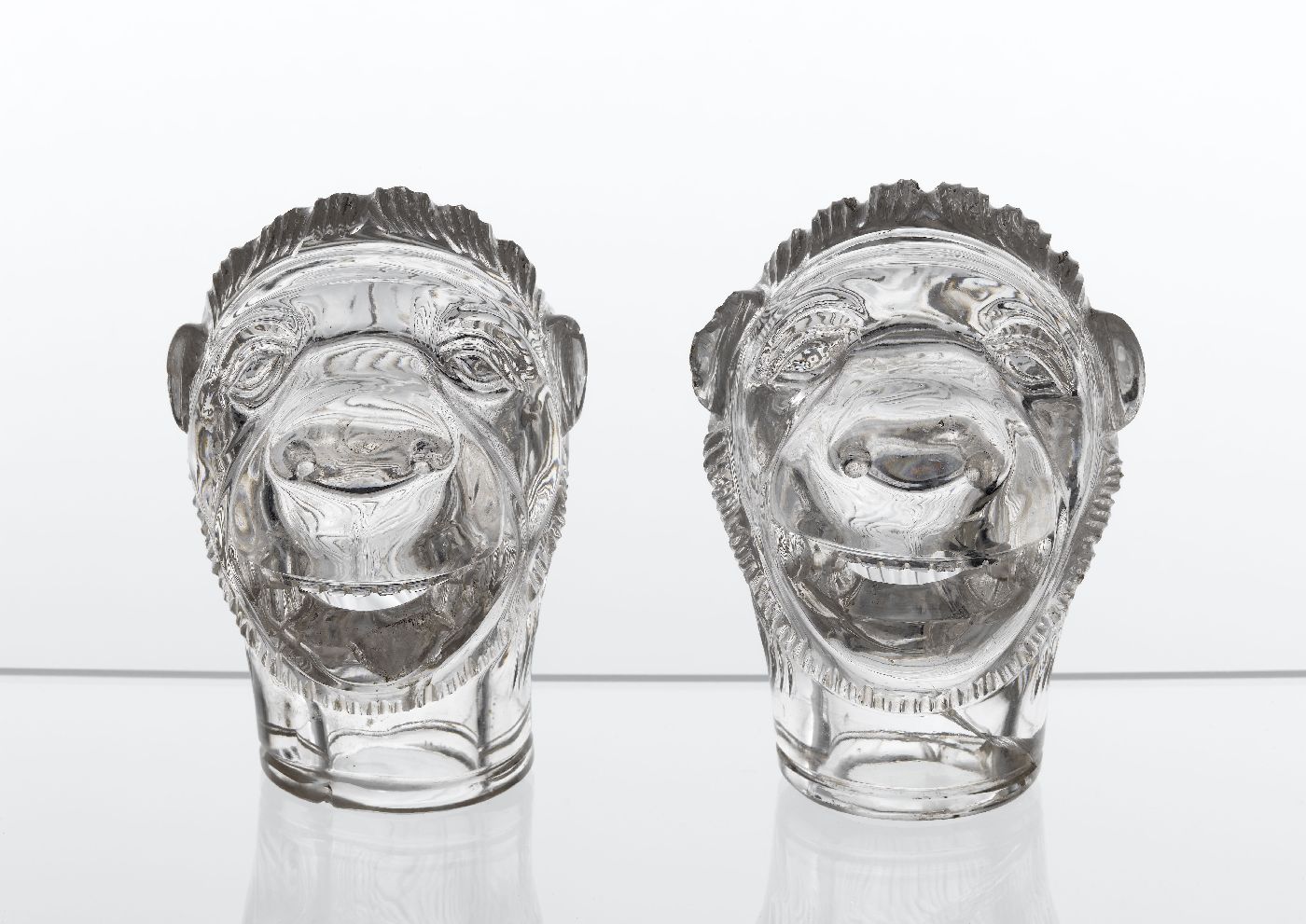
The two lion’s heads were produced in the Roman Empire, perhaps in Rome, in the 5th century. They are carved from rock crystal so pure that almost no imperfections are visible except for the crack on the neck of one of the lions. Each piece features the animal’s canines, rounded muzzle and the wavy locks of its mane.
The base of each head is hollowed out. This opening was probably used to attach the heads to vertical posts that supported the armrests or the upper part of a throne backrest.
Very early on the lion, a symbol of power and majesty, was associated with the throne, which symbolises power. In the Hebrew Bible, Solomon, the king of the ancient kingdom of Israel, sits on a throne flanked by two lions.
This arrangement is seen in several depictions of thrones on diptych panels, like the one belonging to Areobindus. He was consul of Constantinople at the beginning of the 6th century. This ivory plaque shows that feline heads decorate the arms of the seat on which the consul sits. A ring also passes through each of their wide open mouths. As seen on the Areobindus panel, a ring probably also passed through each of the two open mouths of the crystal lions, which has now disappeared.