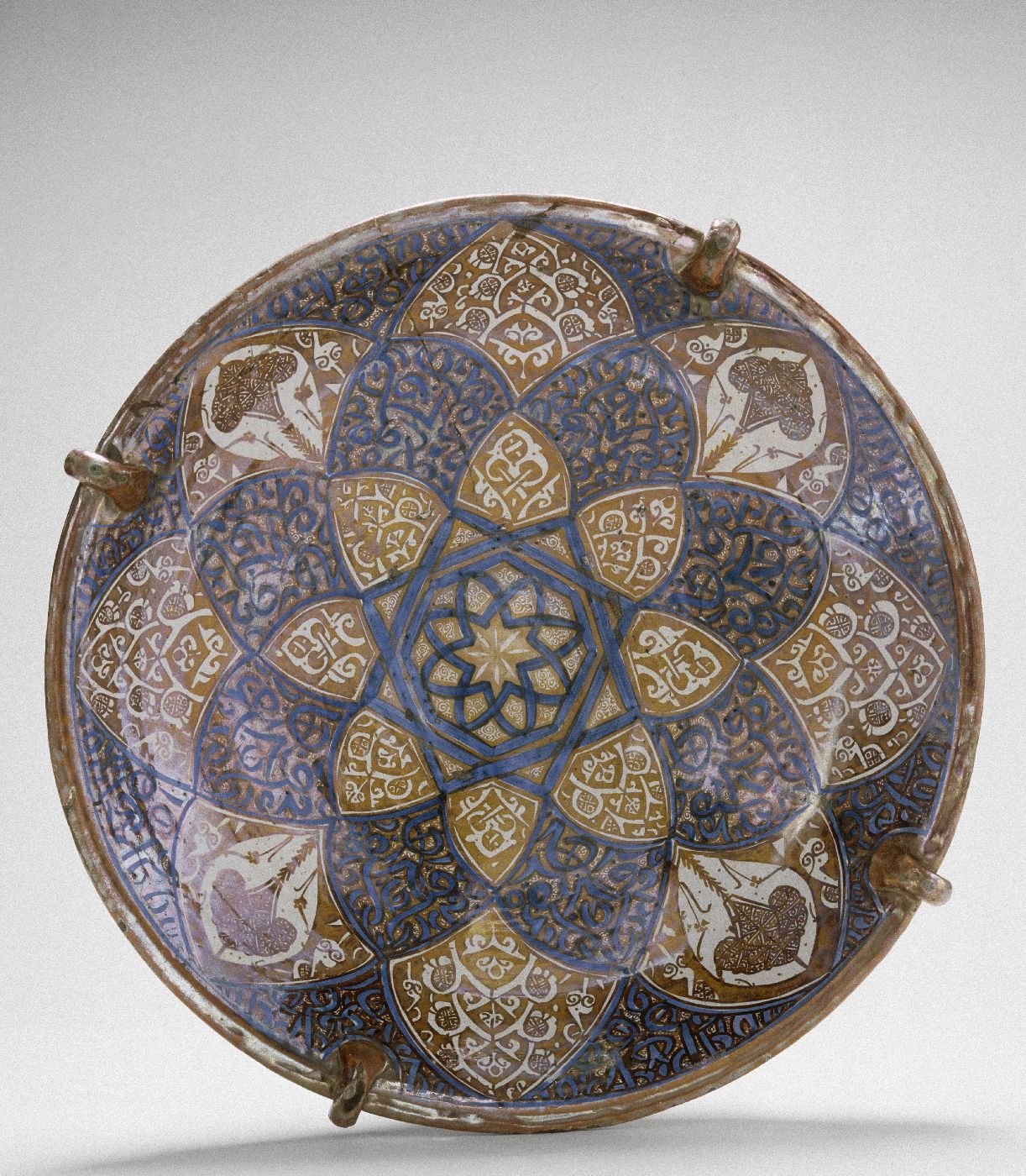
Hispano-moresque ceramic, basin with eyelets, Cl. 2343 © GrandPalaisRmn / Jean-Luc Mabit
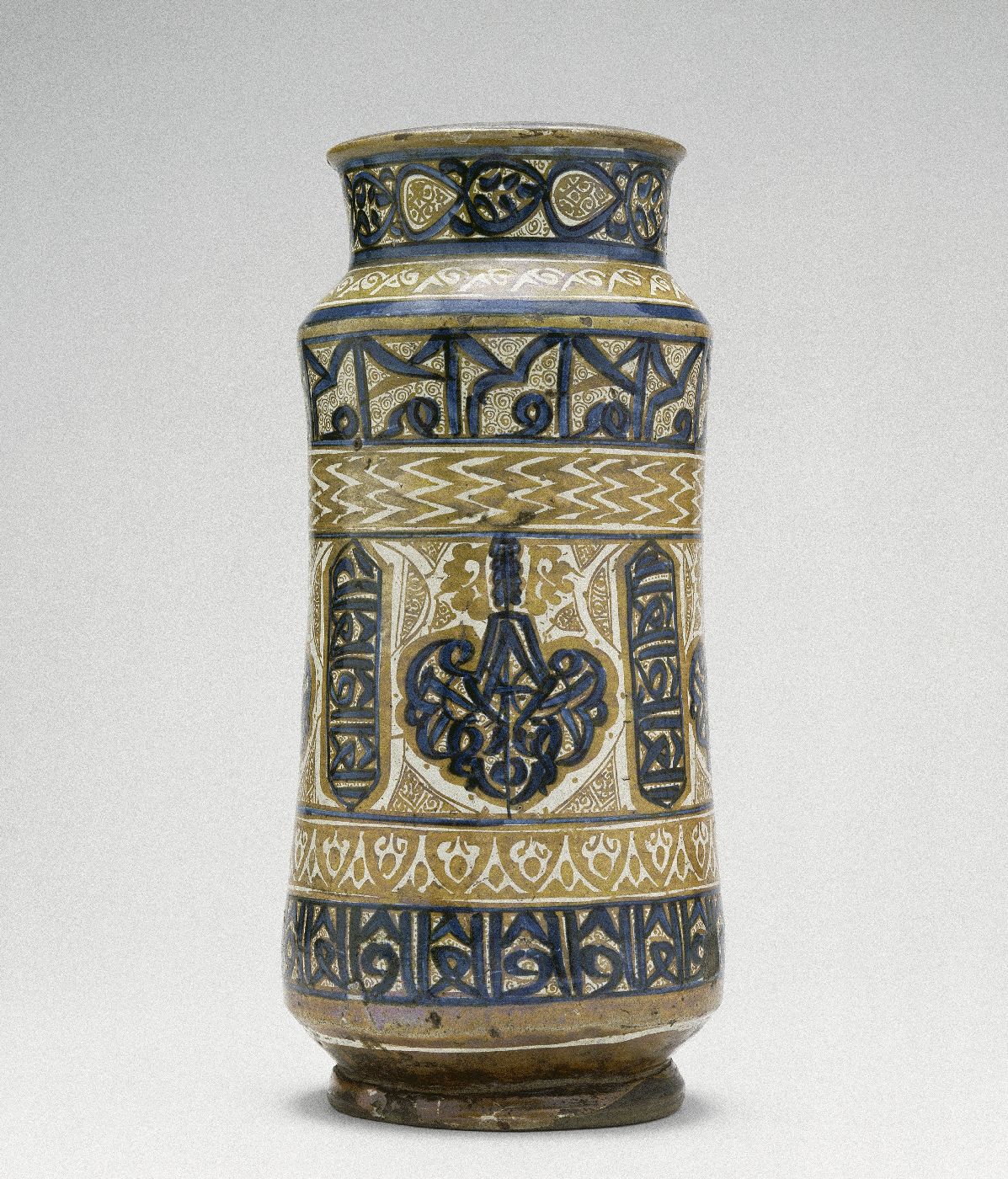
Hispano-moresque ceramic, spice jar with a geometric pattern, Cl. 2119 © GrandPalaisRmn / Jean-Luc Mabit
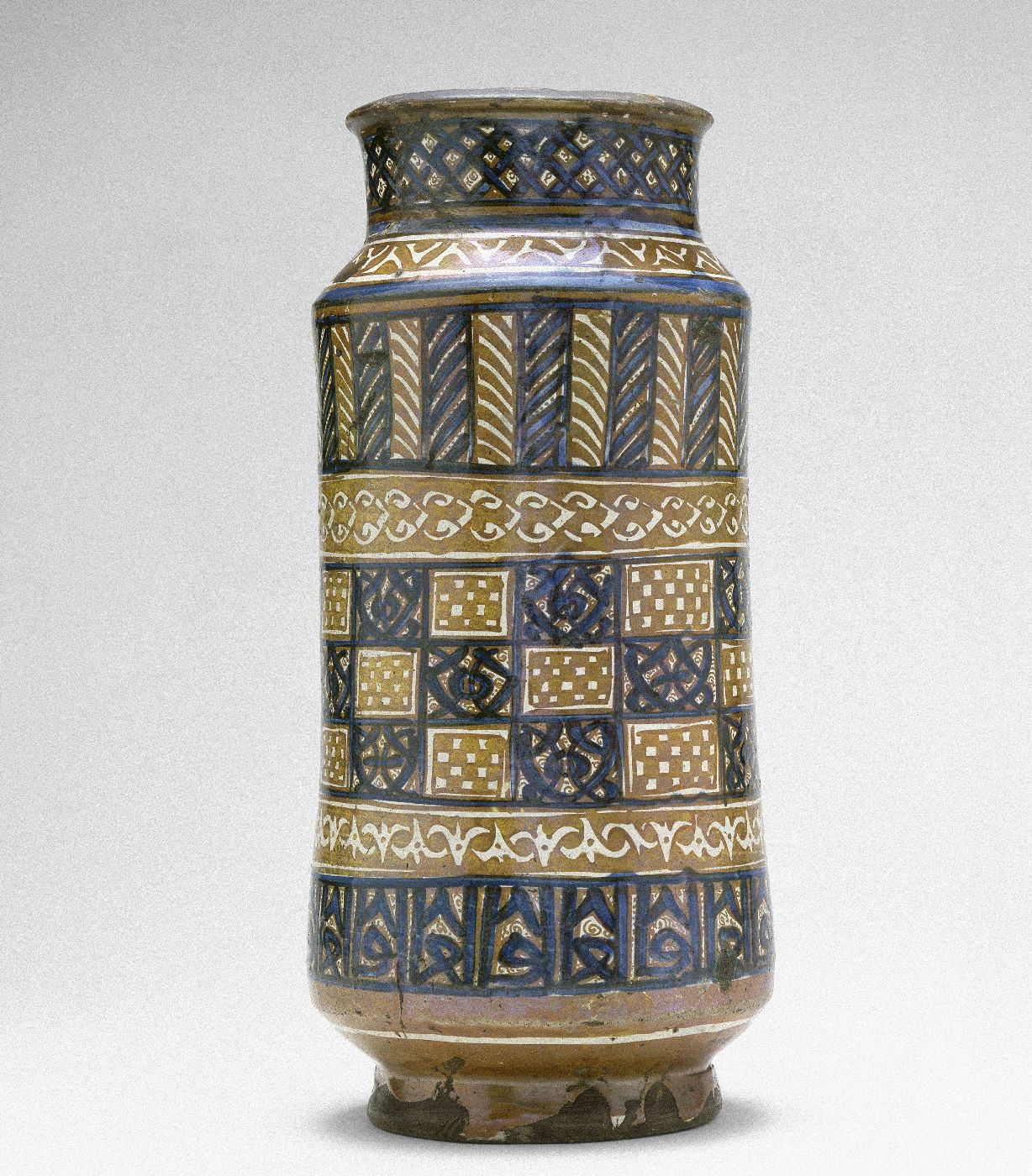
Hispano-moresque ceramic, spice jar with a geometric pattern, Cl. 2120 © GrandPalaisRmn / Jean-Luc Mabit
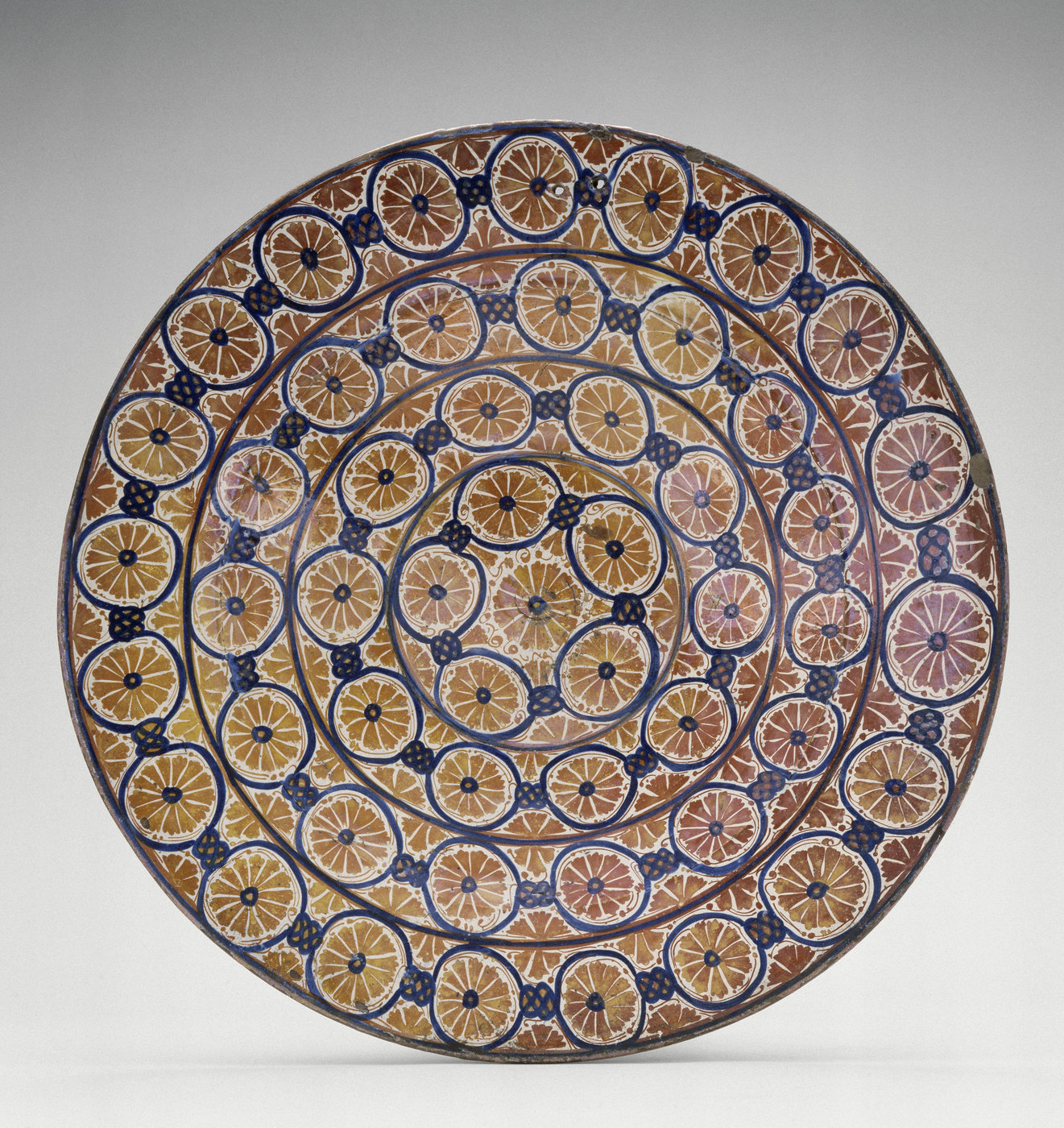
Hispano-moresque ceramic, dish decorated with oranges, Cl. 2240 © GrandPalaisRmn / Jean-Luc Mabit
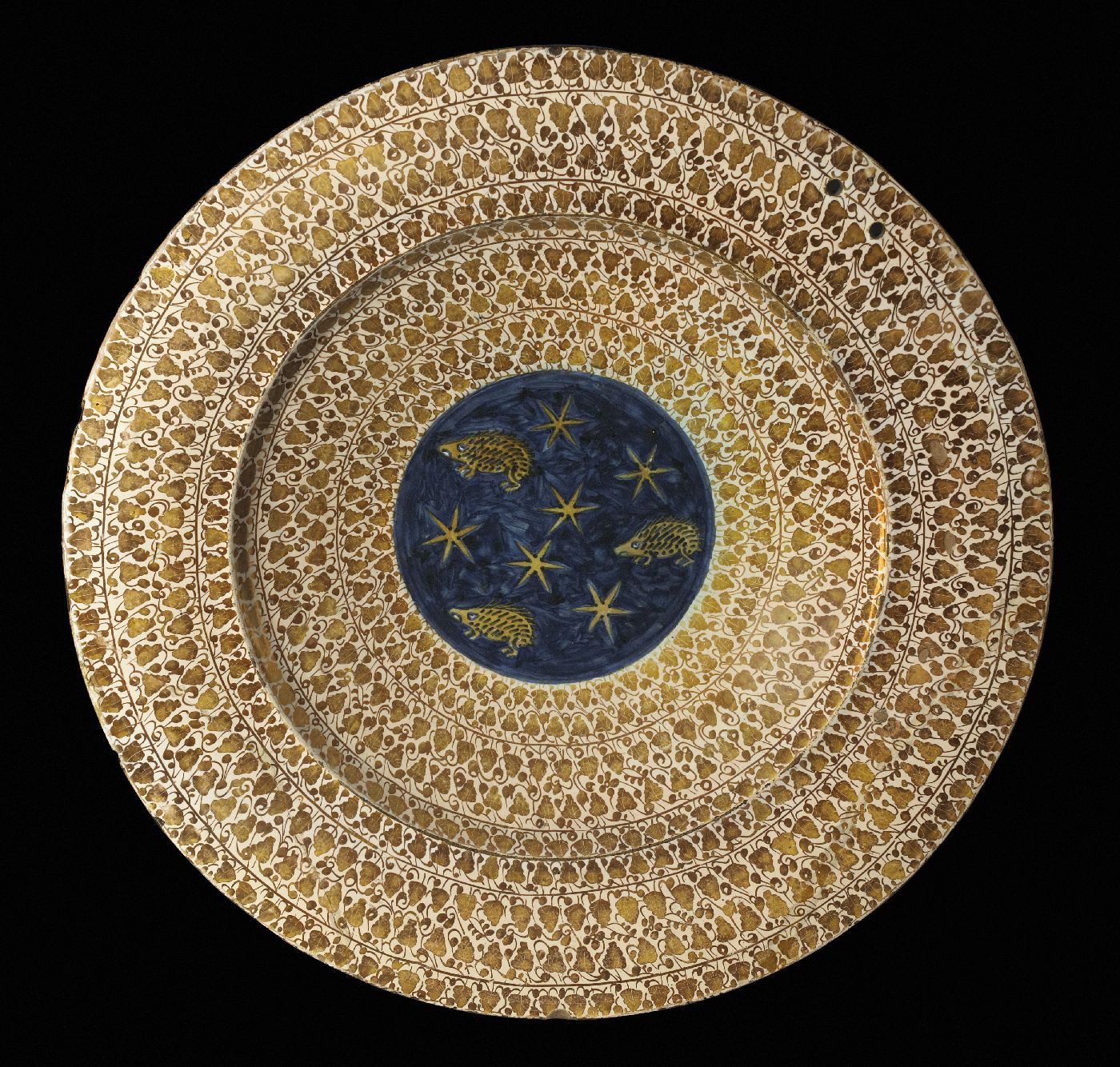
Hispano-moresque ceramic, dish bearing the Ricci coat of arms, Cl. 1686 © GrandPalaisRmn / Franck Raux
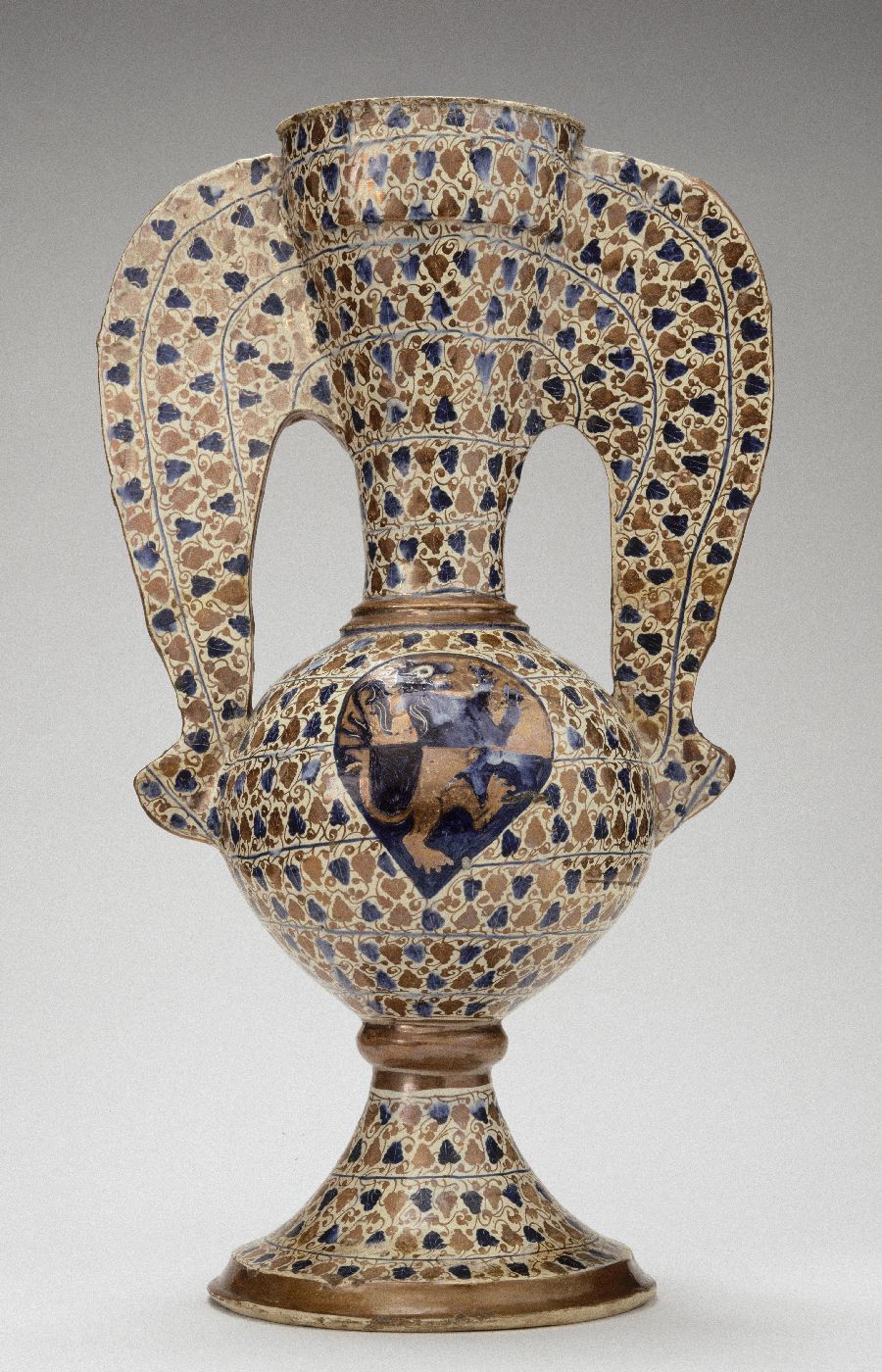
Hispano-moresque ceramic, vase with heraldic decoration, Cl. 7647 © GrandPalaisRmn / Jean-Luc Mabit
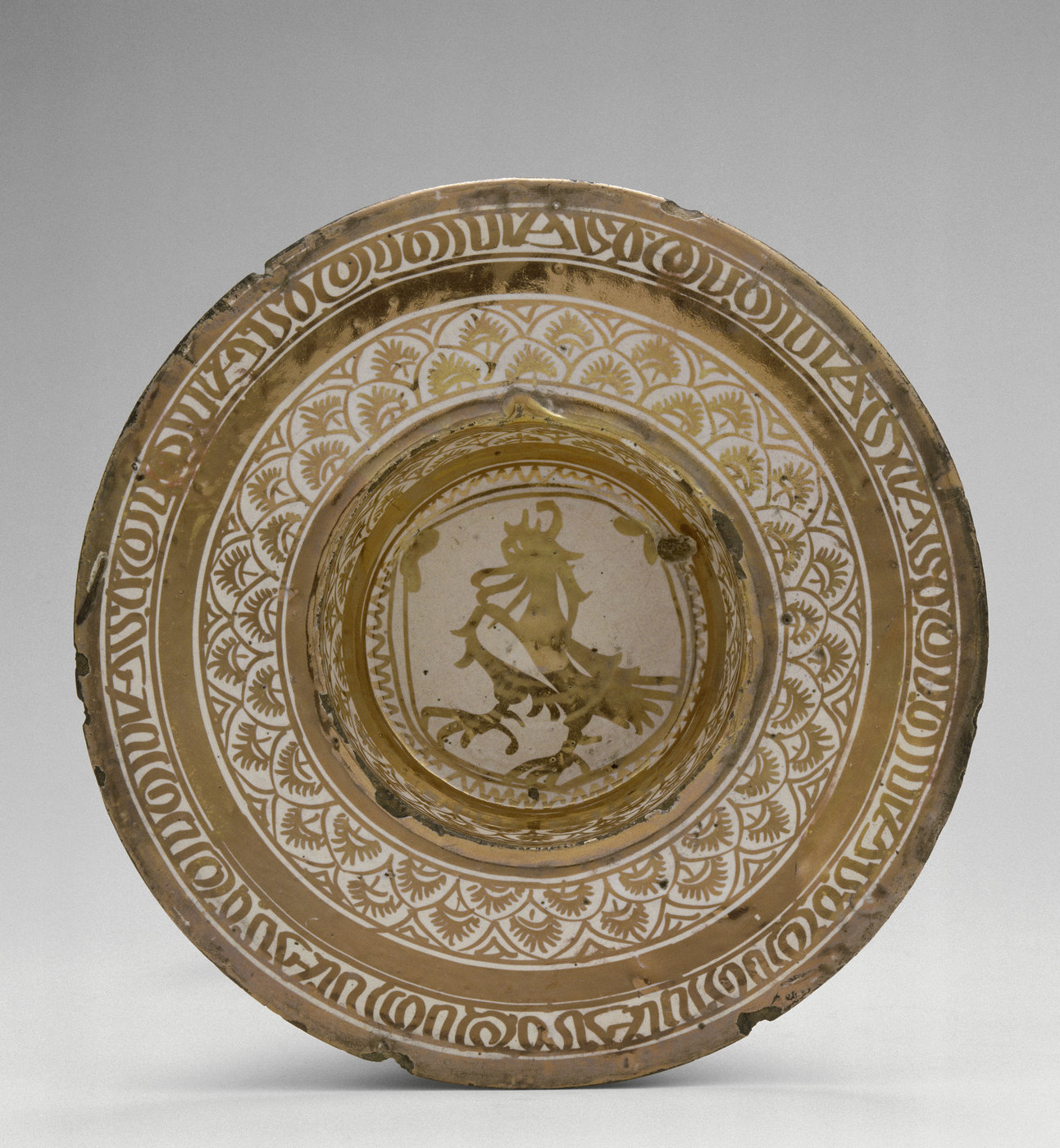
Hispano-moresque ceramic, rooster in a coat of arms, Cl. 1685 © GrandPalaisRmn / Jean-Luc Mabit
Hispano-moresque ceramics
Description
This set is made up of Hispano-Moresque pottery.
Some of the pieces are decorated with geometric motifs inspired by Islamic art. Other pieces have more figurative designs, like the elegant Oranges dish. Lastly, some pieces of pottery are decorated with their owners’ coats of arms.
They are remarkable examples of metallescent ceramics. By adding metal oxides to clay, the highly-refined technique was able to create prestigious pieces of tableware that reflected light in a similar way to metals.
Related to the lusterware produced in the Eastern Mediterranean basin from the 10th century onwards, metallescent ware was imported from Spain after the Muslim conquests. Eastern craftsmen settled in the region of Valencia - where these pieces came from – making it a major production site from the end of the 14th century.
Less onerous than metalwork, these decorative ceramics were highly successful with the European elites, particularly in Tuscany.
However, at the end of the 16th century, Spanish production became standardised, and the quality and colour palette diminished.
This exceptional set was collected by the museum’s first curator, Edmond Du Sommerard. Today, it is the second largest collection of Hispano-Moresque pottery, after that held in the Valencia National Ceramics Museum.
Basin with eyelets
| Inventory number | Cl. 2343 |
|---|---|
| Place of production | Manisès (Valencia, Spain) |
| Medium | Ceramic |
| Method of acquisition | Purchased in 1854 |
Spice jar or albarelle no. 1
| Inventory number | Cl. 2119 |
|---|---|
| Place of production | Manisès (Valencia, Spain) |
| Medium | Ceramic |
| Method of acquisition | Purchased in 1852 |
Spice jar or albarelle no. 2
| Inventory number | Cl. 2120 |
|---|---|
| Place of production | Manisès (Valencia, Spain) |
| Medium | Ceramic |
| Method of acquisition | Purchased in 1852 |
Dish decorated with oranges
| Inventory number | Cl. 2240 |
|---|---|
| Height | 6,5 cm |
| Diameter | 47,5 cm |
| Place of production | Manisès (Valencia, Spain) |
| Medium | Ceramic |
| Method of acquisition | Purchased in 1853 |
Dish bearing the Ricci coat of arms
| Inventory number | Cl. 1686 |
|---|---|
| Place of production | Manisès (Valencia, Spain) |
| Medium | Ceramic |
| Method of acquisition | Purchased in 1848 |
Vase with heraldic decoration
| Inventory number | Cl. 7647 |
|---|---|
| Place of production | Manisès (Valencia, Spain) |
| Medium | Ceramic |
| Method of acquisition | Purchased in 1863 |
Rooster in a coat of arms
| Inventory number | Cl. 1685 |
|---|---|
| Height | 5,8 cm |
| Diameter | 25,3 cm |
| Medium | Ceramic |