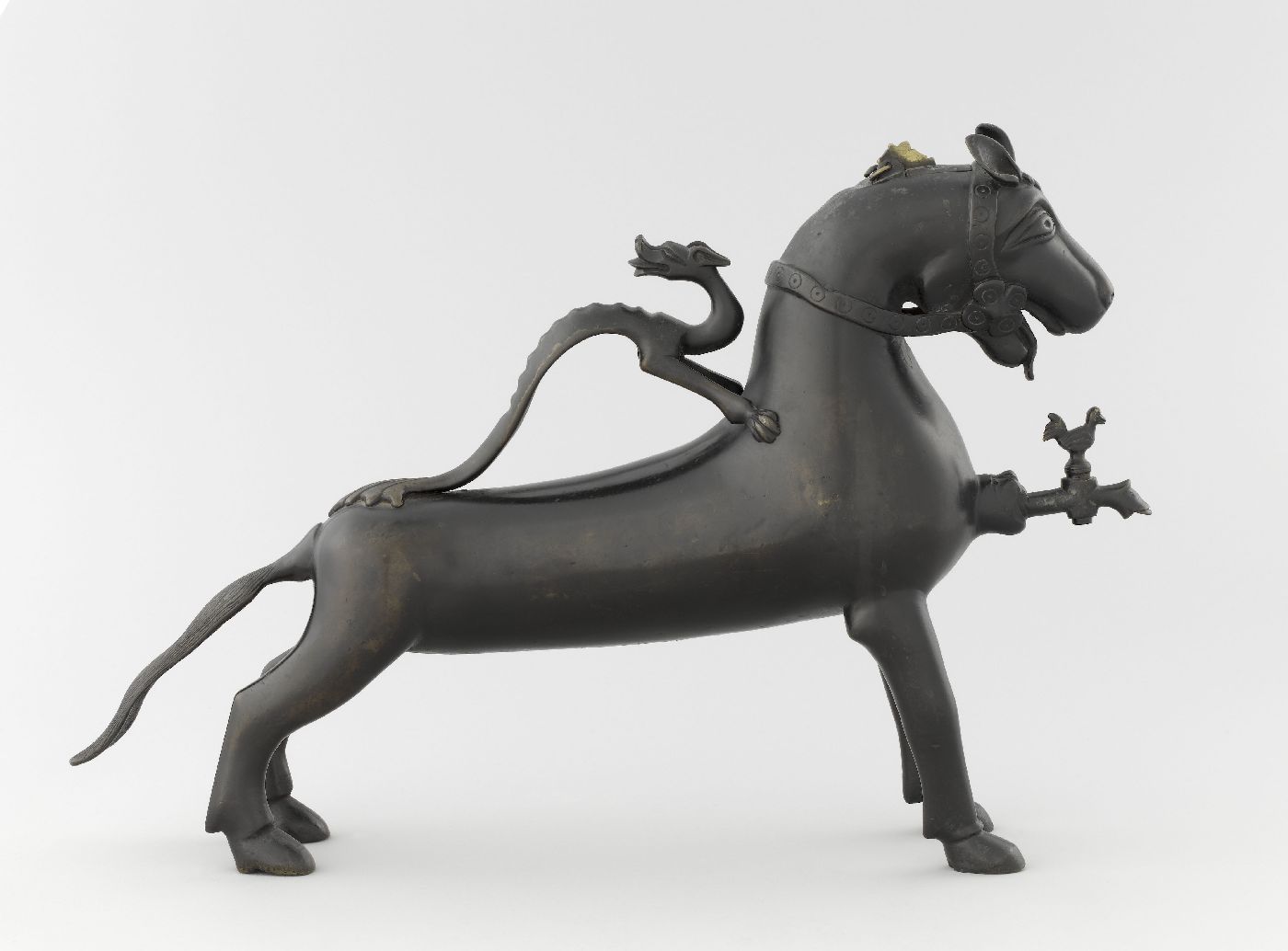
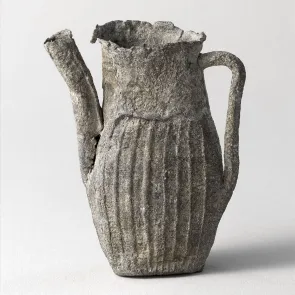
The museum preserves several aquamaniles, objects used for washing hands. They testify to the importance of hygiene in the Middle Ages but also have a more spiritual purification function.
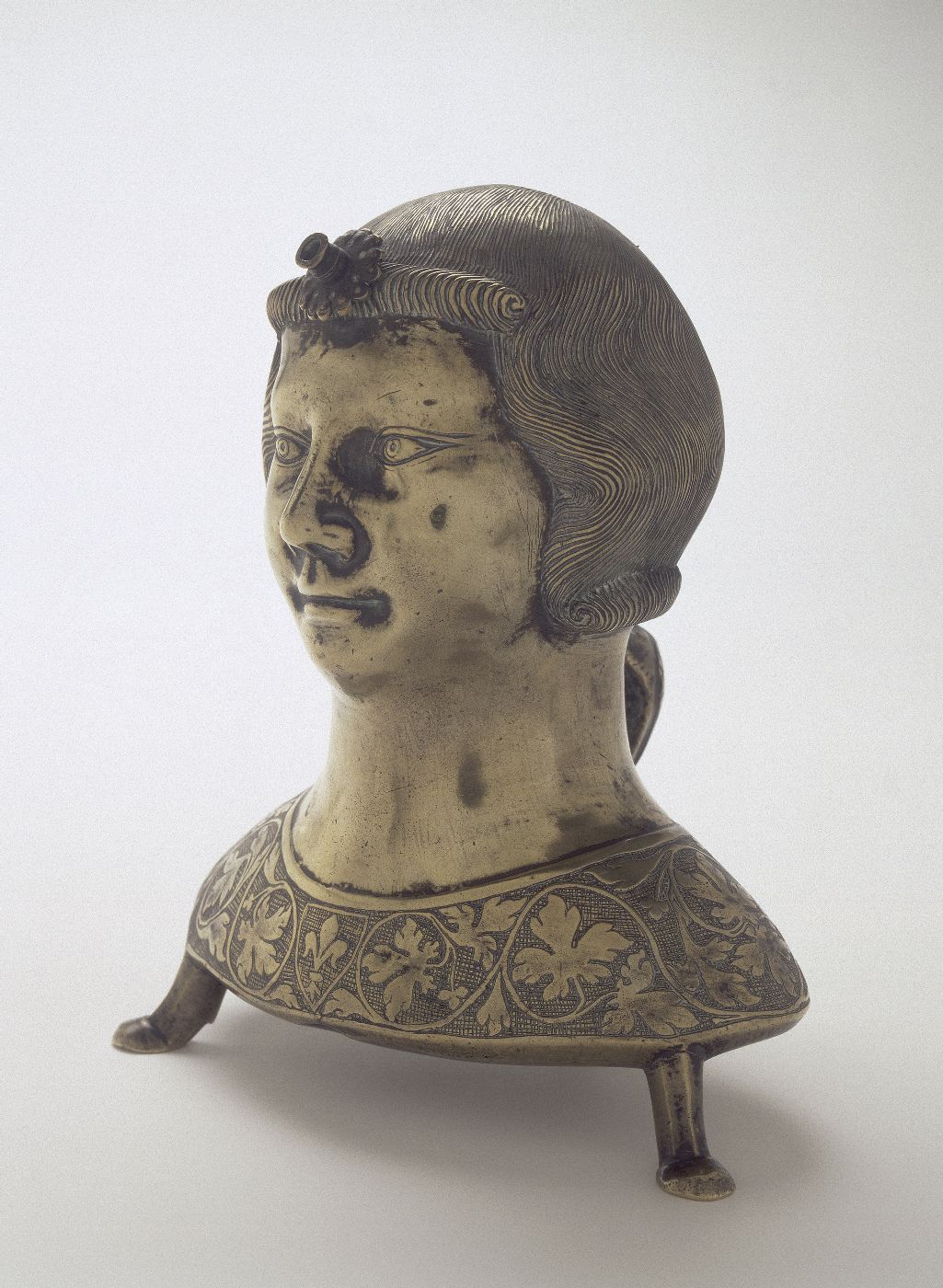
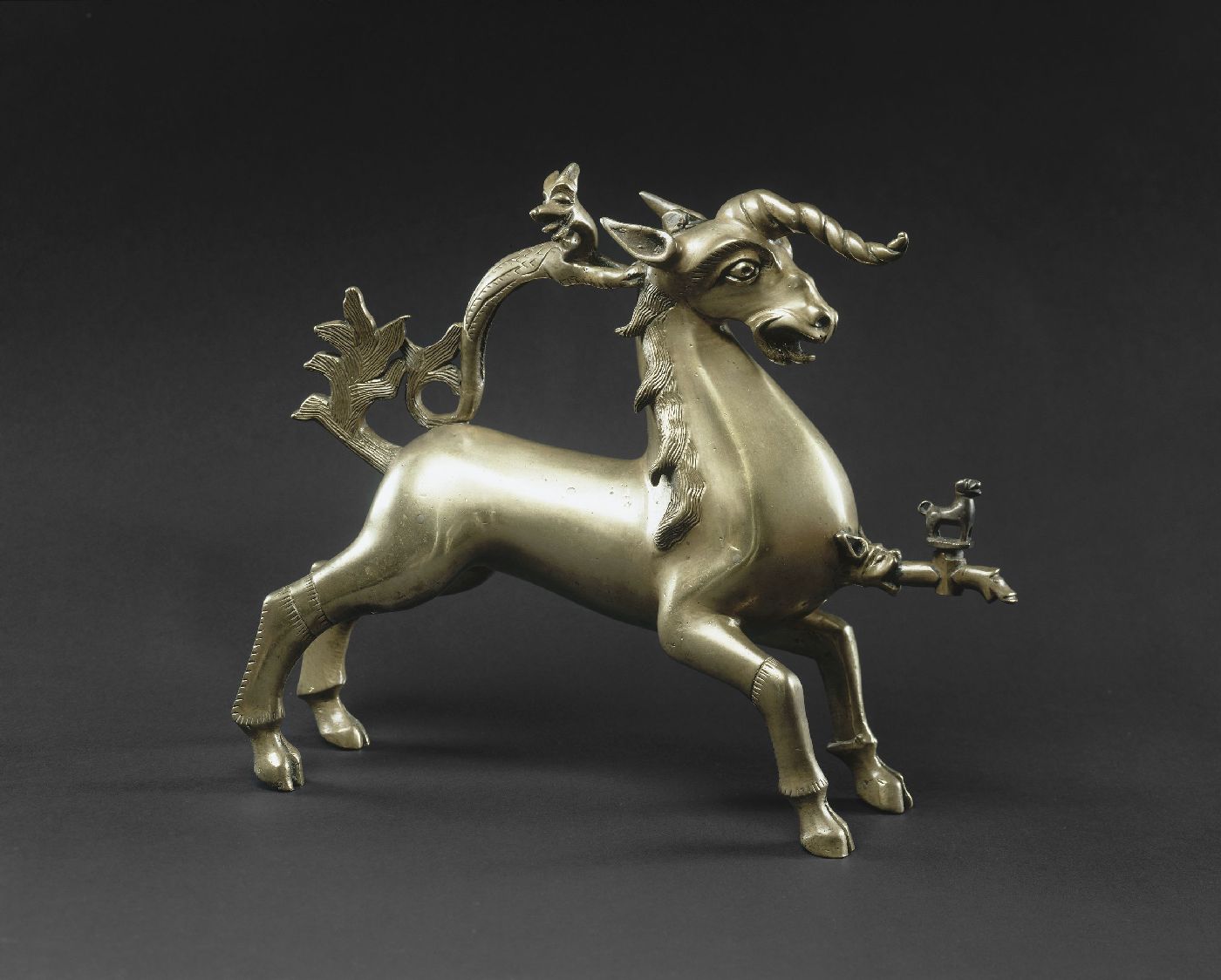
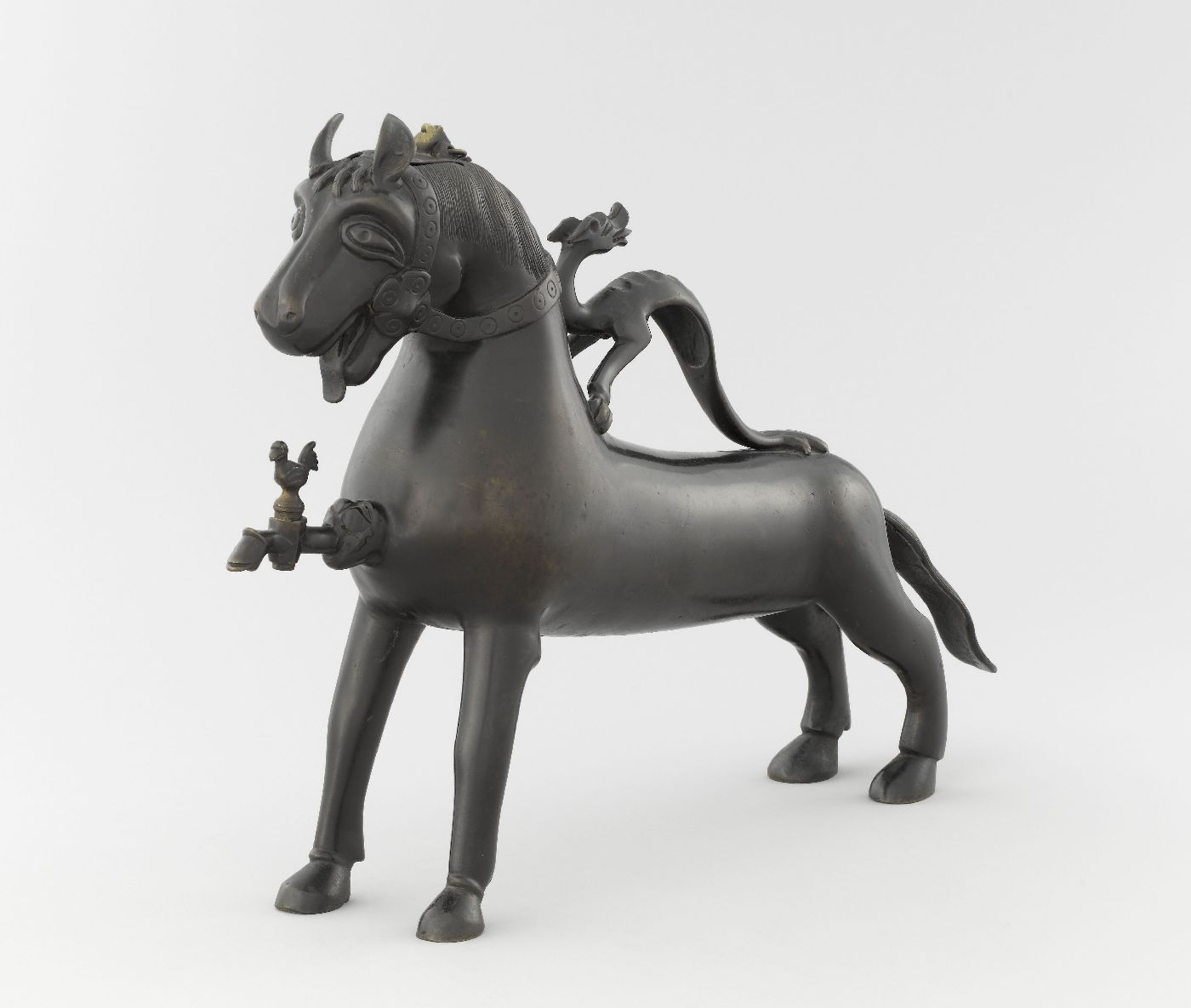
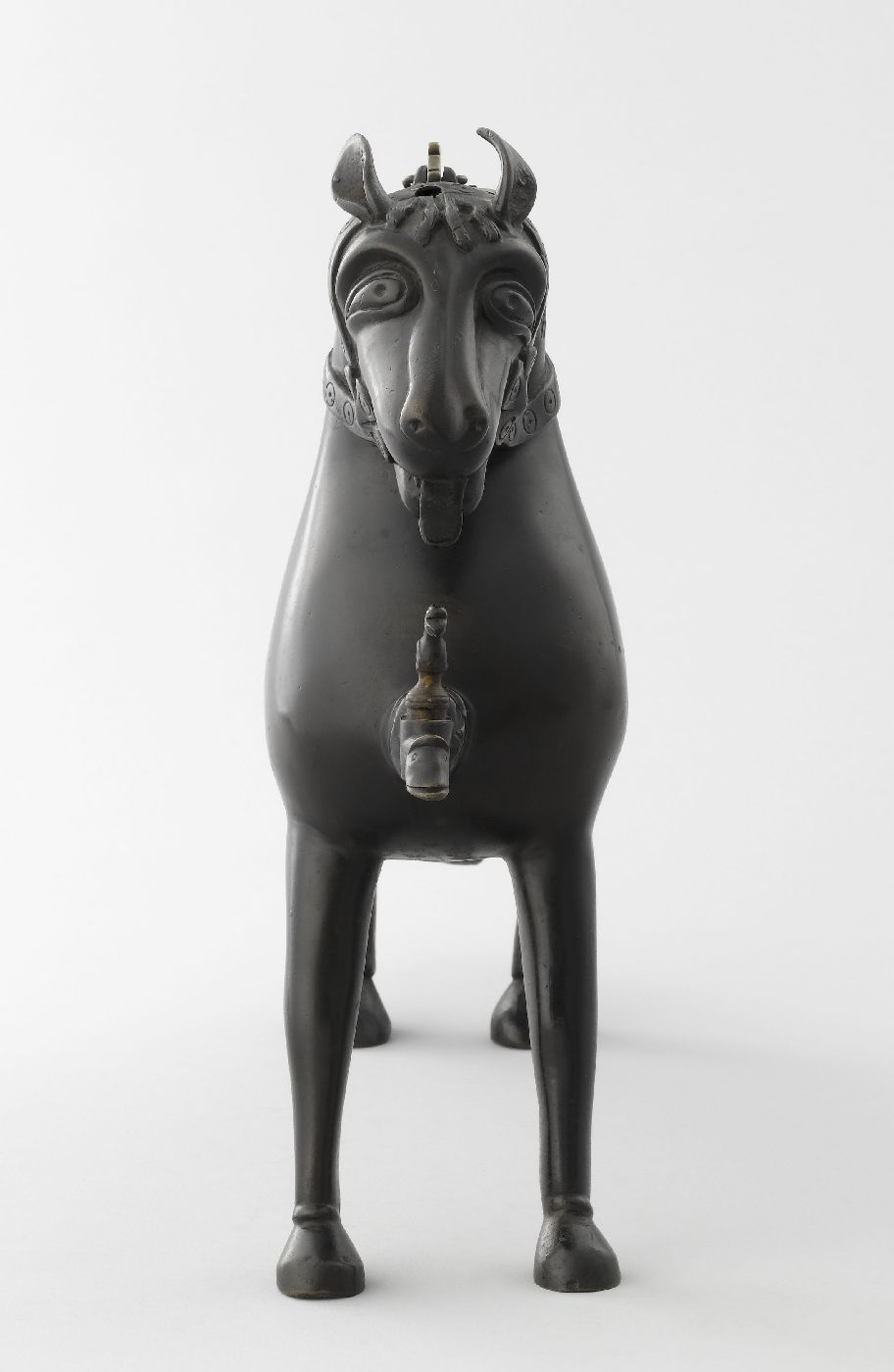
These intriguing objects, shaped like animals or the bust of a young man, date back to the 14th century and come from Germany. They are made of brass (copper and zinc alloy). They are known as "aquamaniles". From the Latin words aqua (meaning "water") and manus (meaning "hand"), they are vessels for washing hands. They have an opening to be filled with water and a spout through which it flows.
In the Middle Ages, these objects could be used in both religious and secular contexts. They were used to wash the priest's hands during the service. When a lord received a guest, he could invite him to wash his hands as a sign that his customs were accepted. In all cases, the washing water is collected in a basin.
This practice, which is well known since antiquity, addresses a sanitary need. But it has a higher value of purification. Present in all aspects of mediaeval society, in both religious and civil spheres – Christian, Jewish, and Islamic alike – it facilitated symbolic ablutions.
Aquamaniles were therefore found throughout mediaeval Europe. Made from ceramic, copper alloys, or precious metals, these vessels have a wide range of shapes that reflect the creativity of their designers.
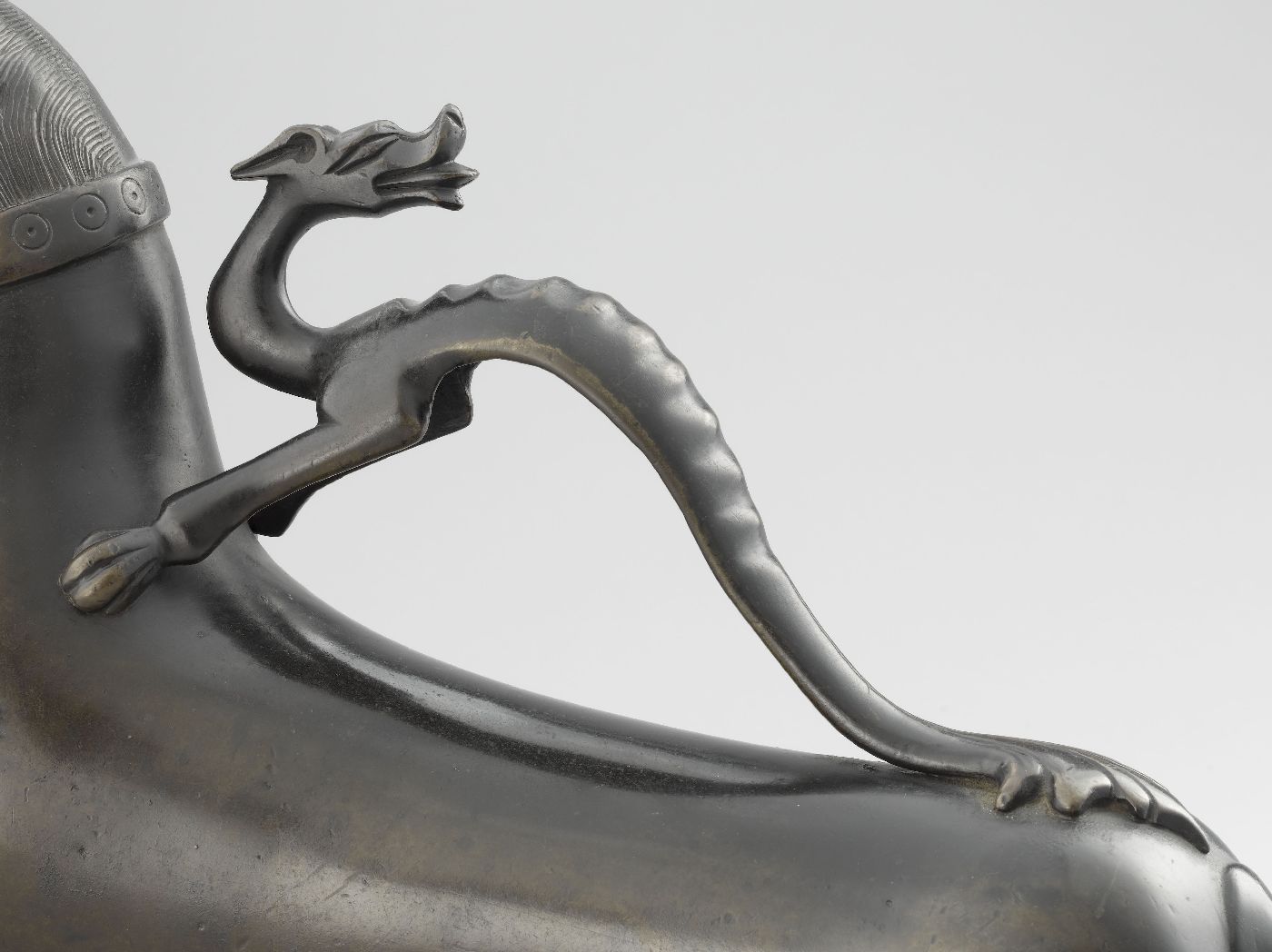
For example, the unicorn-shaped aquamanile resembles a fantastical creature with the body of a horse, the hooves of a goat, and a twisted horn reminiscent of a narwhal's tusk. In addition, there are other zoomorphic designs. The handle is shaped like a dragon on the back of the unicorn (as for a horse). A dog decorates the spout. The neck consists of a tongue emerging from a monster's head.
Aquamaniles often take the shape of real or mythical animals, such as dogs, lions, centaurs, and mermaids. Other examples, like the bust of a young man presented here, are human in form.