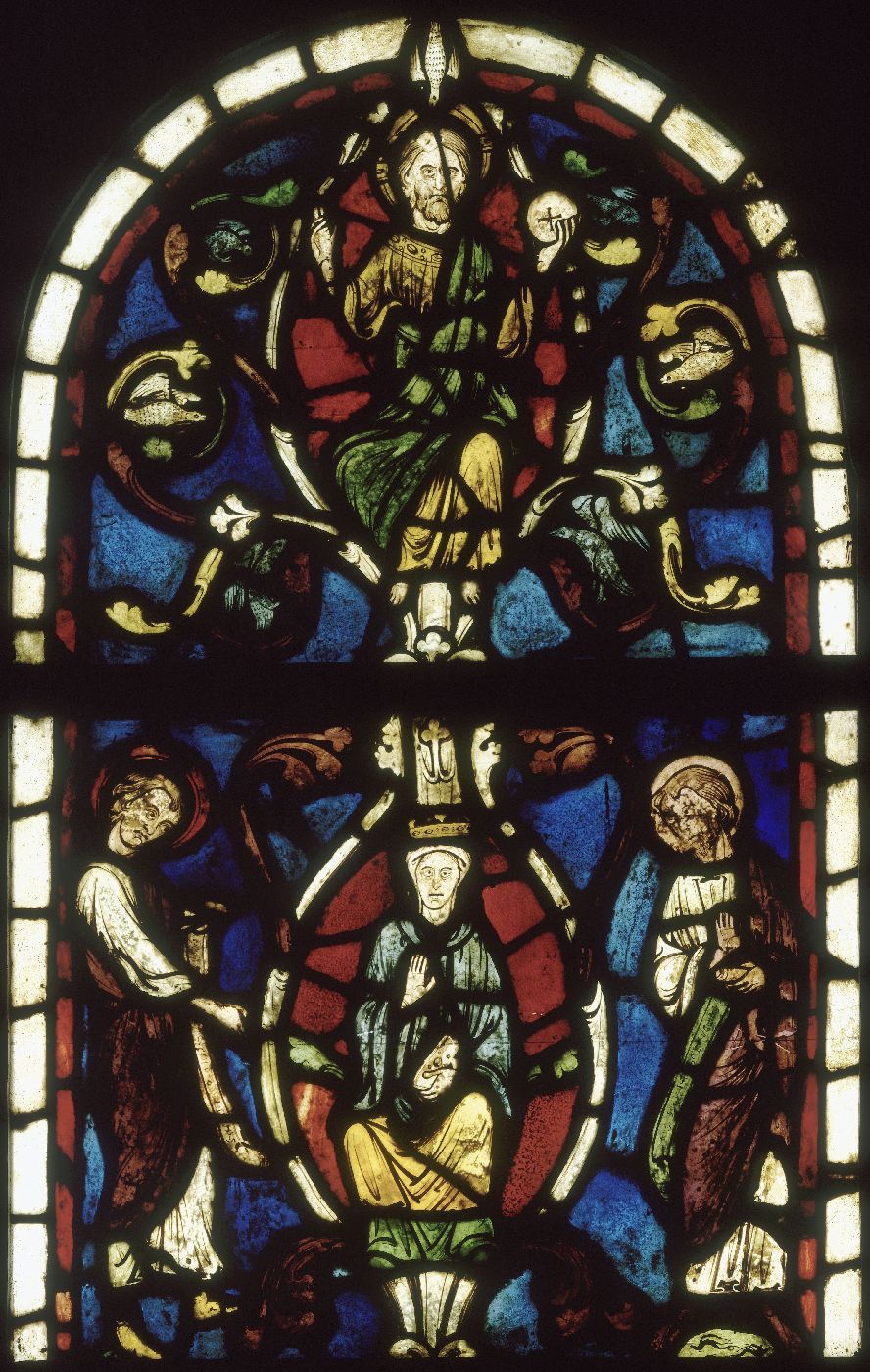
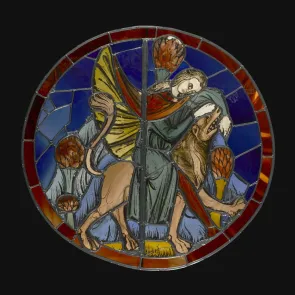
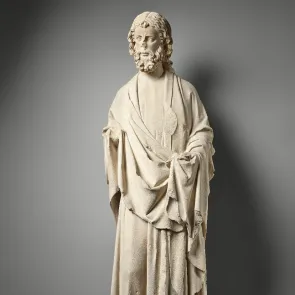
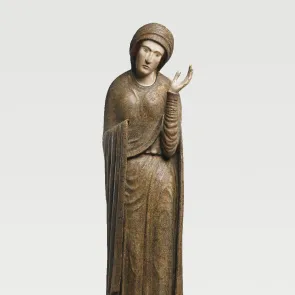
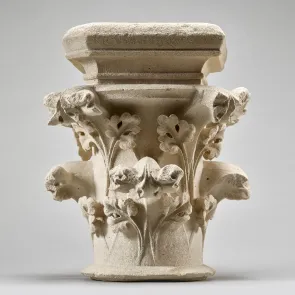
The Tree of Jesse is a common motif in medieval art, particularly in the Île-de-France region. It evokes the genealogy of Christ. These two stained glass windows focus on the figures of Jesus and the Virgin.
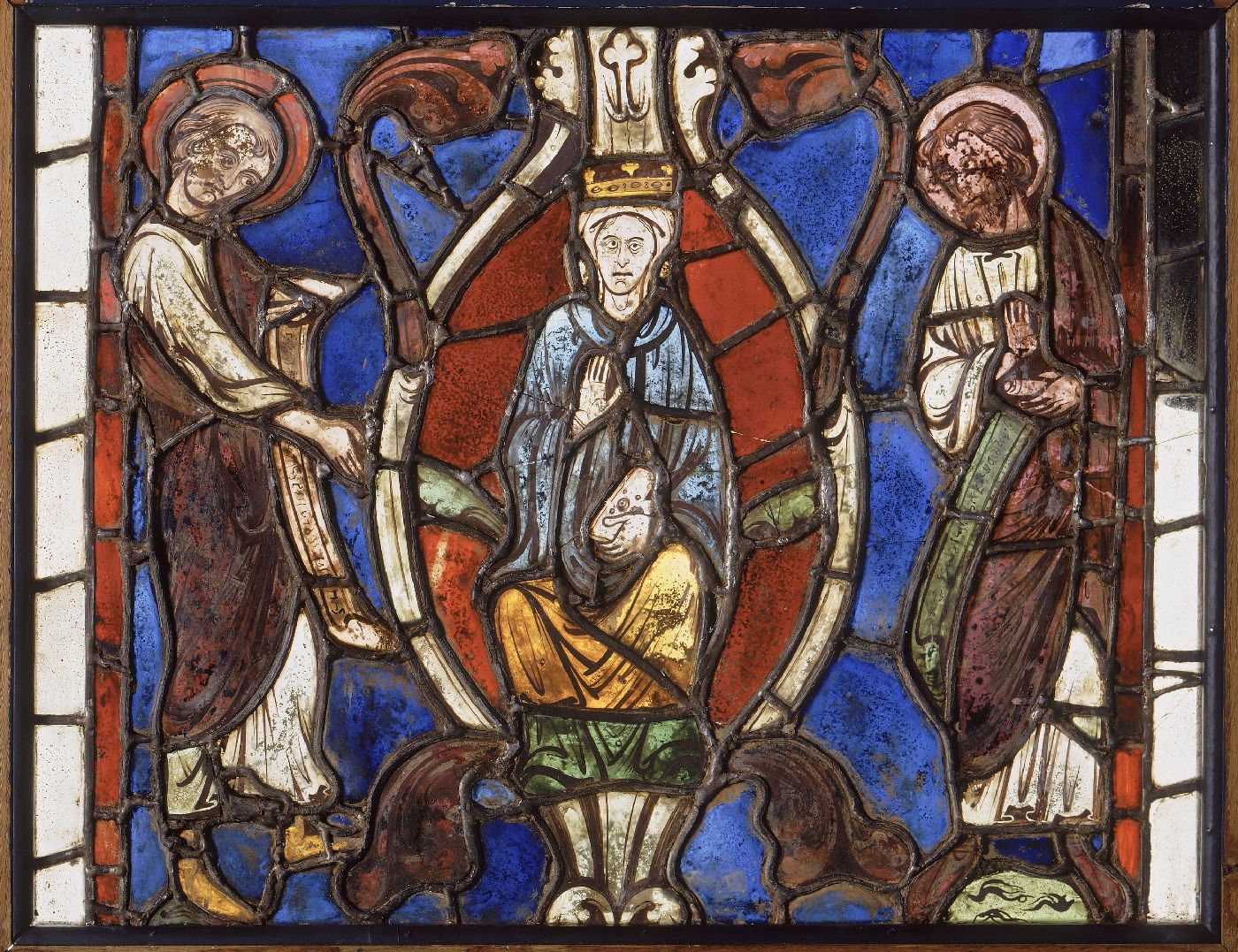
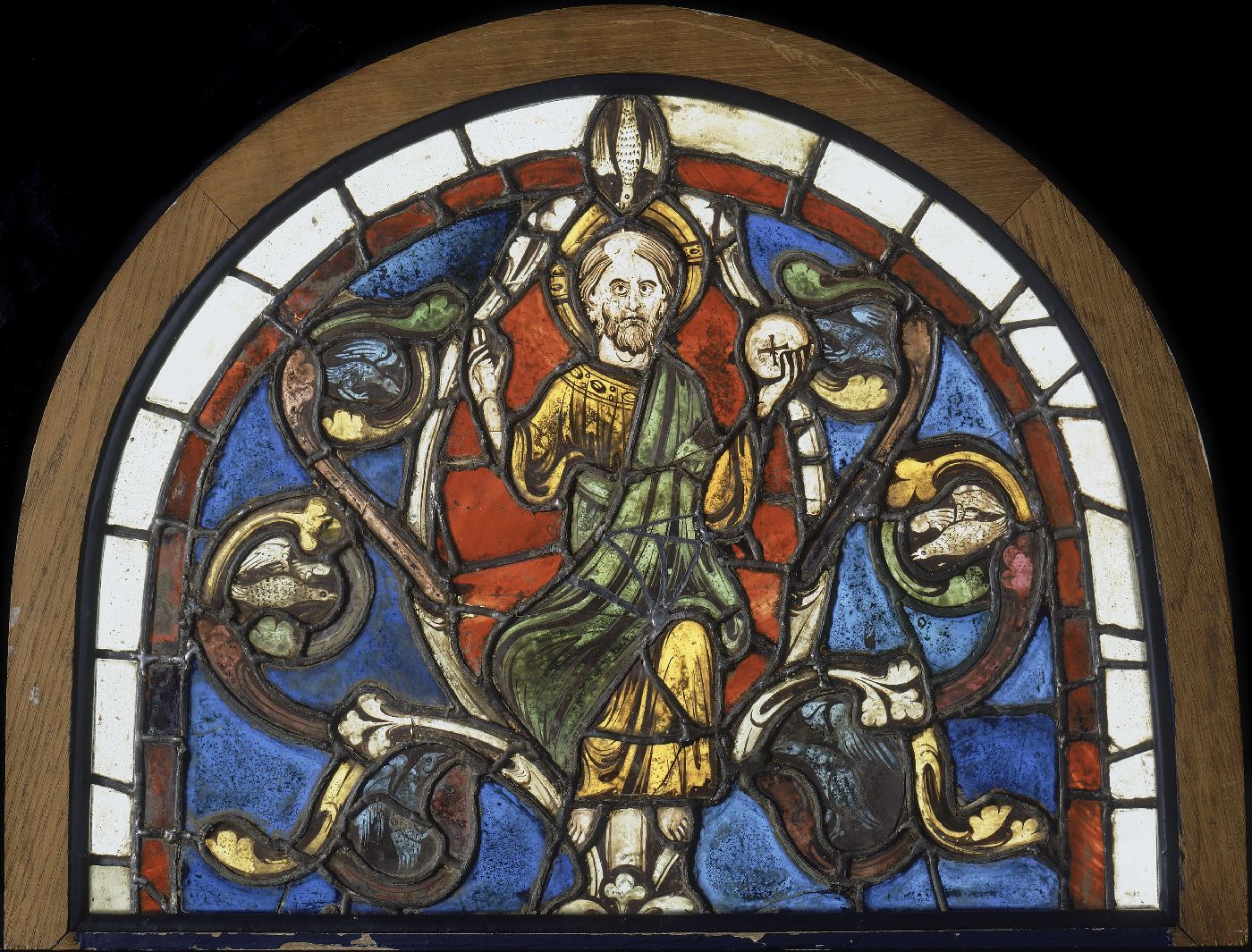
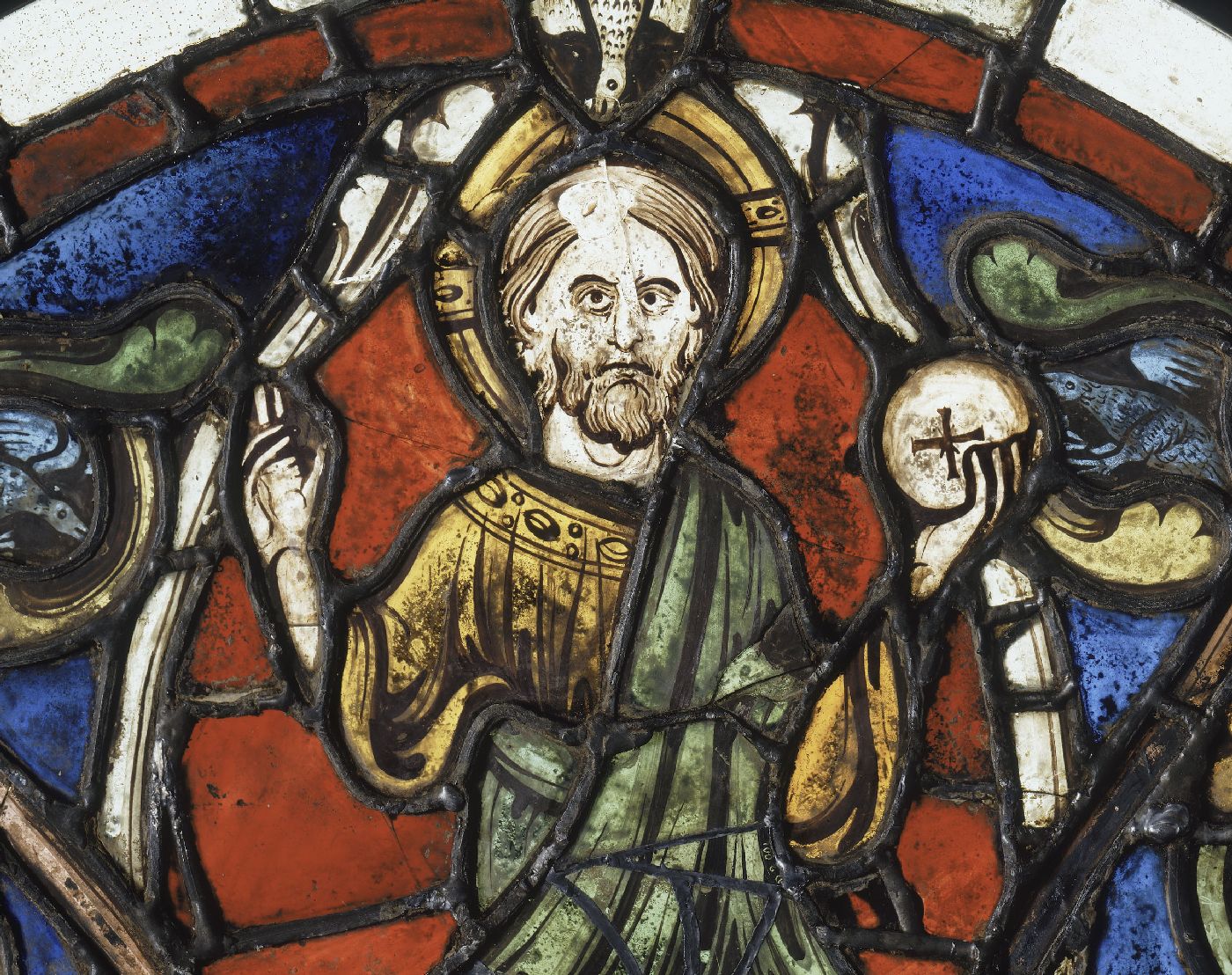
The Christ and the Virgin Mary reign in majesty, each within a mandorla with a red background. Jesus stands at the top of a stem linking him to his mother, Mary, like a family tree.
These two 13th-century stained glass windows are based on a depiction of the Jesse tree. This iconographic motif is inspired by a prophecy from Isaiah (The Book of Isaiah, chapter 11): "And there shall come forth a rod out of the stem of Jesse, father of Daivd, and a Branch shall grow out of his roots" (Chapter 11, verse 1).
The prophecy is illustrated in the form of a family tree of Christ from Jesse through King David and the Virgin Mary.
The representation in the Musée de Cluny is incomplete. The lower section is missing, featuring David and his father, Jesse.
At the top of the tree, Christ raises his right hand in blessing, while holding an orb and cross in his left hand. This disposition reflects that of Christ, the "Salvator Mundi" ("Saviour of the World").
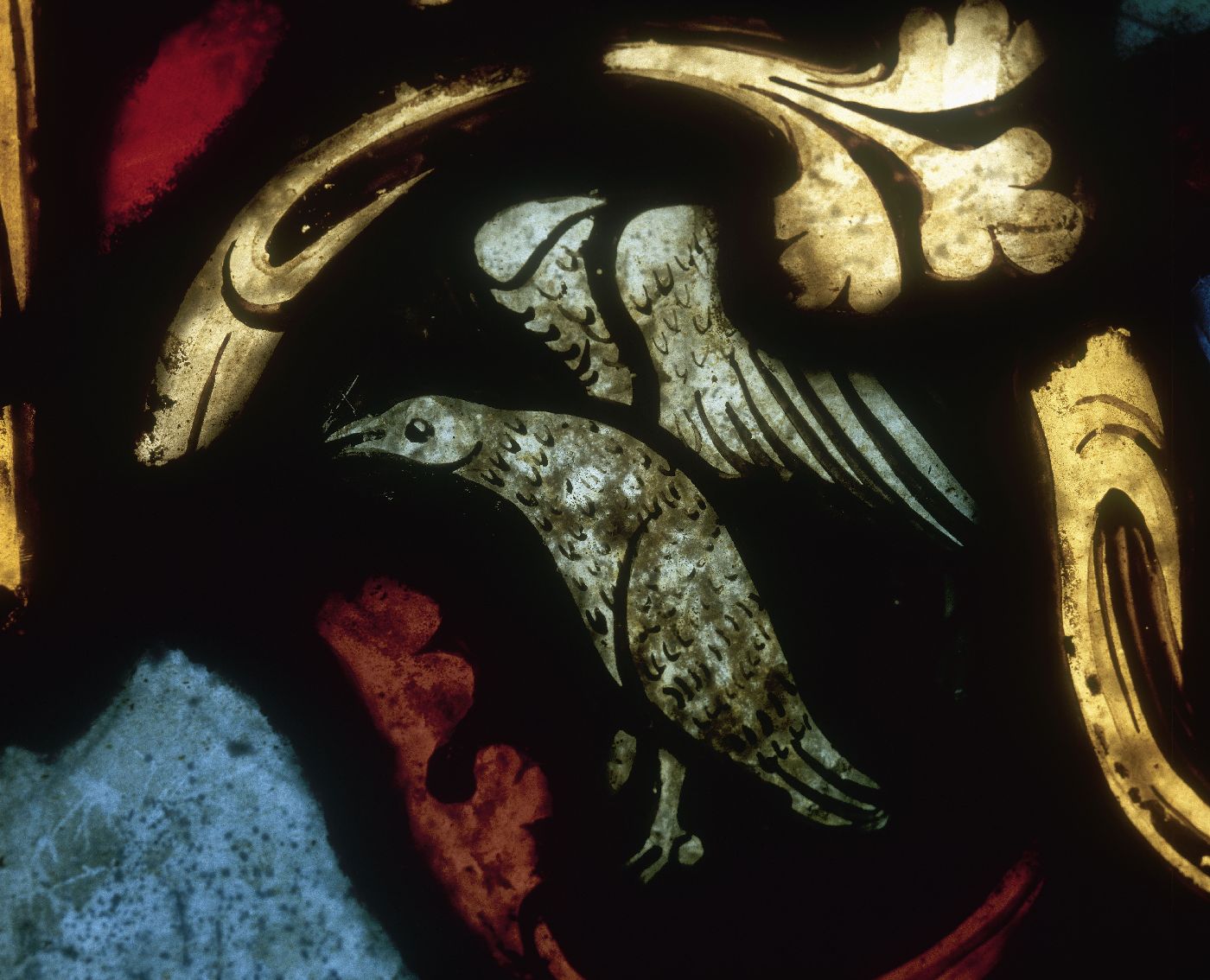
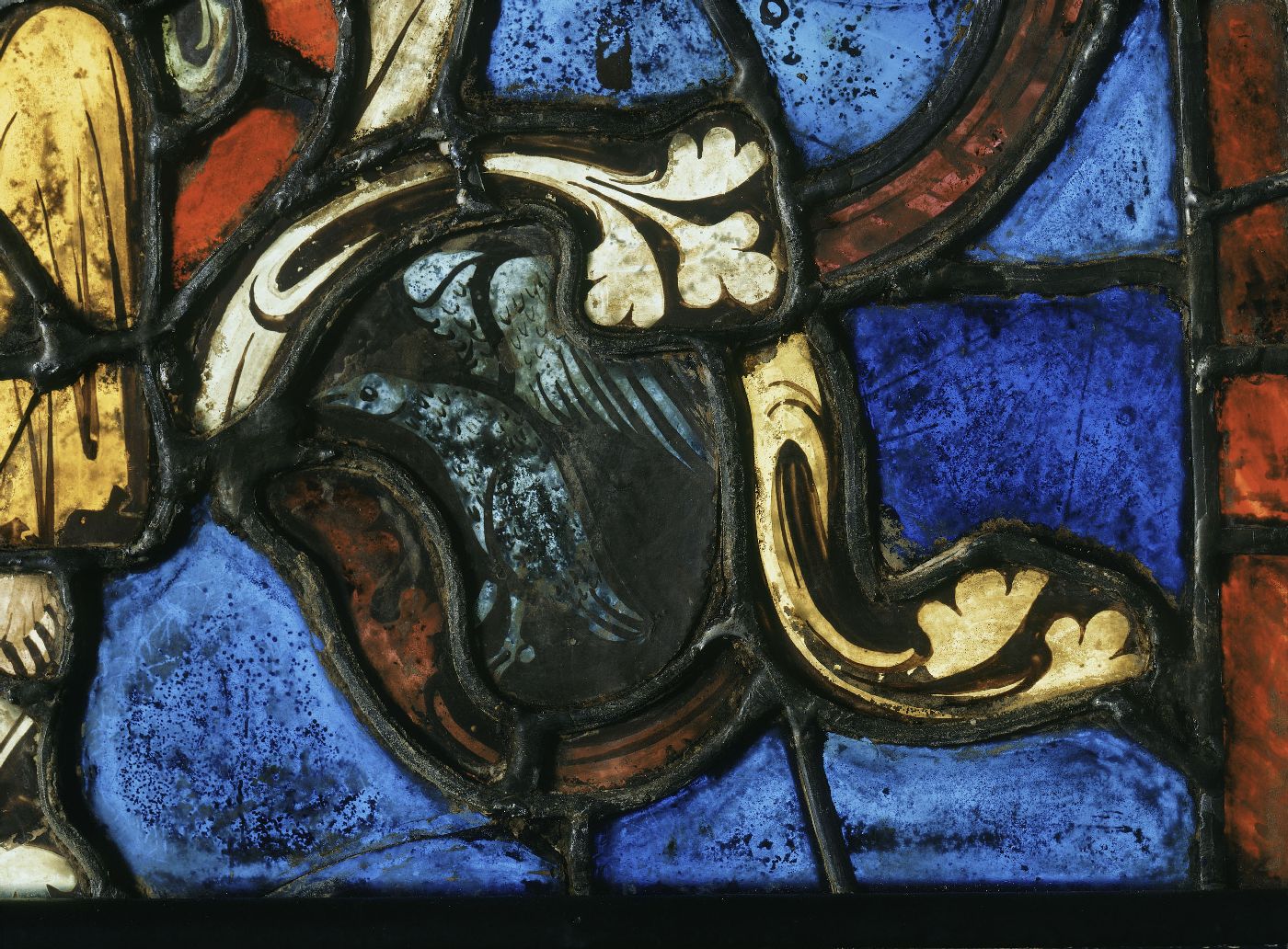
He is surrounded by seven doves that symbolise the gifts of the Holy Spirit, which are represented by the scrollwork tendrils emerging from the mandorla: wisdom, understanding, fortitude, knowledge, counsel, piety, and fear of the Lord.
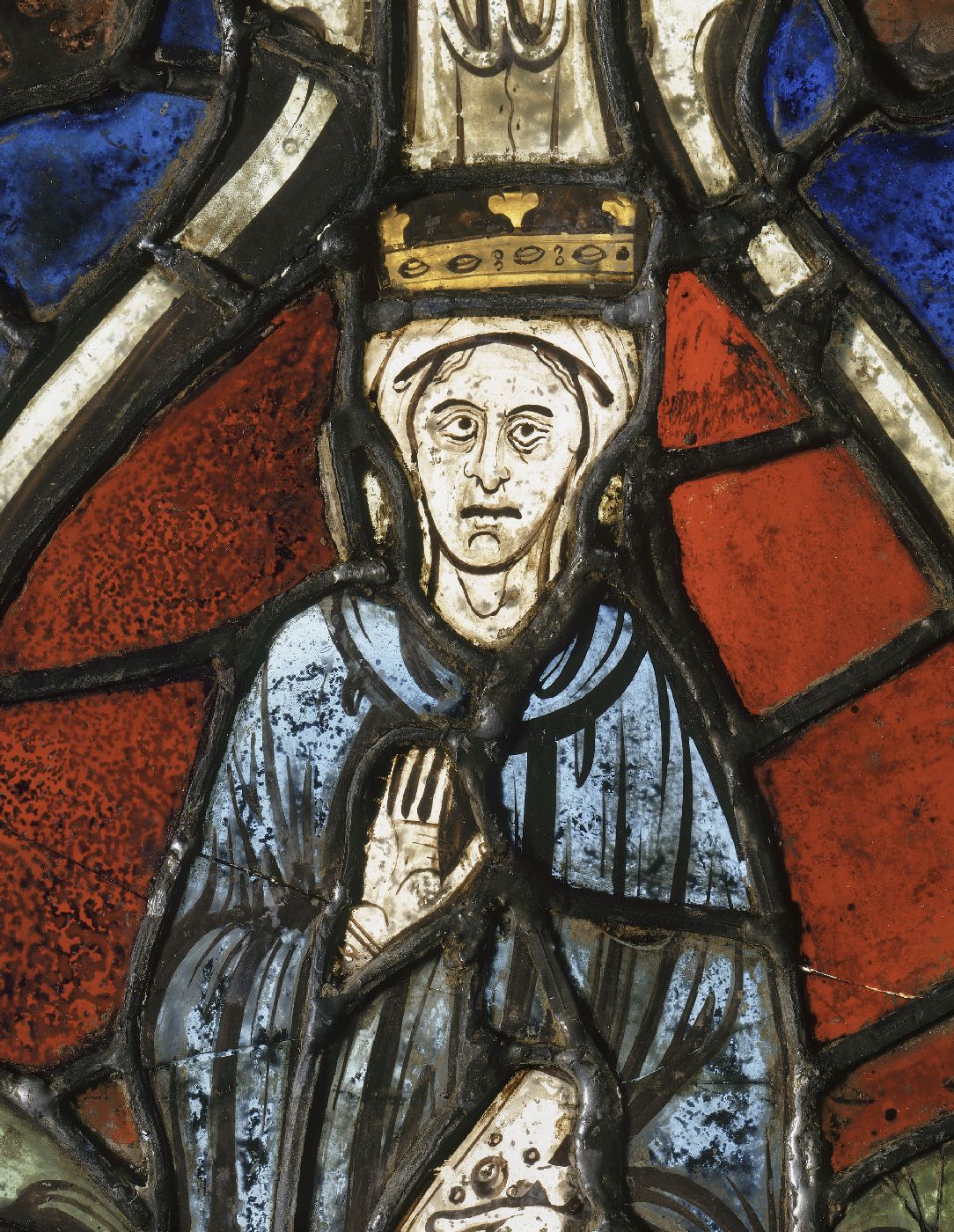
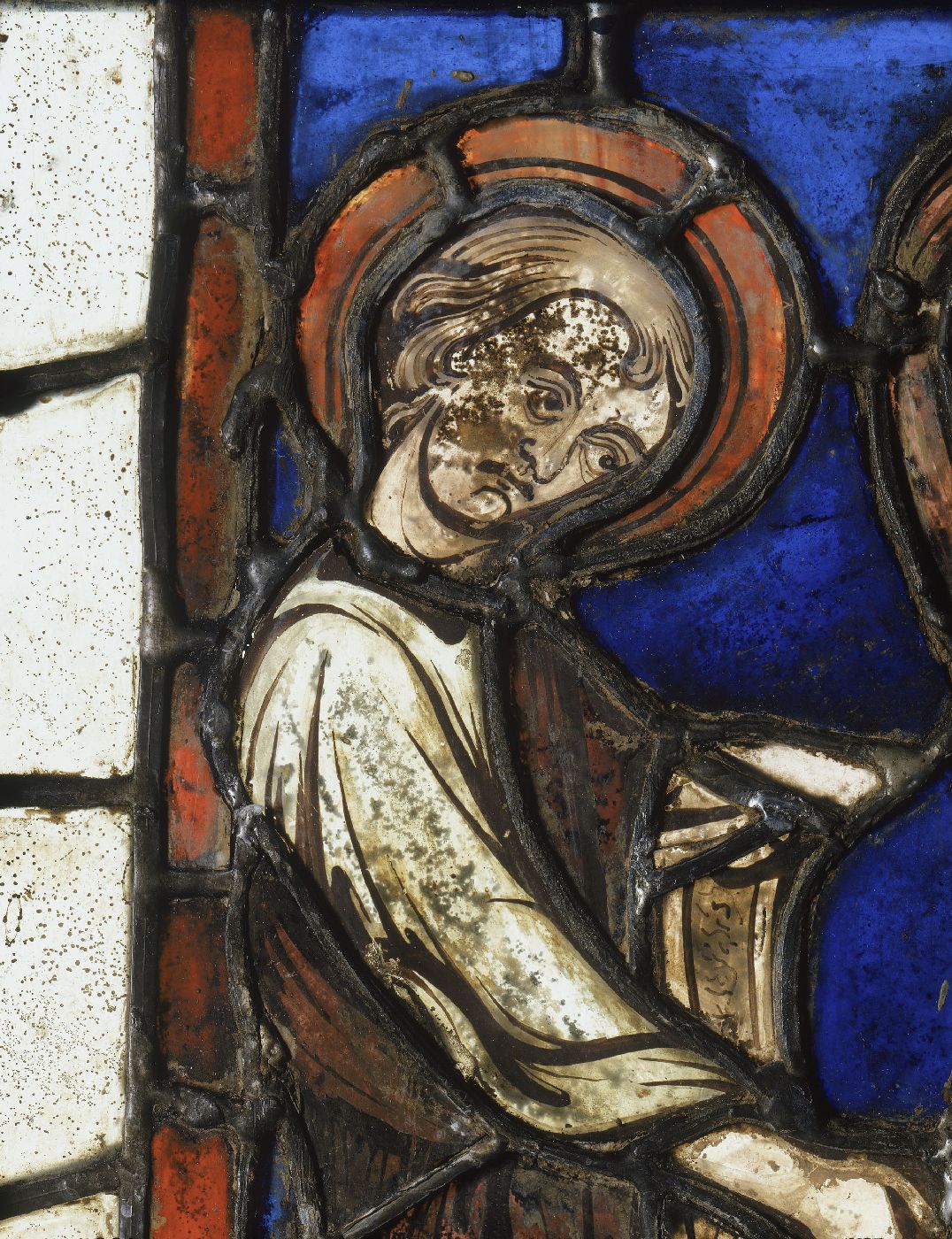
The Crowned Virgin raises her hand in a gesture of professing faith, with her palm visible. In her left hand, she holds a book, likely to be the Holy Scriptures. She is surrounded by two prophets who hold a phylactery: they are probably Isaiah, who prophesies that Christ will be born of a virgin, and Daniel, who is often associated with the tree of Jesse.
The monumentality of the figures and the elegant depiction of the fabric folds characterise the work produced by the early 13th-century Parisian workshops associated with the royal court. The expressive gestures of the two prophets and the stylised elongation of the figures seem to herald the fluid and eloquent style of the Sainte-Chapelle in Paris.
The theme of the Jesse tree was first used in the stained glass windows of the abbey of Saint-Denis in 1140 to glorify the royal origins of Christ. Secondly, this depiction gained favour among the churches of Île-de-France, the domain of the Capetian kings. It is also found in various forms in illuminated manuscripts.
These stained glass windows were discovered in the 19th century in the small church of Varennes-Jarcy in the Essonne region. It is widely believed that they originate from the nearby abbey of Gercy, which was founded around 1260 by Joan of Toulouse, sister-in-law of Saint Louis. Indeed, the theme of the Tree of Jesse is well-suited to a princely foundation, especially one dedicated to Notre-Dame.