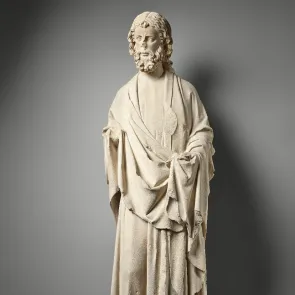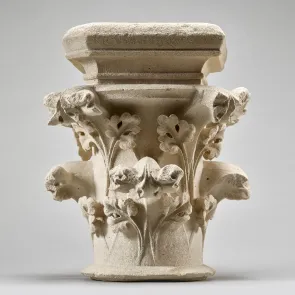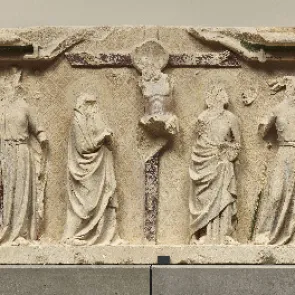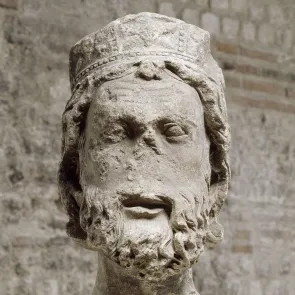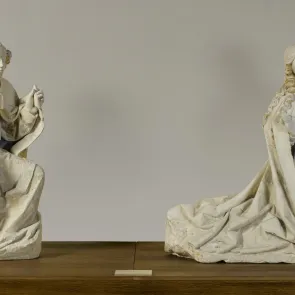
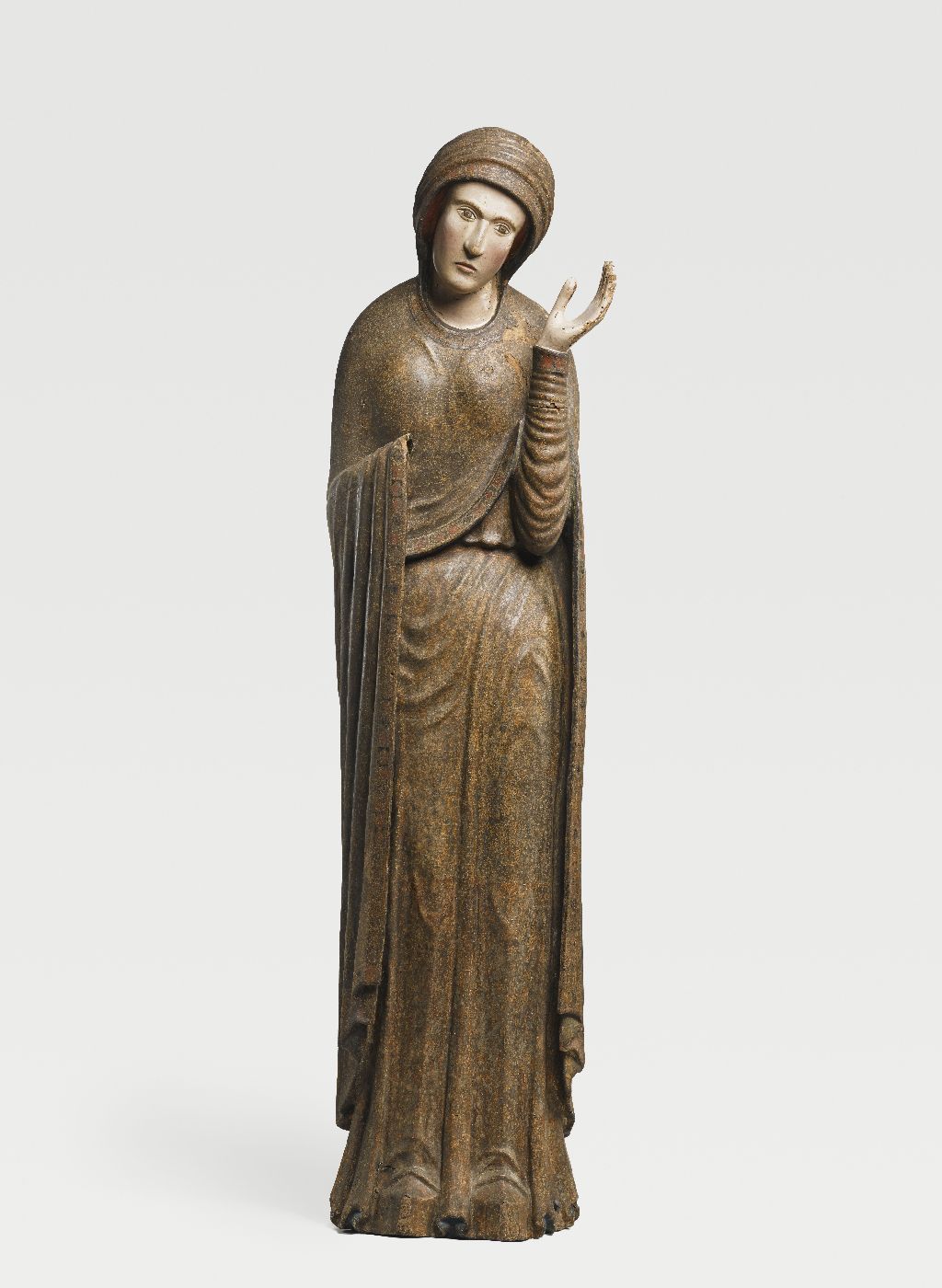
The Virgin at Calvary, Cl. 2368 © GrandPalaisRmn / Michel Urtado
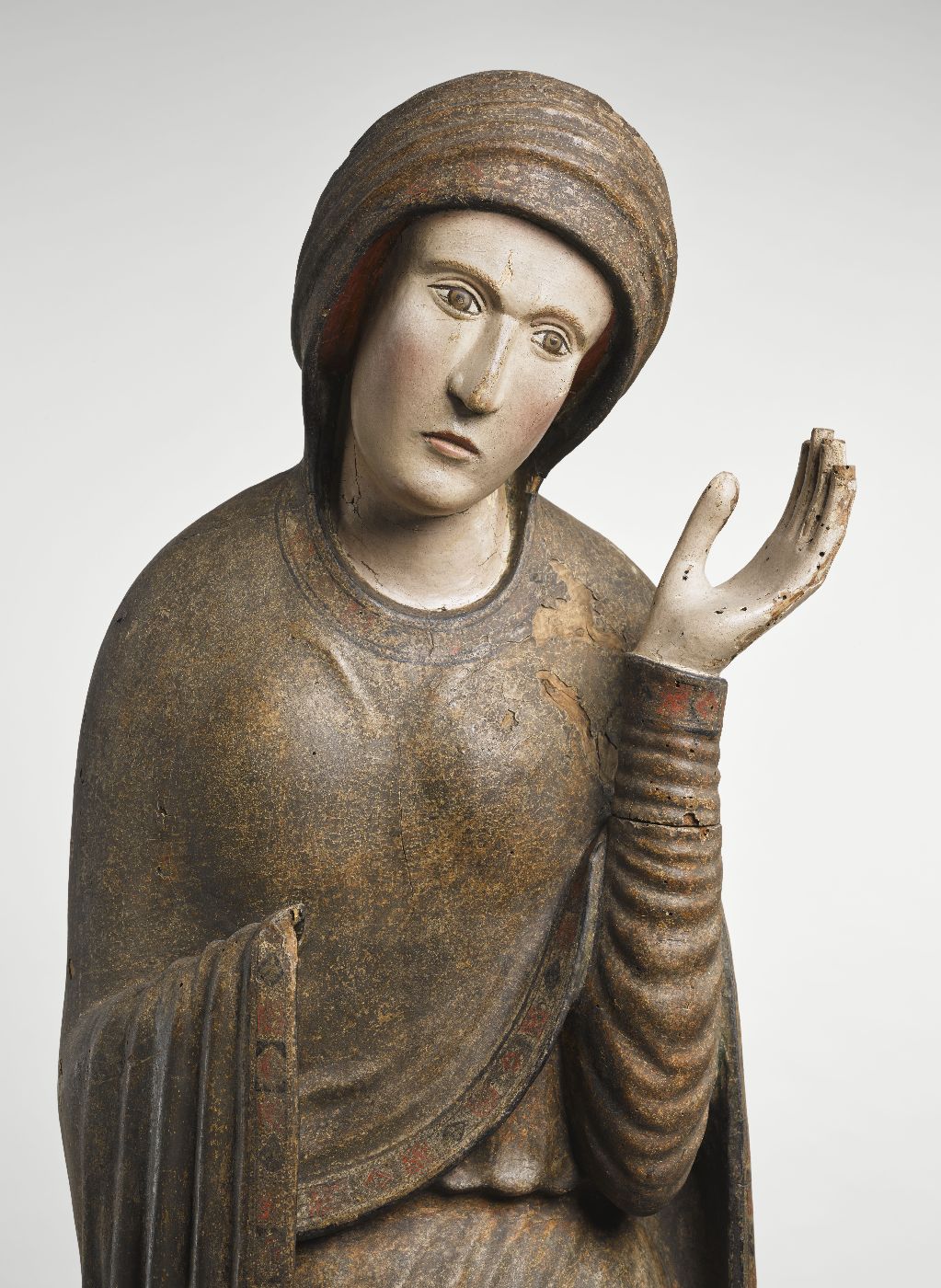
The Virgin at Calvary, Cl. 2368 (detail) © GrandPalaisRmn / Michel Urtado
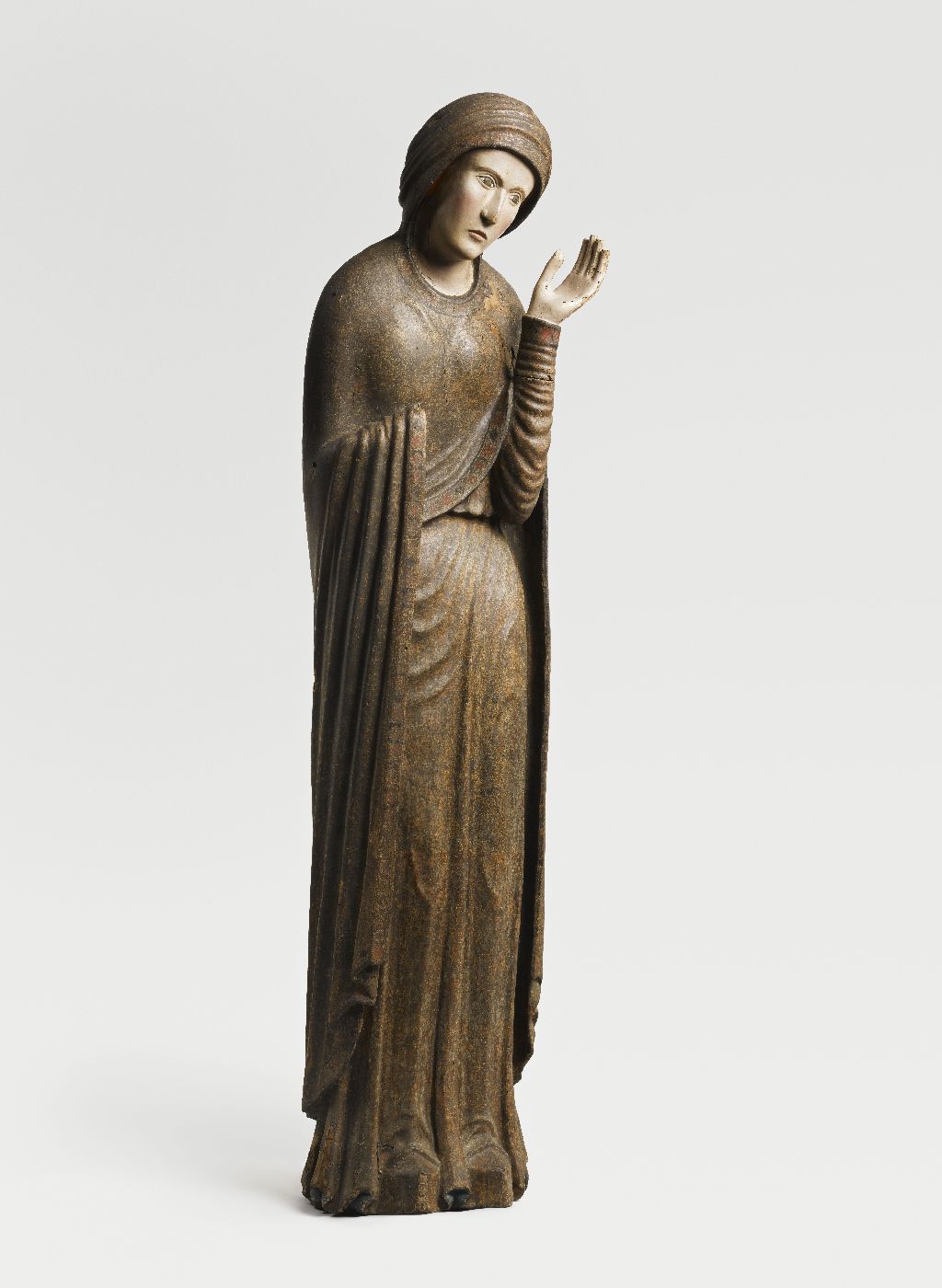
The Virgin at Calvary, Cl. 2368 © GrandPalaisRmn / Michel Urtado
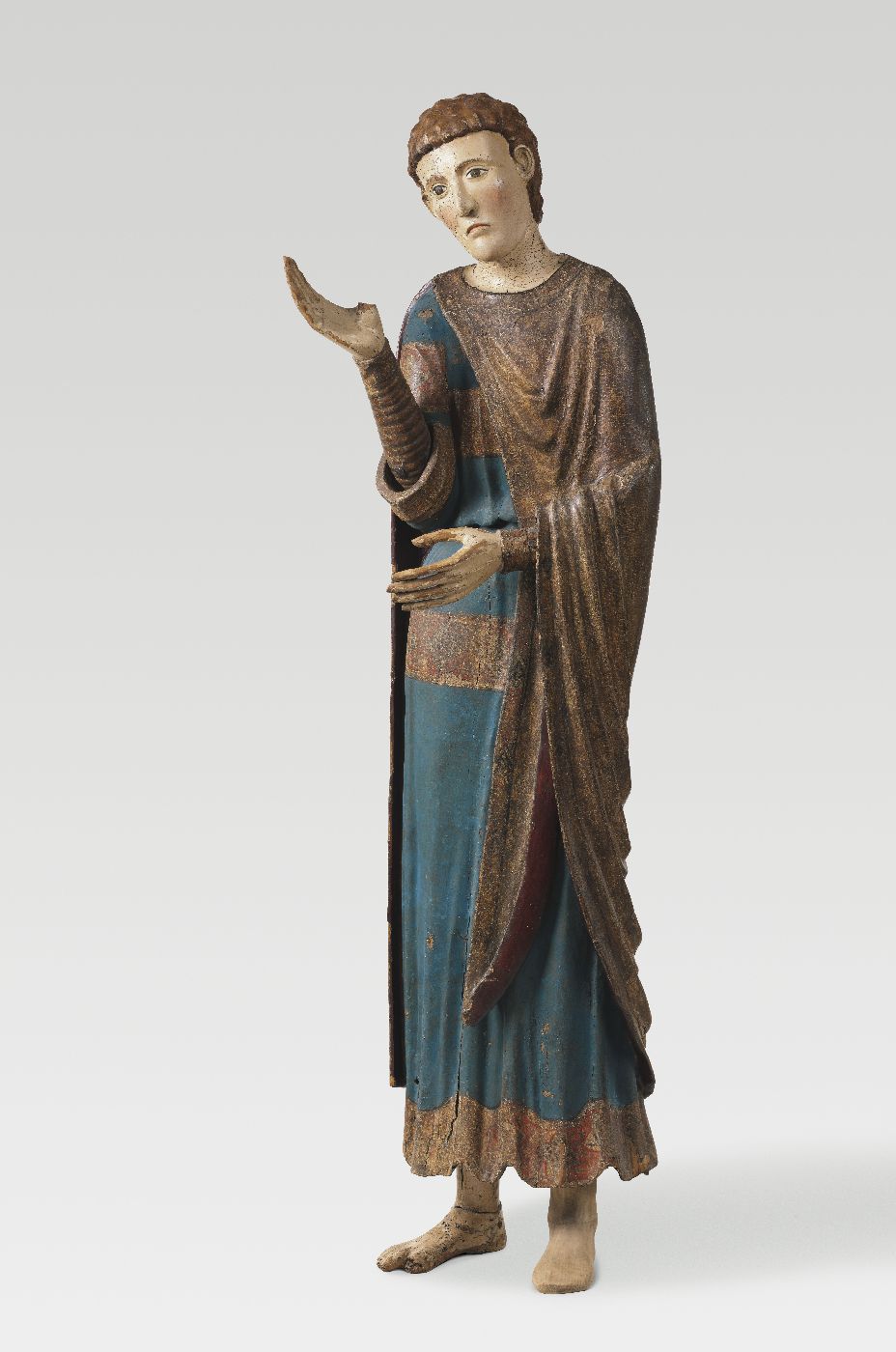
Saint John at Calvary, Cl. 2369 © GrandPalaisRmn / Michel Urtado
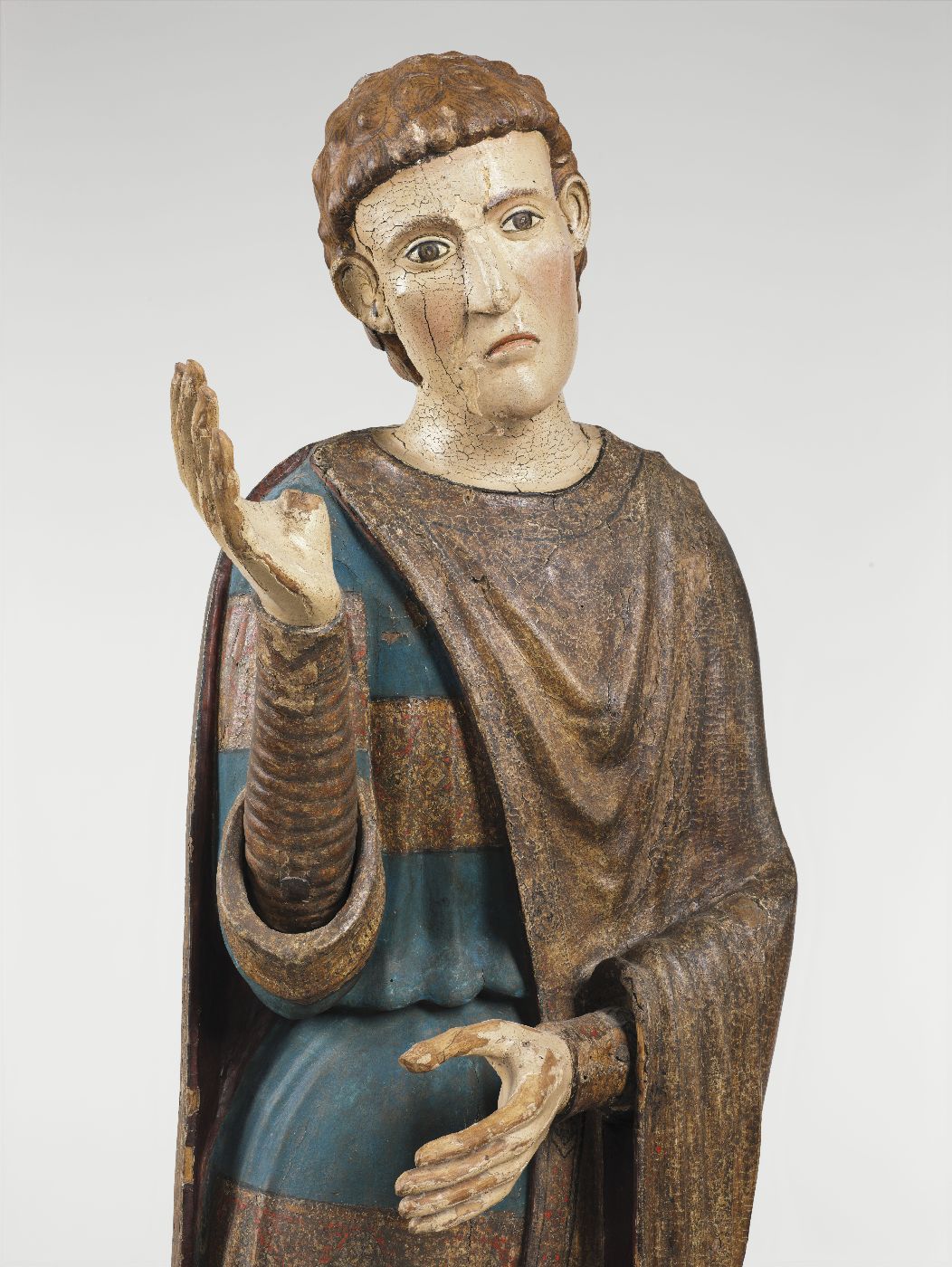
Saint John at Calvary, Cl. 2369 (detail) © GrandPalaisRmn / Michel Urtado
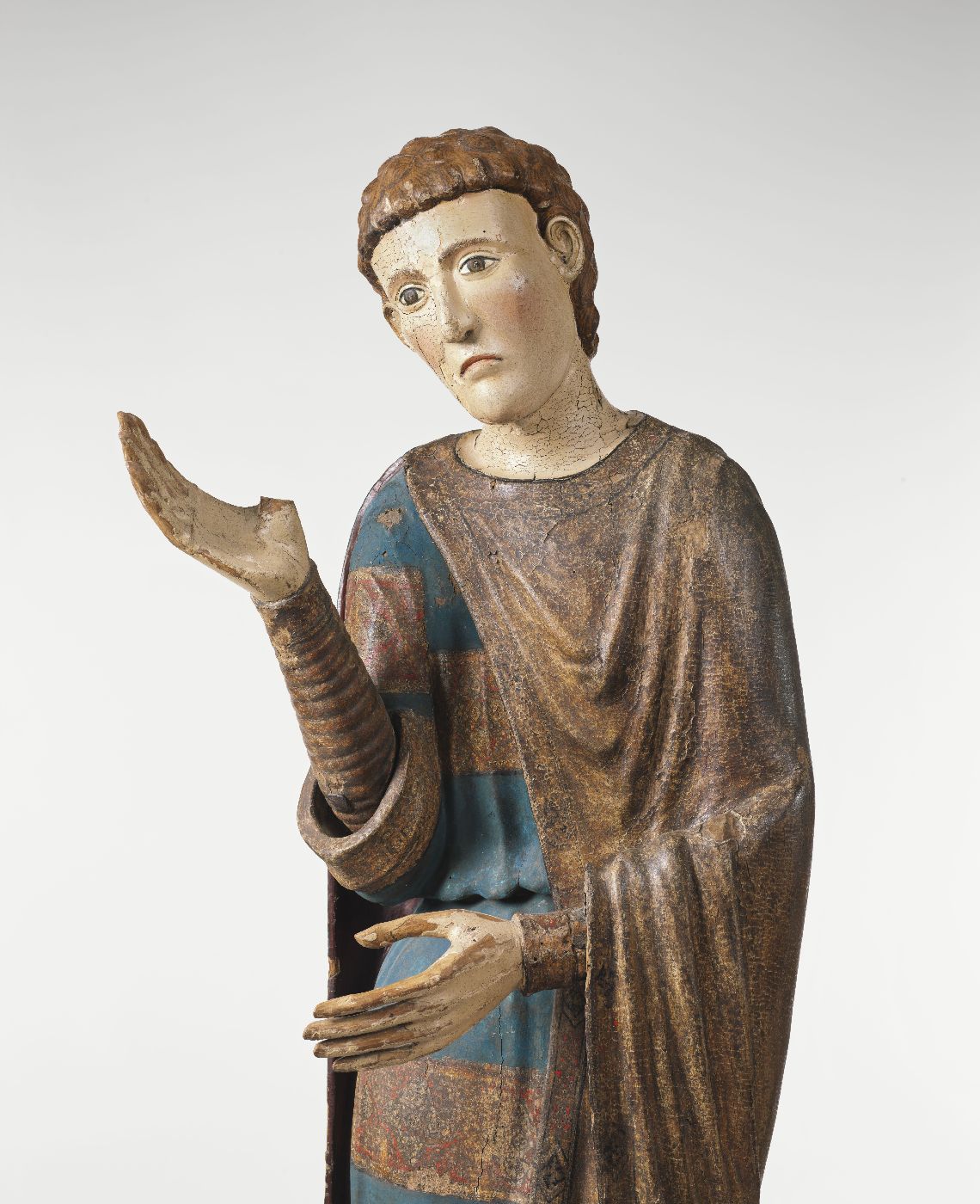
Virgin and Saint John from a Descent from the Cross
Description
These two polychrome wooden sculptures represent the Virgin Mary and Saint John. They date back to the early 13th century. They are part of a sculpted ensemble from Prato Cathedral, not far from Florence (Italy).
To fully understand these life-size sculptures, they should be imagined in their original arrangement. They belong to a sculpted group representing a Descent from the Cross. The crucified Christ at the centre, which is still kept in the Prato Cathedral. The figures of Joseph of Arimathea and Nicodemus descended from the Cross. The Virgin and Saint John stood on either side, pointing to the central group of figures.
They are often represented in the Crucifixion or the Descent of the Cross. When they are present, the Virgin is always placed to the right of Christ and Saint John to his left.
The two elongated figures exhibit the hieratic posture characteristic of Italian sculpture from the first half of the 13th century, which was influenced by Byzantine art.
Their garment features draped fabric with straight folds or curved lines. The concentric folds of the veil surrounding the Virgin's face appear to envelop her in her sorrow.
These characters express restrained sorrow, despite being distressed by the death of Christ. Their reserved expressions convey a sense of remembrance and introspection.
Like the Virgin, Saint John beckons the Christian with his eyes and hands to become a participant in the drama of the Passion and to share in the sufferings of Christ.
The theatrical presentation of these sculptures alludes to liturgical plays that emerged in churches around the year 1000. Their dimensions and delicate polychromy make the scene realistic and further enhance the effect produced on the faithful.
The Descent from the Cross theme encountered remarkable success in Italy in the 13th century. This representation multiplies alongside the development of a Franciscan piety aimed at making the humanity of Christ perceptible.
Virgin Mary at Calvary
| Inventory number | Cl. 2368 |
|---|---|
| Width | 40 cm |
| Height | 171 cm |
| Depth | 30 cm |
| Original location | Prato |
| Medium | Sculpture ; Wood |
| Method of acquisition | Acquired in 1854 |
Saint John at Calvary
| Inventory number | Cl. 2369 |
|---|---|
| Width | 40 cm |
| Height | 169 cm |
| Depth | 50,6 cm |
| Original location | Prato |
| Medium | Sculpture ; Wood |
| Method of acquisition | Acquired in 1854 |