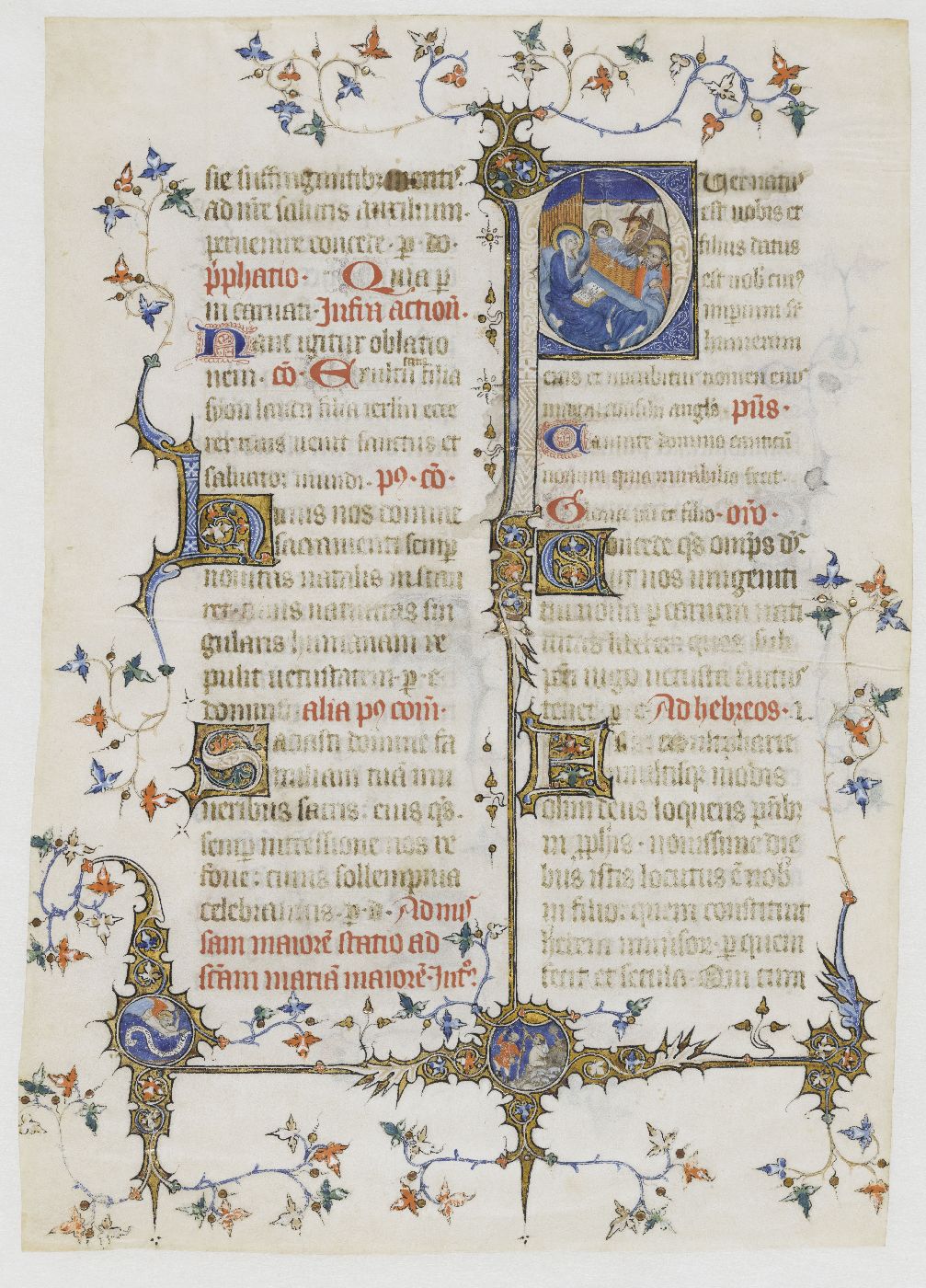
Illuminated prayer book page: Nativity, Cl. 23893 © GrandPalaisRmn / Michel Urtado
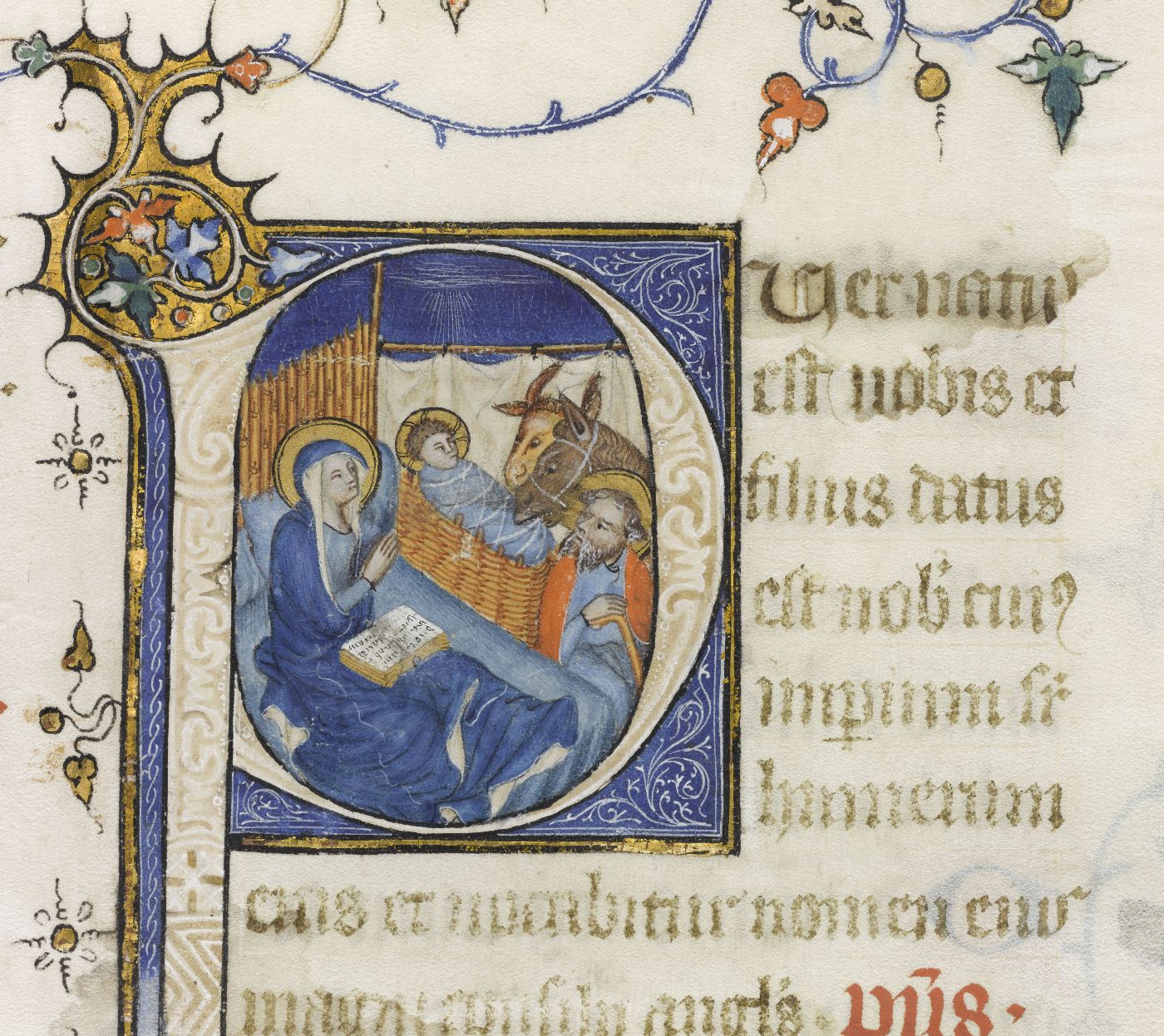
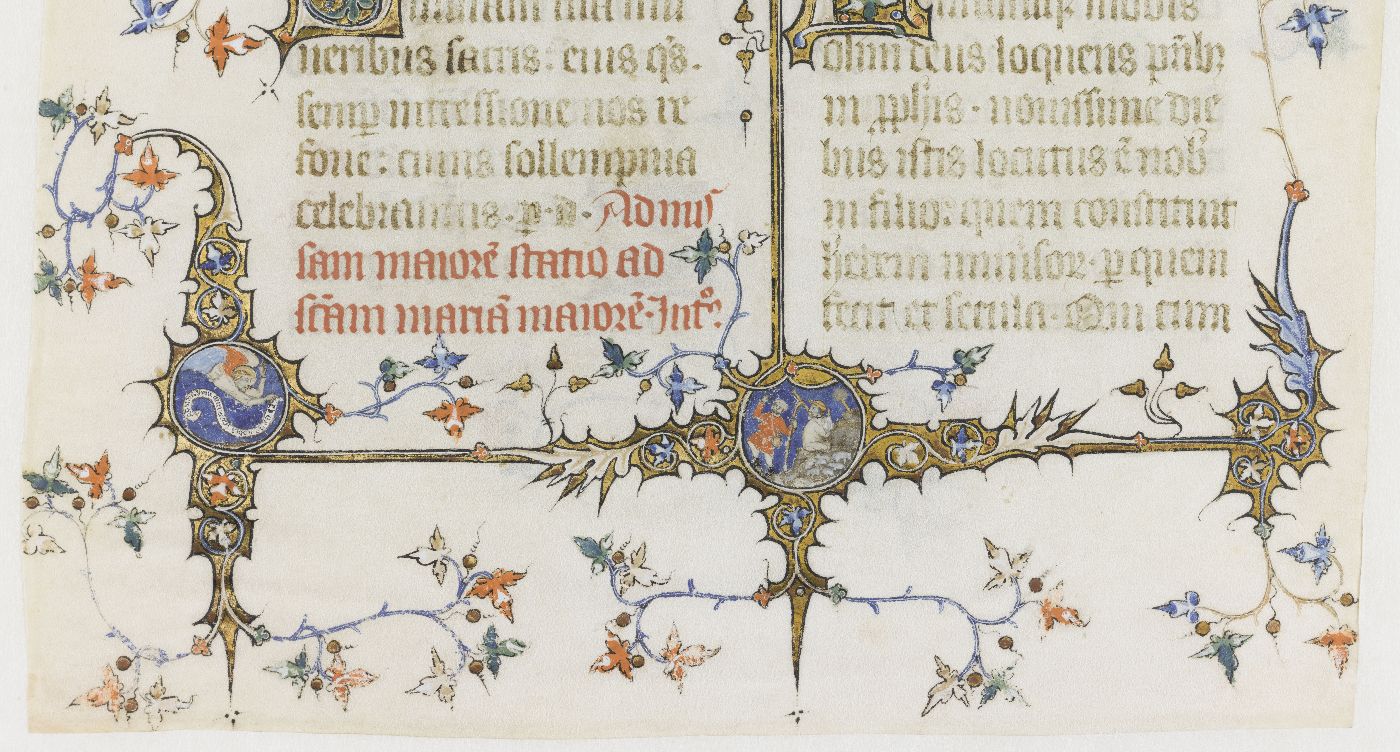
Illuminated prayer book page: Nativity, Cl. 23893 (detail) © GrandPalaisRmn / Michel Urtado
Illuminated prayer book page: Nativity
Description
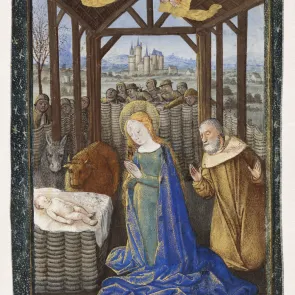
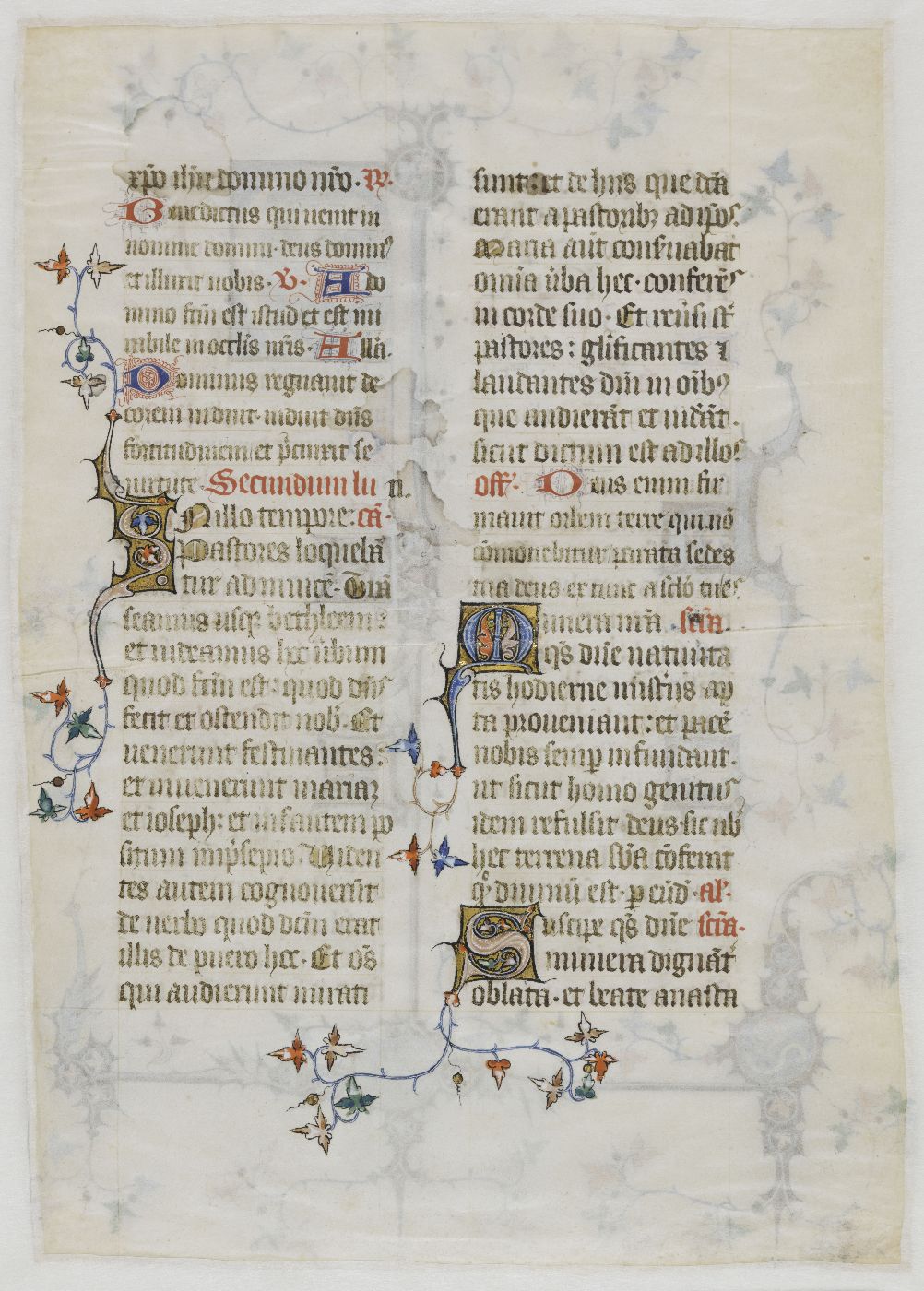
This illuminated page has the opening text of the Christmas Mass, which can be identified by the Latin verse: "Puer natus est and filius datus est nobis..."
The refrain "A child is born to us, a son is given to us..." is sung by the priest as he approaches the altar on Christmas Day.
This important liturgical season for Christians is represented by the Nativity scene that fills the large letter P of Puer.
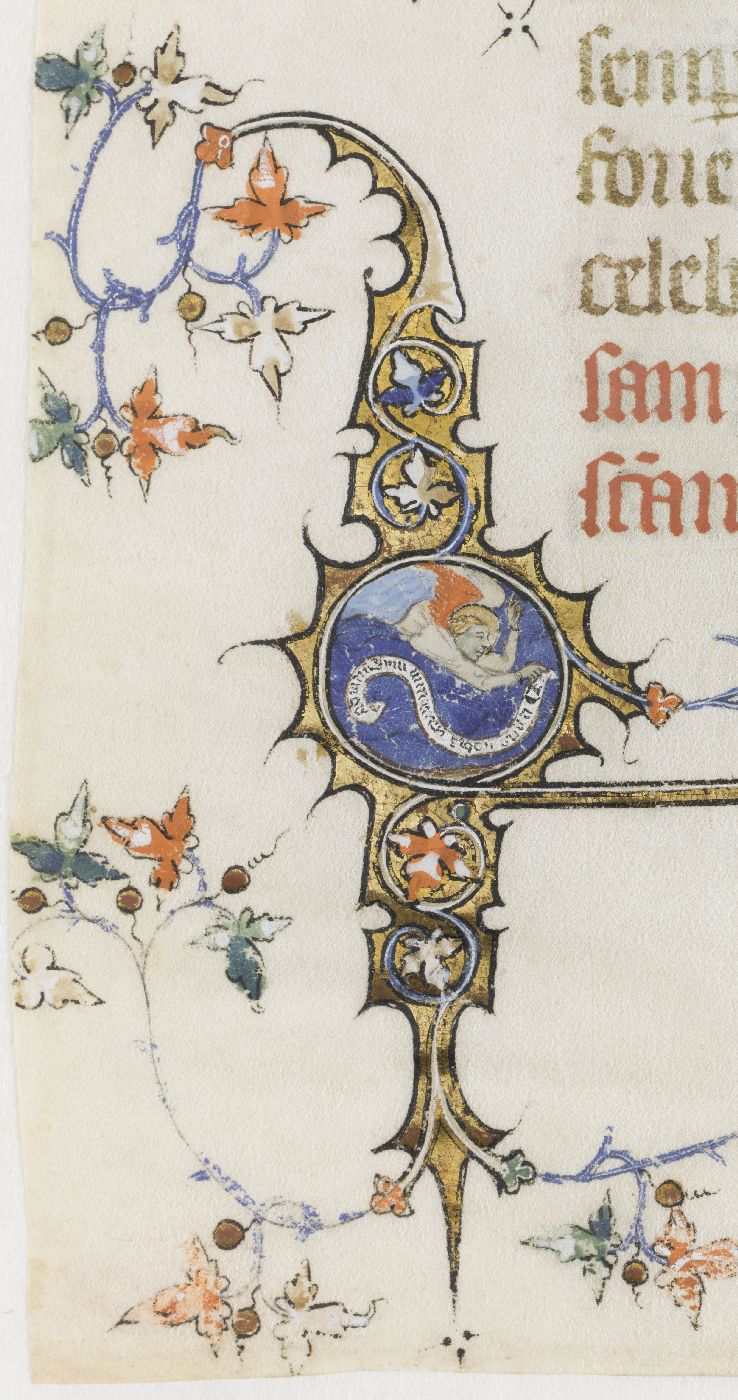
Everything creates an impression of opulence for this prayer book page. It is written on very white parchment in particularly elegant Gothic script, meticulously arranged in two columns.
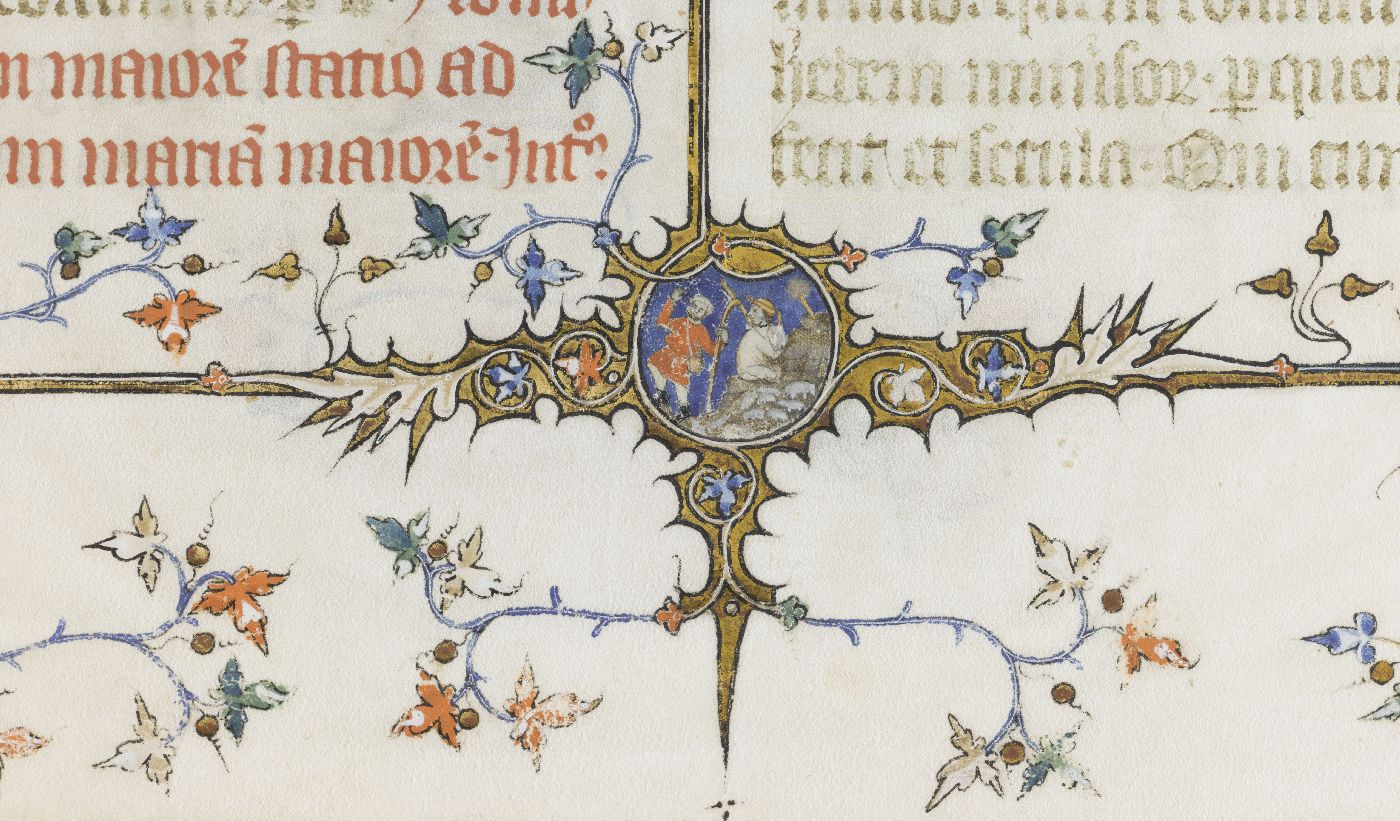
It was lavishly decorated with dropped capital letters on a gold background, adorned with a gold T-shaped strip decorated with plants, and brightened by scrollwork decorated with motifs of foliage, thorns, wings, and dragon tails.
In the lower margin, the Announcement to the Shepherds is depicted in small medallions, while the main letter presents a tender and familiar scene of the Nativity.
The illumination comes from Avignon, which experienced flourishing development in the last few years of the century, during the time of the Western Schism (1378-1417). Despite this period of severe crises and tensions between the Popes and anti-Popes, the very cosmopolitan Provence city experienced significant artistic inspiration. The workshops were influenced by styles from northern France, Italy, Catalonia, and Central Europe.
The museum's page is attributed to the most productive workshop in the papal city, which was then led by Jean de Toulouse, who was active from the mid-1380s until around 1420.
Attributed to Jean de Toulouse’s workshop
| Inventory number | Cl. 23893 |
|---|---|
| Width | 24,5 cm |
| Height | 34,5 cm |
| Place of production | Avignon |
| Medium | Graphic arts ; Illuminated manuscript |
| Method of acquisition | Purchased by preemption, 2013 |