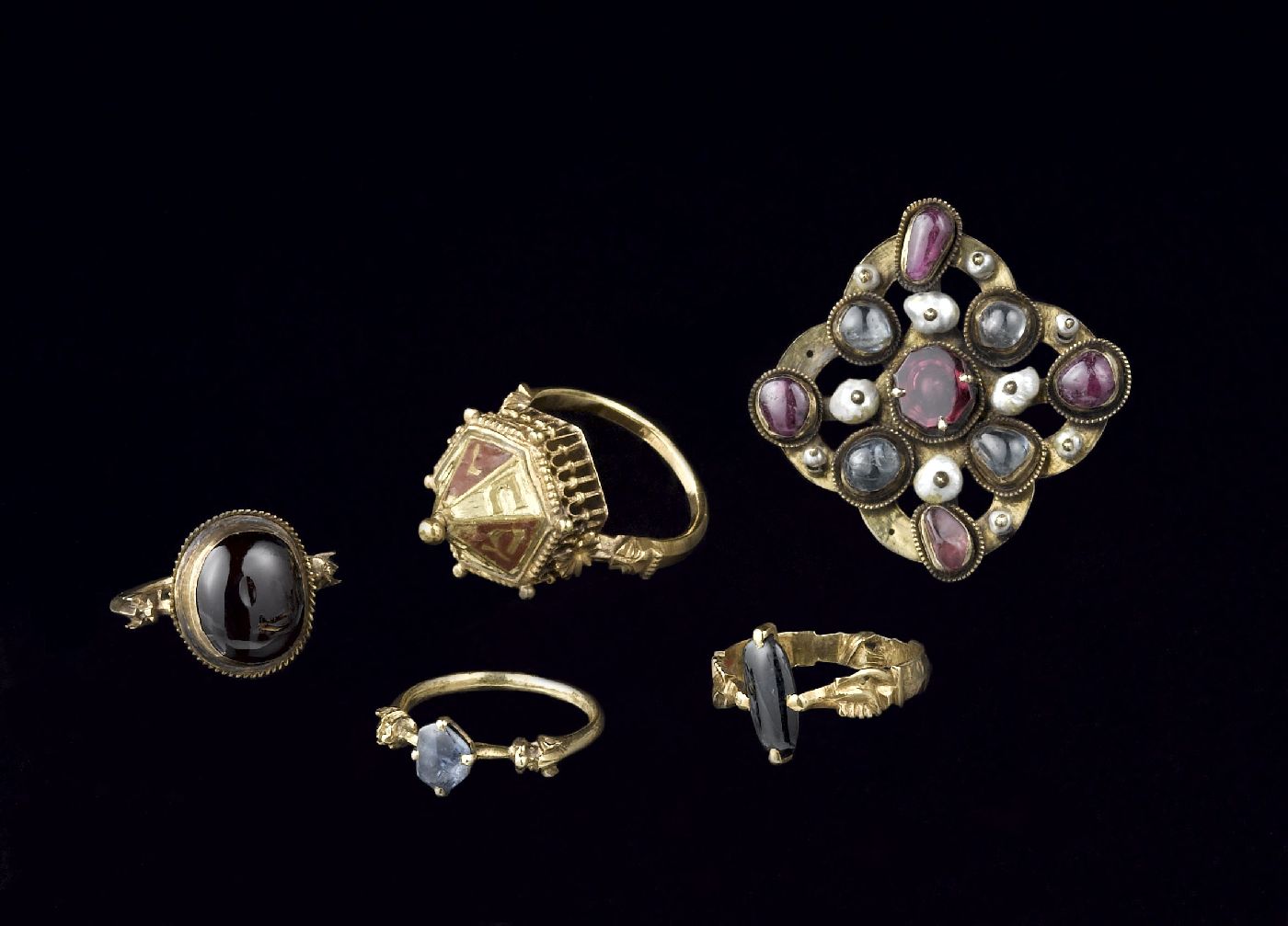
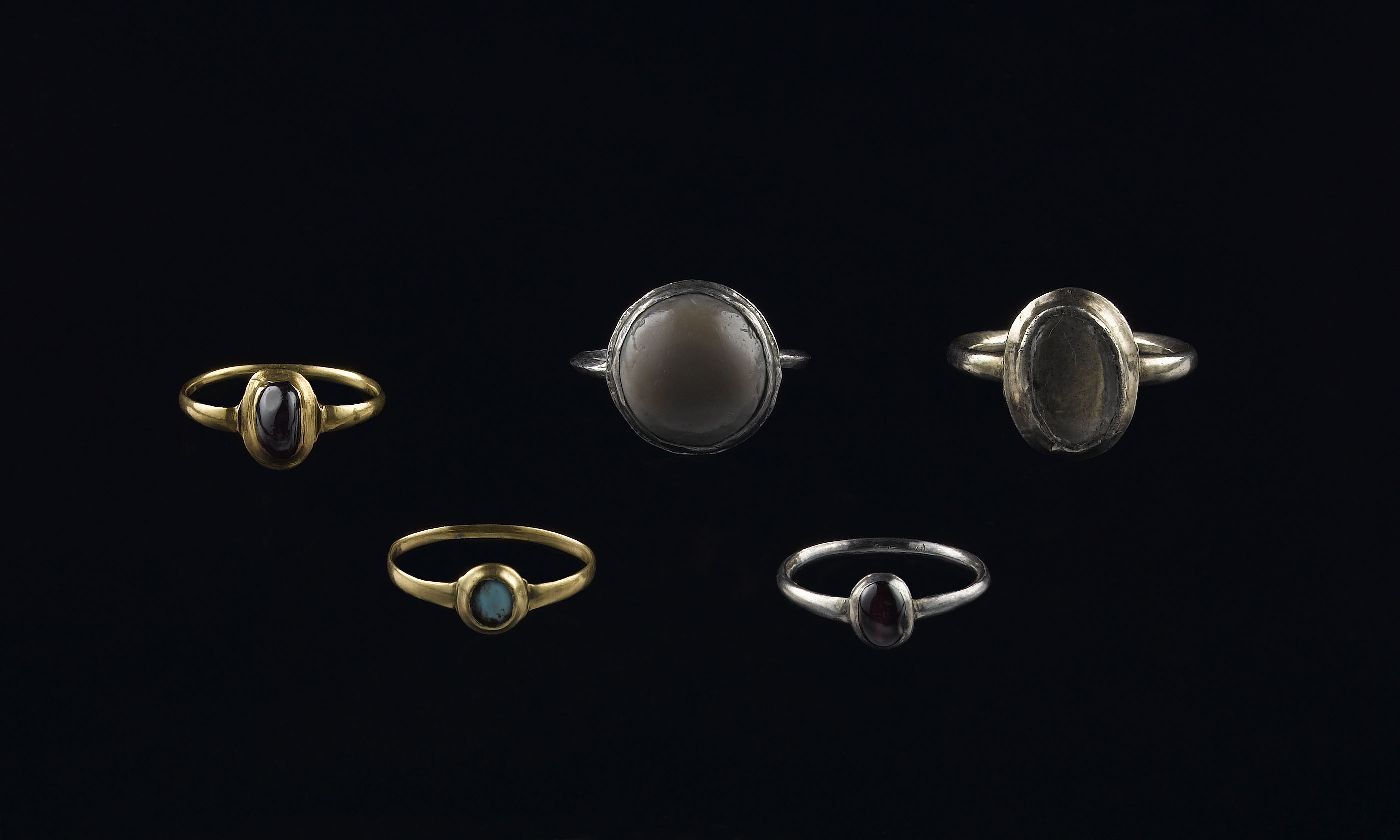
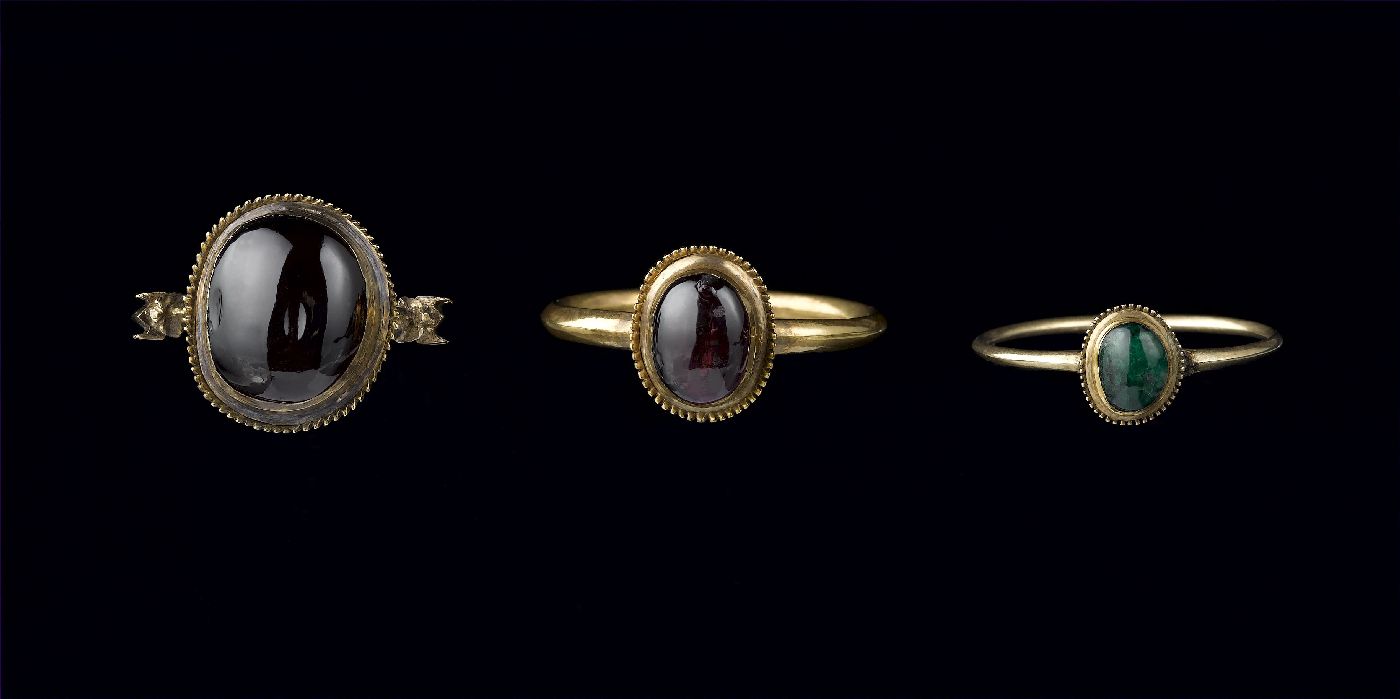
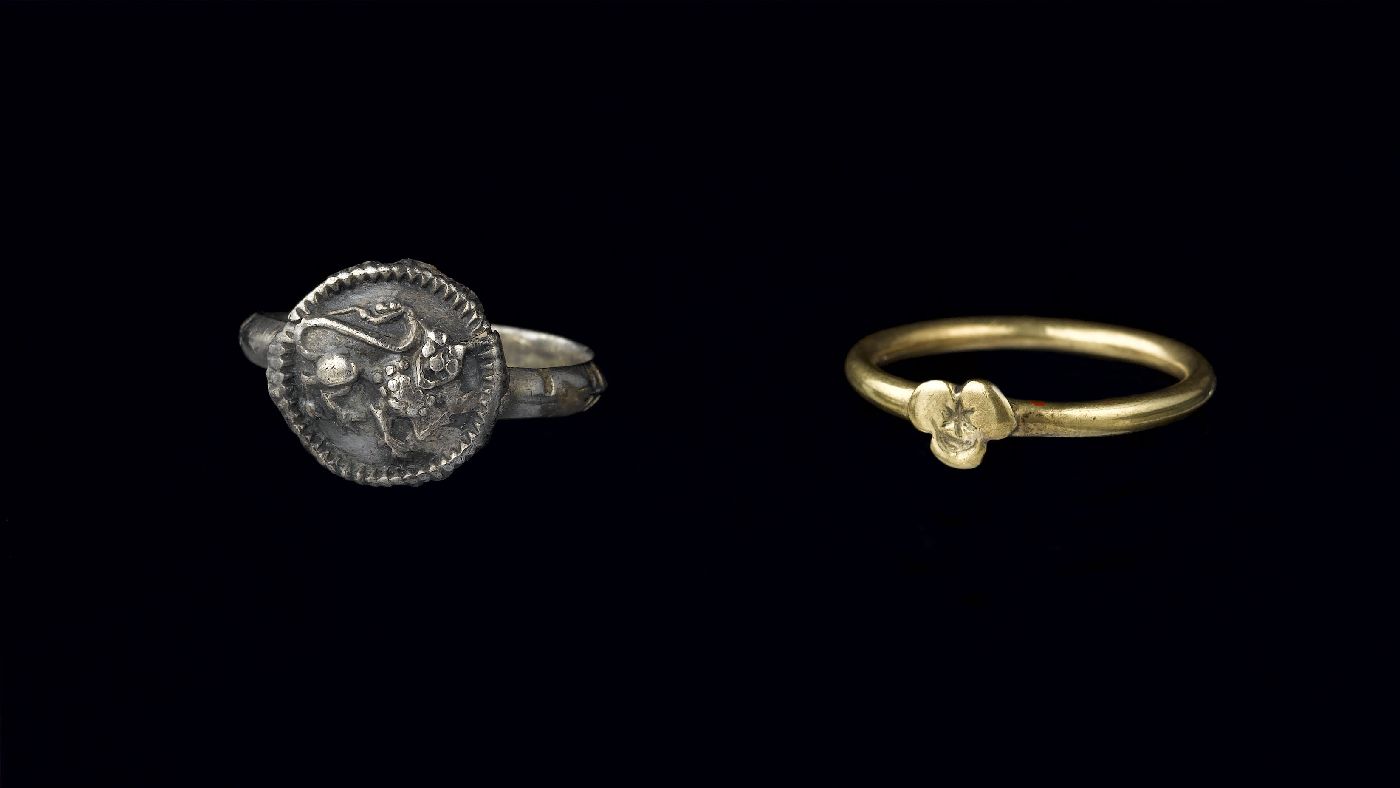
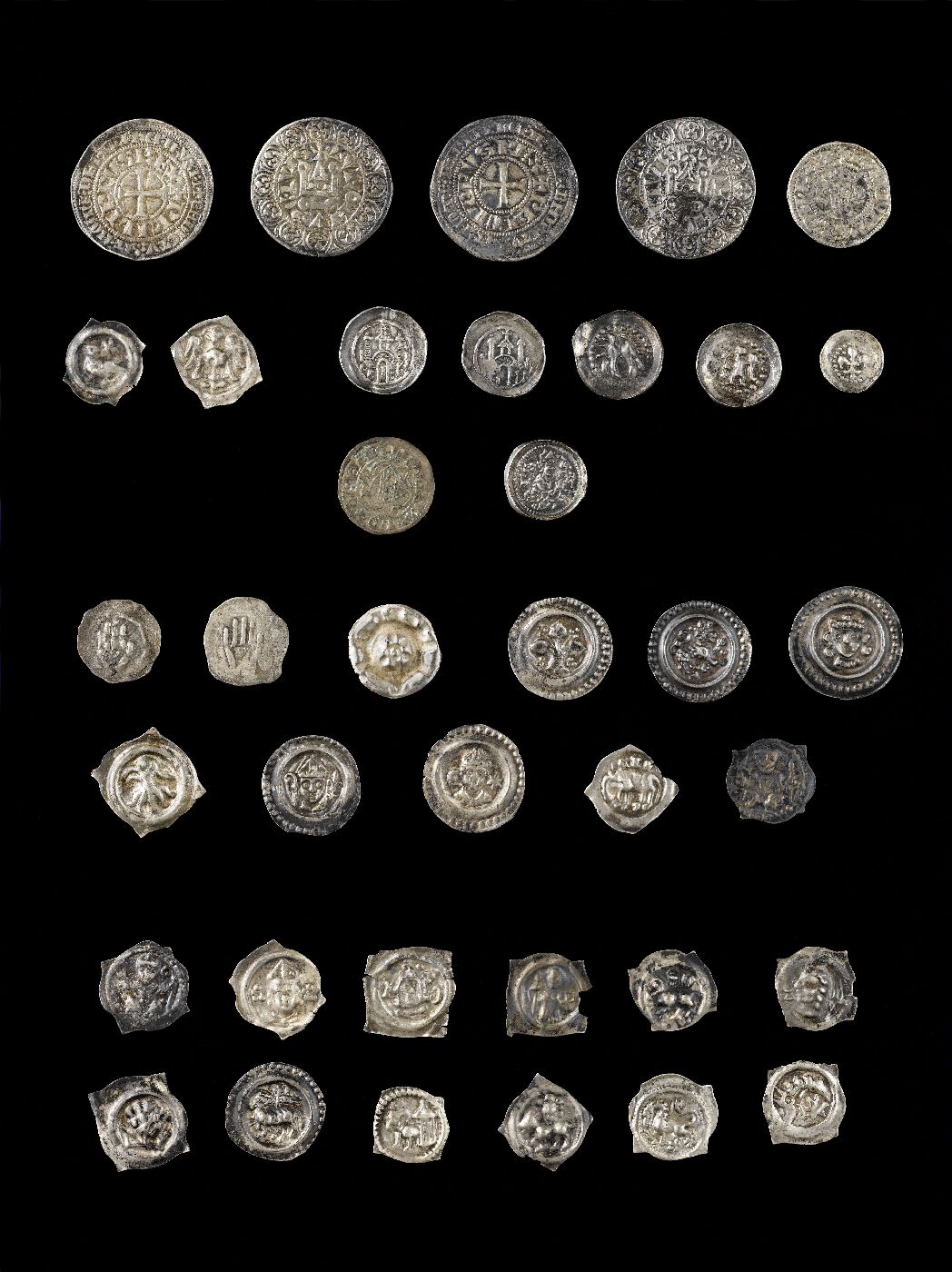
The Colmar Treasure comprises over 300 coins and around fifty pieces of goldsmithing, primarily jewelry and costume elements (rings, brooches, belts, and ornaments). These objects date from the 13th century and especially the first half of the 14th century. The Musée de Cluny preserves a significant portion of the Colmar Treasure, acquired in 1923.
In 1863, during construction work in a house in the former Jewish quarter of Colmar, this treasure was discovered hidden in a wall. It likely belonged to a Jewish family living in Colmar in the 14th century. Blamed for the Black Death epidemic that ravaged Europe between 1347 and 1352, Jews were subjected to several waves of persecution. Perhaps this family had to hastily leave their home during one of these episodes and never had the opportunity to recover their belongings. Two objects, in particular, link the treasure to the Jewish community: the wedding ring and the key-jewel.
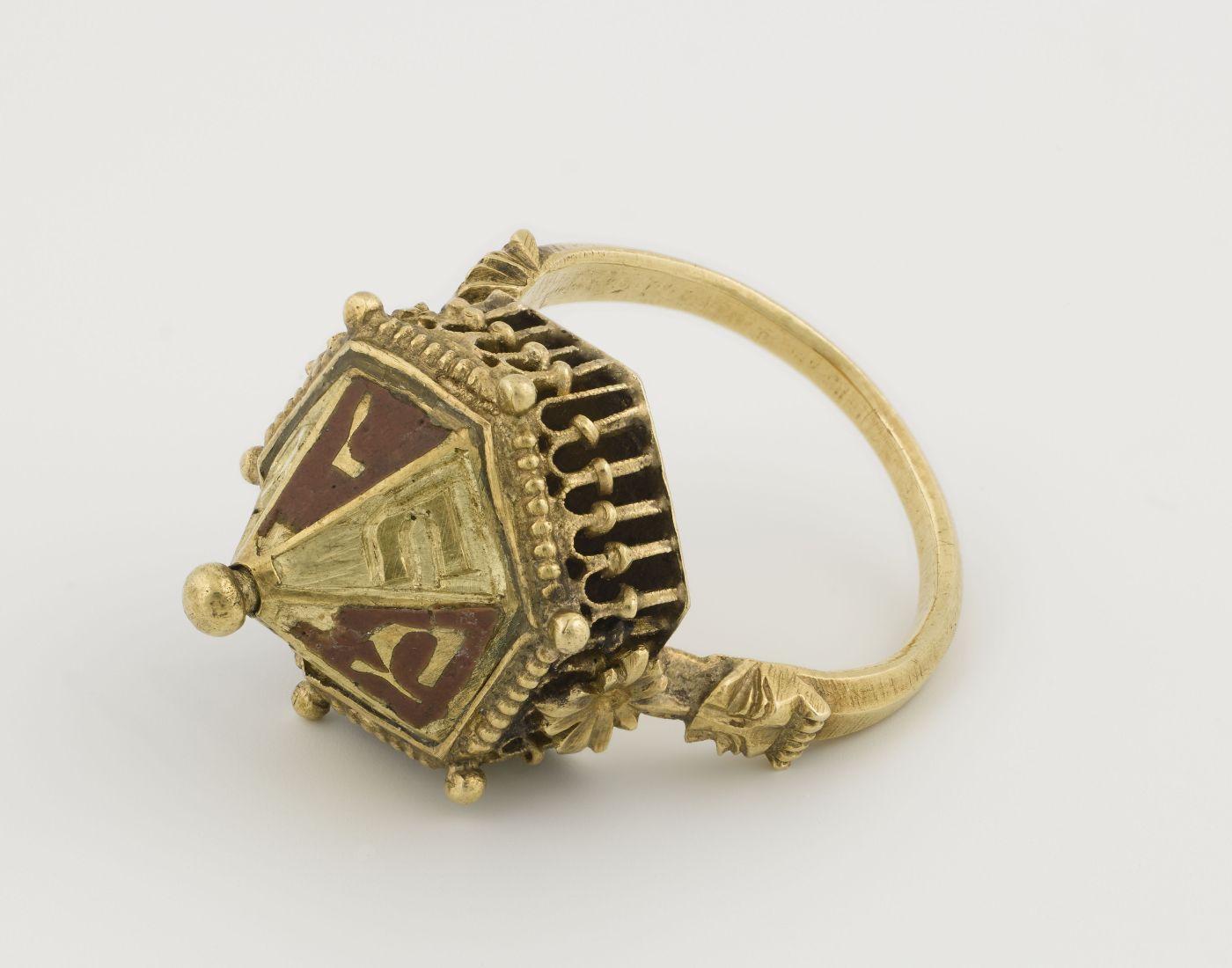
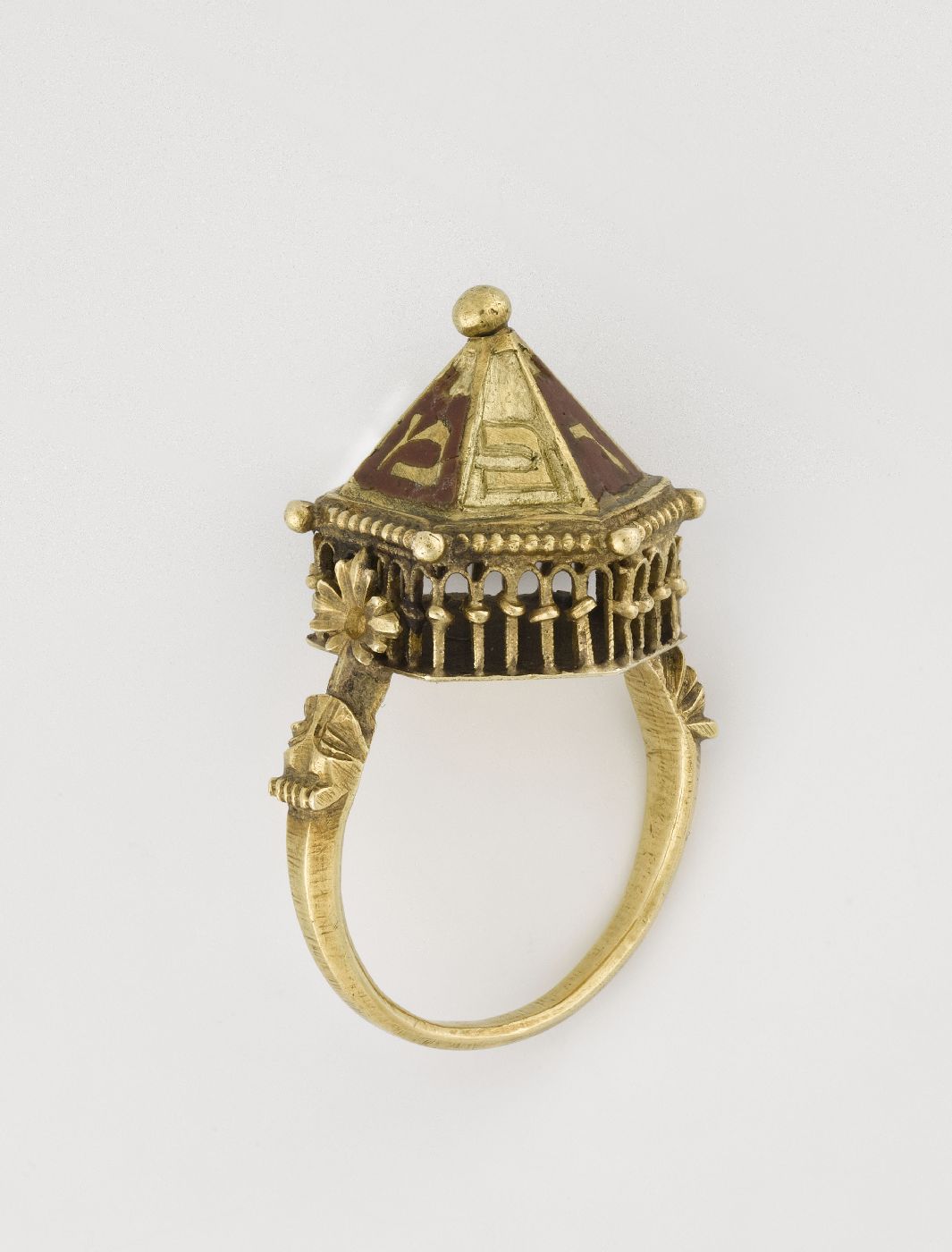
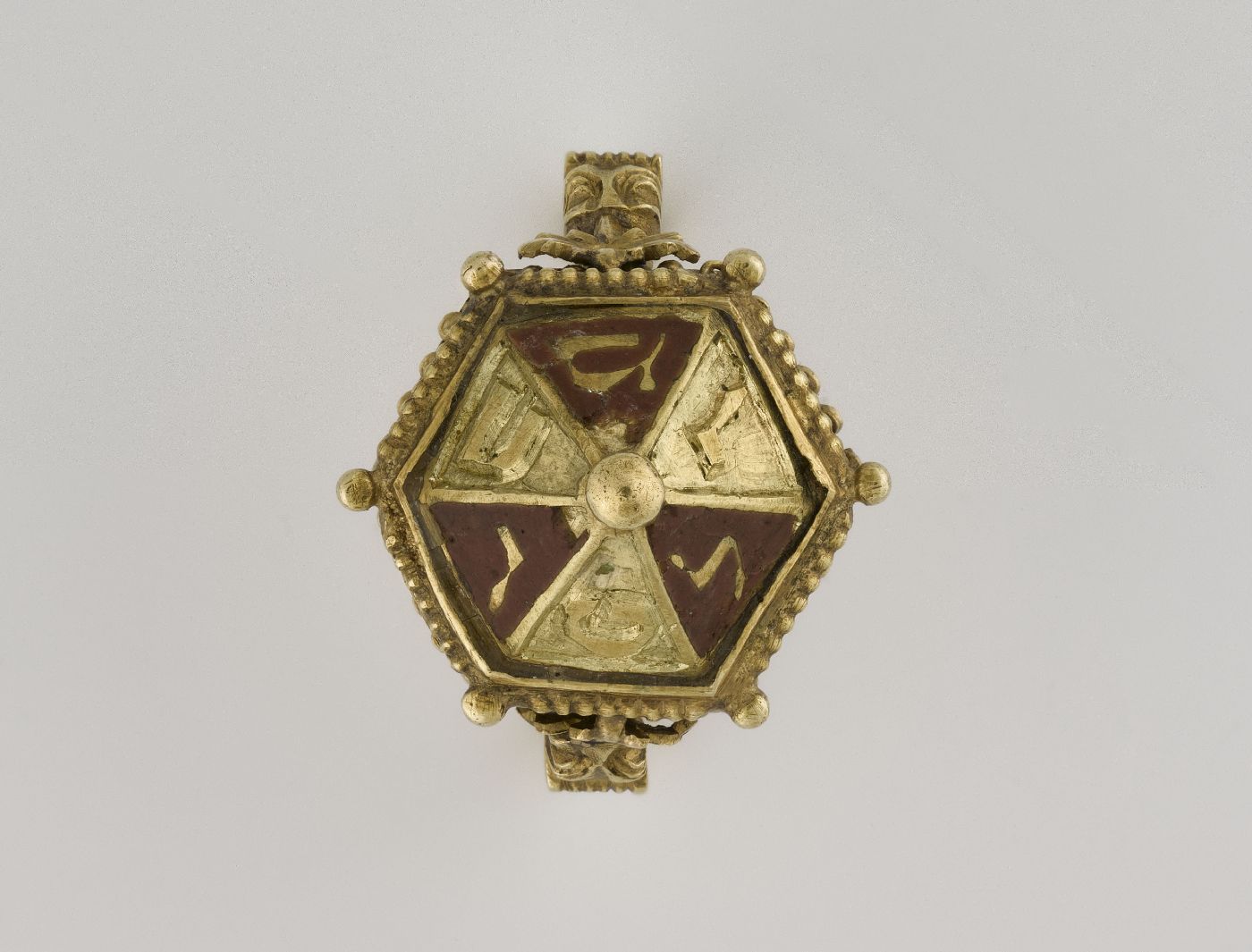
One of the most precious objects in this treasure is the wedding ring. During the Jewish marriage ceremony, the groom gives the bride a ring, usually made of gold. This ring is only worn on the wedding day. A key moment in the nuptial ritual, the giving of the ring seals the marital bond. Medieval examples are adorned with a small building. This symbolizes both the couple's new home and the destroyed Temple of Jerusalem. The building on the Colmar ring is hexagonal in shape. It is formed by filigree arcades and a pyramidal roof enriched with enamel. A Hebrew inscription is visible on the roof. It reads "mazel tov," which means "good luck" or "good omen." These words were traditionally inscribed on Jewish wedding rings. They were meant to bring luck to the couple. The Colmar ring is one of the oldest preserved examples. It was likely created around 1300 in Italy.
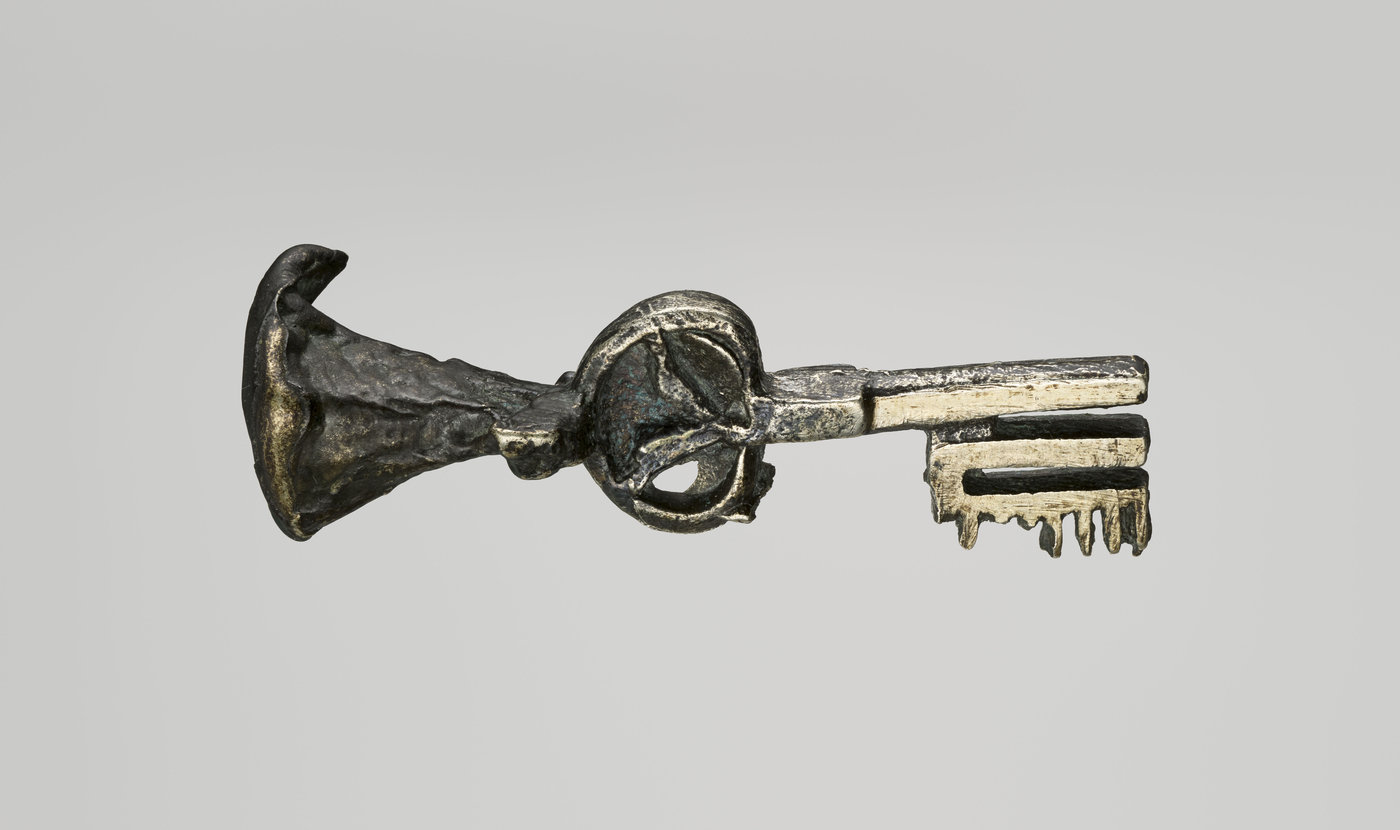
The Musée de Cluny also preserves a key-jewel. This was worn by women who went to the synagogue on the Sabbath. Jewish law prohibited them from carrying heavy objects, such as bulky jewelry, on this day. They therefore placed their valuables in chests, the keys of which were kept in a small box. This box was itself locked with a small key that women wore as a pendant (attached to a chain) or as a brooch (fixed to a pin). Made of gold or silver, it was considered a small piece of jewelry, which they were allowed to wear. Few medieval key-jewels survive. The key preserved at the Musée de Cluny is likely the oldest surviving example of its kind. It dates from the first half of the 14th century. This key is unfinished: it still has its casting cone. Additionally, it shows burrs, whereas these keys were supposed to be polished.
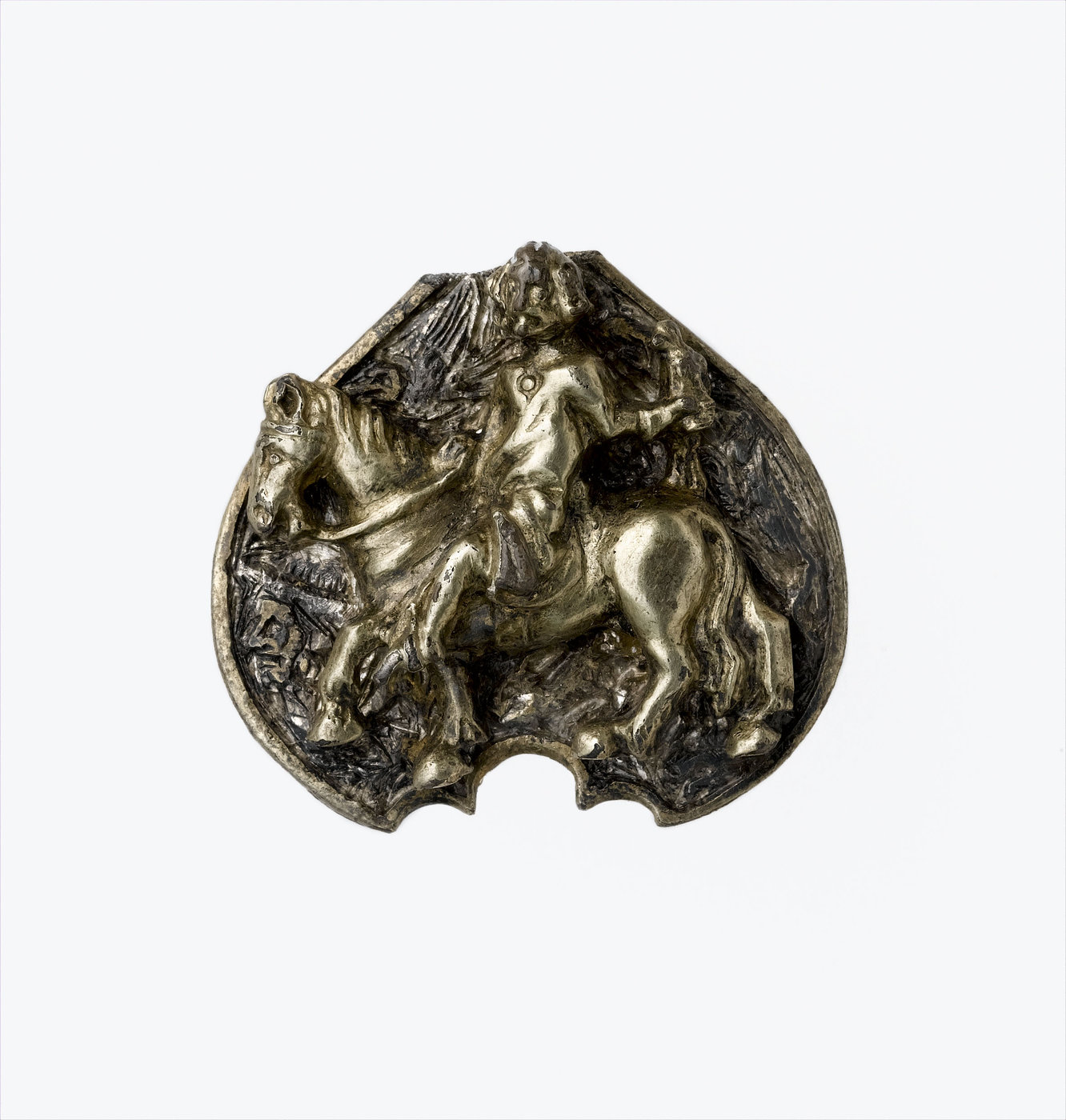
The Colmar Treasure also includes affiches. An affiche is a small decorative element applied to a garment or headdress. This affiche could be sewn on thanks to its ring placed on the reverse. It depicts a rider setting off for a hunt, falcon in hand. Comparable figures of riders are found in sculpture, illumination, and on seals. On the background of the affiche, motifs are engraved, once covered with translucent enamels. An image of a bird (in front of the rider), a dog (behind the horse), a hare (under the horse), and a head wearing a pointed hat (in front of the horse) can be recognized. This type of hat was worn by Jews in Germanic lands.
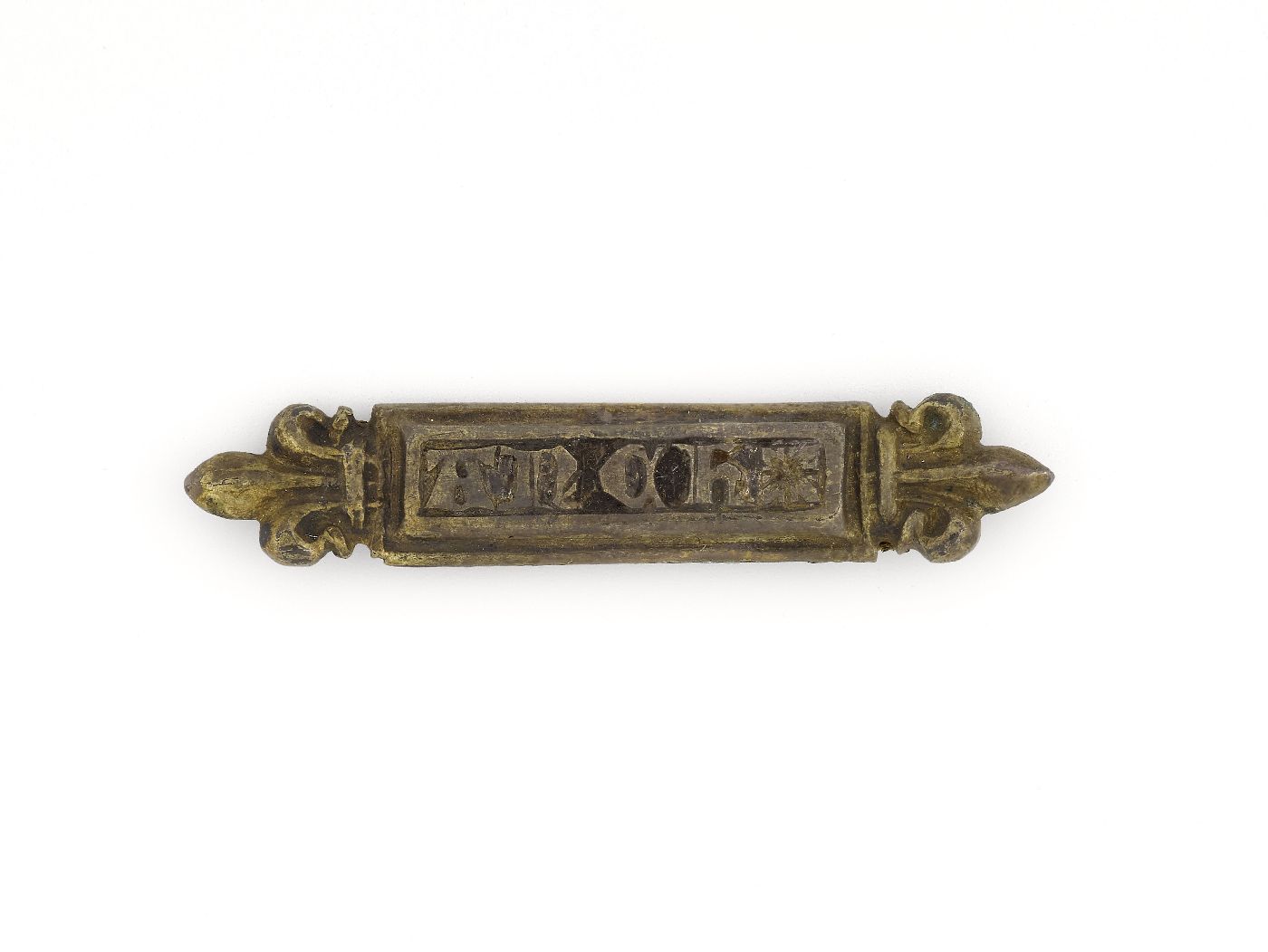
A belt was also found among these objects. The belt was a frequent accessory in medieval costume, both utilitarian and ornamental. It was often ostentatious, to the point that urban regulations prohibited the wearing of overly luxurious belts. The example from the Colmar Treasure consists of numerous metal elements once attached to a silk ribbon. Small rosettes alternate with enameled plaques. The latter bear inscriptions, either in Latin (AMOR = love) or in a Germanic language (LIEB = love, HAIL = health). The fourth inscription, ANCH, possibly means "little Anne" (Annchen), the likely recipient of the belt. This belt was probably a token of love, perhaps a wedding gift.
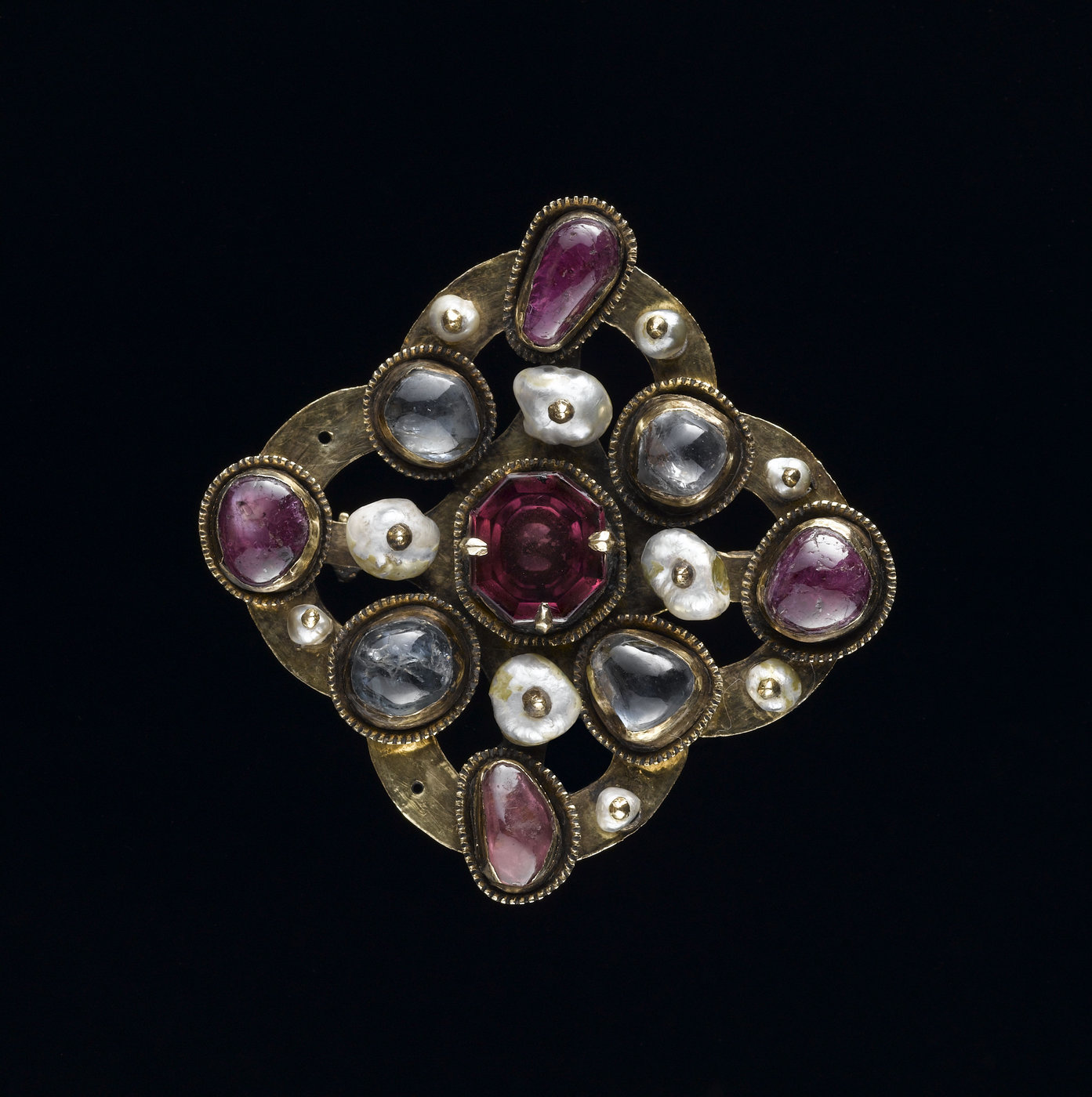
Among the jewelry of the Colmar Treasure, the Musée de Cluny also preserves brooches. A brooch is an accessory for both female and male attire. It can be used to fasten a garment (like an ancient fibula) or be purely decorative (like a modern brooch). One of the examples has a quadrilobe shape. It is richly adorned with sapphires, rubies, garnets, and pearls. These "bouquets of stones" are common on jewelry from the 13th and 14th centuries.