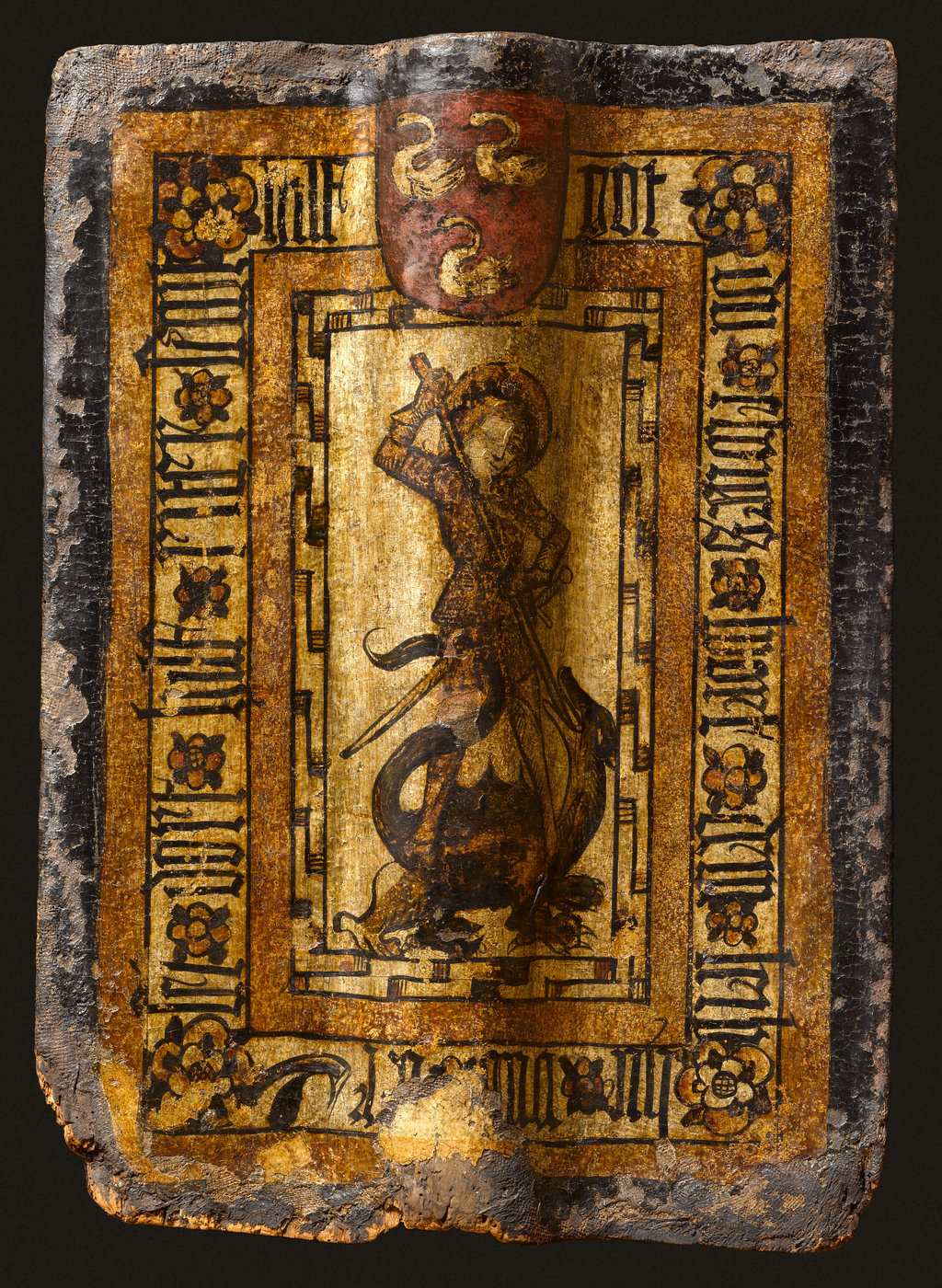
This light and sturdy shield is carried by some infantry soldiers. It is a targe. This one dates from the mid-15th century and depicts the scene of Saint George slaying the dragon, which was very popular in the Middle Ages.
Its prominent central element is designed to enhance its structural solidity. In addition, the use of multiple layers of material increases resistance to it being pierced.
In the Middle Ages, soldiers’ equipment should not only be easy to handle and robust, but also decorated to show who they were and their social belonging. Shields typically displayed their owner's coat of arms. This allowed them to be recognised when the soldiers were hidden beneath their armour.
At the top of this targe the coats of arms of the municipality of Zwickau (now in Germany) can be seen, a red background with three silver swans, and canting coats of arms, as Zwickau is supposed to come from the word swan.
It would have been part of an order for equipment placed by the Saxon city with the workshops of Chomutov in 1441 to equip its own garrison.
Saint George (the protector of the knights) slaying the dragon is seen at the centre of the shield. This theme aligns with the object's military purpose and calls upon divine protection. Similarly, a pious motto borders the scene, "Hilf Got Du Ewiges Wort dem Leibe hier, der Seele dort Hilf Ritter Georg", meaning in English "Help God, help, You the Eternal Word, the body here, to the soul there, help Knight George". It places the person carrying the shield under its protection.
During the Middle Ages, Christians sought the protection of the saints. They ask the saints to intercede on their behalf with God so that He may grant their prayers. This is called intercession. For Christians, as intercessors the saints were mediators between men and God. The depiction of St. George on this shield indicates that the knight fights with faith in God and with divine assistance.
The presence of Saint George and the coats of arms on the shield also recall the virtues, moral duties, and responsibilities associated with chivalry and religion.