
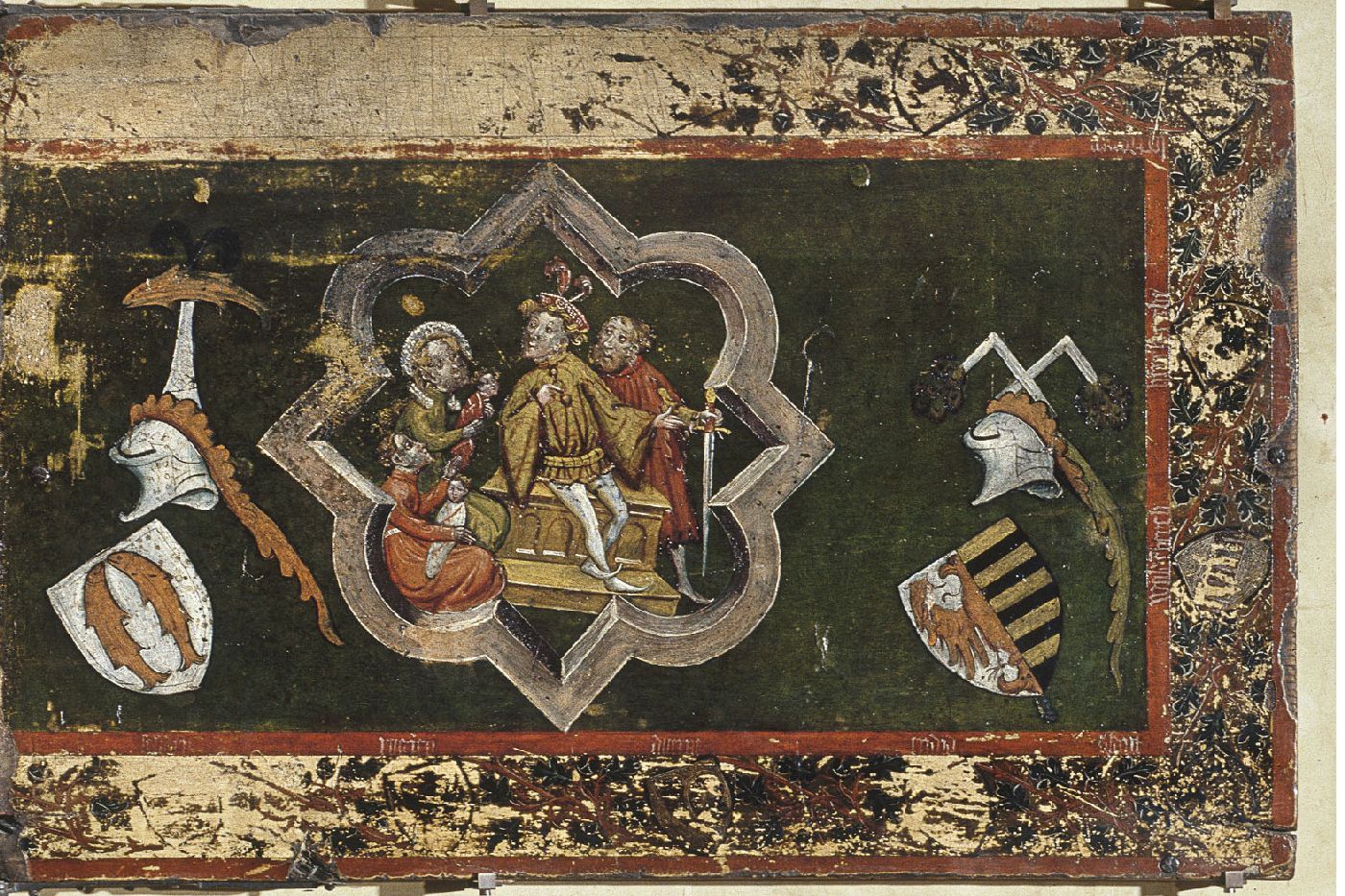
Painted table from Germany decorated with four four-lobed medallions, Cl. 7725 © GrandPalaisRmn / Gérard Blot
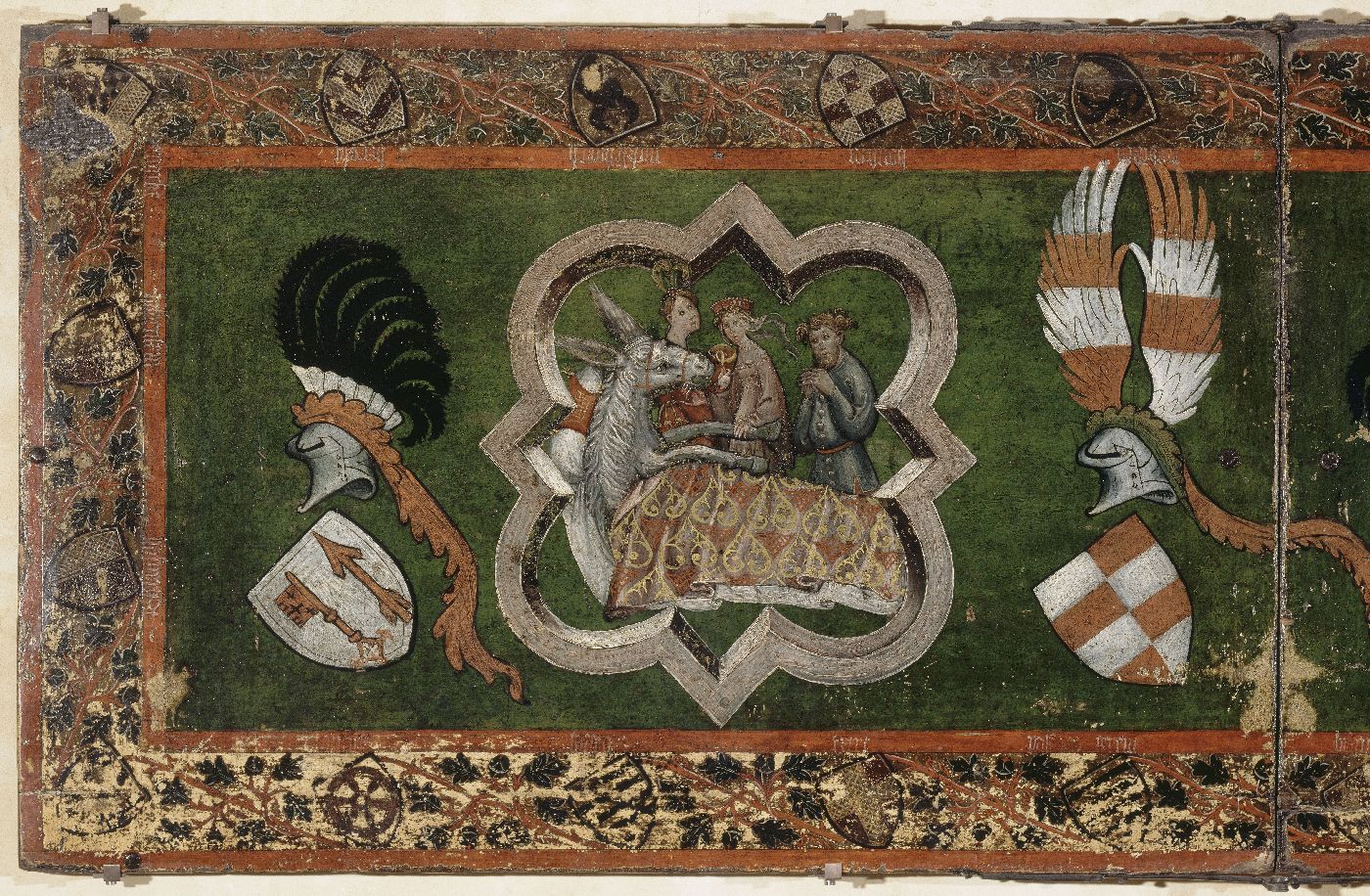
Painted table from Germany decorated with four four-lobed medallions, Cl. 7725 (detail) © GrandPalaisRmn / Gérard Blot
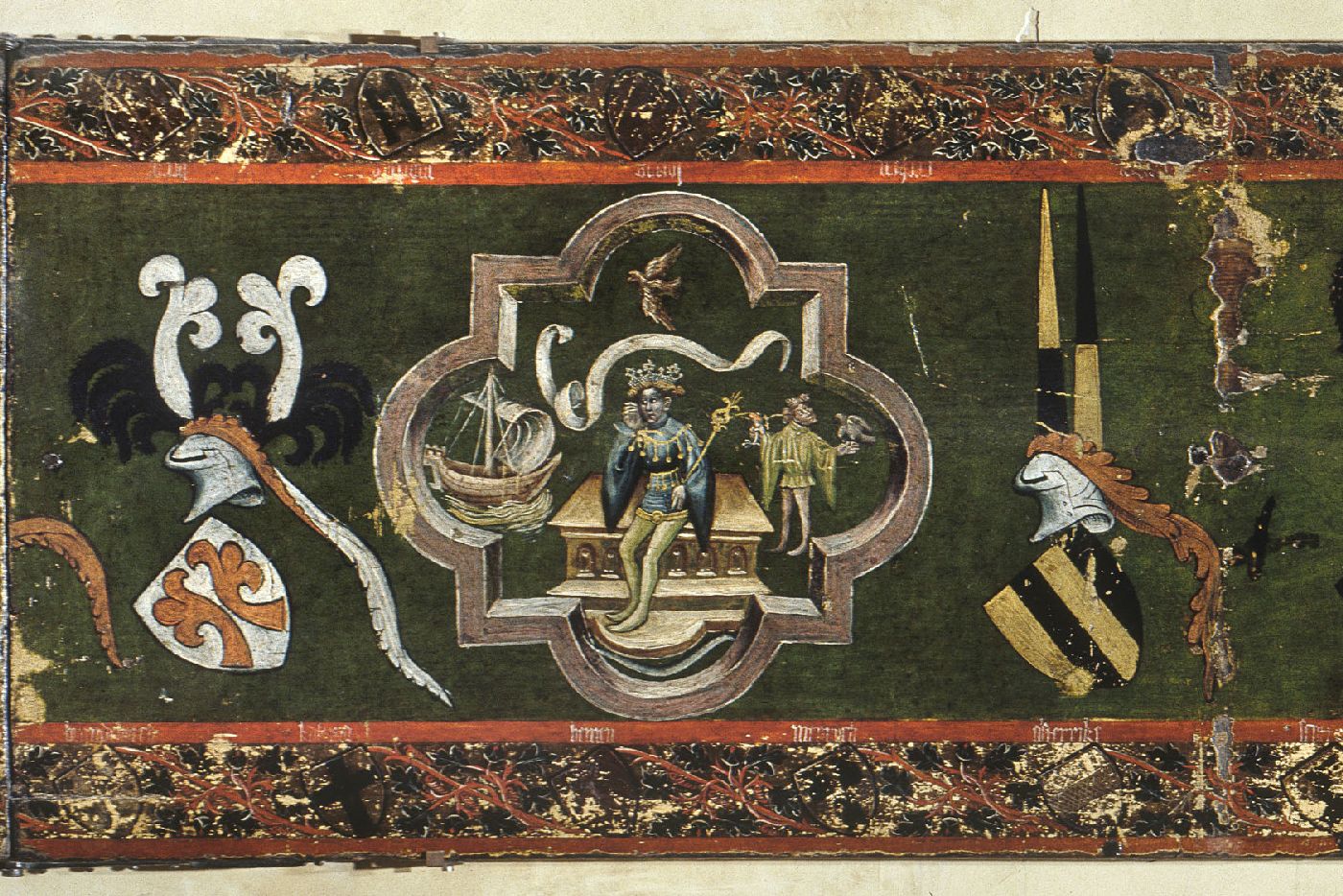
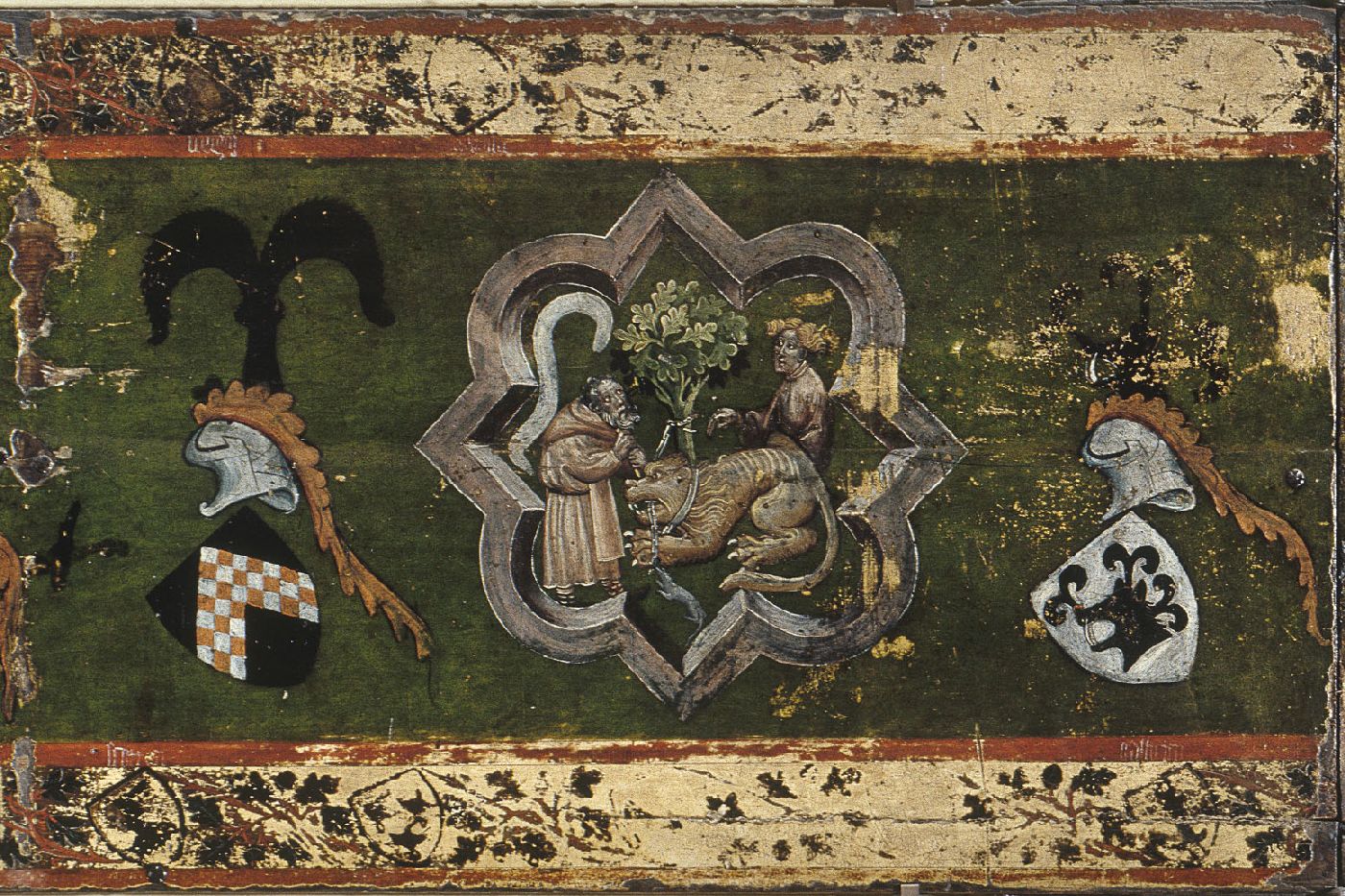
Painted table from Germany
Description
This long painted table was made in the early 15th century in northern Germany. It is decorated with a border featuring large coats of arms and secular scenes depicted in medallions at the centre. This richly decorated piece of furniture, which could be folded and was portable, was probably intended for formal purposes.
The first medallion, on the left, depicts three figures at the side of a donkey in bed. This is a painted transcription of a proverb about foolishness.
The second medallion depicts a passage from the biblical Book of Proverbs, traditionally attributed to King Solomon. He is depicted sitting, meditating on things that are beyond his understanding.
The following medallion is a transcription of the Greek writer Aesop's fable of the lion and the rat.
Finally, the latter depicts the Judgement of Solomon, where this biblical character appears for a second time.
These scenes are rare or even unique in mediaeval iconography. The way they are organised follows a rigorous logic. The two medallions at the ends contrast madness with wisdom, while the two middle medallions contrast the weakness of the strong with the strength of the weak. This moralising programme exalts the virtues of the prince. It highlights the virtues of wisdom and governance that a prince should embody, while also reminding him of the limits of his power.
The border is made up of heraldic shields from German or Scottish lords, as well as from distant sovereigns like Saladin. It gives these virtues universal significance.
As a ceremonial table, this piece of furniture was likely only set up for important ceremonies. Few pieces of this style remain today. Another similar table is known, which is kept in Lüneburg in Lower Saxony.
| Inventory number | Cl. 7725 |
|---|---|
| Width | 455 cm |
| Height | 76 cm |
| Medium | Painting ; Wood |
| Method of acquisition | Acquired in 1864 |