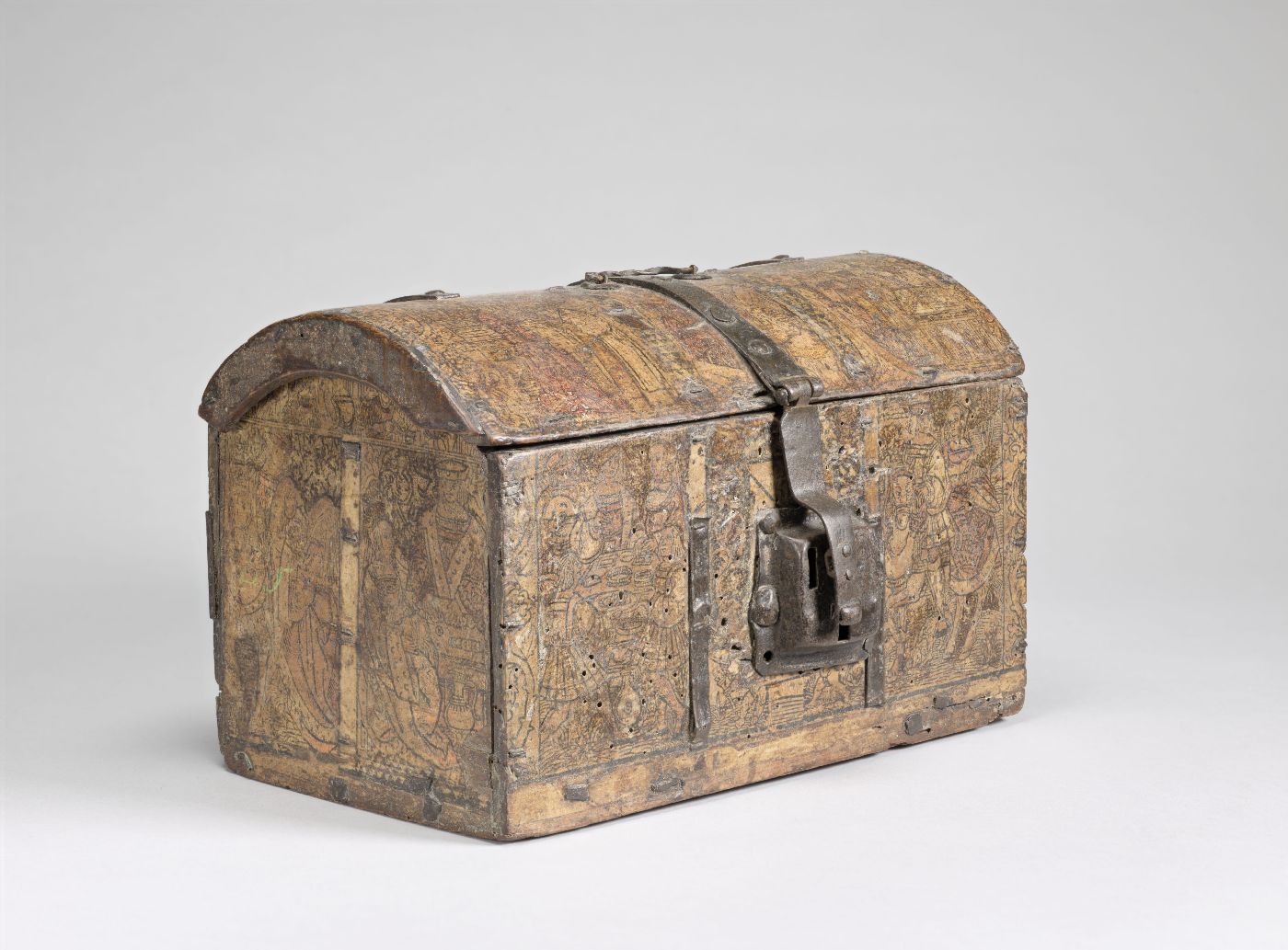
Casket with print decor, Cl. 23925 © GrandPalaisRmn / Michel Urtado
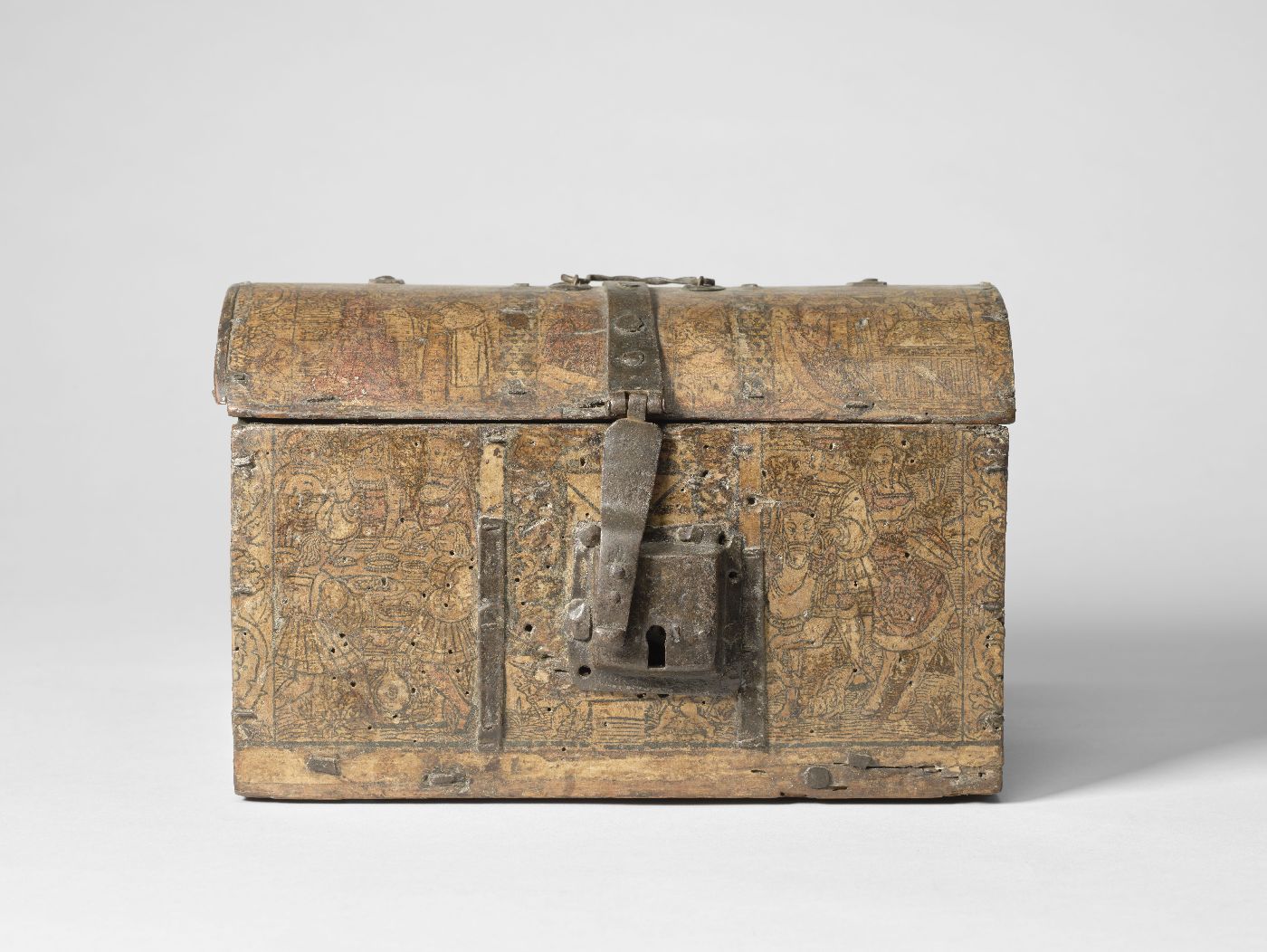
Casket with print decor
Description
This 16th century wooden box is covered with prints depicting courtly subjects.
There was a penchant for caskets in the Middle Ages, small pieces of furniture used for keeping things in, as well as objects associated with courtly, religious, or political life. For certain decorative items or (pre)nuptial gifts, the materials used range from the most basic wood to ivory or gold for the most precious, reflecting the social status of those buying them.
In the context of courtly love, and with the exception of rare ivory caskets, most caskets from the 14th and 15th centuries are either painted or decorated with sculpted or embossed leather.
This casket is quasi "unicum". It is rectangular with a domed lid that opens along the long side, and is entirely covered with coloured prints of courtly scenes on paper, mounted onto a wooden frame assembled with nails. It illustrates the developments in the production of engraved objects, at a time when the reproduction of images using xylography was burgeoning.
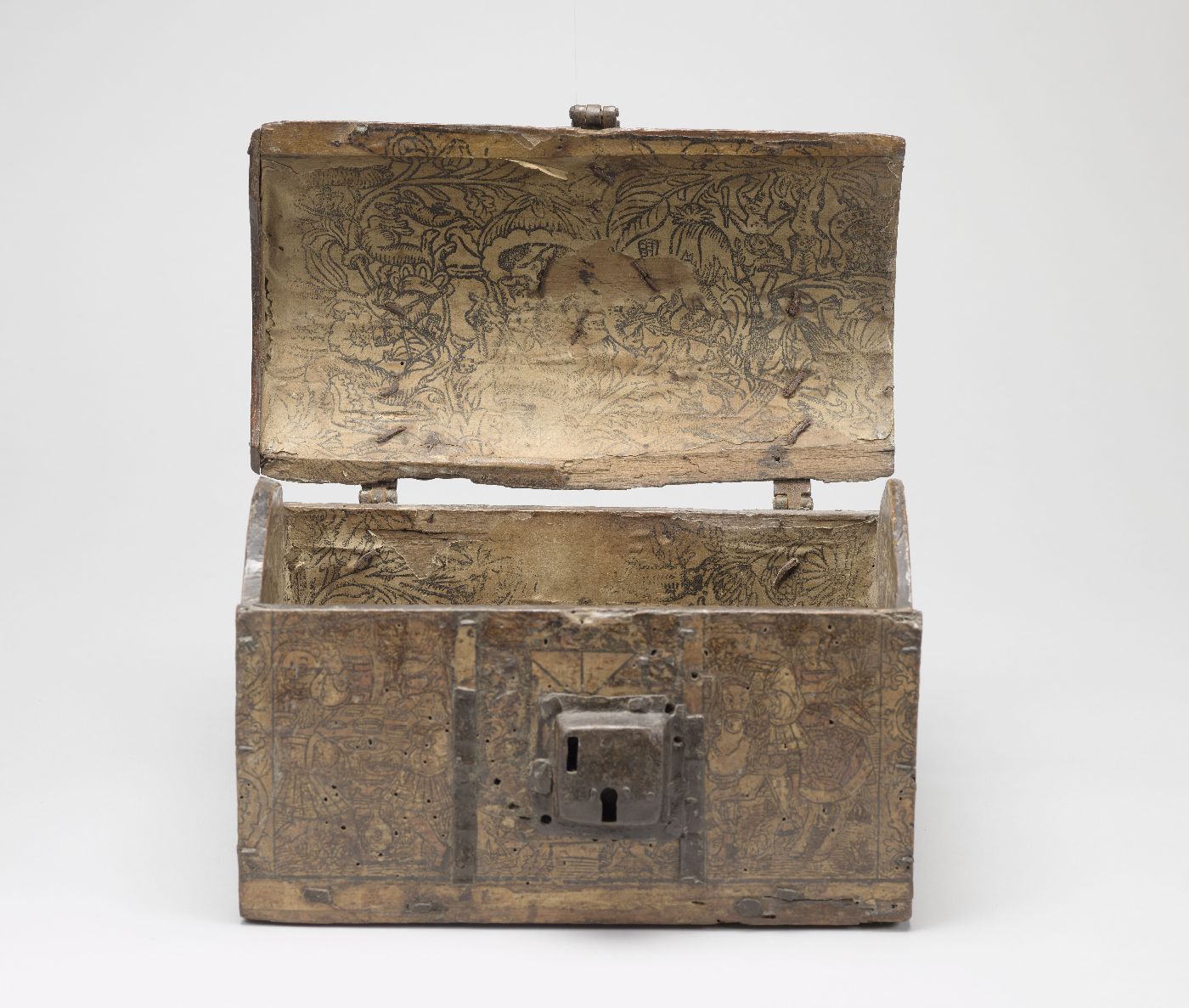
The lock is positioned within an area marked by a frame struck through by a cross, which has been left in reserve in the composition. The same applies to the hinges, which have predefined places. These elements show that in the production of series of objects, engraving was designed from the outset as both a decorative feature and a structural component of the assembly it covers.
The inside of the casket is covered with monochrome prints of scrollwork full of chimaeras, men and animals. Such images were inexpensive, not much more than the wooden box or lock that make up the casket.
| Inventory number | Cl. 23925 |
|---|---|
| Medium | Metals ; Wood |
| Method of acquisition | Donated by the La Marck Foundation |