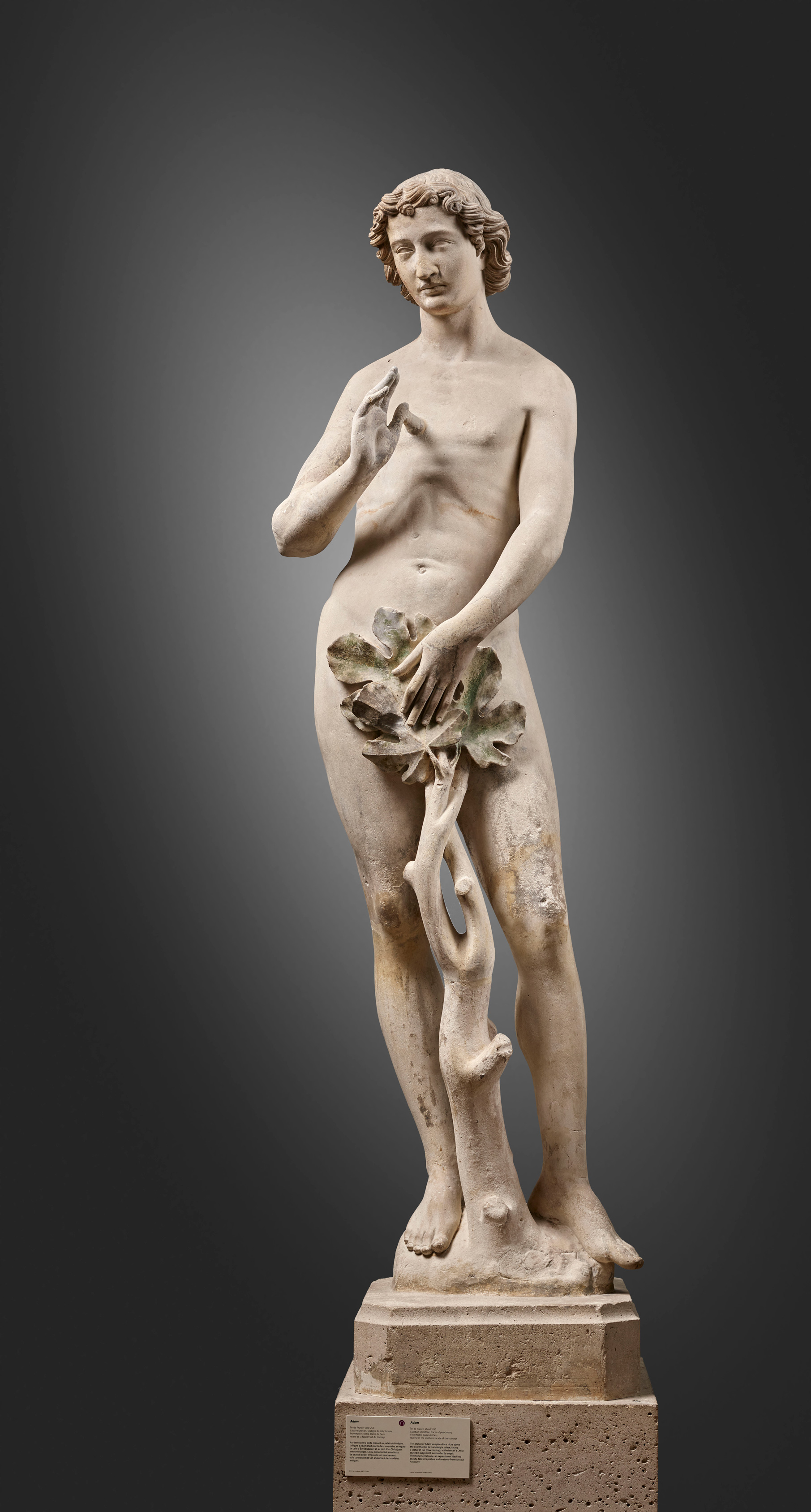
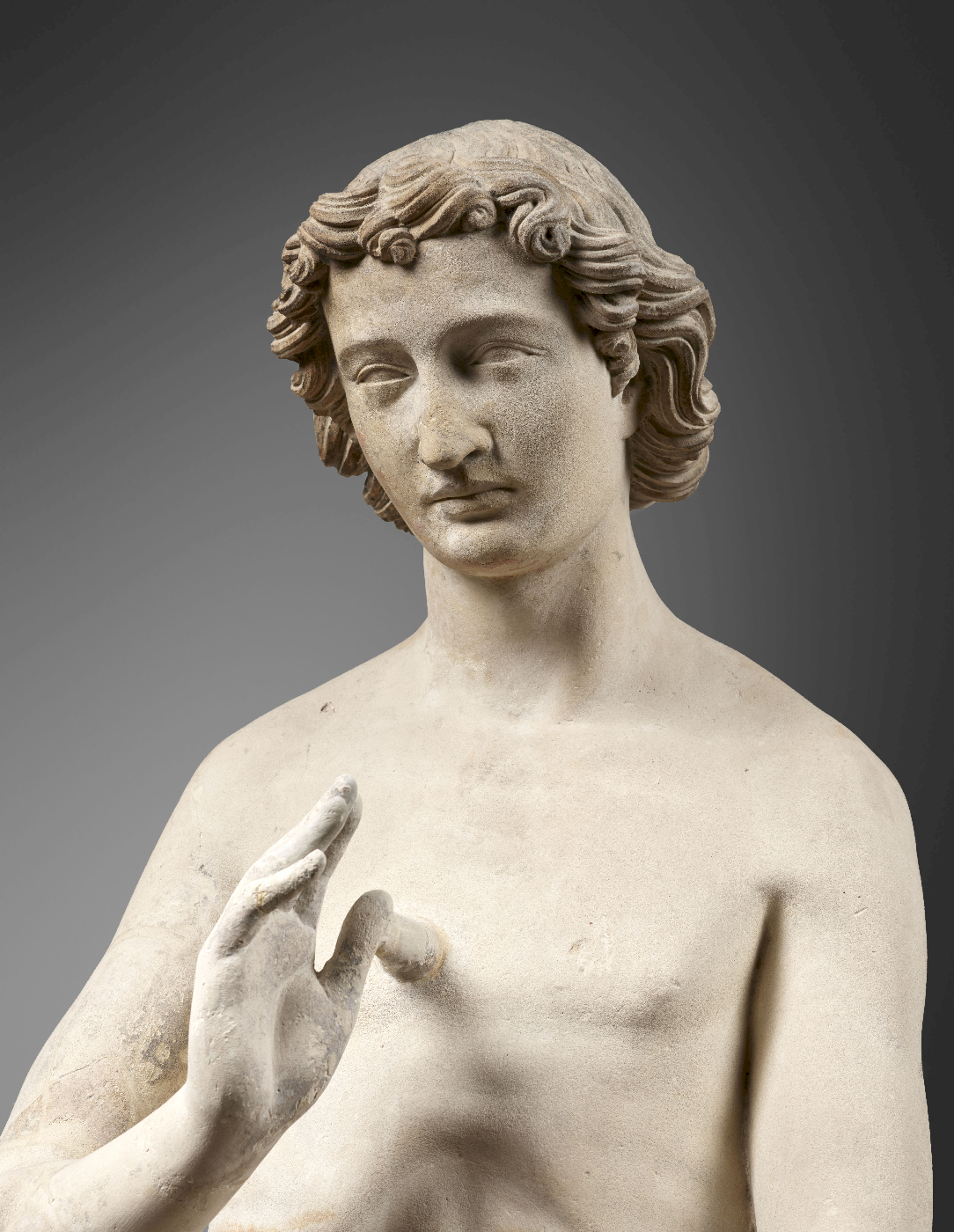
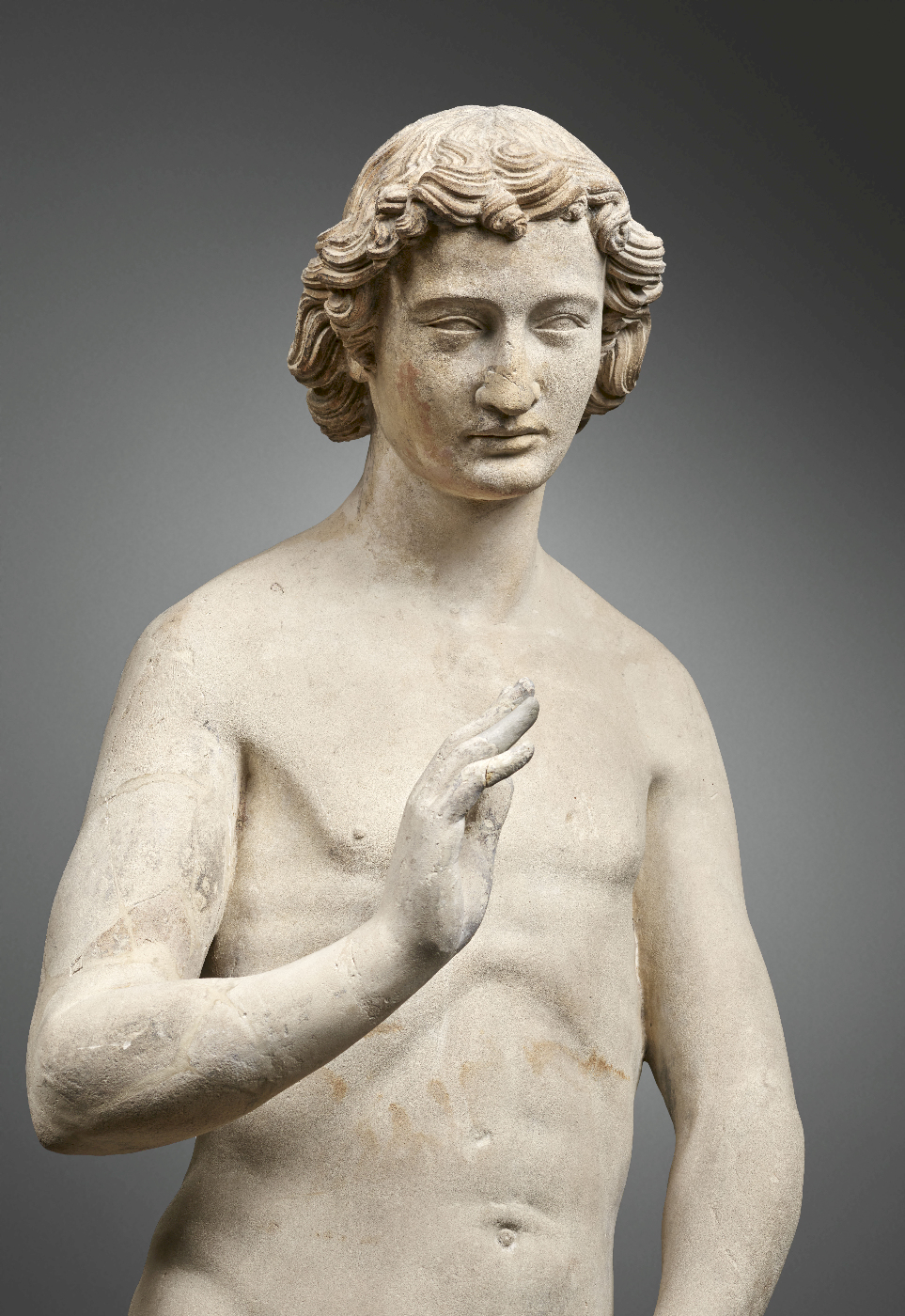
Originally located in Notre-Dame de Paris cathedral, the Adam that was probably sculpted by Pierre de Montreuil around 1260, was accompanied by an Eve who is now missing. It was moved after the Revolution, and was added to the Musée de Cluny in 1887.
A drawing from the beginning of the 18th century shows this sculpture located on the back of the façade of the south arm of the transept of Notre-Dame. The two statues of Adam and Eve were on either side of the portal, at the feet of a Christ of the Last Judgement placed on top of the gable over the door.
On the side gables, angels hold the instruments of the Passion.
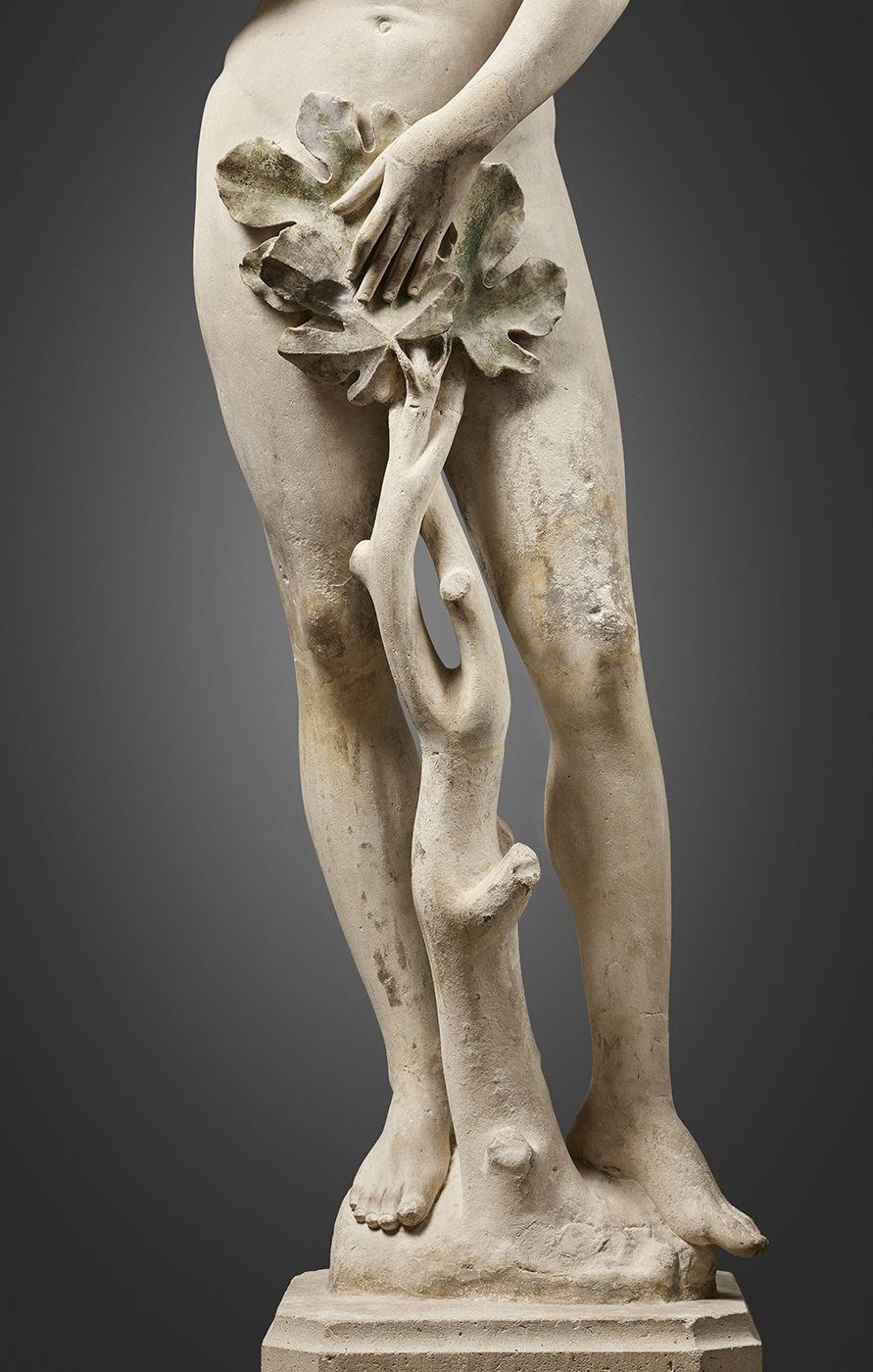
Pierre de Montreuil (who died in 1267) was given the responsibility of managing the building of the south arm of the transept. Perhaps he is the architect and sculptor that gave us Adam. It was at least crafted under his direction. You can tell by the way the fig leaves have been crafted, which alludes to the vitality of the plant decor that can be seen on another of his works, also preserved at the Musée de Cluny: the portal of the chapel of the Virgin of Saint-Germain-des-Prés (Cl. 12726).
During the Revolution, the Adam was removed and displayed at the Musée des Monuments français (Museum of French Monuments), which chronicled the history of sculpture in France. When the museum closed in 1816, it was sent to the stonework repository in Saint-Denis, along with many works that were originally displayed on buildings that had disappeared, until it was assigned to the Musée de Cluny in 1887.
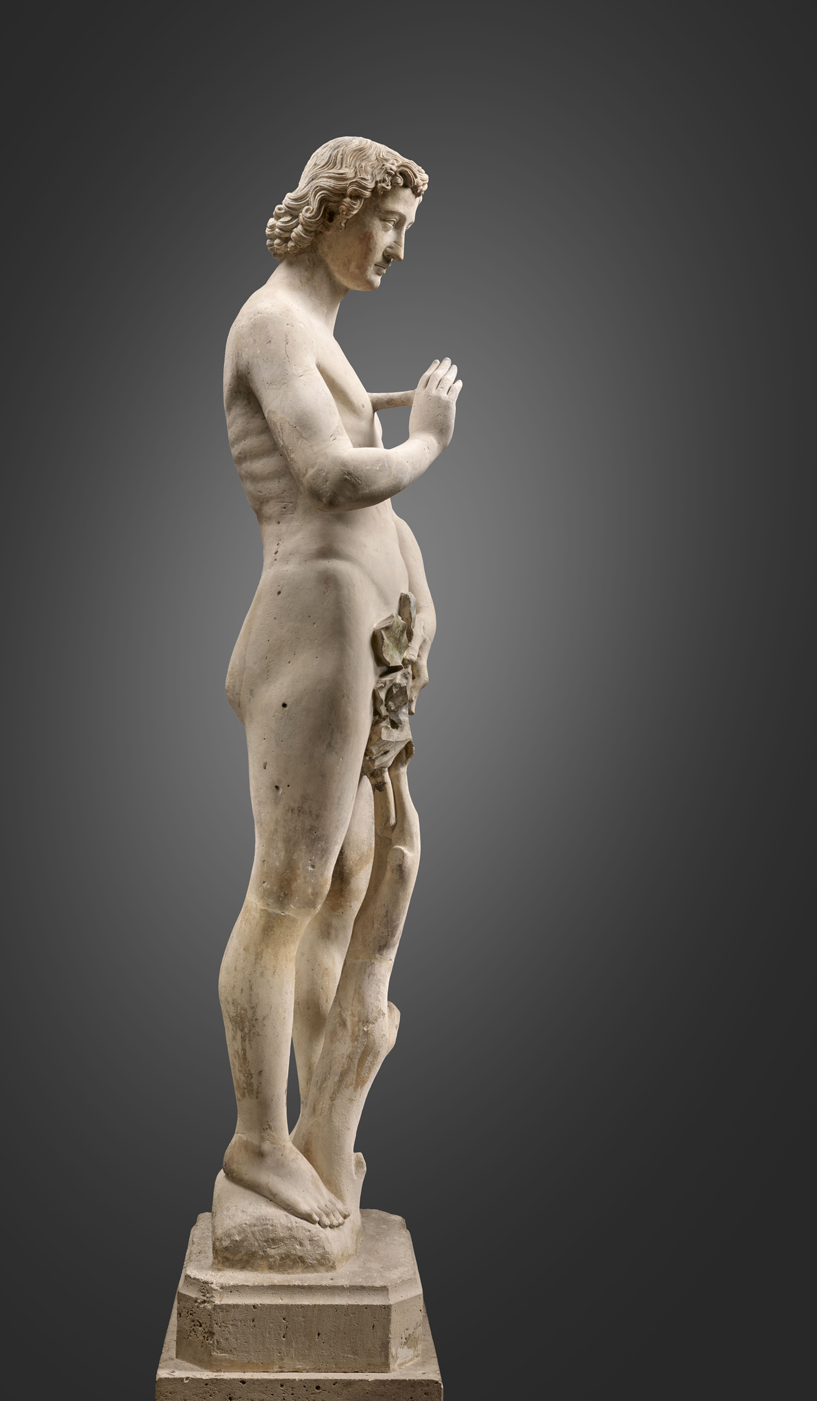
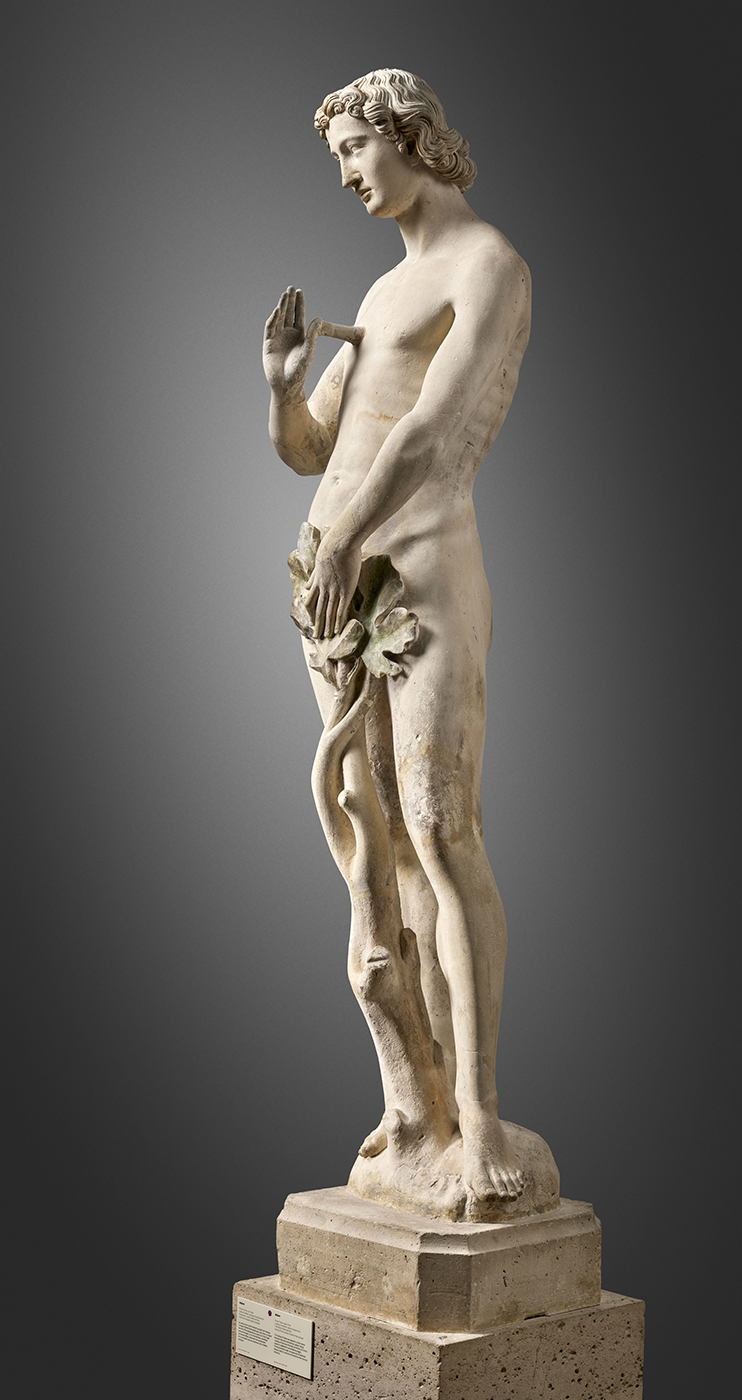
This masterpiece of Gothic sculpture is crafted from Parisian limestone. Despite its current white colour, which gives it the appearance of a classic sculpture, it was decorated in colour (polychromy). Only a few traces remain, particularly on the fig leaf.
Adam gestures a warning with his hand, likely directed at the clerics making their way back to the bishop's palace through the portal of the south arm of the transept. He draws their attention to his fall and his redemption through Christ, who is above him. This representation is directly related to the iconography of the Salvation sculpted on the rood screen of the cathedral.
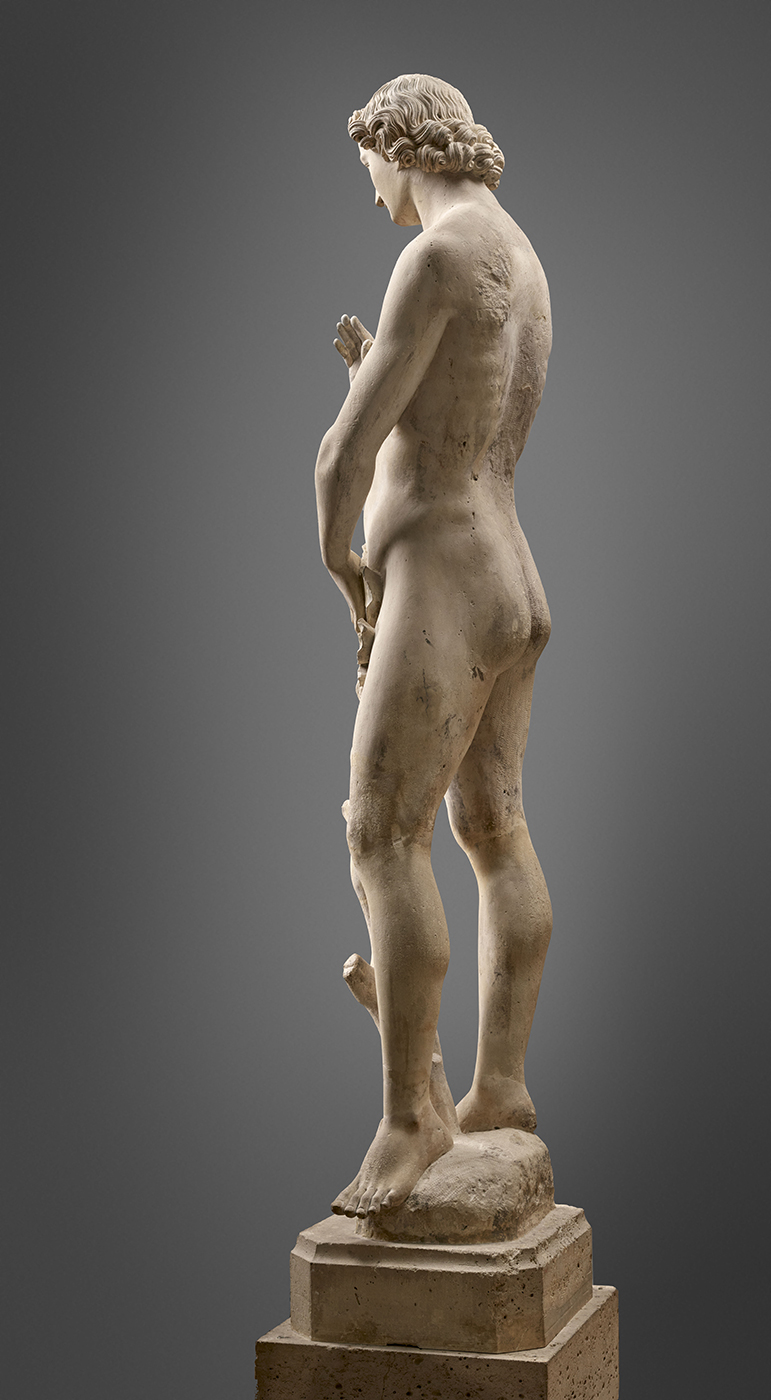
The uniqueness of Adam is that he is naked. In the Middle Ages, nudity, although not exceptional, was rare. His position is that of the contrapposto: his weight is on one of his legs, while the other is slightly bent and relaxed. With his nudity, strong hip and the position of the left hand placed in front of the fig leaf, the statue seems to reproduce the ancient type of the Venus Pudica embodied by the Aphrodite of Knidos by Praxiteles.
This reference therefore explains certain feminine anatomical traits (the sinuosity of the body, rounded buttocks, etc.), which are adapted to a male figure in this case. Apart from the hair, which is characteristic of 13th-century Parisian art, the face of Adam face also reveals ancient inspiration.
It is therefore reasonable to question whether the sculptor of the work had seen the models that inspired him, or if he had acquired indirect knowledge of them through sketchbooks. The major restorations carried out on the statue in 1888 and at the end of the 1970s render this analysis more complicated.