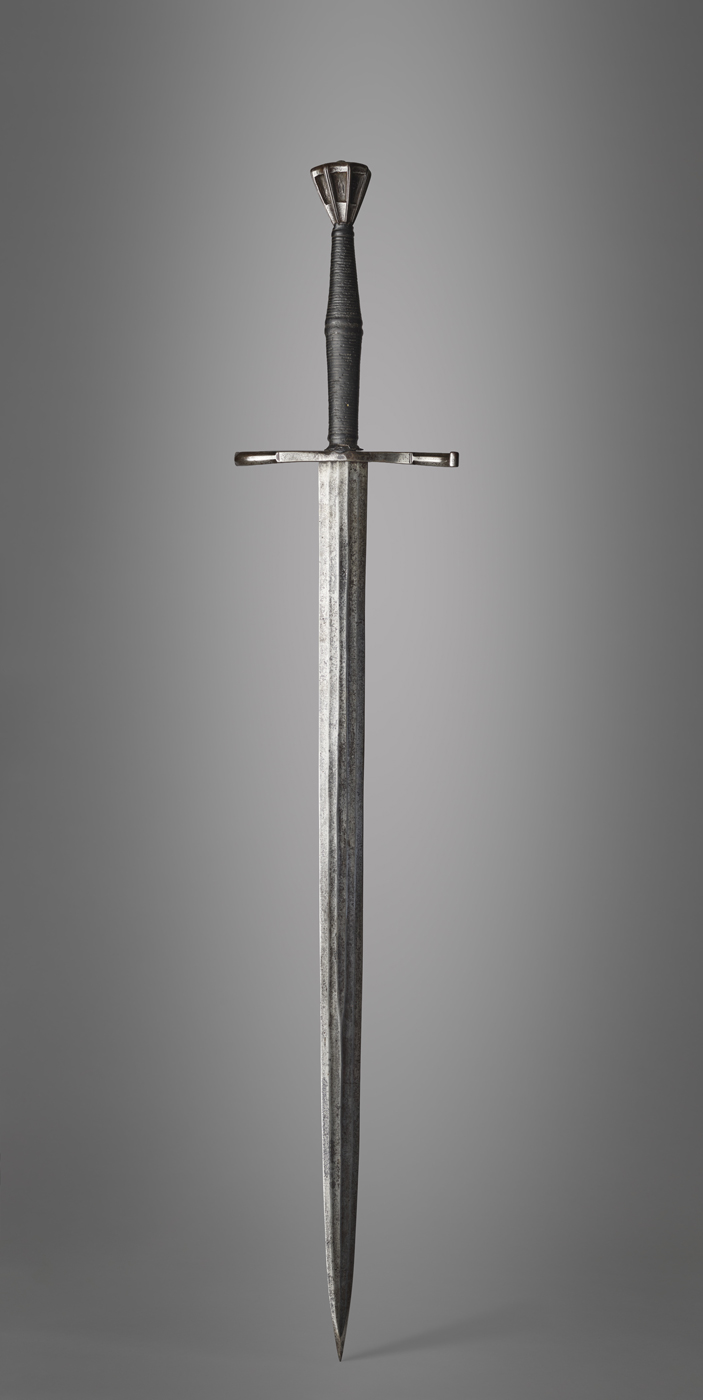
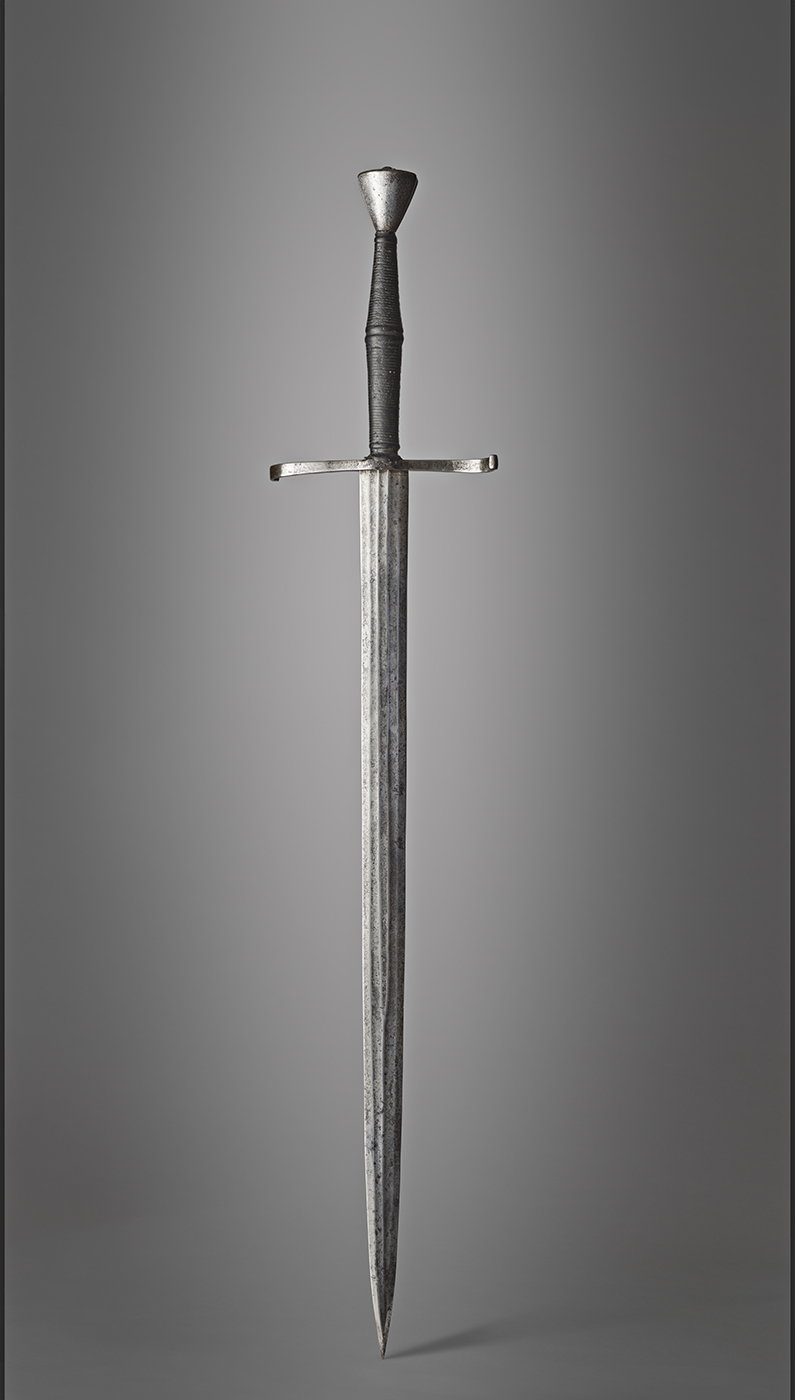
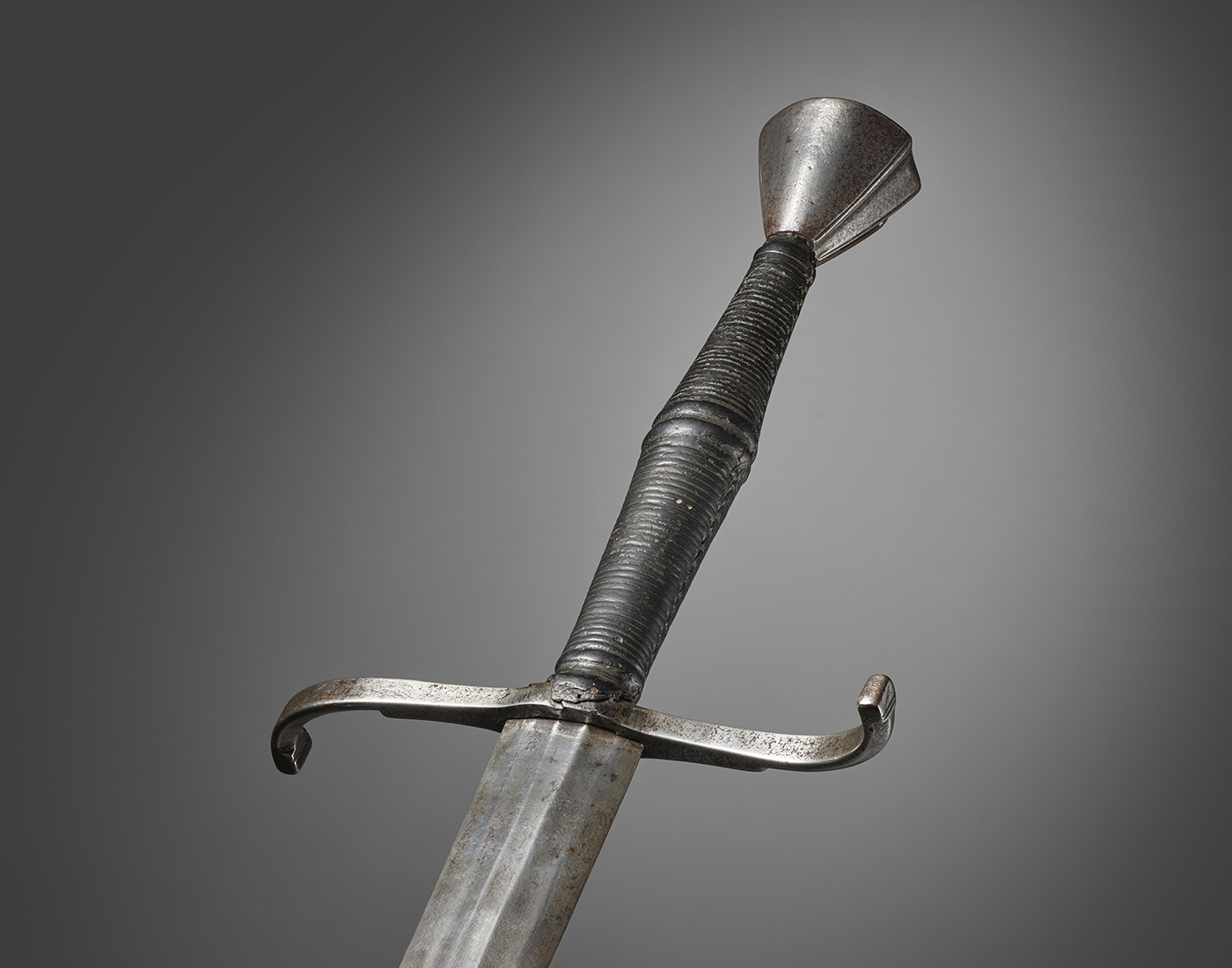
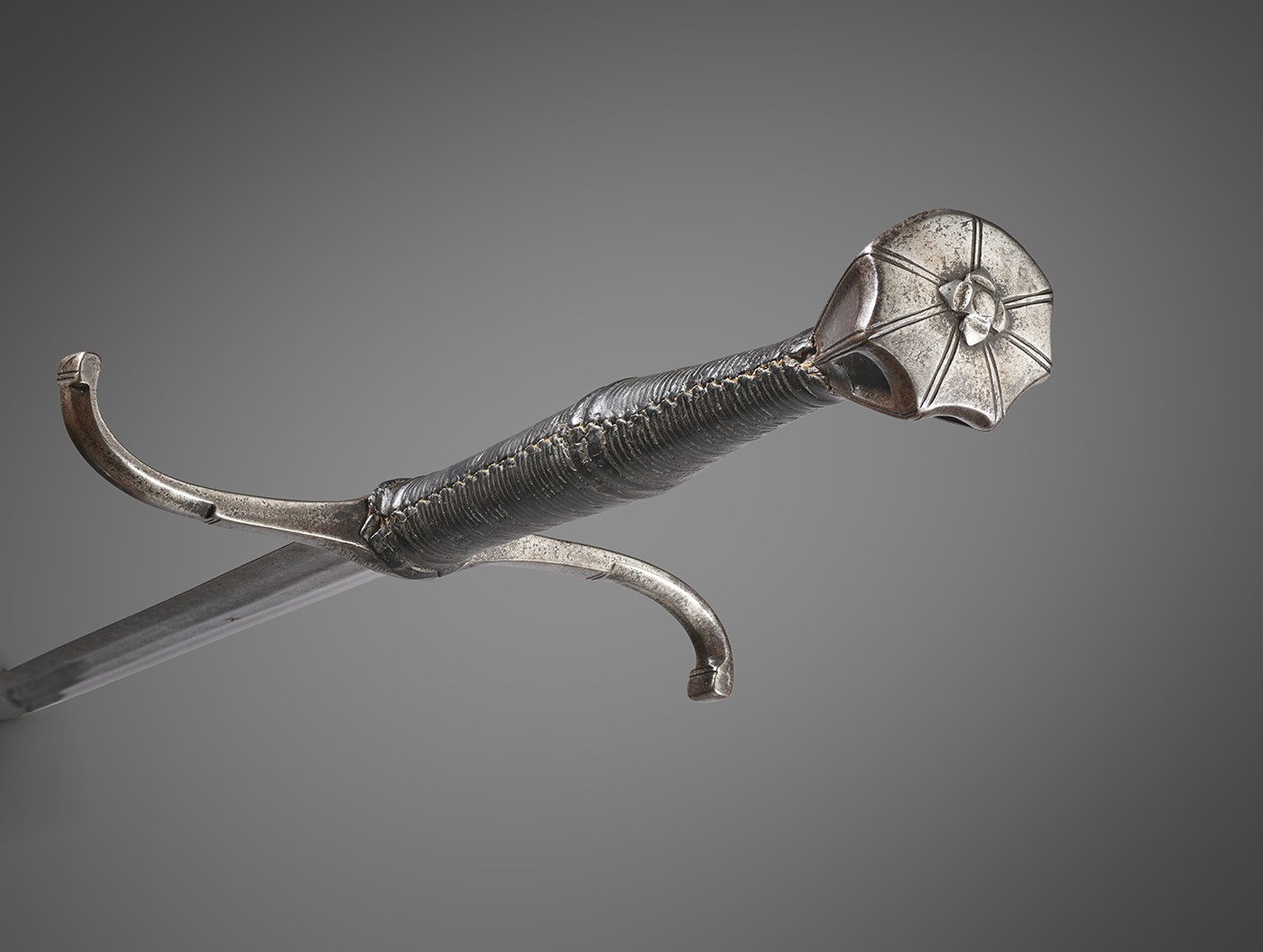
This particularly well-preserved sword is a rare example of a weapon, notably due to its pommel and blade.
Medieval weapons that are not in an archaeological state but instead well-preserved are among the rarest. This famous sword, published by Ewart Oakeshott in a reference work, was also part of his own collection.
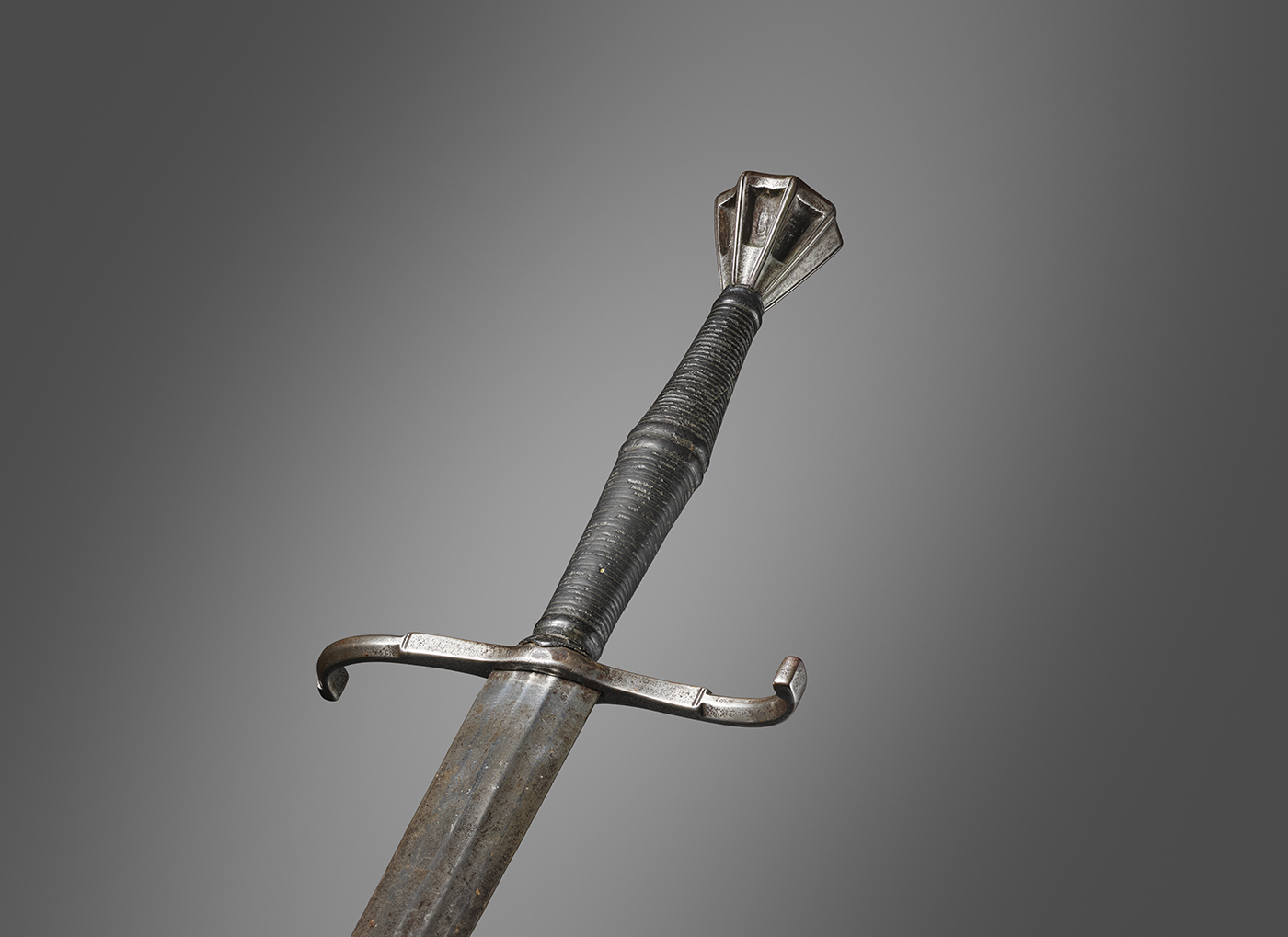
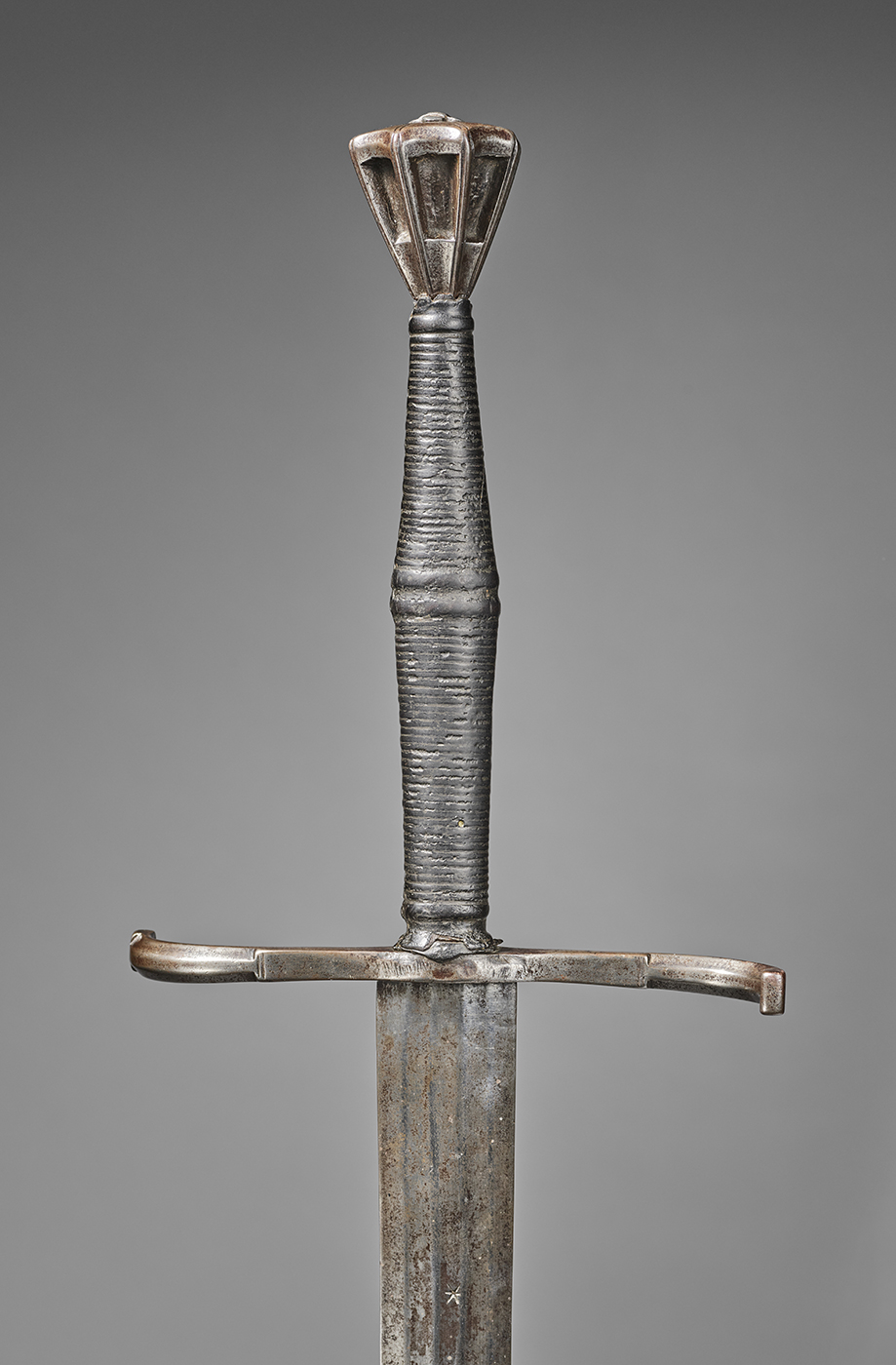
Beyond its condition, it features remarkable morphological characteristics that, combined, make it a unique weapon. The piriform pommel with three concave facets, which were likely adorned with decorative inlays, is very similar to that of the sword with which Svante Nilsson, Regent of Sweden who died in 1512, was buried. The S-shaped, asymmetrical quillons, chamfered on one side, are specific to a fencing practice that allows binding the opponent's blade and are typical of Germanic countries around the year 1500.
This rare form is present on only three other swords, each composed differently in terms of pommel and blade (Musée de l'Armée; Munich, Bayerisches Museum; Musée de Cluny).
Mark on the fuller near the hilt, on the front side: a six-pointed star.