Priest of Sarapis known as Julian the Apostate, Cl. 18830 (detail) © GrandPalaisRmn / Franck Raux
3D
Priest of Sarapis known as Julian the Apostate, Cl. 18830 (detail) © GrandPalaisRmn / Franck Raux
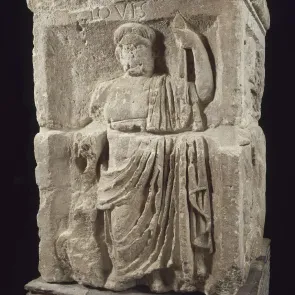
For a long time, this famous Roman statue found in Paris in the 19th century was named Julian the Apostate, the name of the emperor in the 4th century. This interpretation is based on the observation of the coin stamped with this emperor’s image, where he appears bearded and crowned, as on the statue, and on the fact that he liked to wear costumes and lived in Lutetia for a time. However, recent research links the work to the reign of Hadrian (2nd century), which leads to seeing an anonymous priest.
| Inventory number | Cl.18830 |
|---|---|
| Width | 62 cm |
| Height | 181 cm |
| Medium | Sculpture ; Stone |
| Method of acquisition | Acquired in 1859 |
Pillar of the Boatmen, stone of Jupiter, Cl. 18602 © GrandPalaisRmn / Jean-Gilles Berizzi
Between 14 and 37
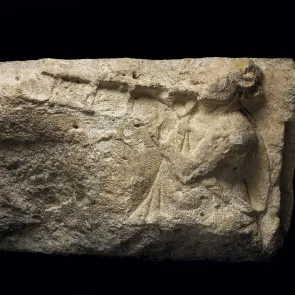
Saint Landry Pillar, Musician, rose window and leaf motif, Cl. 18607 © GrandPalaisRmn / Michel Urtado
First half of the 2nd century
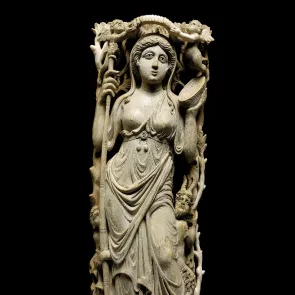
Ariadne, Cl. 455 © GrandPalaisRmn / Thierry Ollivier
5th century - 6th century
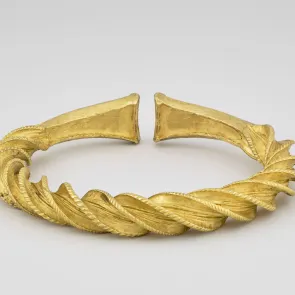
Open torque, Cl. 8071 © GrandPalaisRmn / Mathieu Rabeau
2nd century BCE
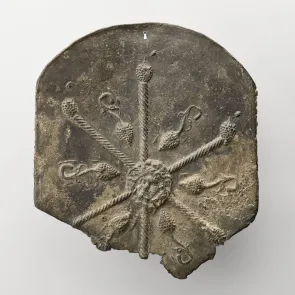
Sarcophagus slab, Cl. 23975 © GrandPalaisRmn / Mathieu Rabeau
2nd - 3rd centuries
The Symmachi diptych panel, Cl. 17048 © GrandPalaisRmn / Thierry Ollivier
5th century
The Jouvenel des Ursins family in prayer, RF 9618 © GrandPalaisRmn / Michel Urtado
Between 1445 and 1449