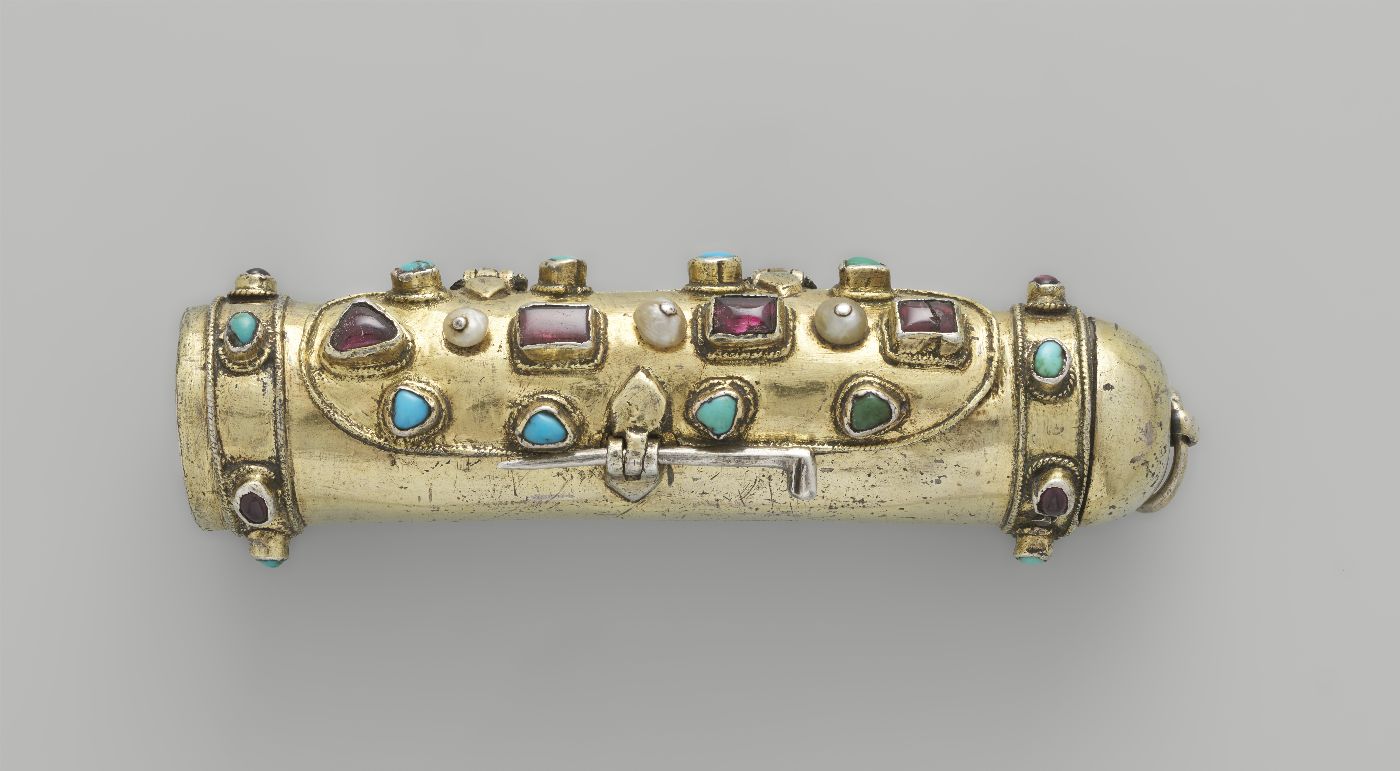
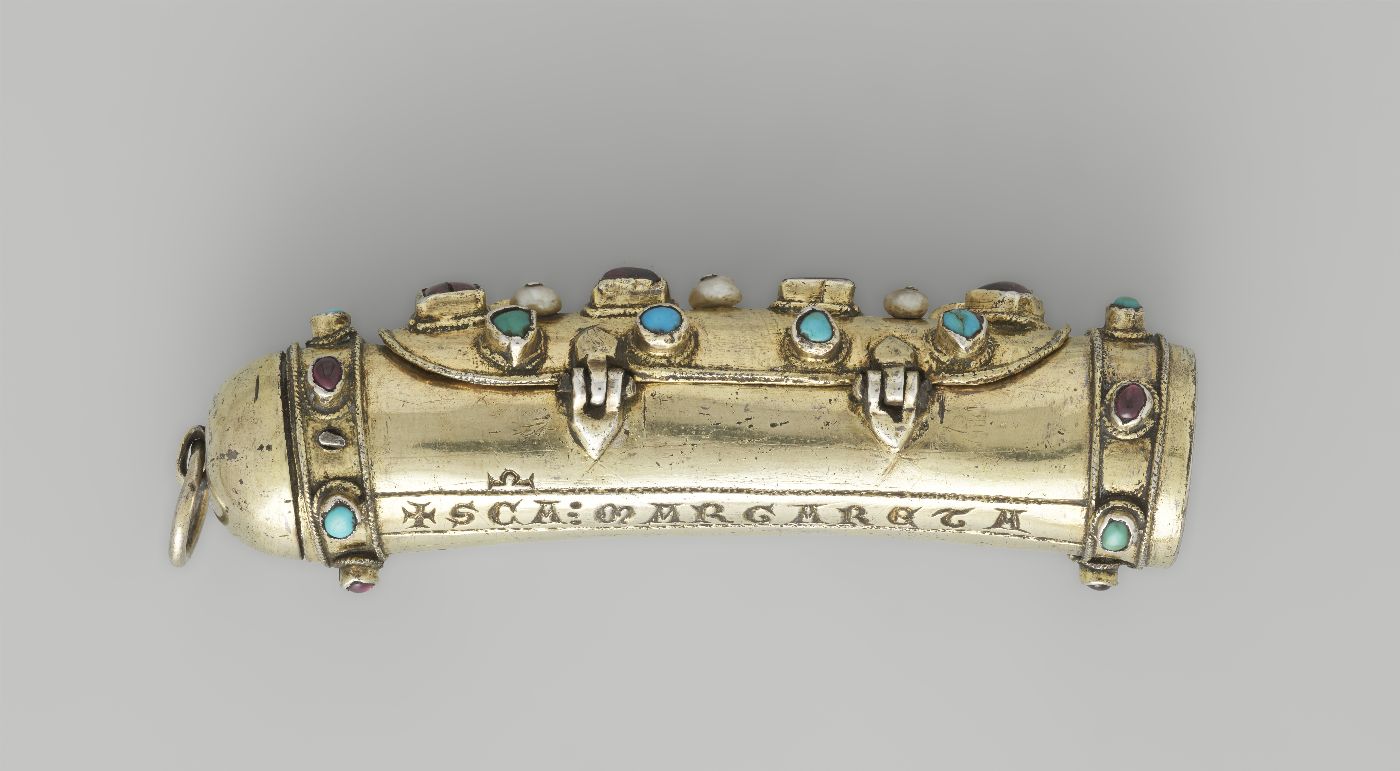
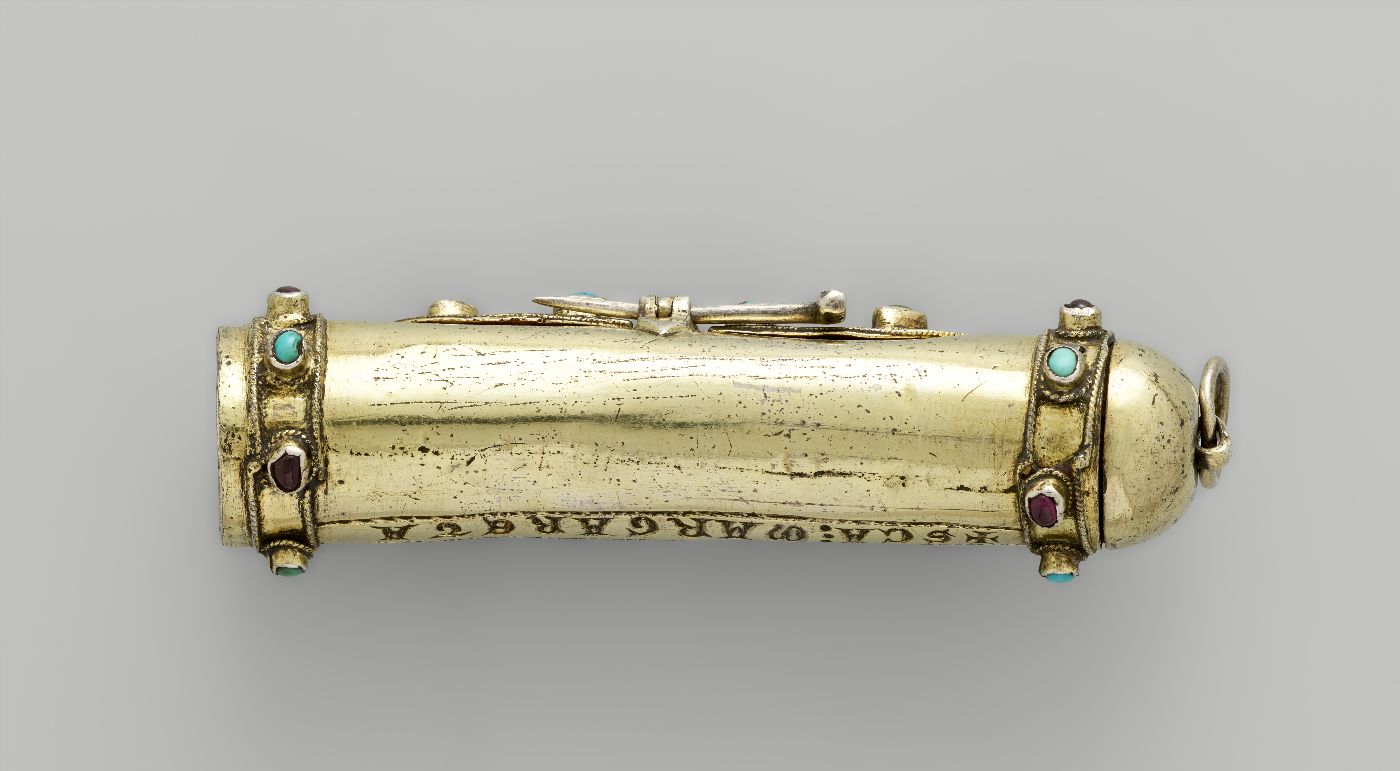
This silver reliquary finger, encrusted with gemstones and pearls, is remarkable not only because of its rarity and state of conservation, but also its history.
It was said to have been given by King James V of Scotland to Jean de Langeac, Bishop of Limoges, around 1537, as a token of thanks for a diplomatic mission by the prelate in Scotland. It remained in the Langeac family until its extinction, and it is said to have passed by marriage to the Scorrailles family in 1772.
Although it does not exactly look like a finger, this object is an expressive reliquary, as its shape alludes to the relic it contains: a relic of Saint Margaret's finger. It displays the inscription in Gothic uppercase letters: + SCA: MARGARETA" (Saint Margaret) and opens with a hinged flap on the relics of the Saint.
An Anglo-Saxon princess of the House of Wessex, Queen of Scotland, Margaret (c. 1045–1093) was venerated for her pious life and for introducing Roman liturgy to the Scottish Church. She was canonised in 1250 and declared the patron saint of Scotland in 1673.
Mediaeval reliquary fingers have survived to the present day, but in relatively small numbers, and they have diverse shapes. This almost unique and virtually unaltered specimen enhances the rich and diverse collection of reliquaries at the Musée de Cluny, while addressing a gap: the museum holds a reliquary arm and a reliquary foot, but did not possess a reliquary finger until now.
Origin: Langeac family since the 16th century; Scorrailles family since 1772; purchased in 2024.