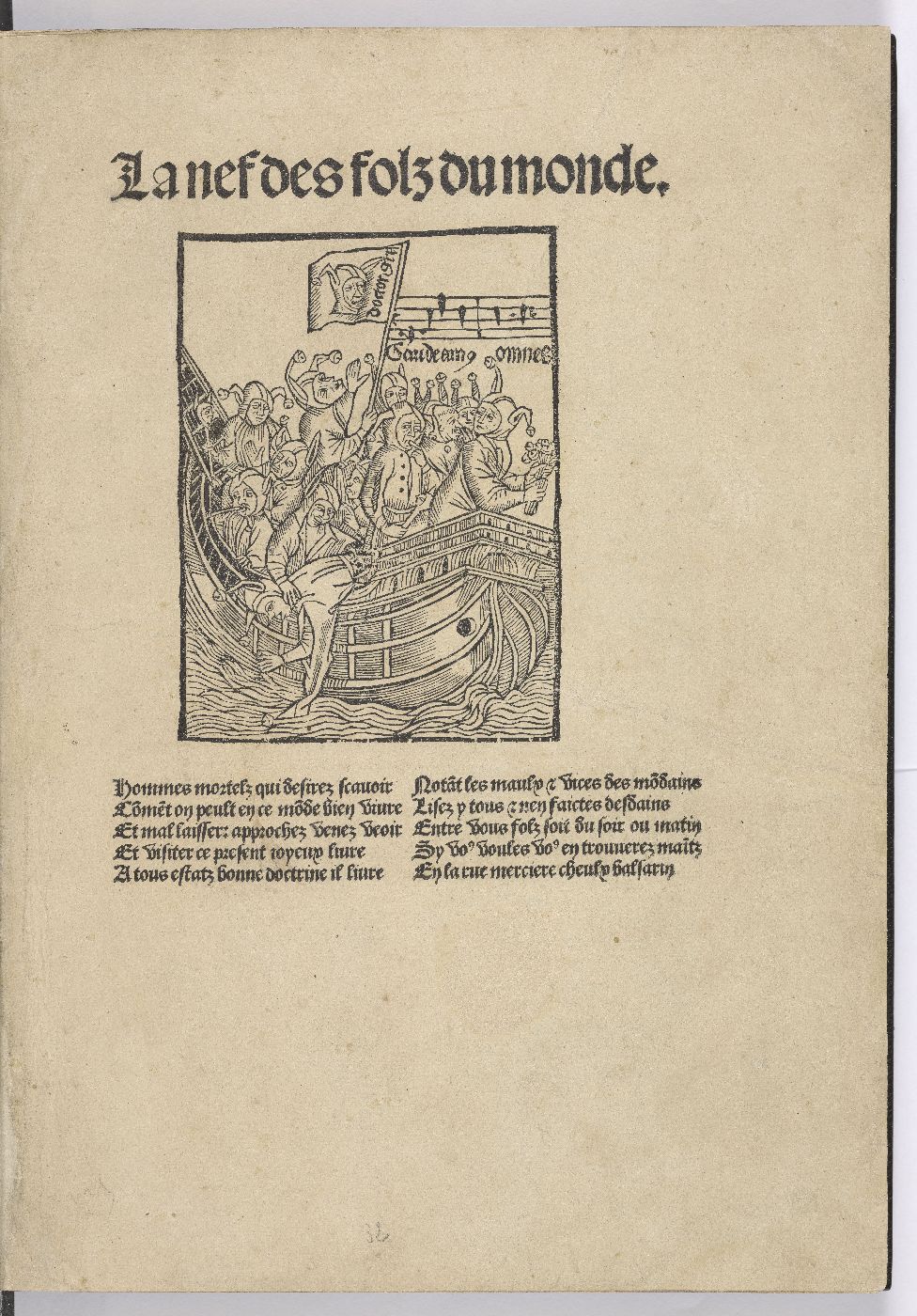
The "Ship of Fools" brings together, much like carnival parades, a procession of idiots and fools aboard a ship bound for "Narragonia", an island symbolising folly and foolishness.
The satirical and moralist book was written in 1494 by Sébastian Brant (1457-1521) from Strasbourg, who, as a legal scholar and professor at the University, wanted to speak out against and ridicule "human folly".
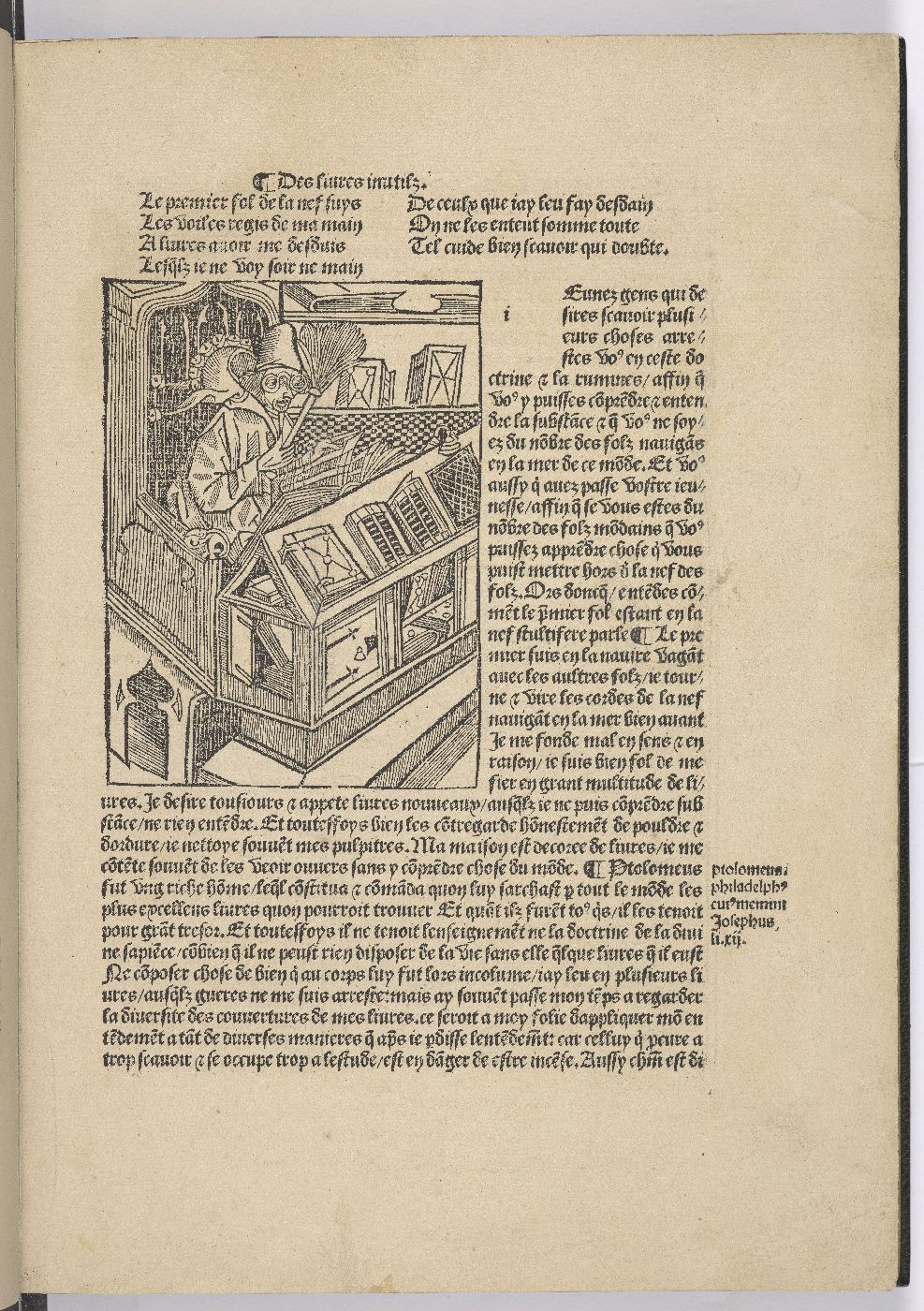
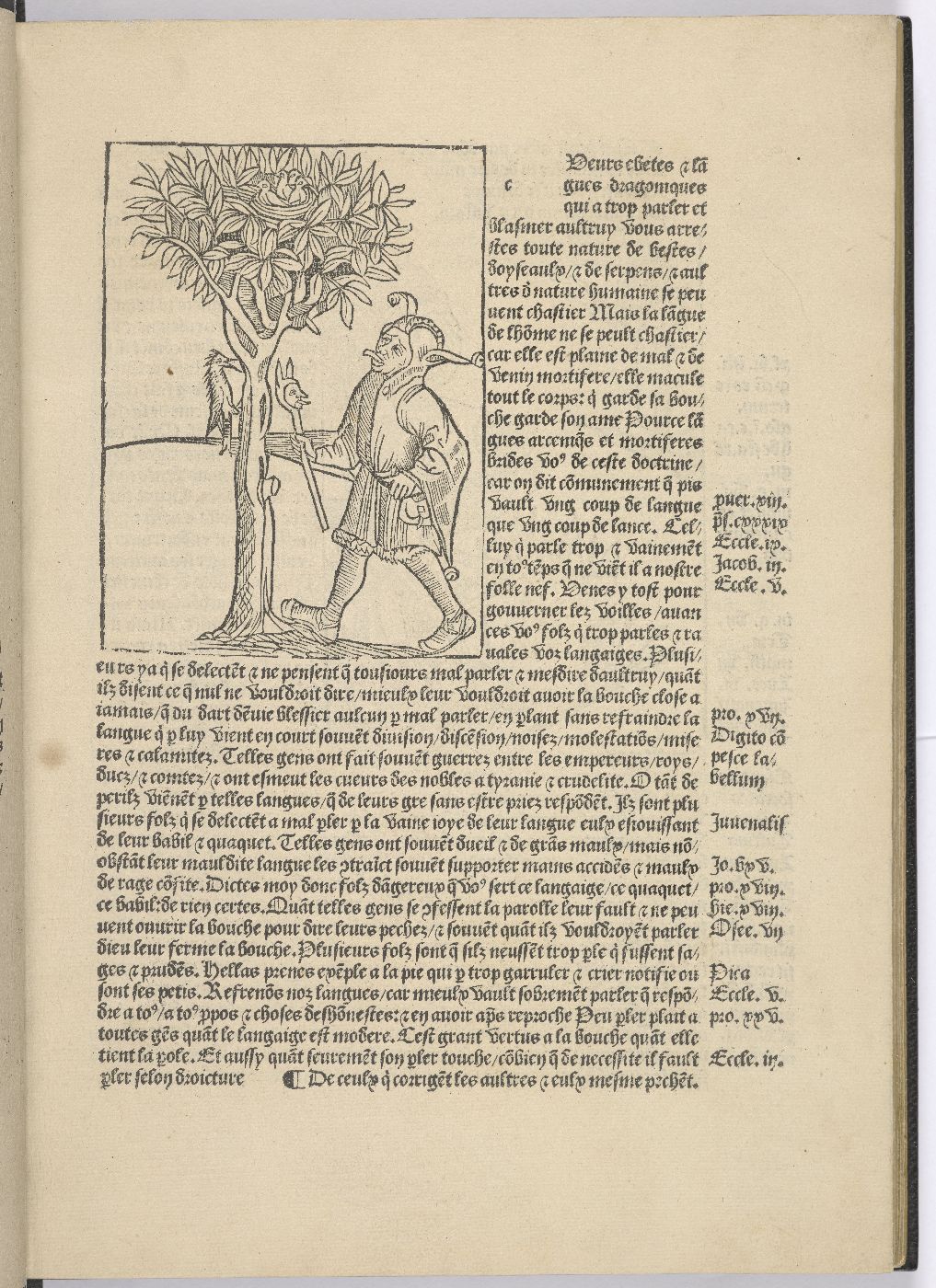
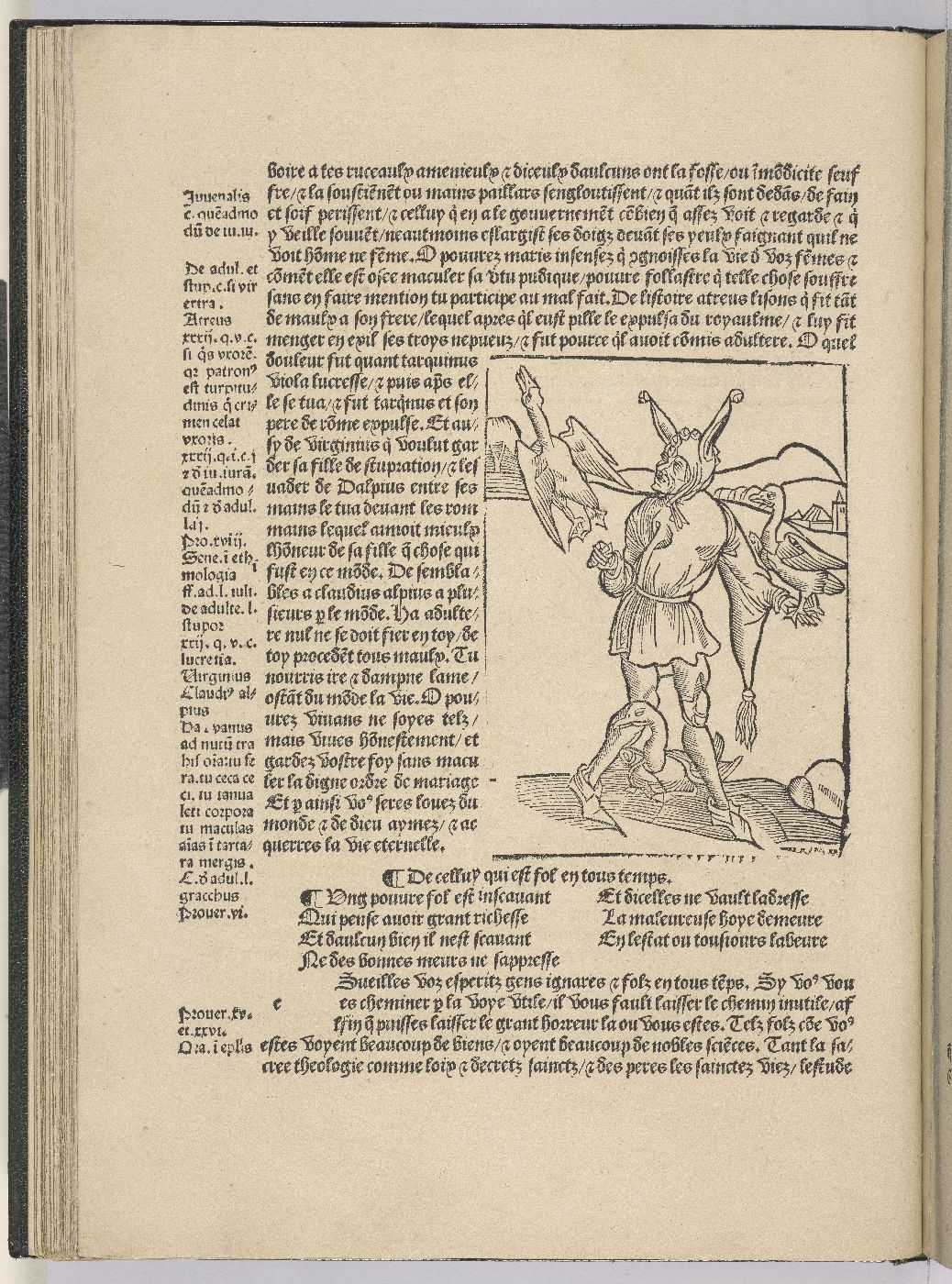
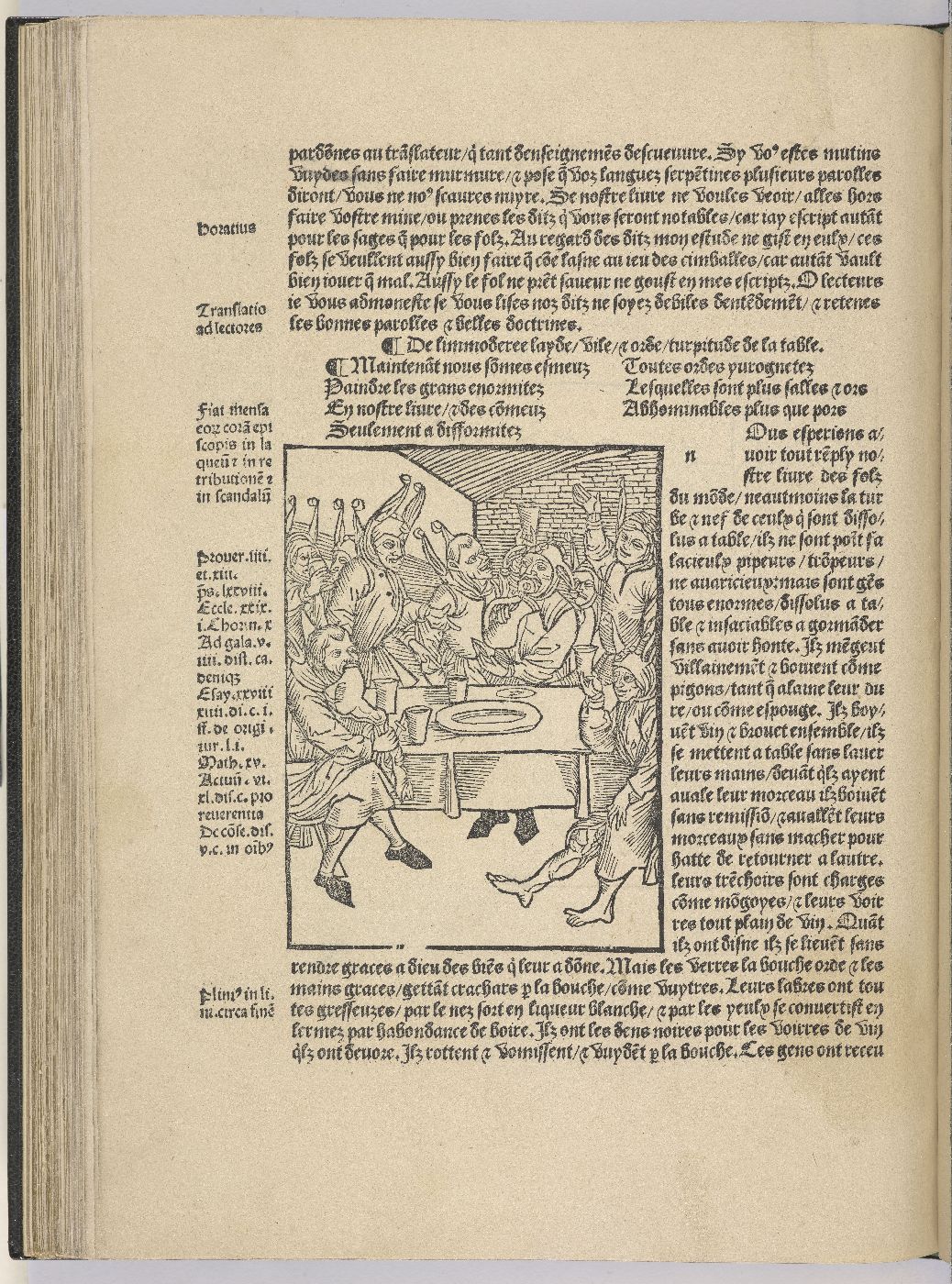
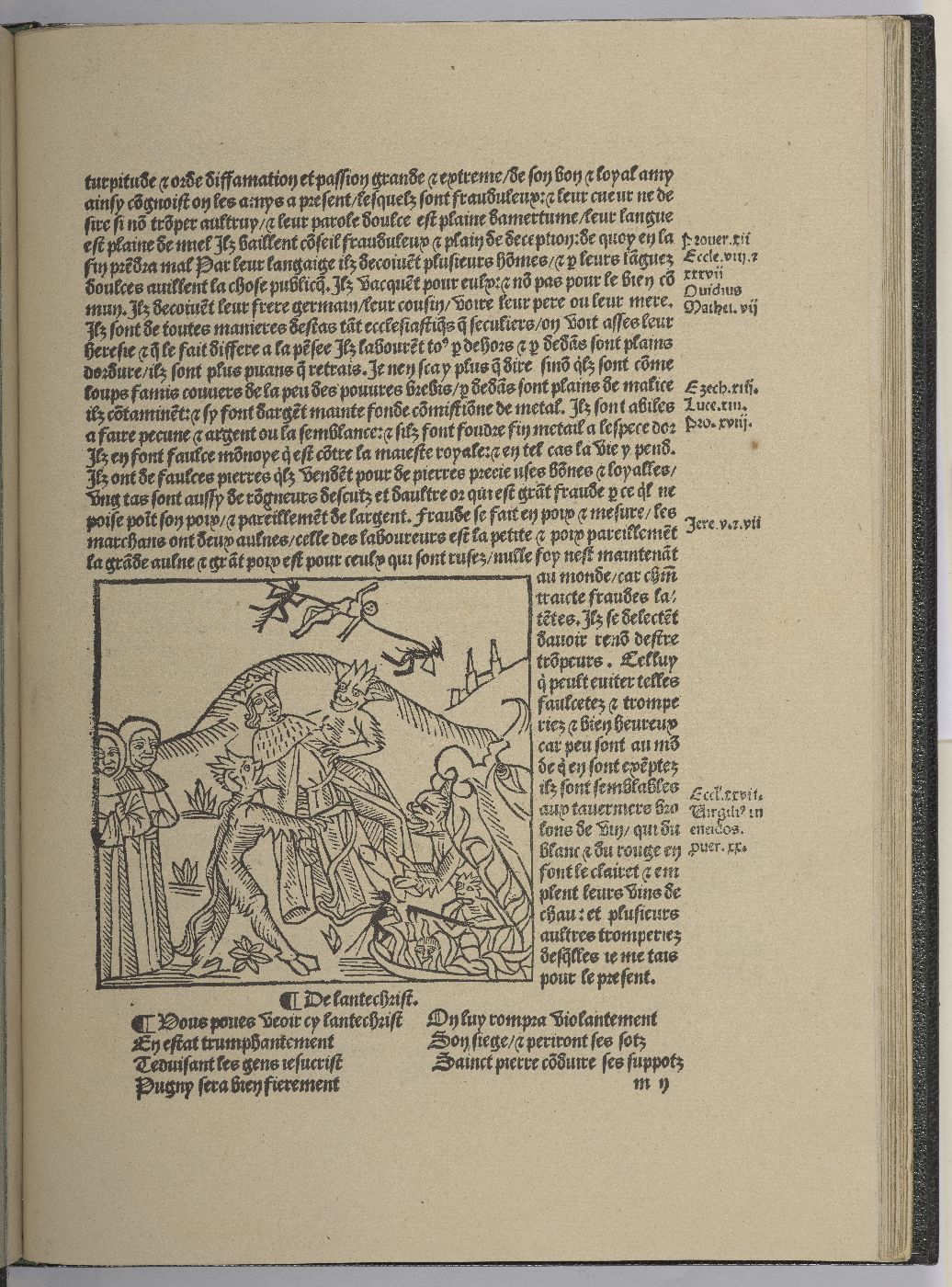
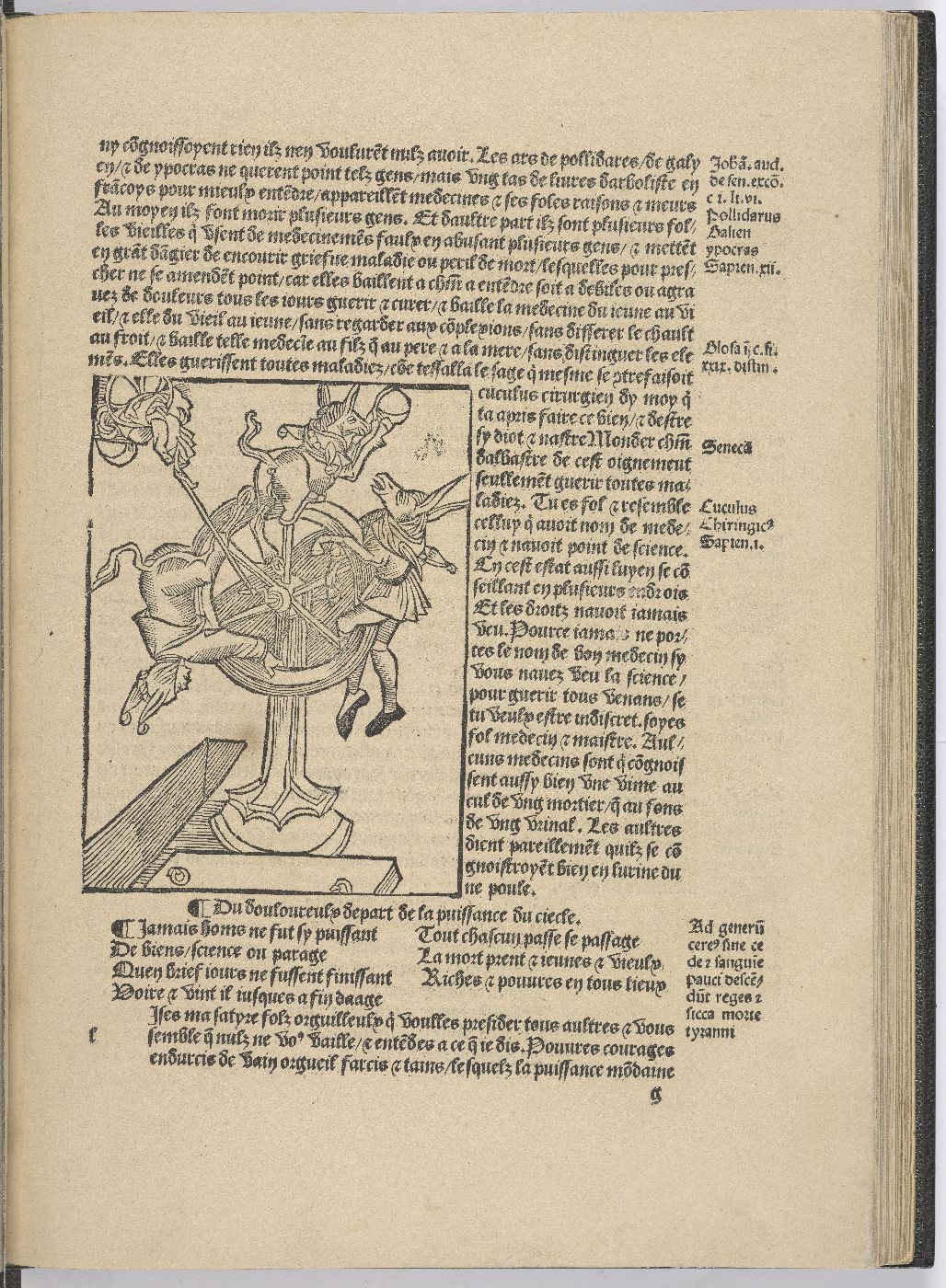
The edition in the museum (Lyon, 1498) represents the first French version, in prose, extensively illustrated and well-structured. Each chapter opens with three introductory verses, an expressive print and, finally, the description of the selected vice. Several artists contributed to his imagery, including the young Albrecht Dürer.
From the beginning, the author depicts himself as a book-mad fool. He similarly caricatures the behaviours of the miser, the usurer, the traveller, the physician, the fool of lust, and so on.
Everyone, the clerk, the nobleman, the magistrate, the university scholar, the merchant, the peasants, the cooks, and so on all sail together on board the same boat.
The illustration inspired Hieronymus Bosch for his famous painting of the Ship of Fools.
On a deeper level, the manual reflects a sense of unease and confusion in the late Middle Ages. It was very popular, becoming one of the "bestsellers" of the late 15th century, and the most read book in the 16th century in Europe, after the Bible.
Printed on 11 August 1498, this edition bears the trademark of Guillaume Balsarin, a printer in Lyon, that can be seen on the last page. It has 168 pages and 117 wood engravings.