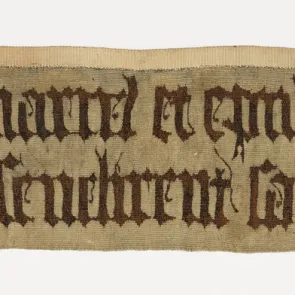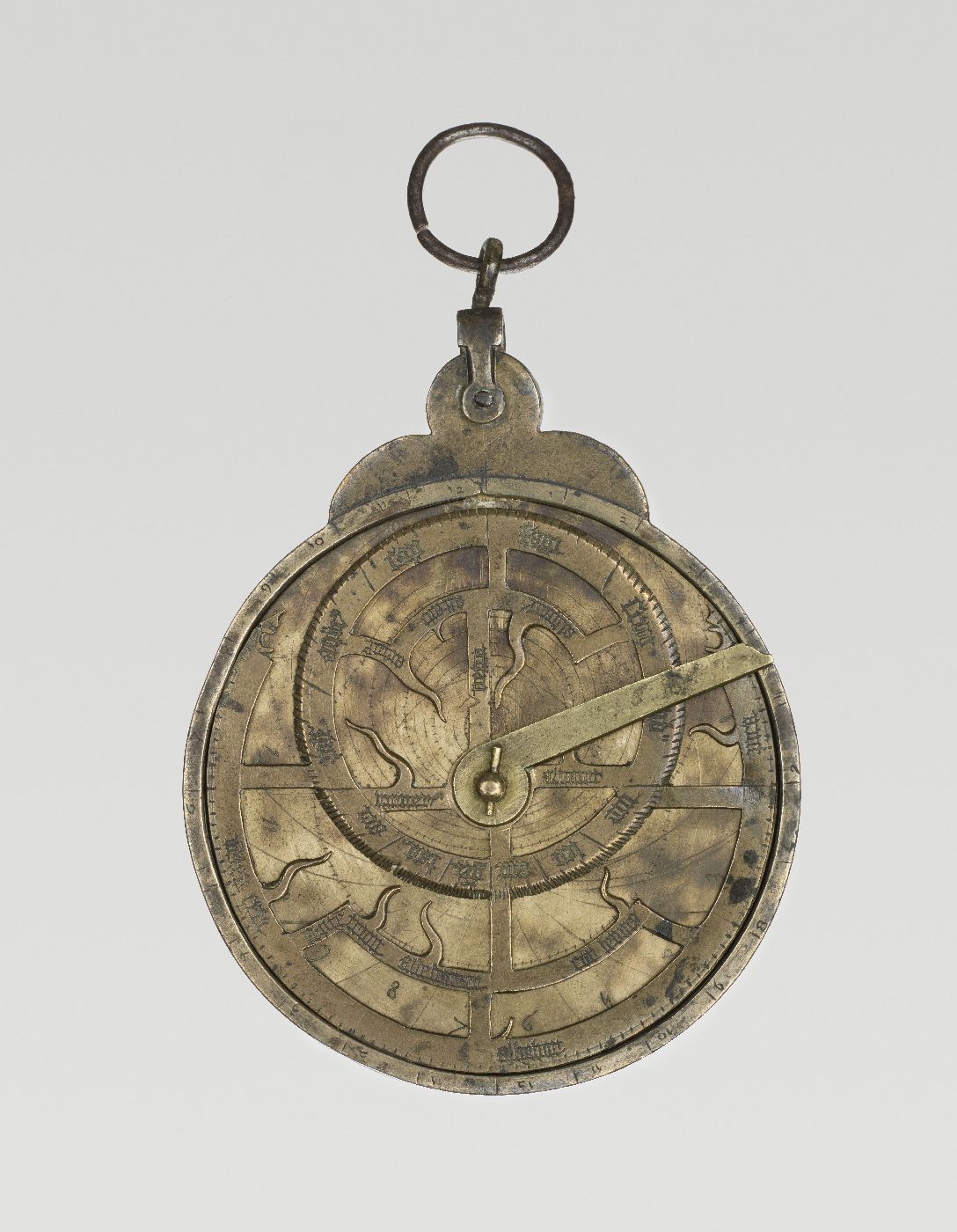
Planispheric astrolabe, Cl. 23915 © GrandPalaisRmn / Michel Urtado
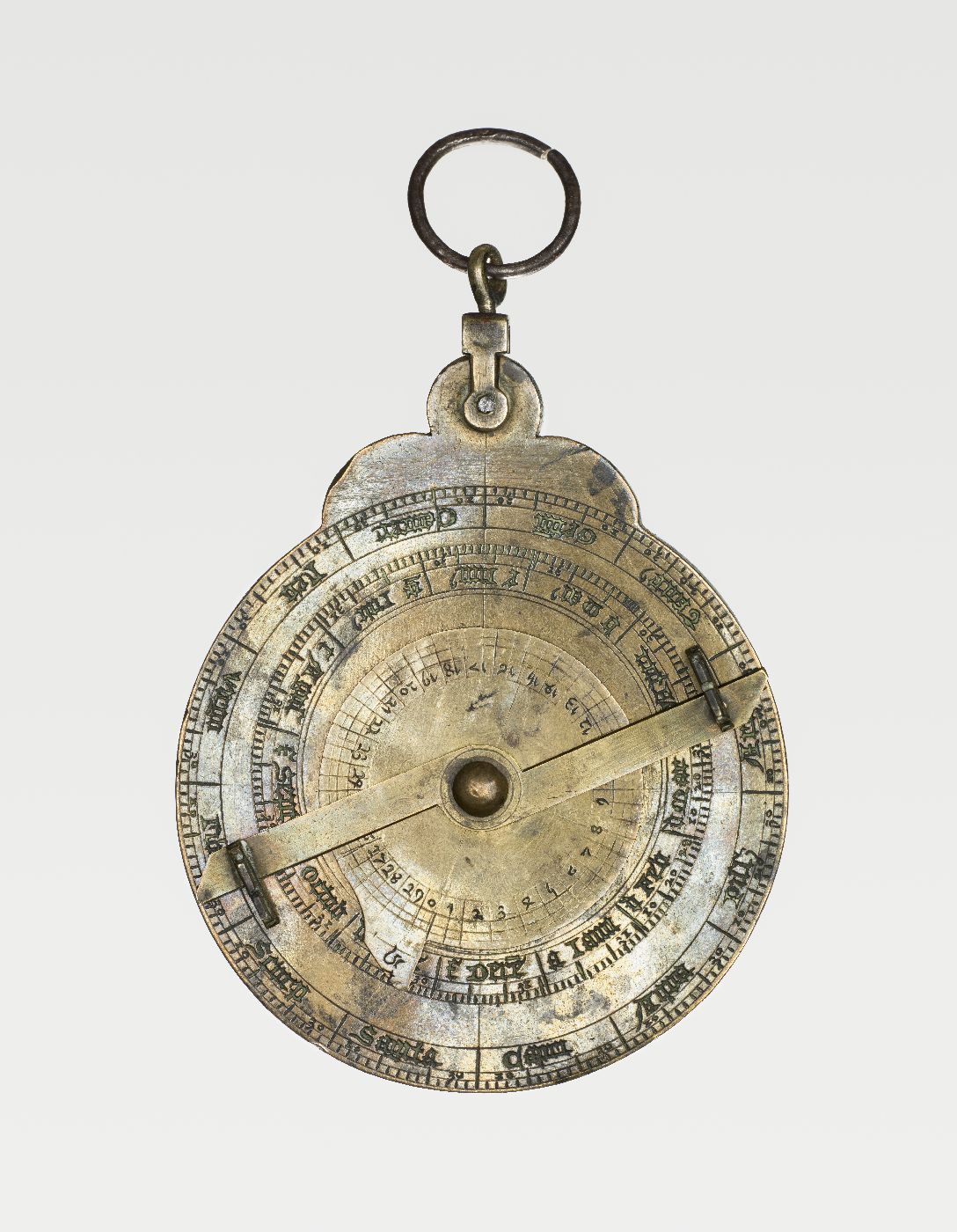
Planispheric astrolabe
Description
The astrolabe is a instrument for making calculations that uses a representation of the celestial vault and the earth, combined with a calendar. It was designed in ancient times, was widely used and perfected in the Islamic sphere before being adopted by the Christian world in the 12th century, where its use then spread rapidly. The astrolabe is primarily used to answer questions involving the time, date, and position of a celestial body when two of these three parameters are known, particularly the exact time at any moment of the day or night. While the mechanical or hydraulic clock, adjusted daily at noon (when the sun is at its highest point), serves as a timekeeper, the astrolabe tells the time by utilising the vast mechanics of the cosmos. But its uses of geometric and analogue calculation tools (as opposed to the abacus, for example, which is an algebraic tool) are infinitely more diversified, to the point that in the 9th century As Suffi described a thousand of them.
Surveying land or a city, determining the height of a building, predicting the date or location of a celestial body rising or setting, calculating movable feats, and exploring astrological themes are just a few examples of its many applications.
This fascinating instrument also serves as the marker of a scholarly society in constant motion, with the various plates found in most astrolabes being engraved for precise use at a fixed latitude. An astrolabe containing, for example, three plates, engraved on each side with a differential of 5°, can therefore be used across a latitude range of nearly 4,000 km from north to south, roughly encompassing Europe and the Mediterranean basin, from Oslo to Cairo. It is precisely this area that is traversed by the scientists, clerks and scholars most likely to have, use and master an instrument of this kind. In the 11th century, an astronomer active in Toledo and Cordoba, Abu Ishaq Ibrahim ibn Yahya Al-Zarqali or Al-Zarqali (1029–1087), invented a type of universal astrolabe that did not have an interchangeable plate and could be used at any latitude. The principle, passed down to posterity as azafea, is to project the celestial sphere not from a pole onto the plane of the equator, but from the vernal point onto a so-called colure plane, intersecting the poles. His immense work had considerable influence on the discipline, correcting Ptolemy's data with remarkable precision and compiling tables of the movements of the planets, known as the Toledan Tables. Alphonse Le Sage had his work translated and incorporated it into the scientific corpus of his time.
The astrolabe at the Musée de Cluny is the classical type featuring stereographic projection of the celestial sphere from the North Pole. Its overall design and compact size suggest that it is an item that could be considered a budget option within the premium segment, according to contemporary consumer goods notions. The organisational layout of the rete, which is one of the stylistic markers, places this object in the sphere of minor masters (compared to Jean Fusoris, for example), while the atypical lunar dial, which hides an incomplete square of shadows, or the plate left blank, reveal a learned patron eager to obtain unusual but also unusual calculation functions, as shown by the overall quality of the object, which is rather average.
Four tympanums: 35°/37°30'; 40°/42°30; blank; 50°:52°30
| Inventory number | Cl. 23915 |
|---|---|
| Depth | 7,4 cm |
| Medium | Metals |
| Method of acquisition | Purchased at a public auction |