Clock
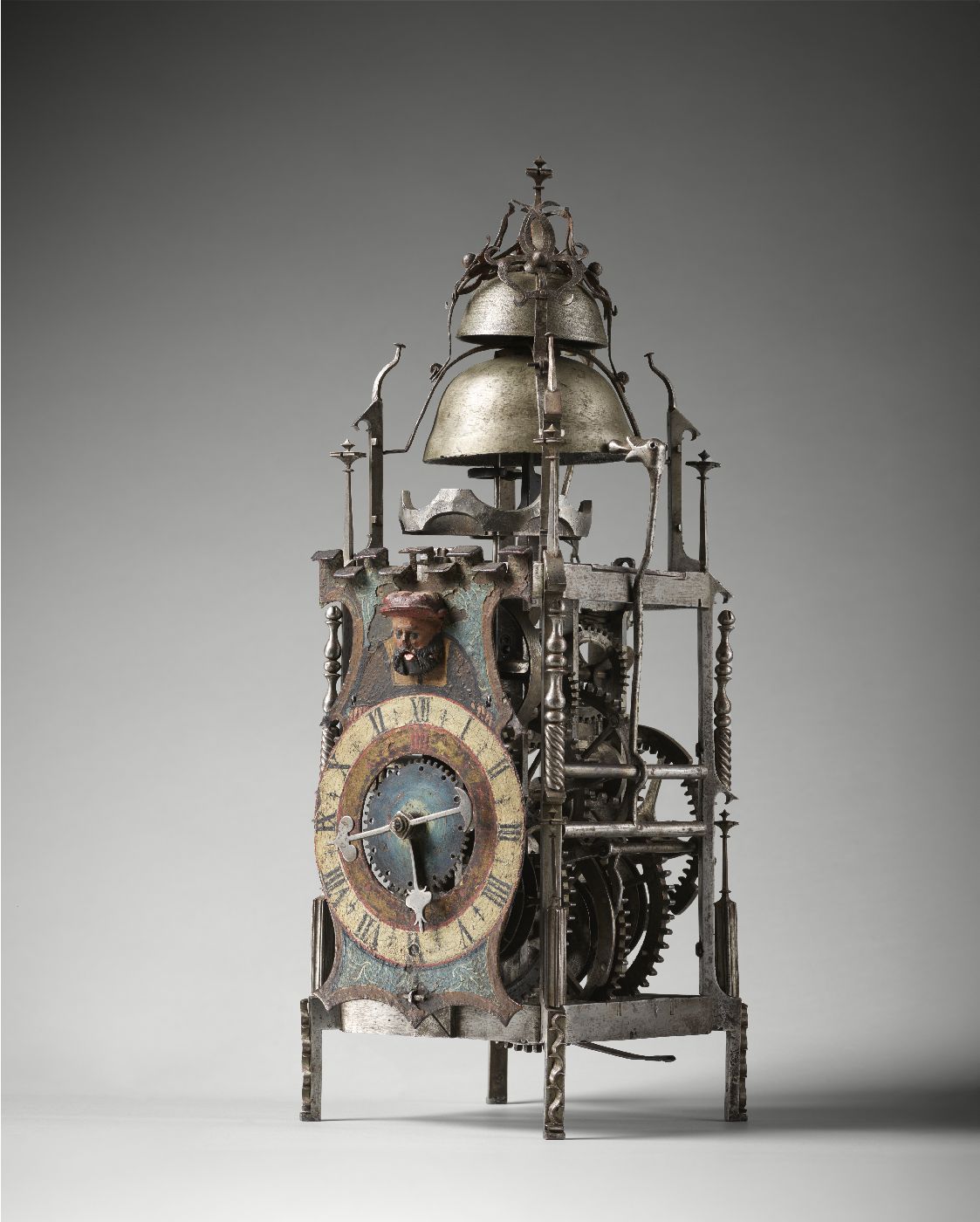
Weight-driven clock with narrative dial and chimes
Clock, Cl. 2465 © GrandPalaisRmn / Michel Urtado
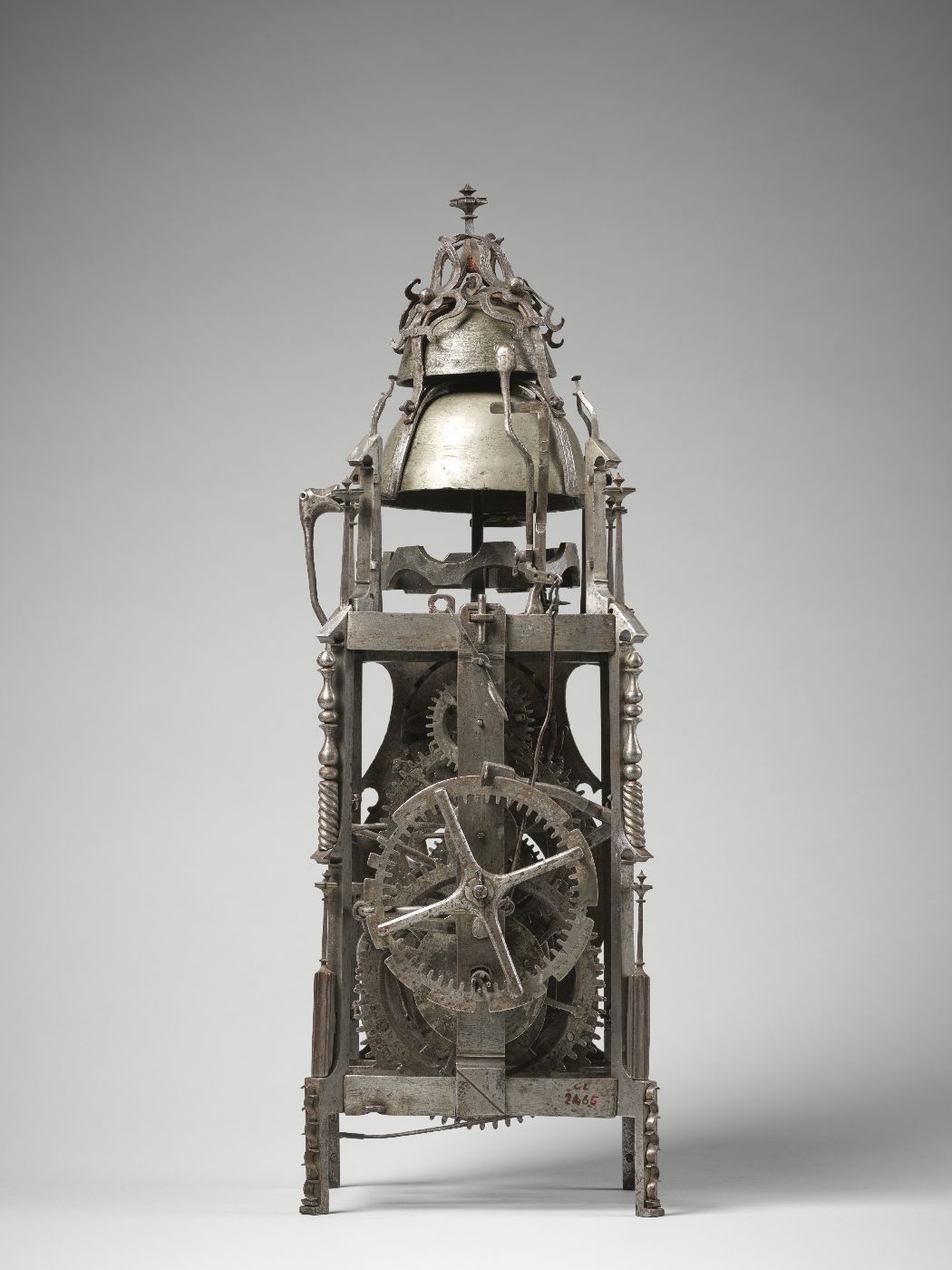
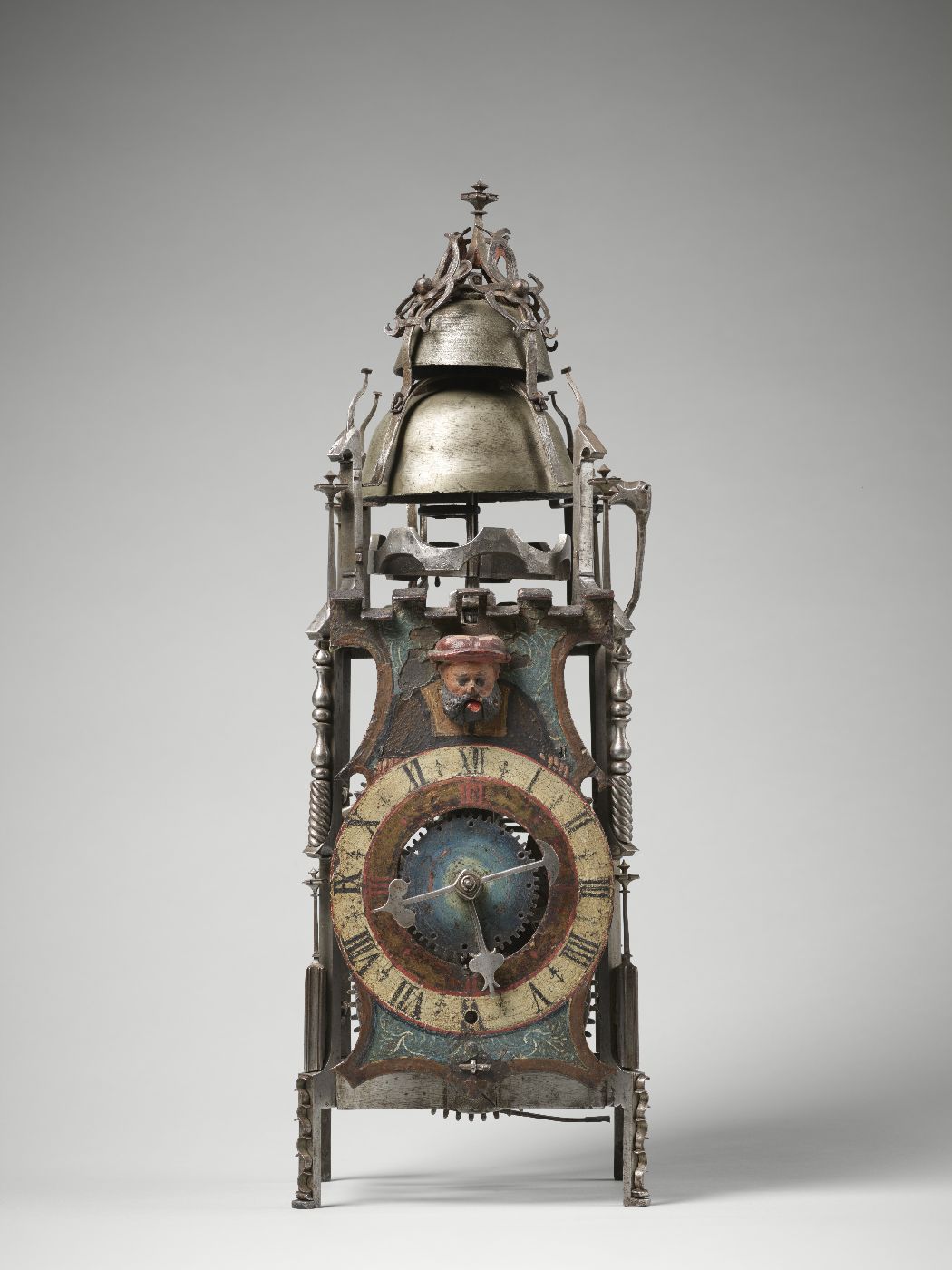
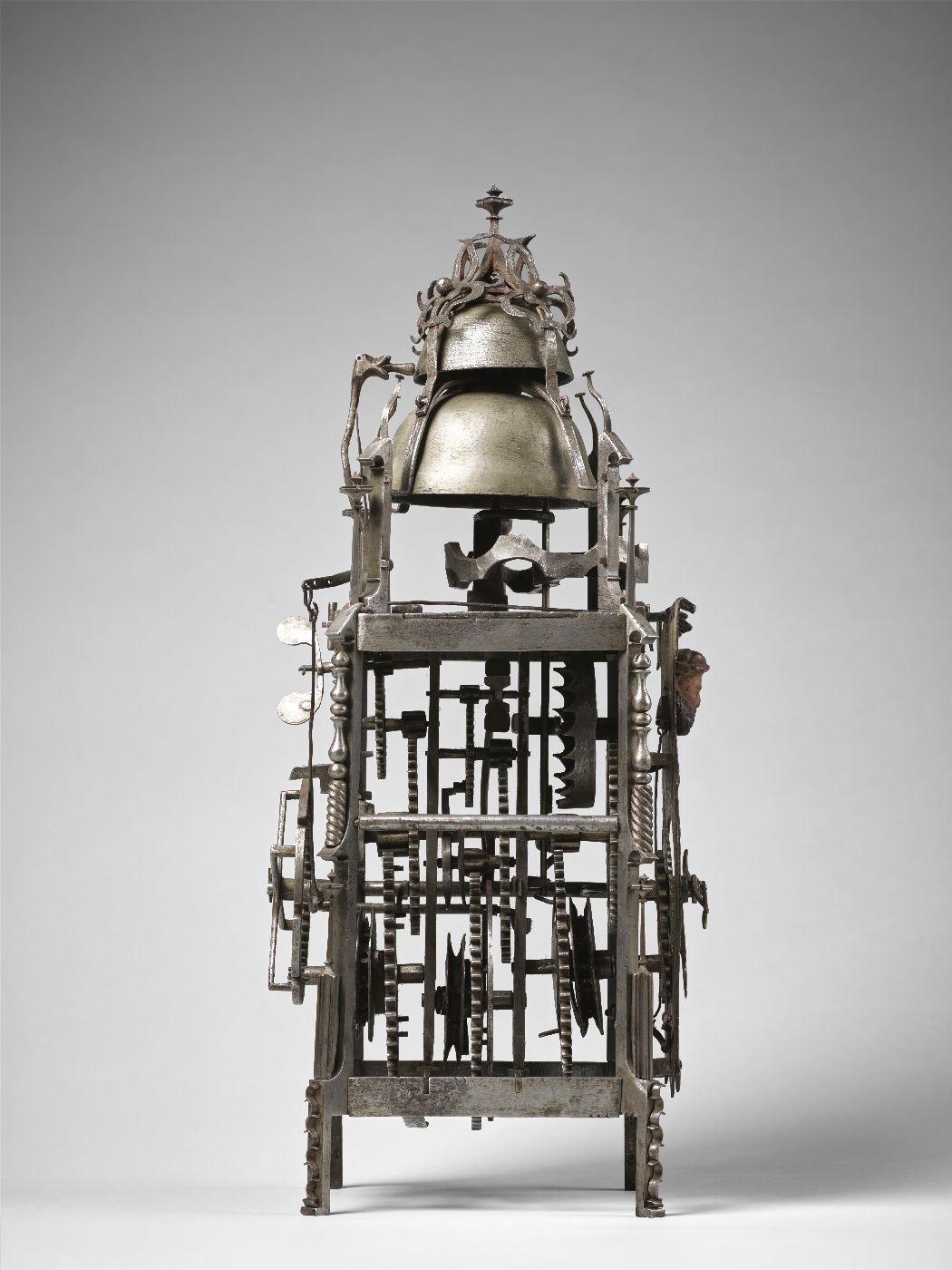
Weight-driven clock with narrative dial and chimes
The mechanical clock, invented in the 13th century, chimes the hours thanks to a weight falling that sets a series of gears in motion. From the 14th century onwards, the folio escapement gave this fall a regularity that is contrary to natural physical laws by providing controlled measured increments. The displayed time is then divided into 12 equal hours, unlike the sun, the shadow of which cast on a dial results in uneven hours that vary with the seasons.
Few gothic clocks are still preserved today. In this example, a ringing device animates the façade's mask; the folio was replaced late on by a carved wheel.
Acquired in 1855 from the Paris art market
| Inventory number | Cl. 2465 |
|---|---|
| Width | 16,5 cm |
| Height | 48 cm |
| Depth | 21 cm |
| Medium | Metals |
| Method of acquisition | Acquired in 1855 |
Tapestries of the story of Saint Stephen, Piece I, The Martyrdom of Saint Etienne, Cl. 20200
© GrandPalaisRmn / Jean-Gilles Berizzi
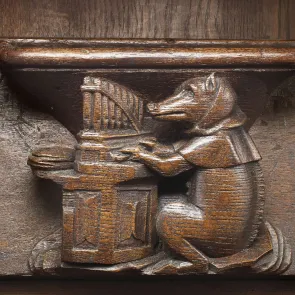
Misericords, three pigs playing the organ and foliage, Cl. 20396 (detail) © GrandPalaisRmn / Michel Urtado
Dollhouse toys, ewer, Cl. 17772 © GrandPalaisRmn / Jean-Gilles Berizzi
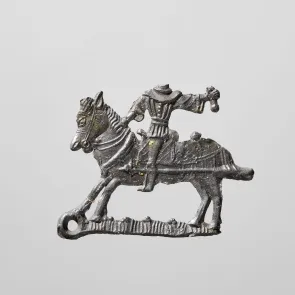
Secular badge, horse rider, Cl. 4600 © GrandPalaisRmn / Michel Urtado
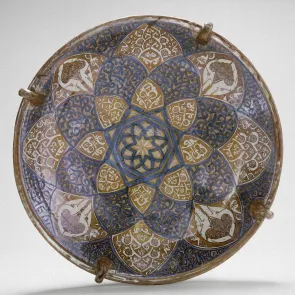
Hispano-moresque ceramic, basin with eyelets, Cl. 2343 © GrandPalaisRmn / Jean-Luc Mabit
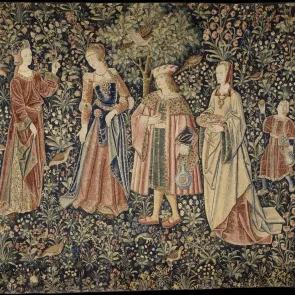
The Lady and the Unicorn tapestries, Taste, Cl. 10831 © GrandPalaisRmn / Michel Urtado