
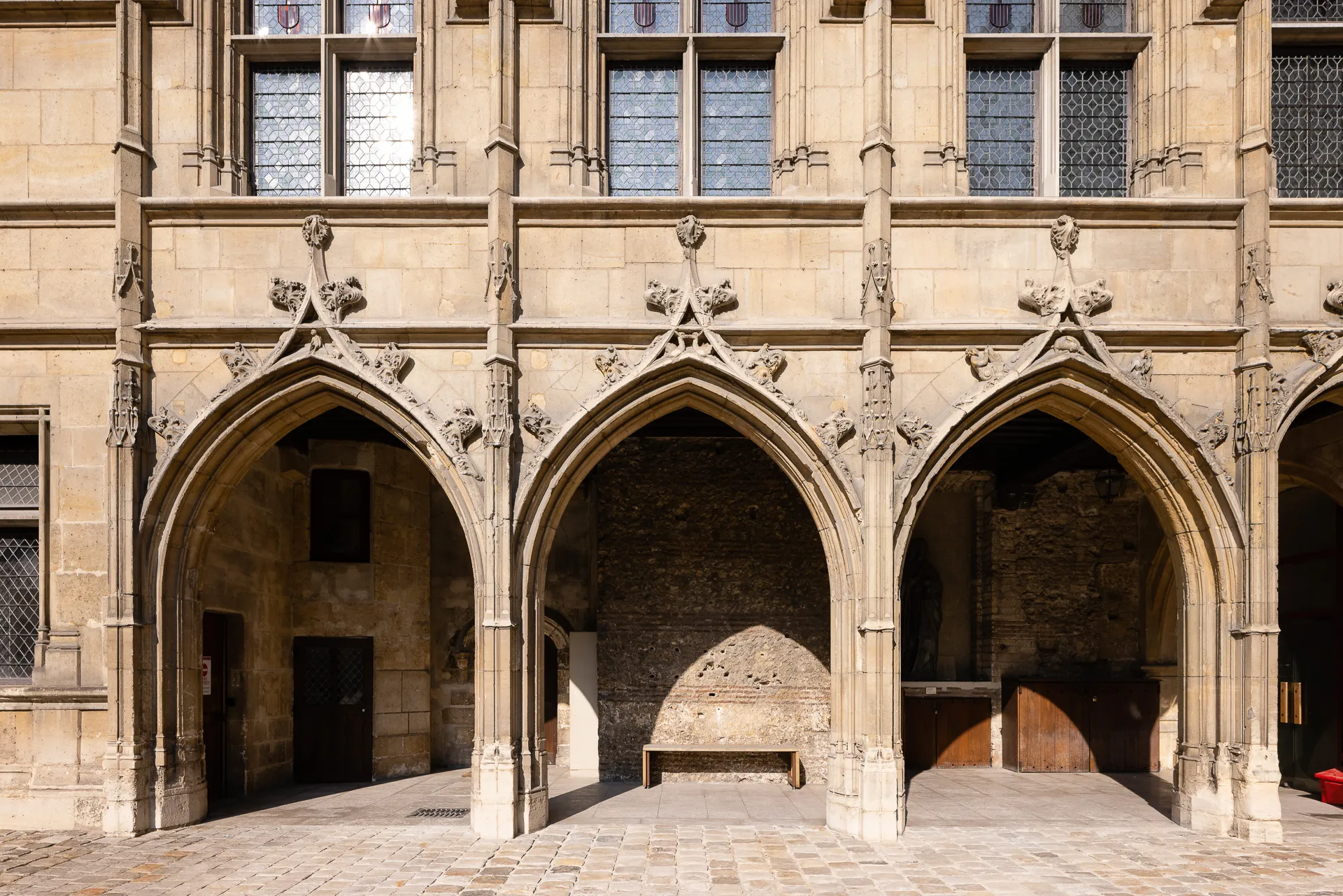
Une façade de l'hôtel médiéval côté cour. © Alexis Paoli / OPPIC
Site protection
Taking care of monumental heritage
The National Museum of the Middle Ages is located in a unique historical site. Its preservation is a major priority in the establishment strategy. In addition to its maintenance, restoration work is necessary.
The site is made up of three historical ensembles:
- The remains of the Gallo-Roman baths of Lutetia were listed as a historical monument in 1862,
- The private mansion of the abbots of Cluny, built at the end of the 15th century and designated a historical monument in 1846,
- A contemporary extension designed by Bernard Desmoulin, inaugurated in 2018.
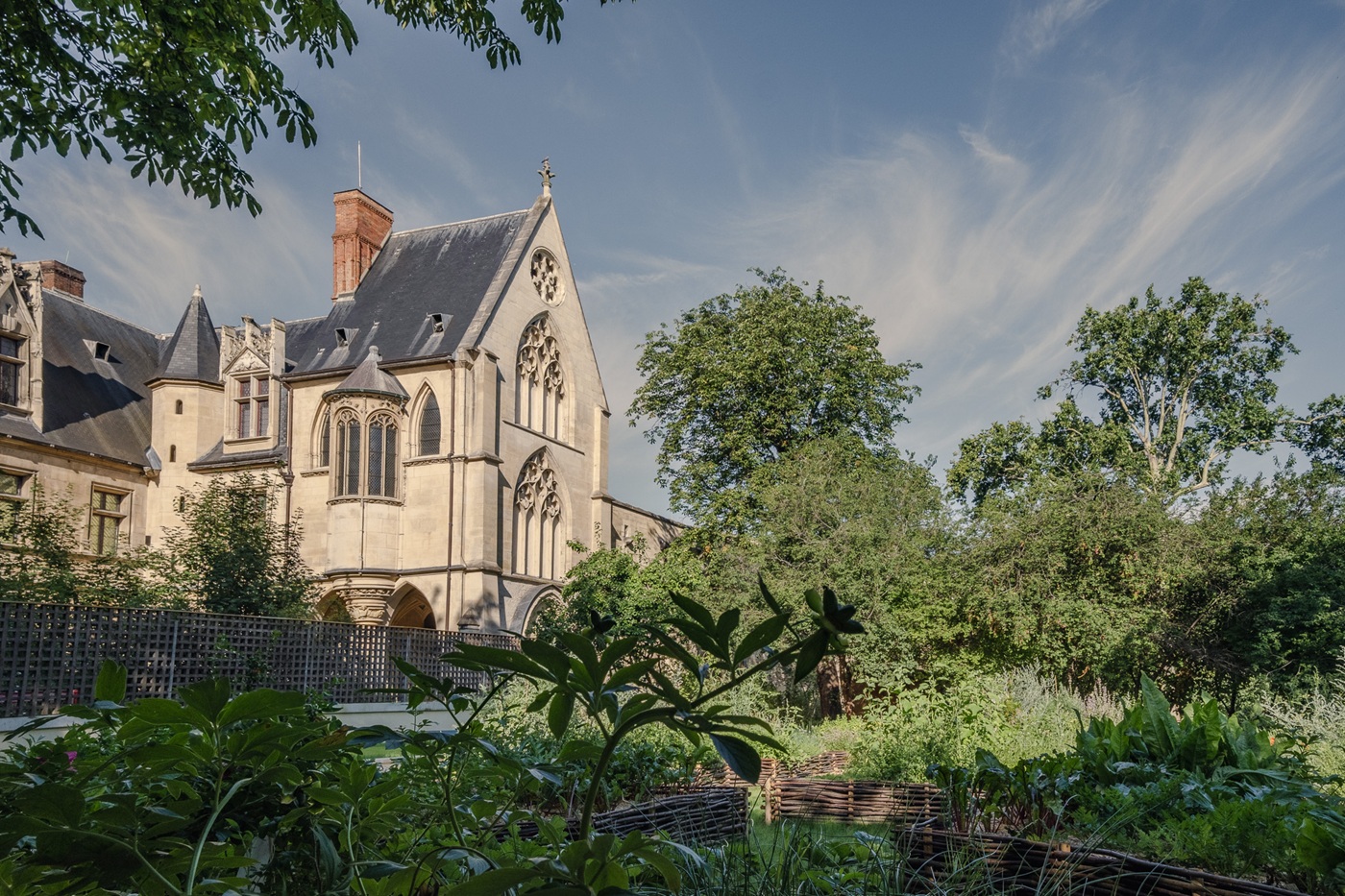
The chapel of the Hôtel de Cluny, viewed from the public gardens © Dubontemps / musée de Cluny – musée national du Moyen Âge
Restoring the historic garden of the Hôtel de Cluny
The Hôtel de Cluny is one of the earliest examples of a private mansion between a courtyard and a garden in Paris. But its garden has evolved over the centuries. Its scope and uses have changed, particularly during the 19th century.
The first phase of work has modernised the public garden next to the museum. This area, overseen by the City of Paris, reopened to the public on 10 July 2025 following 10 months of works. However, this intervention does not cover the historic garden, known as the Abbots' garden. Its restoration will finalise the extensive modernisation of the museum and will enable the Hôtel de Cluny to reclaim its original garden.
Explore the project on our dedicated page.
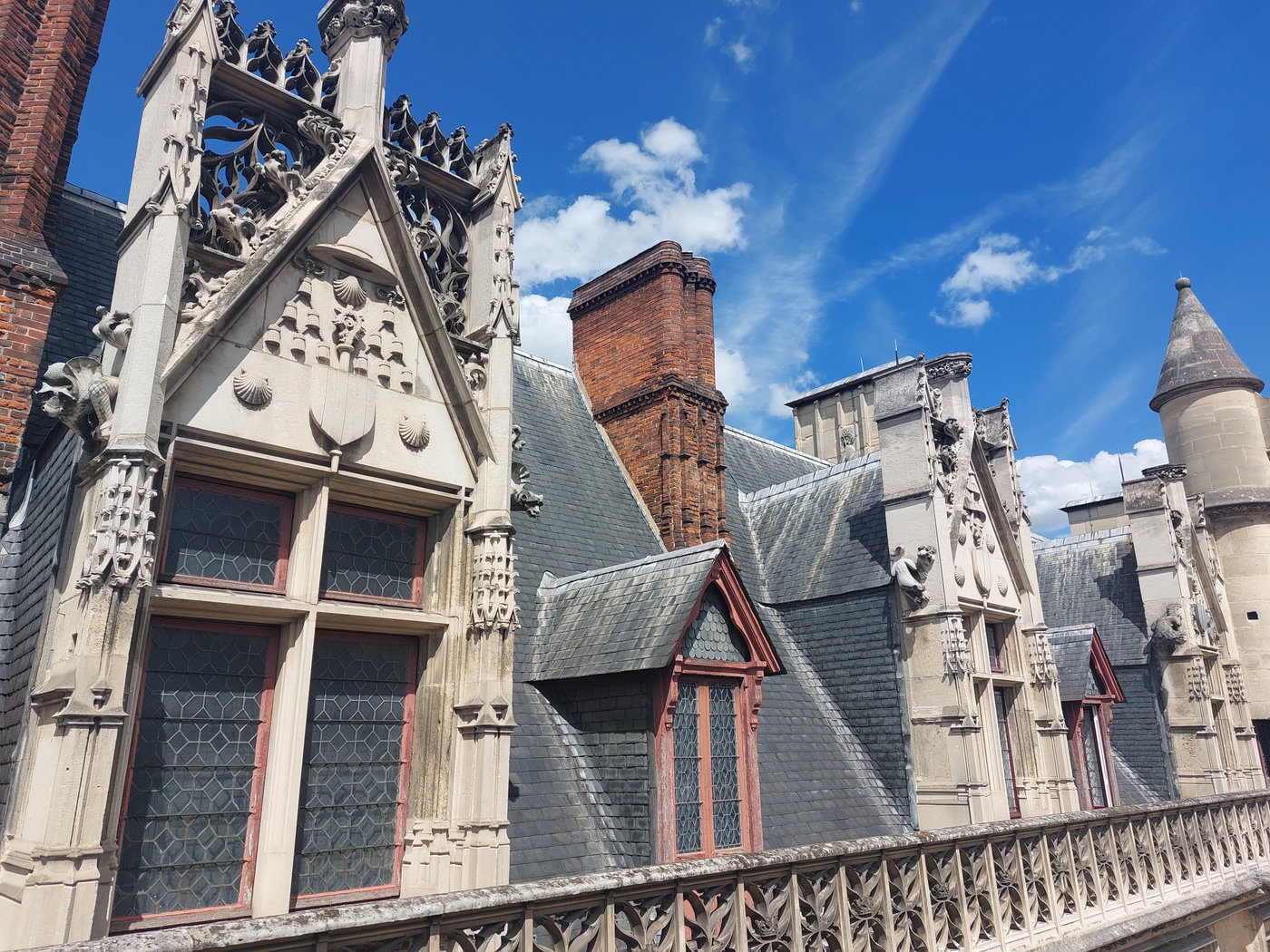
View from the rooftops of the Hôtel de Cluny © musée de Cluny - musée national du Moyen Âge
Roof refurbishment
Meanwhile, the museum's roofs are in urgent need of restoration. The "frigidarium" (1st–2nd century) coverings will be repaired as a priority. Set within the other buildings on the site and very high, they pose a complex and urgent challenge.
The roofs of the mediaeval hotel, made of slate and lead, feature beautiful original lead elements (late 15th century) but also require restoration, as do the large glass roofs of the rooms covering in the 19th century. Finally, all the window frames and the external walls of the mediaeval hotel are in urgent need of restoration.
Restoring the perimeter railings
The stone walls and railings that enclose the garden and the ancient ruins date back to the 19th century. Partly classified as a Historic Monument, the railings are severely damaged and a restoration campaign will be organised soon.