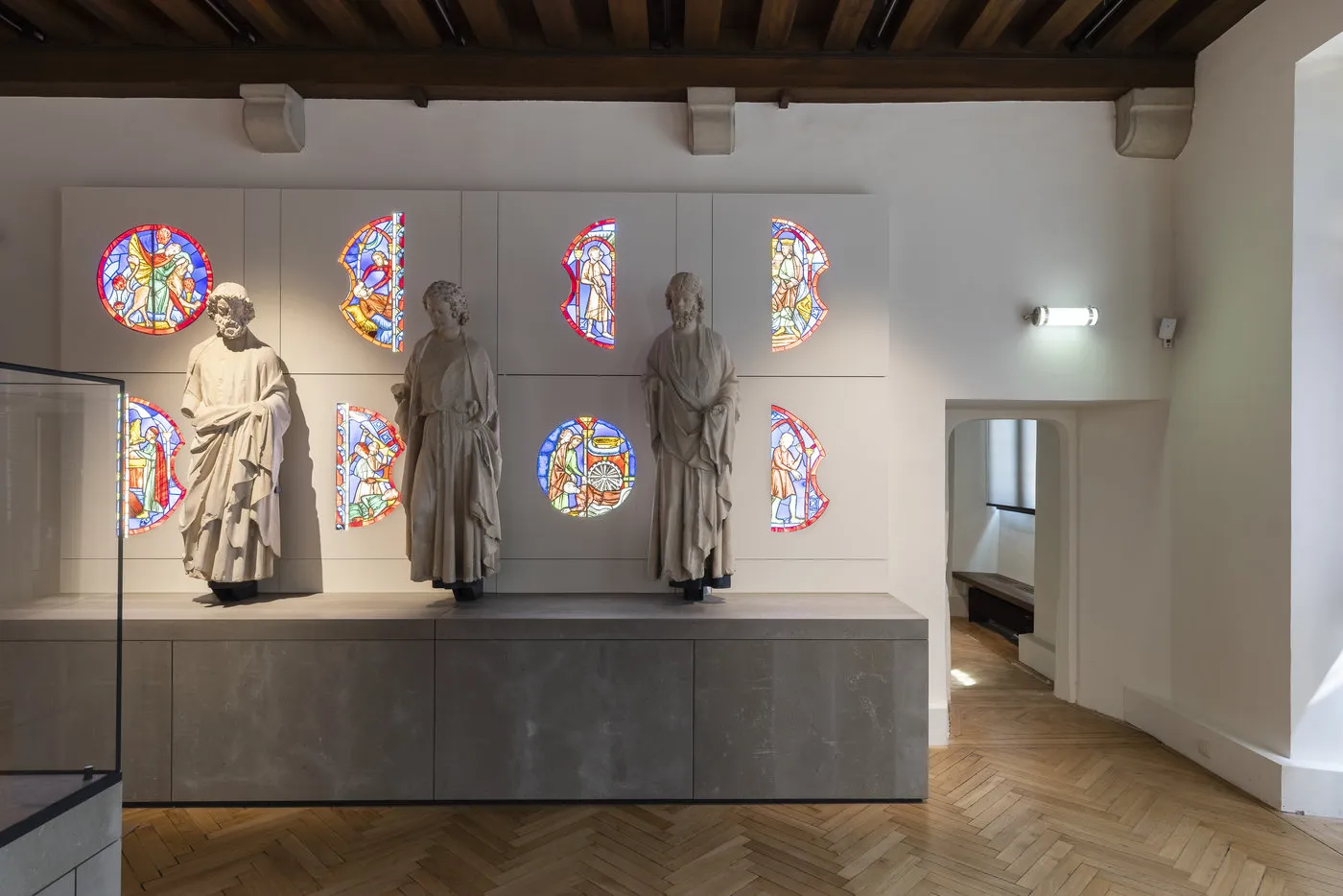
Room 8, The Sainte-Chapelle of Paris (1241 – 1248) © Alexis Paoli / OPPIC
Preserving and enriching the collections
A legacy for future generations
The museum's staff are the custodians of a heritage preserved by previous generations. These collections must be preserved for future generations. The museum also actively pursues an acquisition policy to enhance its collections.
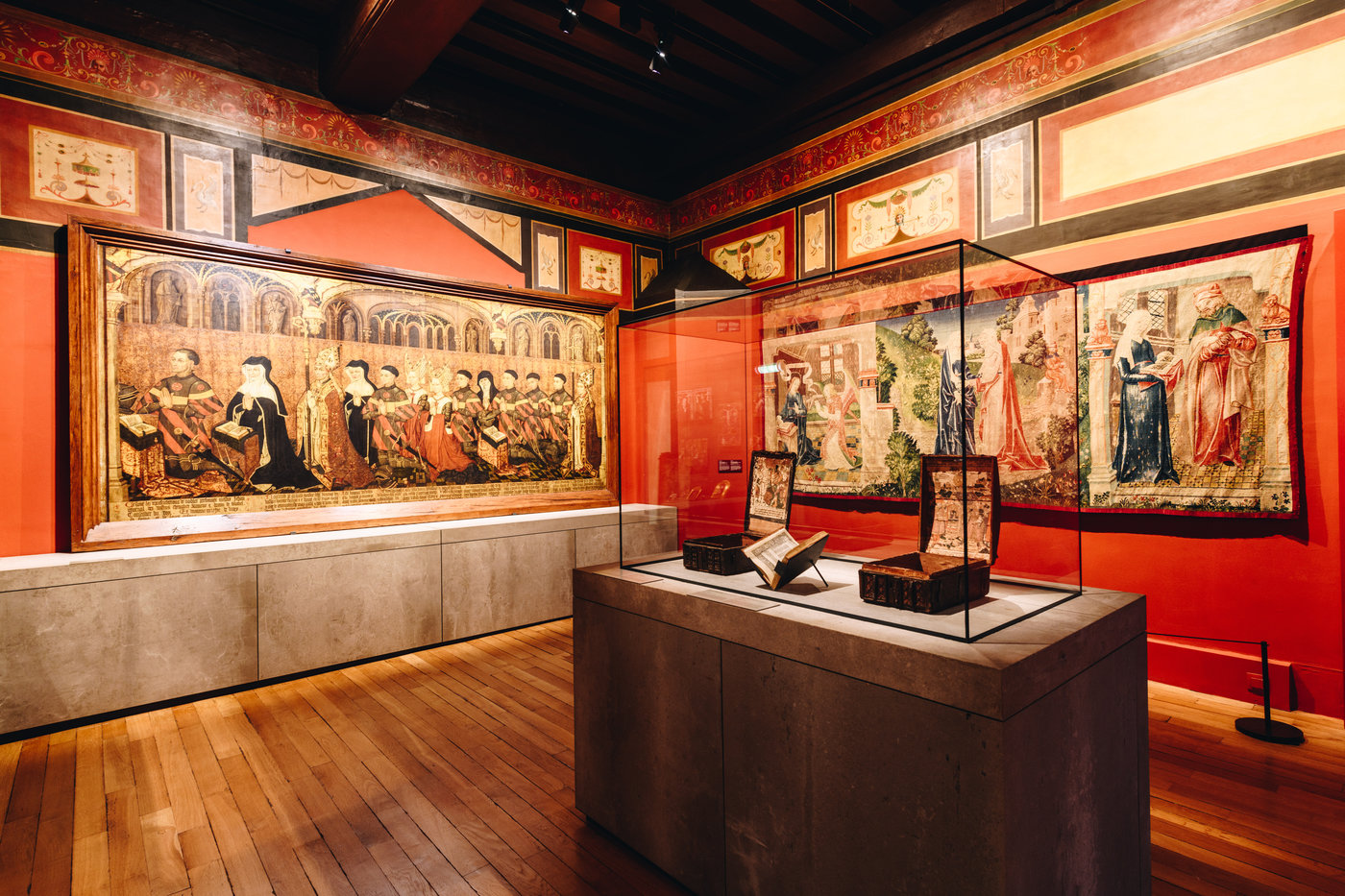
Room 15, Art around 1500: between the Middle Ages and the Renaissance
© Jean-Marie Heidinger / musée de Cluny - musée national du Moyen Âge
Cataloguing and verifying
Like any public collection, the works and objects that form the National Museum of the Middle Ages may not be transferred or sold. They cannot be sold, lost over time, or seized.
They are recorded in a chronological regulatory inventory that enables each item to be identified by its own unique number. Its presence and condition are checked regularly during inspections every ten years.
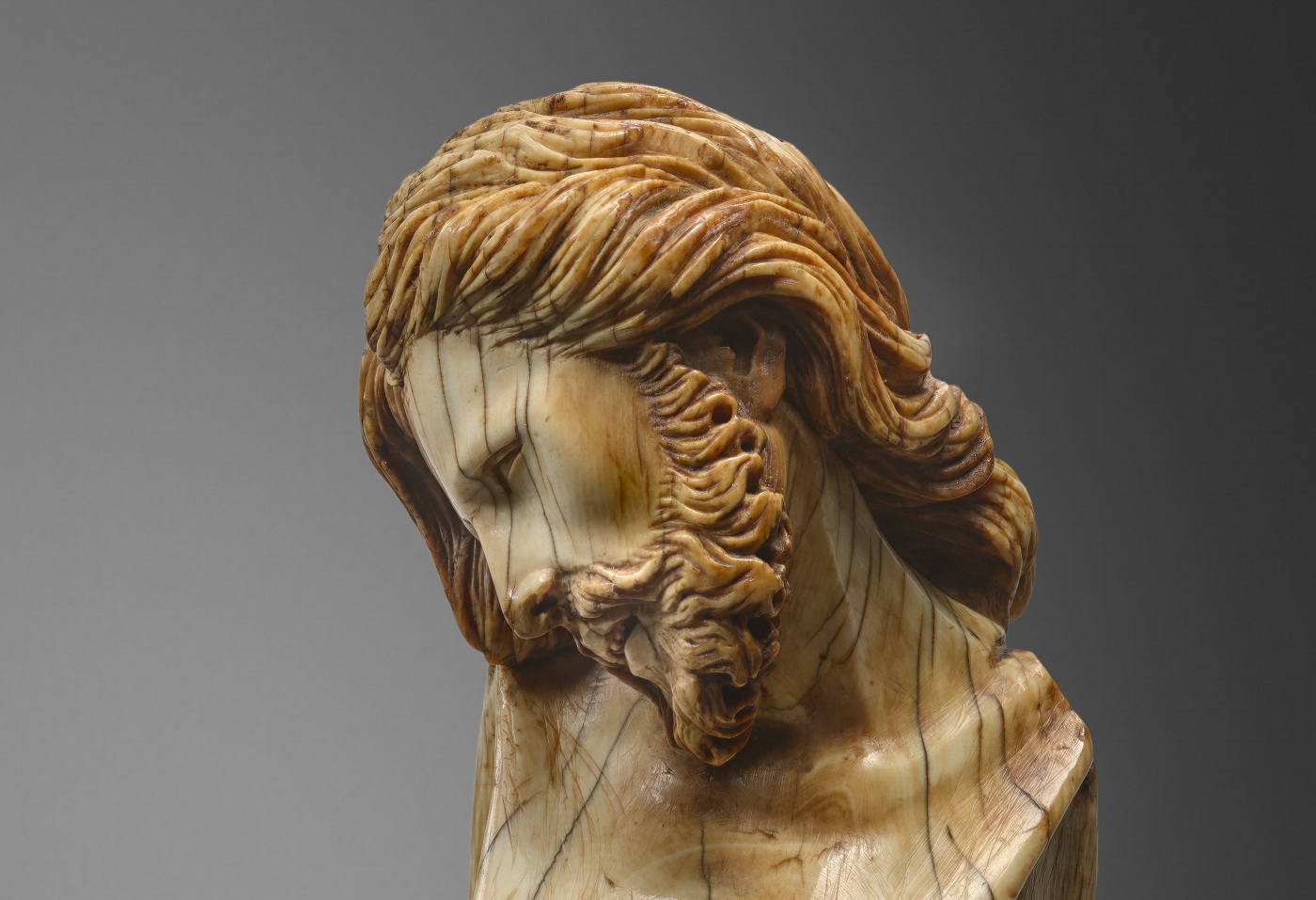
The Crucified Christ by Giovanni Pisano, Cl. 23976 (detail) © GrandPalaisRmn
Enriching the collections
Each year, the collections are enhanced through donations, bequests, or purchases made privately or at public auctions. All of the museum’s recent acquisitions are listed on this dedicated page.
The conservation teams' expertise allows objects to be identified for which preservation of which in a national public collection is of public interest. In particular, works that enhance existing collections within the museum or address a gap in the understanding of mediaeval art are sought. The artistic or historical quality of the work must be of a high level. The interest of a work is explained in a scientific file prepared in advance and submitted to the Acquisition Committee chaired by the SMF and the Grand Palais-RMN, and for acquisitions above a certain financial threshold, to the Artistic Council of National Museums prior to any acquisition.
To supplement the museum's acquisition budget, patrons are sometimes approached, including the Society of Friends of the Musée de Cluny. In 2023, it contributed to purchasing an extraordinary Crucified Christ sculpted by Giovanni Pisano by launching an online fundraising campaign open to all.