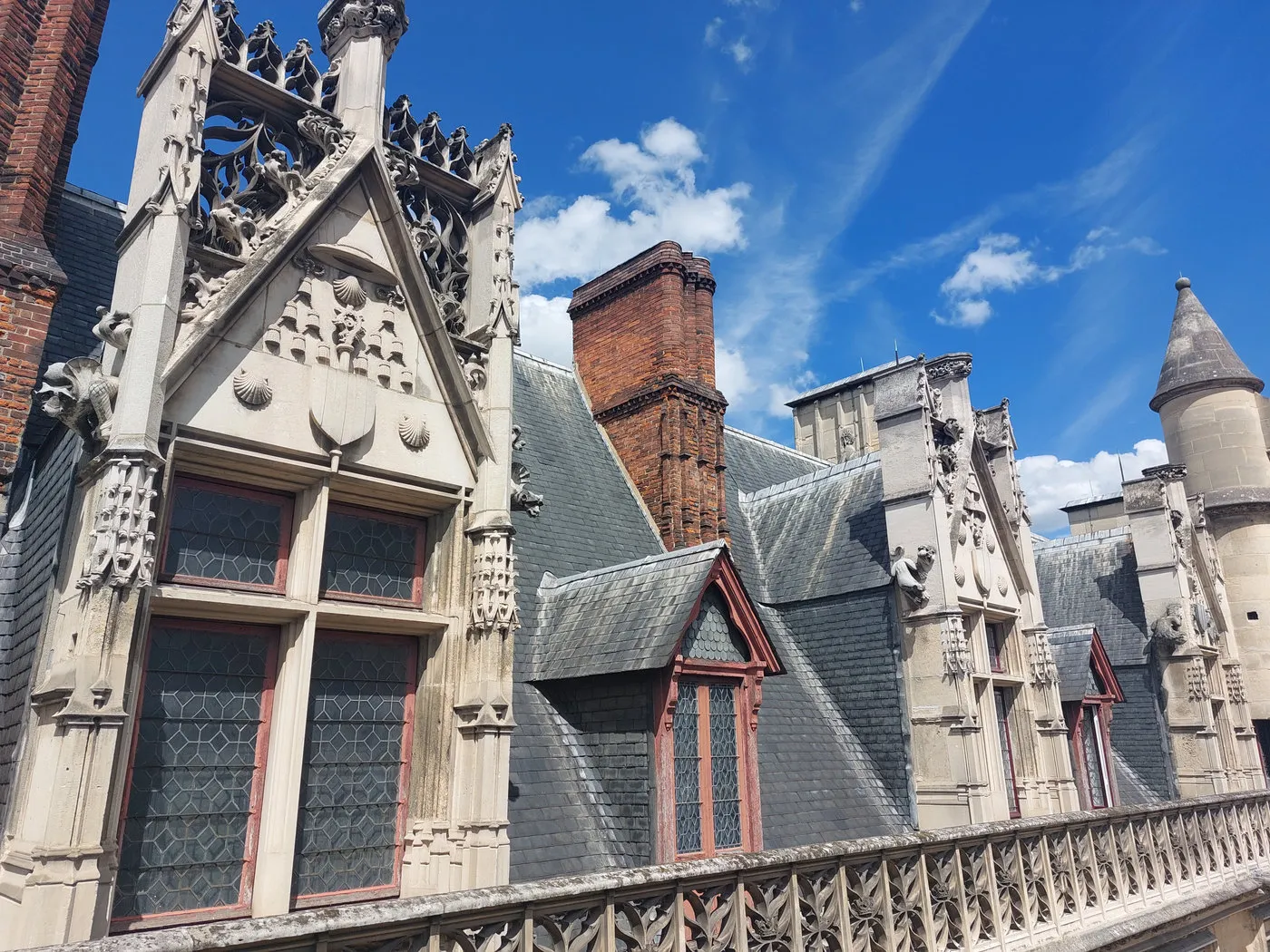
View from the rooftops of the Hôtel de Cluny © musée de Cluny - musée national du Moyen Âge
Founding figures
In the 19th century, the destiny of the Musée de Cluny was shaped by the combined efforts of curators and architects. They were strong personalities who contributed to awakening heritage awareness that aimed to preserve the material testimonies of the past in order to better articulate a collective narrative. They also left a lasting mark on the museum and the site.
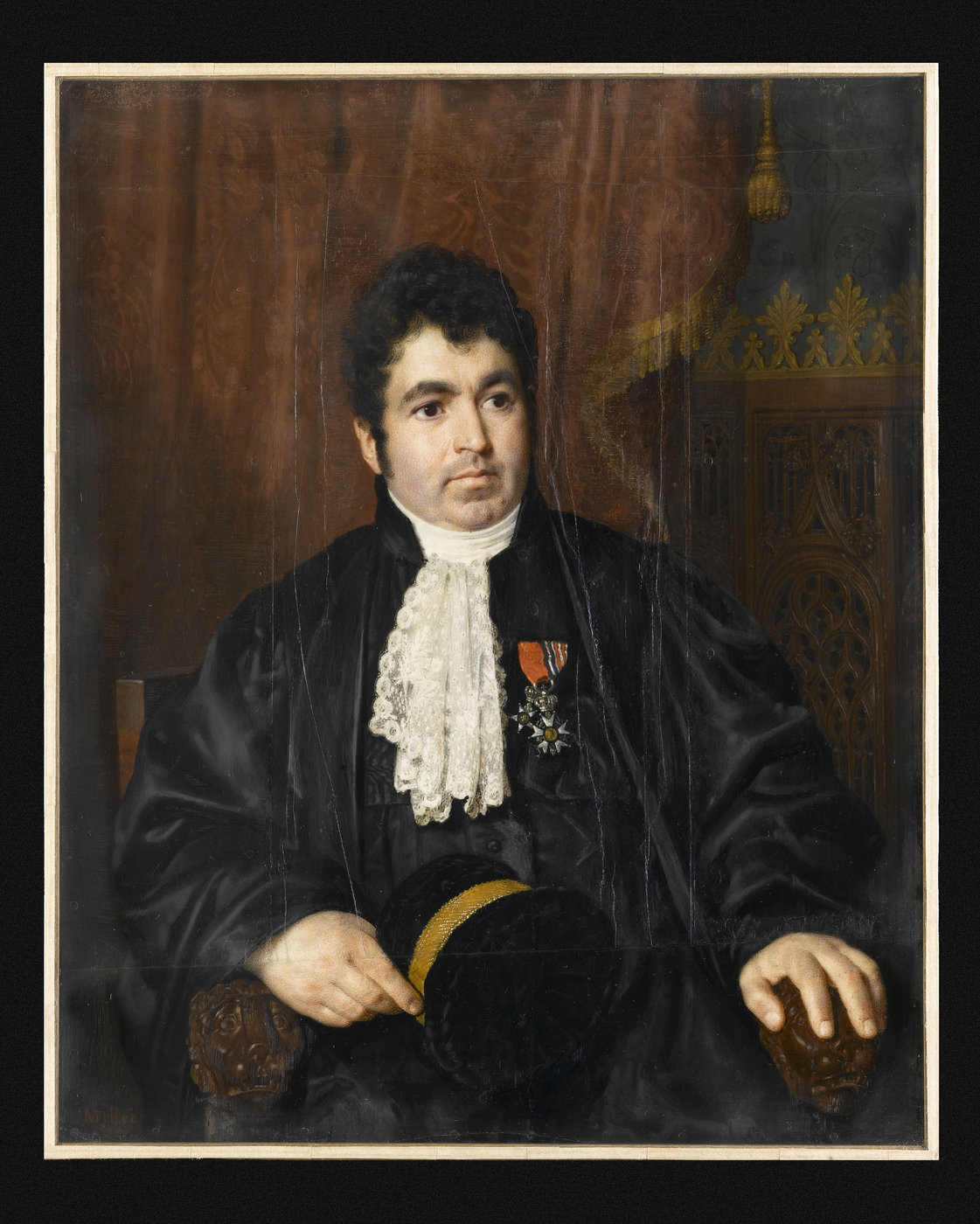
Portrait of Alexandre du Sommerard, Cl. 23754 © GrandPalaisRmn / Franck Raux
Alexandre Du Sommerard, the pioneer
The history of the Hôtel de Cluny and the museum being founded in the 19th century are closely linked to the Du Sommerard family, and Alexandre first and foremost.
Alexandre Du Sommerard (1779-1842) was a prominent art collector who served as a Senior Councillor at the Court of Accounts. From the 1820s, he amassed a vast collection dedicated to the arts of the Middle Ages. He was one of those in the first half of the 19th century who generated new interest in the mediaeval period. He was also a member of the Historical Committee for the Arts and Monuments from its inception and a founding member of the Society of the History of France.
In 1832, Alexandre Du Sommerard took up residence in an apartment in the mediaeval Hôtel to showcase his collection. After his death, the state acquired the Hôtel de Cluny and its collection. The 1,500 objects or so in his collection formed the foundation on which the Musée de Cluny would build its collection.
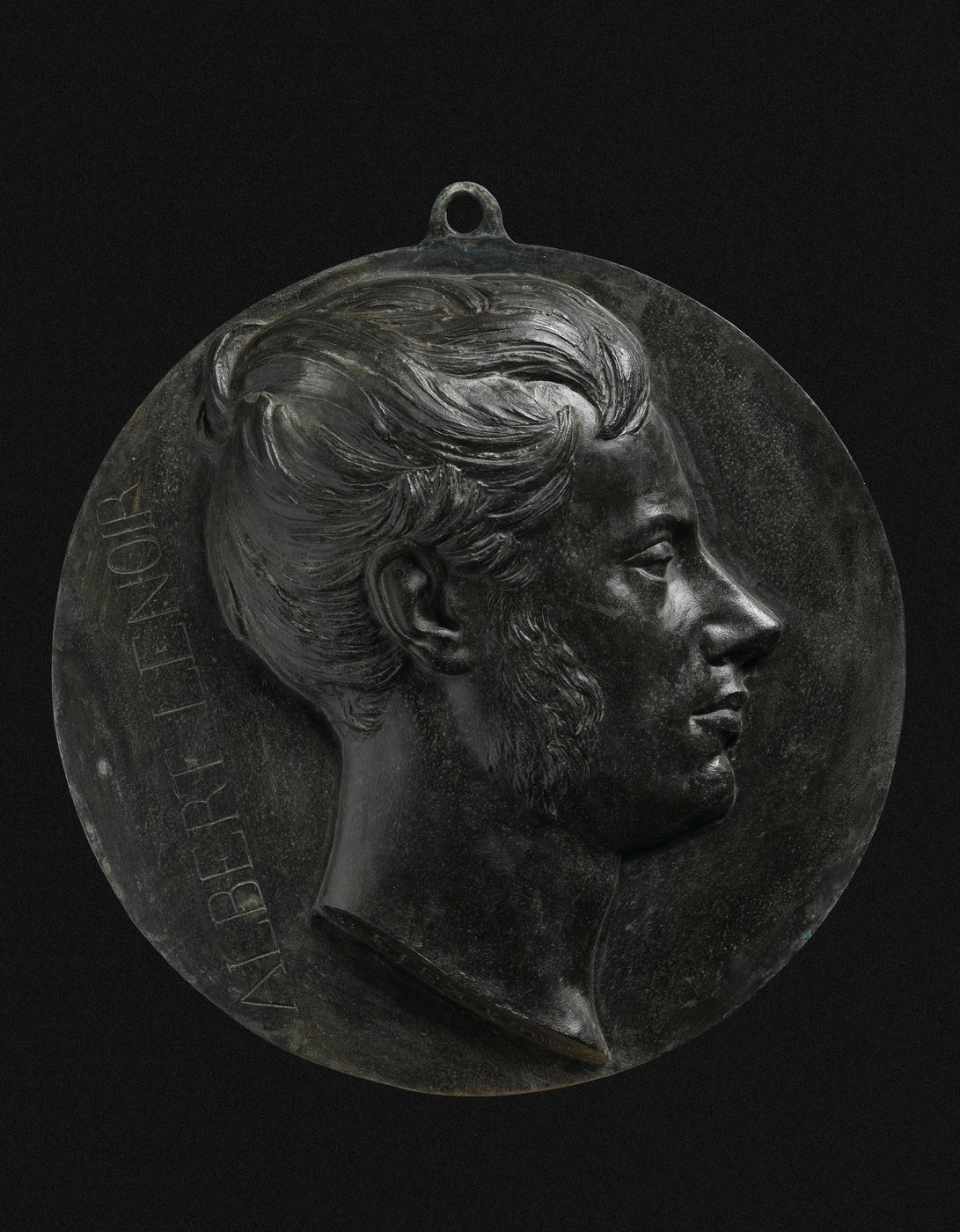
Portrait medallion of Albert Lenoir, Cl. 23800 © GrandPalaisRmn / Franck Raux
Albert Lenoir, architect and restorer
During the same decade of the 1830s, the architect Albert Lenoir (1801-1891) proposed establishing a "musée d'antiquités nationales" or "musée d'art français" in the Roman baths complex and the Hôtel de Cluny.
He wanted his project to be the successor to the Musée des Monuments français (Museum of French Monuments). Established during the Revolution and directed by his father, Alexandre Lenoir, the Musée des Monuments français was closed in 1816. Albert Lenoir suggested that collections be presented in chronological order to illustrate the continuous evolution of art throughout the centuries.
His project was more ambitious than the museum established in 1844, but it planted the seed for the creation of the Musée de Cluny. As a nod to history, several works that were featured in the Musée des Monuments français will soon be included in the collections of the Musée de Cluny, such as the Adam from Notre-Dame cathedral in Paris.
From 1838, he was tasked with the restoration of the Gallo-Roman baths, followed by the restoration of the Hôtel de Cluny from 1843. Albert Lenoir removed later additions from around the ancient buildings and carried out a thorough restoration of the mediaeval residence, even contributing to the museum installations. Under the Second Empire, Napoleon III’s urban planning projects included a large public sculpture garden being created to the north of the buildings. However, Albret Lenoir managed to preserve the perimeter of the former garden of the Hôtel des Abbés.
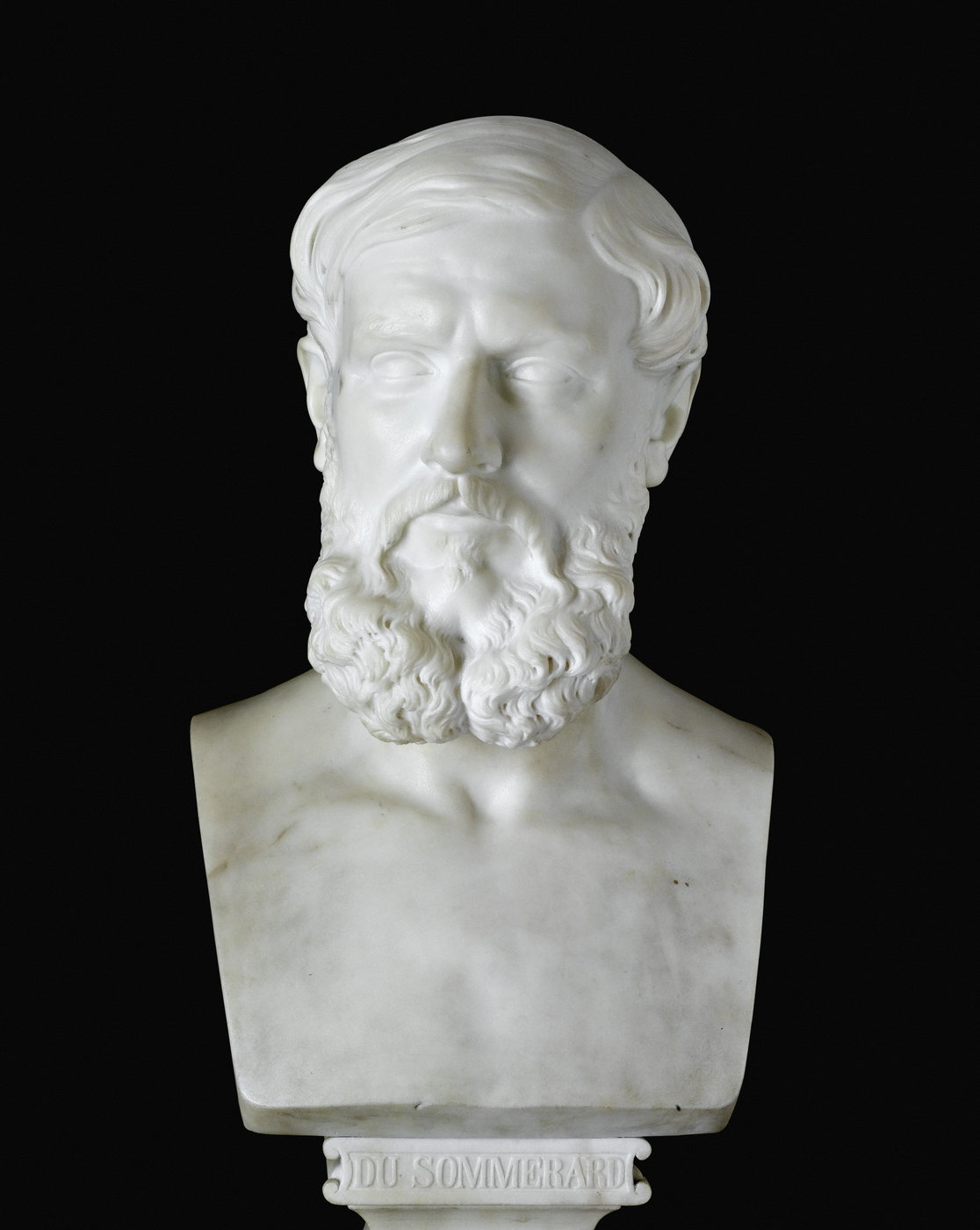
Bust of Edmond du Sommerard © GrandPalaisRmn / Franck Raux
Edmond Du Sommerard, the first curator
The son of Alexandre, Edmond Du Sommerard (1817–1885) was the first curator of the Musée de Cluny. Aged around twenty at the time of his father's death, he embraced his heritage while adding his own personal touch to the collections. Appointed as the lifelong curator of the Musée de Cluny, he held this position until his death, despite changes in the political regime.
For 40 years, he made significant additions to the museum’s collections by directing acquisitions towards the decorative arts. He was particularly interested in gold- and silversmithery. In 1854, he acquired the altar frontal and the Golden Rose from the Basel Cathedral treasure. It was also under his direction that the museum's masterpiece joined the collection: the tapestries of the Lady and the Unicorn.
To showcase these collections, he commissioned architect Paul Boeswillwald to design an extension and the interior fittings.
At the time of his death in 1885, the museum had 11,000 objects. His successors, Alfred Darcel (1818-1893) and Edmond Saglio (1828-1911), endeavoured to enhance the focus on the decorative arts in the collections.