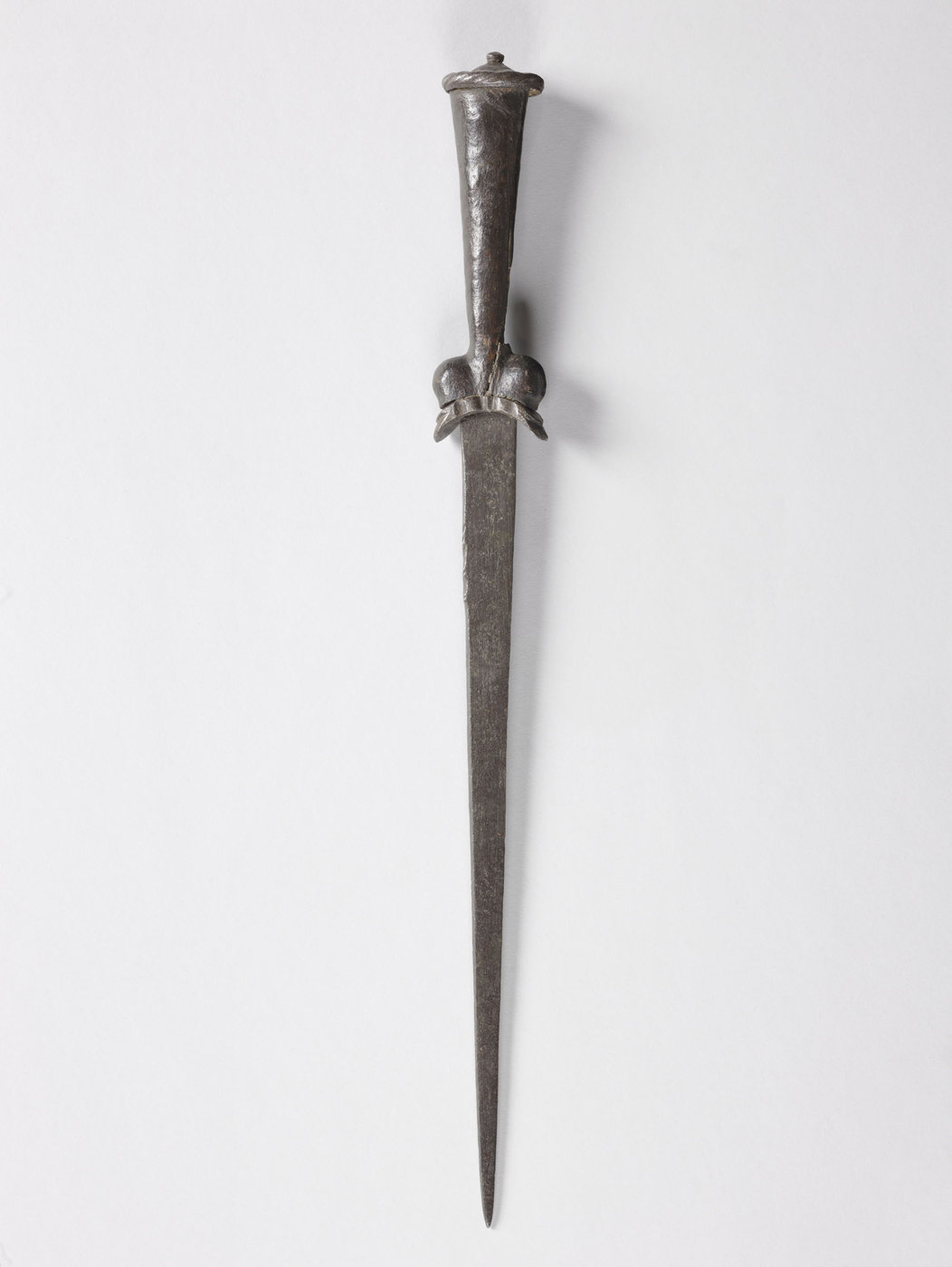
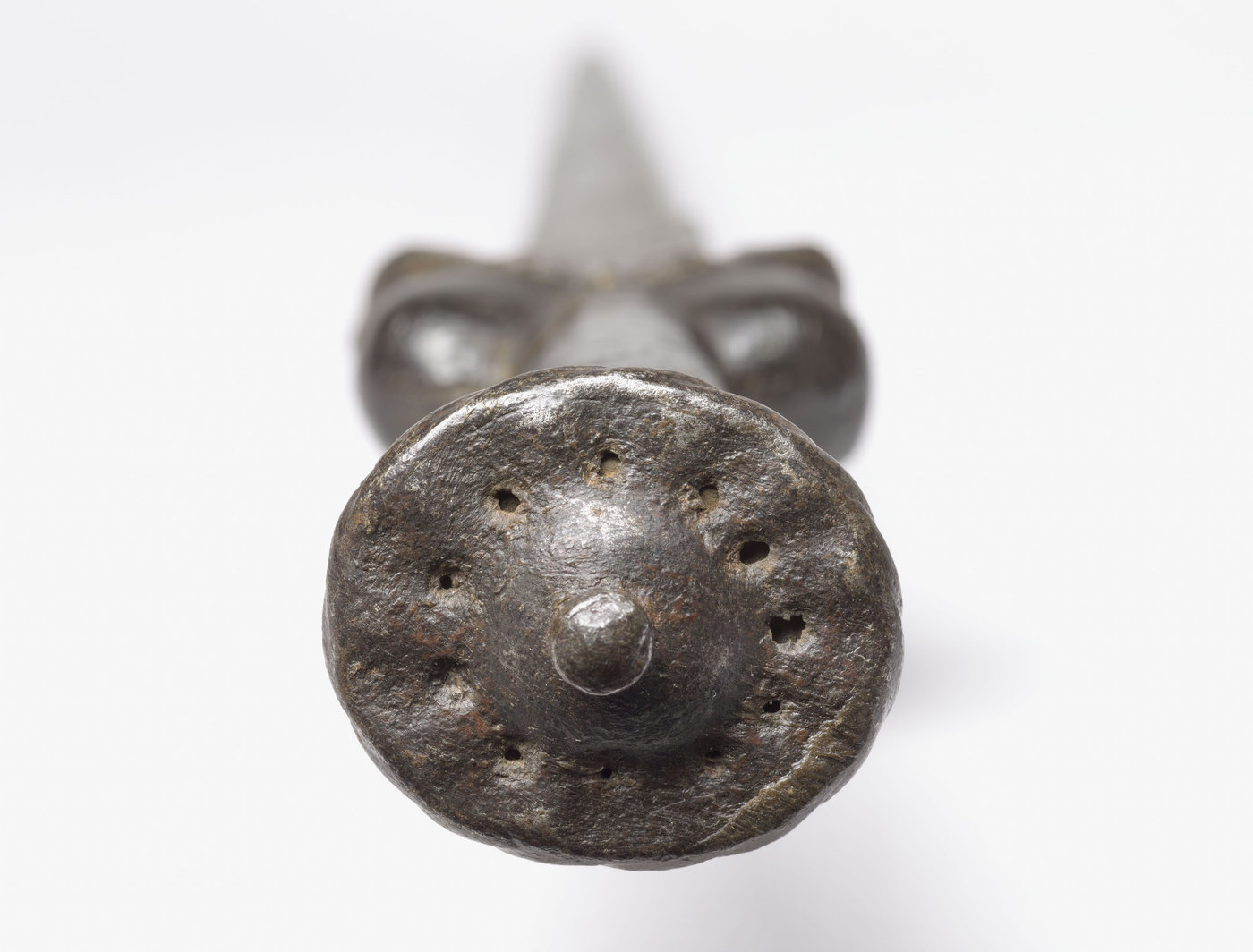
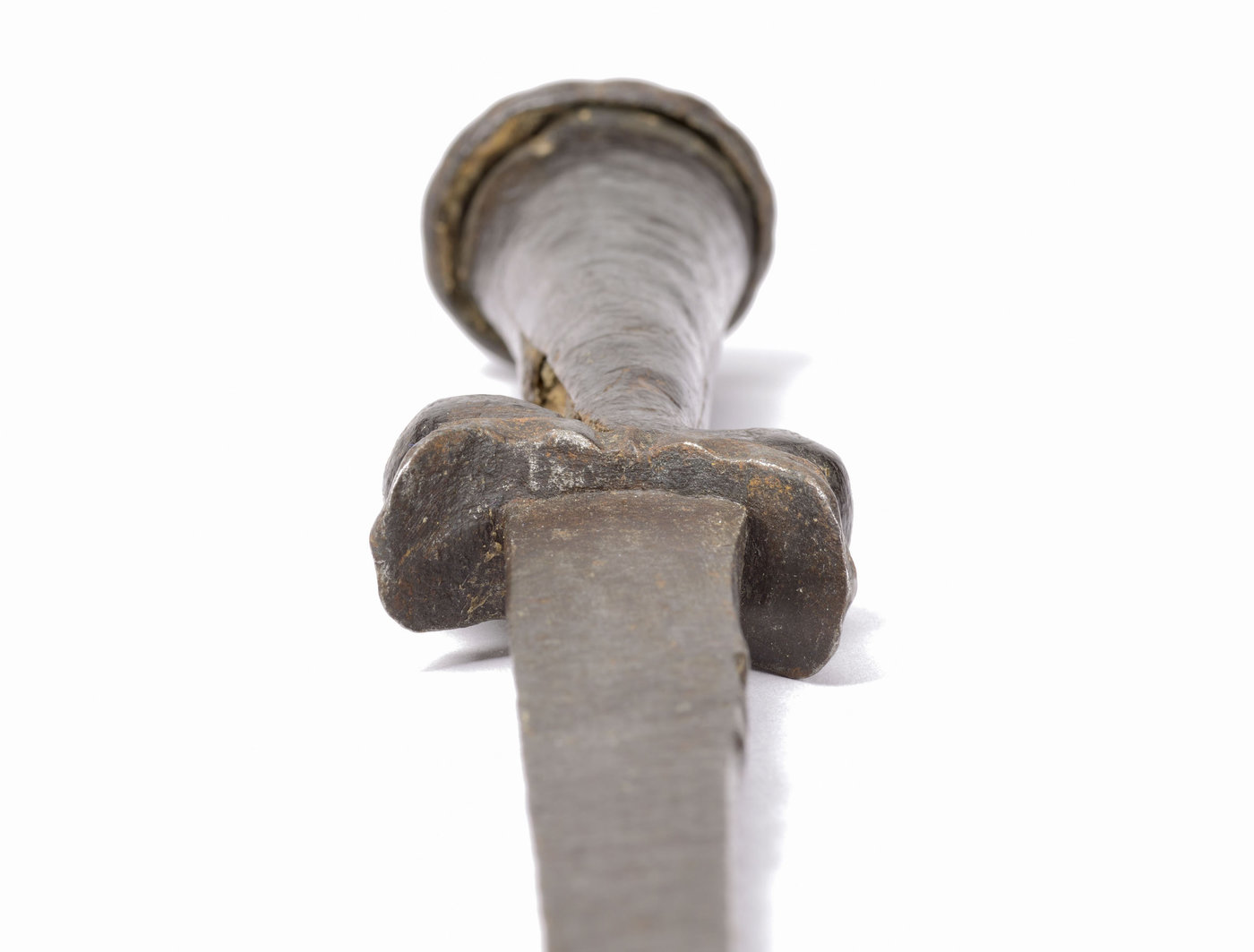
This dagger, with its masculine connotation, is characteristic of medieval combat.
The kidney dagger, or "couilet dagger" due to the shape of its guard, first appeared in the 14th century and was used until the early 16th century. Originally a weapon of the elites, it quickly moved down to the lower echelons of society and was carried by both foot soldiers and civilians. The Musée de Cluny had a wheel-guard dagger (named after the two metal discs forming the guard and pommel) but did not have an example of this weapon, which is characteristic of the mediaeval period, represented in the iconography, and a clear sign of transgression or symbolic of a bold challenge to social norms.
Unlike its use in 16th-century swordsmanship, the dagger in the Middle Ages was an independent, right-handed weapon with its own specific style of fencing, yet versatile enough for all forms of combat, particularly against an armoured opponent, as it could pierce the chainmail at the joints or exploit gaps. Unlike a sword, it is held with the blade facing downwards and is therefore carried in the sheath on the side of the dominant hand (usually the right).