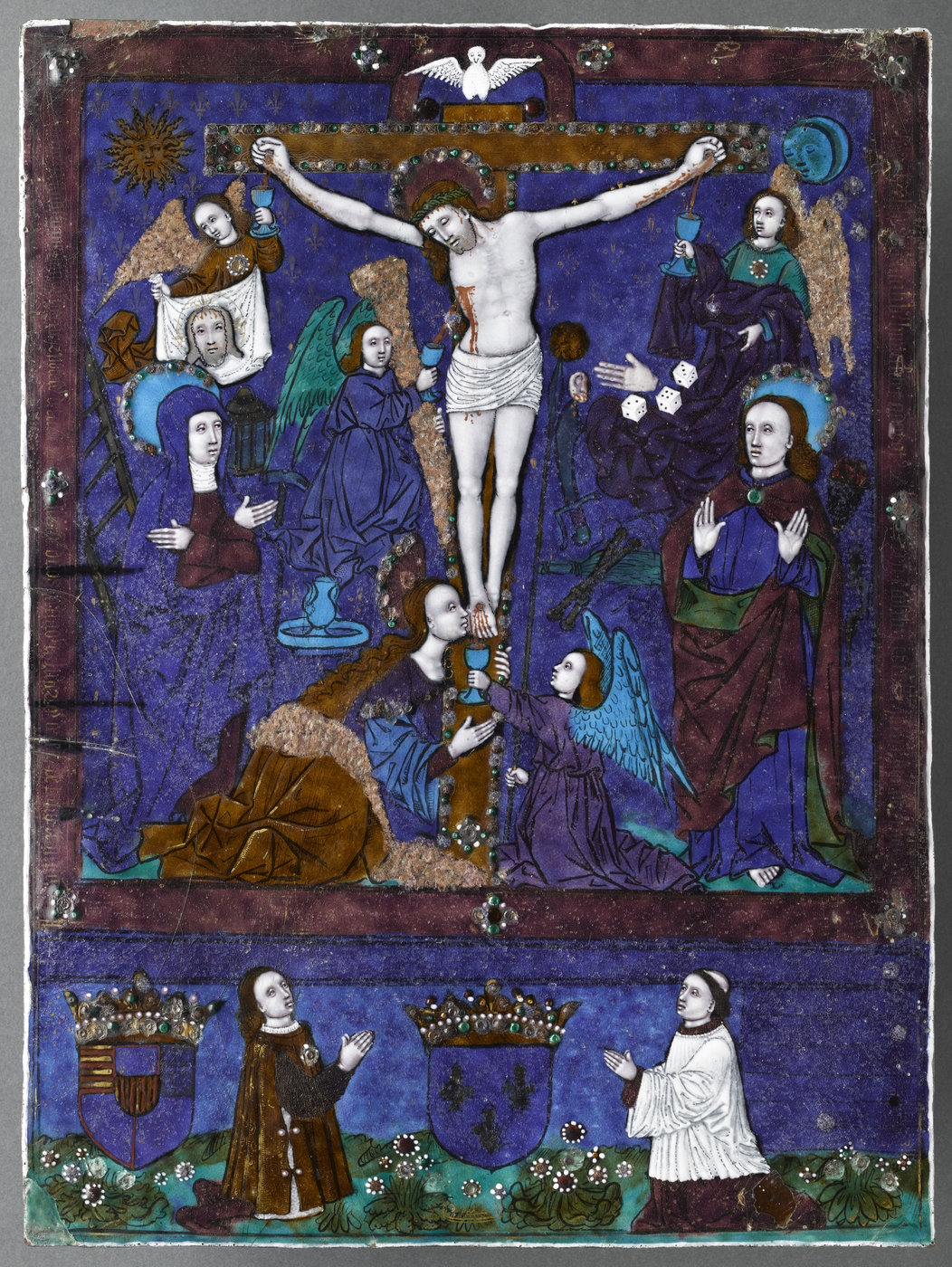
This enamel painting depicts the Crucifixion. Two donors are also featured in the lower register. This piece exemplifies the technique of painted enamel on copper used in the workshops of Limoges from the late 15th century onward.
During this period, the enamel workshops of Limoges experienced a new flourishing (following the earlier peak in the 12th and 13th centuries) with the success of painted enamel on copper. This technique was employed to create devotional panels, catering to the contemporary taste for personal piety objects.
In this painting, which showcases a rich palette of blues and greens, the Crucifixion is depicted. The lower register features two donors: a layperson and a cleric. The inscriptions, now nearly illegible, accompanying the figures provide the name of the cleric, the name of the enamel artist, Nardon Pénicaud, and the date of the work, April 1, 1503. This date, along with the coats of arms of France and Anjou accompanying the lay donor, suggests a connection between this plaque and the affairs of the Kingdom of Naples during the reign of Louis XII.